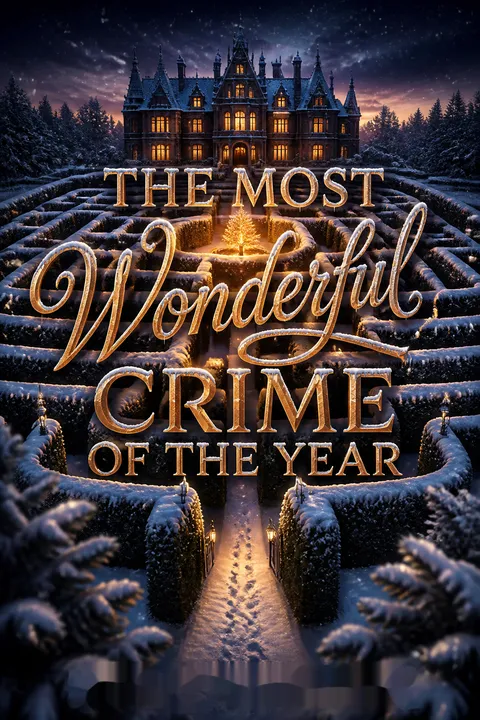

Plot Summary
Elevator Encounters and Old Wounds
Maggie Chase, a successful but emotionally battered mystery writer, is ambushed at her publisher's Christmas party. She's still reeling from a devastating divorce and the betrayal of her best friend, and the holiday season only sharpens her sense of isolation. The party is a minefield of triggers: Christmas, crowds, and, worst of all, Ethan Wyatt—her professional rival and the embodiment of everything she resents. Their banter is sharp, but beneath it lies a history of misunderstandings and mutual pain. Maggie's anxiety is palpable, her sense of self fragile, and her world feels small and cold. Yet, when her editor Deborah hands her a mysterious invitation, Maggie is forced to consider a new path—one that might lead her out of her rut, or into even deeper trouble.
Christmas Invitations and Ghosts
Deborah's invitation is to spend Christmas at the English estate of Eleanor Ashley, Maggie's literary idol. The offer is all-expenses-paid, but Maggie's instinct is to refuse—she's wary of strangers, and Christmas is a season of loss for her. Flashbacks reveal her lonely childhood and the trauma of losing her parents, which left her with a deep-seated fear of abandonment. Deborah's challenge is blunt: Maggie can either wallow in her solitude or take a risk on something new. The prospect of meeting Eleanor Ashley is both thrilling and terrifying, and Maggie's decision to accept is less about hope than about having nothing left to lose.
Alone for the Holidays
Maggie's past is a litany of Christmas disasters, each one reinforcing her belief that the holiday is cursed. Orphaned as a college freshman, she was left to fend for herself, learning early that she could rely on no one. Her friendship with Emily and romance with Colin offered a brief respite, but even those relationships would eventually betray her. The chapter explores Maggie's psychological scars—her fear of being a burden, her compulsion to take up as little space as possible, and her desperate longing for connection. These wounds shape her every interaction, making her both fiercely independent and deeply vulnerable.
Nemeses on a Jet
Maggie's journey to England takes an unexpected turn when she discovers that Ethan Wyatt is her travel companion. Trapped together on a private jet, their rivalry flares into open conflict, but there are hints of something deeper beneath the surface. Ethan's charm is both infuriating and disarming, and Maggie's defenses begin to crack. Their banter is laced with unresolved tension, and the forced proximity exposes their shared loneliness. As the plane crosses the Atlantic, Maggie realizes that she and Ethan are more alike than she wants to admit—both are haunted by the past, and both are searching for something they can't name.
Arrival at Mistletoe Manor
The English countryside is blanketed in snow as Maggie and Ethan arrive at Mistletoe Manor, a sprawling estate that seems to have leapt from the pages of a classic mystery. They are greeted by Eleanor Ashley herself, a formidable woman whose presence commands both awe and fear. The house is filled with eccentric guests—family members, old friends, and a handful of other writers—all of whom have their own secrets and agendas. The atmosphere is charged with anticipation, and Maggie feels both out of place and strangely at home. The stage is set for a holiday unlike any she has ever known.
The Duchess of Death
Eleanor Ashley is every bit the legend Maggie imagined—witty, sharp, and enigmatic. She presides over her guests with a mixture of warmth and mischief, dropping hints that something unusual is afoot. Maggie is starstruck but also keenly observant, noting the tensions among the family and the oddities of the household. Cece, Eleanor's newly discovered American niece, is eager and naive; Rupert, the nephew, is sullen and entitled; Kitty, his wife, is overwhelmed by motherhood; and the rest of the guests are a mix of sycophants and suspects. The house itself is a labyrinth of secrets, and Maggie senses that everyone is playing a role in a story she has yet to understand.
Family, Fans, and Foes
As the guests settle in, old grievances and new rivalries come to the surface. The family is divided by jealousy and suspicion, and the writers—Maggie, Ethan, and the flamboyant Sir Jasper—are outsiders in a world of privilege. Maggie's admiration for Eleanor is complicated by her awareness that even her idol is vulnerable to loneliness and betrayal. Ethan, meanwhile, oscillates between flirtation and genuine concern, his own past as mysterious as the house itself. The group is snowed in by a blizzard, and the isolation heightens the sense of danger. When Eleanor hints that she is writing her final novel and searching for a successor, the stakes become personal for everyone.
Locked Rooms and Vanishing Acts
The holiday takes a sinister turn when Eleanor vanishes from her locked office, leaving behind only a bolted door and a trail of confusion. The guests are thrown into chaos, each reacting according to their nature—some with panic, others with calculation. Maggie's instincts as a mystery writer kick in, and she begins to piece together the clues. The locked-room puzzle is classic Eleanor, but the fear is real: has she been murdered, or is this an elaborate game? The sense of unreality is heightened by the storm outside and the mounting evidence that someone in the house is a killer.
The Contest and the Clues
Maggie becomes convinced that Eleanor's disappearance is a test—a contest to determine who is worthy of inheriting her literary legacy. The clues are buried in Eleanor's novels, and Maggie's encyclopedic knowledge of the books gives her an edge. Ethan, too, is drawn into the game, and their rivalry becomes a partnership as they race to solve the mystery. The other guests are less helpful, their motives clouded by greed, resentment, and fear. As Maggie and Ethan follow the trail of mistletoe, nightshade, and secret passages, they realize that the danger is not just theoretical—someone is willing to kill to win.
Poison, Fire, and Falling Snow
The tension escalates as a series of near-fatal accidents befall the guests: a sabotaged staircase, a fire in the greenhouse, and a poisoned tea tray that nearly kills Sir Jasper. Maggie herself becomes a target, narrowly escaping a sniper's bullet in the maze. The blizzard cuts off all communication with the outside world, and the house becomes a pressure cooker of suspicion and fear. Maggie and Ethan's relationship deepens as they rely on each other for survival, their emotional walls crumbling in the face of real danger. The line between fiction and reality blurs, and Maggie is forced to confront her own capacity for courage and trust.
The Maze and the Mistletoe
The key to the mystery lies in the maze—a literal and metaphorical labyrinth that mirrors Maggie's own journey. Armed with a sprig of mistletoe and a lifetime of reading Eleanor's novels, Maggie navigates the twists and turns, pursued by both the killer and her own doubts. Ethan is her anchor, but their partnership is tested by secrets and betrayals. The discovery of a hidden camera and a missing notebook brings them closer to the truth, but also puts them in greater danger. The maze becomes a crucible, burning away Maggie's old fears and forging a new sense of self.
Secrets, Scars, and Second Chances
As the investigation intensifies, Maggie and Ethan are forced to confront their deepest wounds. Maggie reveals the full extent of her trauma—her abusive marriage, her lost friendships, and her struggle to reclaim her identity. Ethan, in turn, shares the story of his own scars, both physical and emotional, and the guilt that has haunted him since his days in the Secret Service. Their vulnerability becomes a source of strength, and their romance blossoms in the unlikeliest of circumstances. Together, they piece together the final clues, realizing that the solution to the mystery is as much about healing as it is about justice.
The Greenhouse Inferno
The killer makes a final, desperate move, knocking Maggie unconscious and leaving her bound in the greenhouse as it is set ablaze. Ethan's training and devotion are put to the ultimate test as he races to save her, braving fire and poisonous smoke. Their escape through the secret tunnels is harrowing, but it cements their bond and clarifies the stakes: this is not just a game, and the danger is real. The experience strips away the last of Maggie's defenses, and she emerges from the ordeal transformed—no longer a victim, but a survivor and a detective in her own right.
The Final Notebook
The discovery of Eleanor's missing notebook provides the final piece of the puzzle. The story within is a confession and a challenge, revealing the true motive behind the attempts on Eleanor's life. The killer is unmasked in a dramatic confrontation, their actions rooted in old grievances and a desperate need for control. Maggie's insight and empathy are crucial to the resolution, and the denouement is both satisfying and bittersweet. The locked-room mystery is solved, but the cost has been high, and the future remains uncertain.
The Inspector's Last Stand
The killer, revealed to be Inspector Dobson, takes Maggie hostage in a last-ditch effort to escape. The final confrontation unfolds in the snowy maze, with Ethan and Maggie working in perfect sync to outwit their adversary. Maggie's resourcefulness and Ethan's skill are on full display as they turn the tables, using Eleanor's own tricks—a knitting needle and a cane with a hidden dart—to subdue the villain. The arrival of the authorities brings closure, but the real victory is personal: Maggie has reclaimed her agency, and Ethan has found redemption.
The Locked Room Solution
With the mystery solved and the danger past, the guests reflect on the lessons of the ordeal. Eleanor's disappearance remains an enigma—was it a final act of self-preservation, or the ultimate twist in a life devoted to fiction? Maggie is offered the chance to continue Eleanor's legacy, but she realizes that her true prize is not fame or fortune, but the freedom to be herself. The house is transformed into a refuge for others in need, and Maggie and Ethan look to the future with hope and determination. The locked room is both a puzzle and a metaphor, and its solution is as much about love as it is about logic.
Epilogue: A New Christmas
One year after the events at Mistletoe Manor, Maggie and Ethan are together, celebrating Christmas on a sun-drenched Greek island. Their relationship has deepened, and Maggie has found peace with her past. The search for Eleanor continues, but the real mystery is how two wounded souls found each other and built a new life. The story ends with a promise: some questions may never be answered, but the journey is its own reward. Maggie is no longer running from her ghosts—she is writing her own story, and this time, she is the heroine.
Analysis
Ally Carter's The Most Wonderful Crime of the Year is a masterful blend of classic mystery, romantic comedy, and psychological drama. At its heart, the novel is about the search for belonging—how trauma, betrayal, and loneliness can shape us, and how love and courage can set us free. Maggie's journey from self-doubt to self-acceptance is mirrored in the structure of the mystery: the locked room is both a physical puzzle and a symbol of the emotional barriers we build to protect ourselves. The story interrogates the ways women are gaslit and dismissed, even by those closest to them, and celebrates the power of community, resilience, and self-trust. The romance between Maggie and Ethan is not just a subplot but a central engine of growth, showing how vulnerability and partnership can heal old wounds. The novel's metafictional elements—its references to the genre, the contest for literary legacy, and the interplay between fiction and reality—invite the reader to reflect on the stories we tell ourselves and the ones we choose to live. Ultimately, the book is a love letter to readers, writers, and anyone who has ever felt alone at Christmas, offering hope, humor, and the promise that even the most wonderful crime can lead to a happy ending.
Review Summary
The Most Wonderful Crime of the Year receives mixed reviews averaging 3.93 stars. Readers praise the locked-room mystery setup, Christmas setting, and charming banter between rival authors Maggie and Ethan. Many compare it favorably to Knives Out and Agatha Christie mysteries. However, critics cite unlikable characters, especially Maggie's annoying personality, forced romance with insta-love elements, repetitive dialogue ("sweetheart," "who did this to you?"), and an unsatisfying mystery resolution. The audio narration receives high marks. Opinions split between those finding it a fun holiday cozy mystery and those disappointed by weak chemistry and underdeveloped plot.
People Also Read

Characters
Maggie Chase
Maggie is a bestselling mystery writer whose life has been shaped by loss, betrayal, and a profound sense of not belonging. Orphaned young and later abandoned by her husband and best friend, she has learned to rely on herself, but her independence is laced with loneliness and self-doubt. Maggie's psychological complexity is her greatest strength and her greatest vulnerability—she is hyper-observant, deeply empathetic, and haunted by the fear that she is unlovable. Her journey is one of reclamation: she must learn to trust herself, to accept love, and to step out of the shadows of her idols and abusers. Her relationship with Ethan is both a source of healing and a crucible for growth, forcing her to confront her past and embrace her future.
Ethan Wyatt
Ethan is Maggie's professional nemesis and eventual partner, a bestselling author with a carefully constructed persona. Beneath his swagger lies a man scarred by trauma—both physical, from a near-fatal accident, and emotional, from a lifetime of trying to live up to impossible expectations. Ethan's background in the Secret Service gives him a unique set of skills, but it is his vulnerability and capacity for love that ultimately define him. His relationship with Maggie is transformative, allowing him to shed his mask and become the man he wants to be. Ethan's arc is one of redemption and self-acceptance, as he learns that true strength lies in honesty and connection.
Eleanor Ashley
Eleanor is the "Duchess of Death," a literary icon whose life is as mysterious as her novels. She is brilliant, cunning, and fiercely independent, but also deeply lonely and aware of her own mortality. Eleanor's decision to stage her own disappearance is both a test and a cry for help—a way to ensure her legacy and to force her family and fans to see her as a person, not just a brand. Her relationship with Maggie is that of mentor and muse, and her influence lingers long after she vanishes. Eleanor embodies the paradox of the artist: she is both creator and creation, always in control and yet always at risk.
Deborah Klein
Deborah is Maggie's editor and the closest thing she has to family. She is blunt, pragmatic, and fiercely protective, pushing Maggie to take risks and confront her fears. Deborah's role is that of the wise guide, offering both challenge and support. She sees Maggie's potential even when Maggie cannot, and her faith is instrumental in Maggie's transformation. Deborah's own history is hinted at but never fully revealed, adding to her mystique and authority.
Cece Honeychurch
Cece is introduced as Eleanor's long-lost American niece, but her true motives are ambiguous. She is charming and enthusiastic, but also manipulative and opportunistic. Cece's relationship with the other guests is fraught with tension—she is both a threat and a victim, caught in a web of lies and ambition. Her partnership with Freddy Banes is a classic con, and her downfall is a reminder that not all outsiders are innocent.
Rupert Price
Rupert is Eleanor's nephew, a man embittered by his own failures and desperate for control. His resentment of Eleanor and his willingness to manipulate those around him make him a prime suspect, but his motives are ultimately more pathetic than sinister. Rupert's arc is one of exposure—his crimes are financial, not murderous, and his downfall is a cautionary tale about the dangers of entitlement and envy.
Kitty Price
Kitty is Rupert's wife, a woman stretched thin by motherhood and family drama. She is kind and practical, often overlooked but essential to the household's functioning. Kitty's role as a nurse becomes crucial during the crisis, and her quiet competence is a counterpoint to the chaos around her. She represents the unsung heroes of every family—the ones who hold things together when everything falls apart.
Sir Jasper Rhodes
Sir Jasper is a larger-than-life figure, a mystery writer whose persona is as theatrical as his books. He is both a rival and a friend to Maggie and Ethan, and his near-fatal poisoning is a turning point in the story. Sir Jasper's survival is a testament to the power of community and the importance of not underestimating the eccentric.
Inspector Dobson
Dobson is the local police inspector and a longtime friend of Eleanor's, but beneath his affable exterior lies a capacity for violence and deceit. His motives are rooted in old crimes and a desperate need to maintain control. Dobson's betrayal is the ultimate twist, forcing the characters to confront the reality that danger often comes from those closest to us. His downfall is both satisfying and tragic, a reminder that justice is never simple.
James
James is the manor's butler, a figure of stability and discretion. He is loyal to Eleanor and quietly competent, often providing crucial information at key moments. James's relationship with Eleanor is deeper than it appears, hinting at a shared history and mutual respect. He represents the quiet strength that underpins every great house—and every great story.
Plot Devices
Locked-Room Mystery and Metafiction
The novel employs the locked-room mystery as its central device, using Eleanor's disappearance as both a literal puzzle and a metaphor for the characters' emotional entrapment. The narrative is laced with metafictional elements—references to Eleanor's novels, the contest to become her successor, and the blurring of fiction and reality. Clues are hidden in books, songs, and family traditions, rewarding both the characters' and the reader's attention to detail. The story is structured as a series of escalating challenges, each one forcing Maggie and Ethan to confront their fears and trust each other. Foreshadowing is deftly used, with early hints (the mistletoe, the maze, the missing notebook) paying off in dramatic fashion. The use of police transcripts and flashbacks adds depth and perspective, allowing the reader to piece together the mystery alongside the protagonists.
About the Author

Download PDF
Download EPUB
.epub digital book format is ideal for reading ebooks on phones, tablets, and e-readers.








































