
Plot Summary
Data on the Move
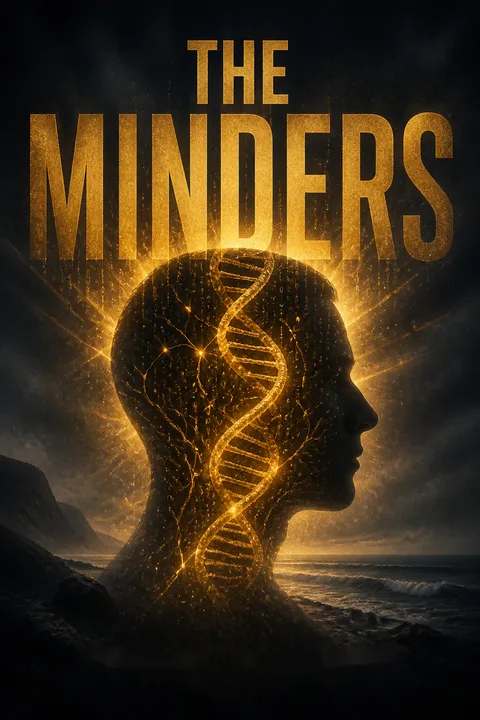
Britain faces a new kind of war: cyberattacks threaten to expose its deepest secrets. After a devastating hack, the government's solution is radical—store classified data offline, moving it constantly in lorries, planes, and ships. But when a lorry is attacked and destroyed, the plan collapses. The stakes are clear: if the nation's secrets are ever found, the consequences will be catastrophic. In a desperate bid for security, a new, unthinkable solution emerges—hide the data in people, not machines. The story begins with a world on edge, where trust is scarce and the line between safety and paranoia blurs.
The Puzzle Solvers
To find the right candidates, the government creates a puzzle only those with rare forms of synaesthesia can solve. Across the UK, broken, isolated individuals—Flick, Charlie, Sinéad, Emilia, and Bruno—encounter the puzzle online. Each is uniquely gifted, able to see patterns and connections others cannot. Solving the puzzle is their invitation to a new life, but also a test of their suitability for a secret mission. For these five, the puzzle is both a lifeline and a doorway into a world of danger, secrecy, and transformation.
Broken Lives, Hidden Gifts
Each candidate is running from something: Flick, devastated by her DNA link to a serial killer; Charlie, isolated by trauma and guilt; Sinéad, trapped in an abusive marriage; Emilia, lost in amnesia and paranoia; Bruno, grieving and desperate after losing his family. Their lives are marked by pain, regret, and longing for escape. Yet beneath their suffering lies a rare neurological gift—synaesthesia—that makes them uniquely suited to the government's plan. Their brokenness is their qualification, and their pain the price of entry.
The Minders Chosen
The five are recruited into a top-secret programme. They are stripped of their old identities, trained, and surgically implanted with DNA beads containing the nation's most sensitive data. The process is invasive, both physically and psychologically. They are told they must sever all ties, trust no one, and be prepared to kill or die to protect what they carry. The government promises them a new life, financial security, and eventual freedom—but only if they survive five years as Minders, invisible and alone.
Training and Transformation
The Minders undergo months of intense training: combat, surveillance, psychological conditioning, and the suppression of pain and emotion. Their bodies are altered, their minds sharpened, and their pasts erased. Each emerges changed—stronger, colder, and more capable, but also more isolated. The training is brutal, designed to make them unbreakable, but it cannot erase their humanity or the ghosts that haunt them. As they are released into new lives across the UK, the line between who they were and who they must become grows ever thinner.
New Identities, New Rules
Flick settles in a quiet coastal town, Charlie in bustling Manchester, Sinéad in rural Scotland, Bruno in a market town, and Emilia—her memory fractured—struggles to piece together her reality. Each must blend in, avoid technology, and live off-grid. They are watched only through coded message boards, their only contact a handler named Karczewski. But the past is never far behind. Old habits, relationships, and traumas threaten to expose them. The rules are clear: trust no one, form no attachments, and never reveal what you know.
Secrets in the Mind
The implanted data is not inert. It seeps into the Minders' consciousness, manifesting as intrusive thoughts, dreams, and even voices—Echoes—of the secrets they carry. Flick is haunted by the crimes of her DNA Match; Charlie's emotions are numbed; Sinéad's guilt and trauma resurface; Bruno is tormented by the voices of the dead; Emilia's reality fractures further. The burden of knowledge is immense, and the cost of failure is death—not just for them, but for anyone they care about.
The Echoes Within
As the Minders struggle to adapt, the Echoes grow louder. Bruno's mind is crowded with the voices of those whose secrets he holds. Sinéad's guilt over her lost child and failed marriage intensifies. Flick's nightmares blur the line between her own identity and that of the killer she was Matched to. Charlie's emotional detachment becomes dangerous, leading him to test the limits of his own humanity. Emilia, lost in a maze of false memories and hallucinations, becomes both hunter and hunted. The Echoes are both a warning and a weapon, pushing each Minder to the brink.
Love, Loss, and Longing
Despite the rules, the Minders crave connection. Flick finds solace and love with Elijah, but her secrets threaten to destroy them both. Charlie seeks meaning in a new relationship, but his inability to feel leaves him empty. Sinéad, after escaping her marriage, risks everything to save a child in danger. Bruno, desperate for his son, is driven to violence and revenge. Emilia, manipulated by her own fractured mind, becomes a pawn in a deadly game. Love is both a weakness and a lifeline, and the longing for redemption drives each toward choices that will shape their fate.
The Trap Is Set
A recall message appears on the Minders' secret board, instructing them to return to a safe house. But something is wrong—a subtle error in the message signals a trap. Flick deciphers the warning, but not all escape. Sinéad is captured and brutally murdered, her death broadcast as a warning. Bruno, tormented by guilt and rage, is lured into a confrontation that ends in violence and tragedy. Charlie, exposed as a "terrorist" by a government desperate to recover its secrets, is hunted by the public and killed by a mob. The programme is unraveling, and the Minders are being picked off one by one.
Betrayal and Bloodshed
Emilia, revealed as the first and most dangerous Minder, is both victim and perpetrator. Her fractured mind, manipulated by hallucinations and Echoes, leads her to kill the others, believing she is serving a higher purpose. Flick, the last remaining Minder, is forced to confront Emilia in a final, violent showdown. The truth emerges: Emilia was the neuroscientist who created the programme, became its first subject, and was driven mad by the very process she designed. In the end, she takes her own life, leaving Flick alone, pregnant, and on the run.
The Programme Unravels
With the Minders dead or missing, the government scrambles to recover its secrets. The Prime Minister and her advisers debate the ethics and consequences of their experiment. The public, manipulated by misinformation, is used to flush out the last Minders. The cycle begins again, with new candidates selected, new lives destroyed, and the same desperate hope that this time, the secrets will be safe. Flick, now a mother, sacrifices everything to protect her child and the knowledge she carries, living in isolation and waiting for the day she can be free.
The Last Minder
Three years later, Flick is the only surviving Minder from her cycle. She lives in hiding, watching from afar as her son grows up with his father, unable to be part of his life. The government, finally secure in its new defences, prepares to recall her and retrieve the data. Flick's sacrifice is acknowledged, but the cost is immeasurable. She has lost her identity, her family, and her future, all for secrets she can never share. Yet in her isolation, she finds a measure of peace, knowing she has done what was necessary to protect her country.
Truths and Sacrifices
The Minders' story is one of extraordinary sacrifice—of lives erased, loves lost, and humanity tested. The experiment has succeeded, but at a terrible cost. The government's gratitude is cold comfort to those who have given everything. Flick, the last Minder, is left to contemplate the meaning of her ordeal. The truth is that some secrets are too heavy for any one person to bear, and the line between hero and victim is razor-thin. In the end, survival is its own kind of victory, and the hope of a new beginning is all that remains.
Epilogue: One More Year
Flick, now living under yet another identity, returns to Aldeburgh to watch her son and his father from a distance. The government's coded message assures her that her sacrifice has not been forgotten, and that her ordeal is nearly over. One more year, and she will be free. As she walks the beach, unseen and unknown, she reflects on all she has lost and all she has saved. The story ends not with triumph, but with endurance—a testament to the resilience of the human spirit, and the high price of keeping a nation's secrets safe.
Analysis
A chilling meditation on secrecy, sacrifice, and the cost of survivalThe Minders is a near-future thriller that uses the conventions of the genre to explore profound questions about identity, trauma, and the ethics of security. At its core, the novel is a study of what happens when ordinary, broken people are asked to bear extraordinary burdens. The government's experiment is both a metaphor for the ways society exploits the vulnerable and a literalization of the dangers of secrecy—when knowledge is weaponized, it destroys not only enemies, but also those sworn to protect it. The Minders' journey is one of transformation, but not redemption; their sacrifices are necessary, but never fully acknowledged or repaid. The novel warns of the dangers of technological hubris, the fragility of the mind, and the impossibility of true security in a world built on lies. Yet, in Flick's endurance and the faint hope of a new beginning, there is a glimmer of resilience—a reminder that even in the darkest times, the human spirit can survive, if not triumph.
Review Summary
The Minders received generally positive reviews, with praise for its imaginative premise and gripping storyline. Set in a near-future world, it follows five individuals chosen to store government secrets in their brains. Many readers found it thrilling and unpredictable, though some felt the pacing was slower compared to Marrs' previous works. The book is connected to "The One" and "The Passengers," with readers recommending reading those first for better context. While not without flaws, most reviewers found it an engaging and thought-provoking read.
People Also Read

Characters
Flick Kennedy
Flick is a woman marked by loss and guilt, her life shattered by the revelation that her DNA Match was a notorious serial killer. Isolated and depressed, she is drawn into the Minders programme by her rare synaesthesia and the promise of escape. Flick's journey is one of painful transformation: from broken recluse to fiercely determined protector of secrets. Her relationships—with her family, her lover Elijah, and her fellow Minders—are fraught with longing and fear. Flick's psychological arc is defined by her struggle to reconcile her need for connection with the demands of secrecy and survival. In the end, her greatest sacrifice is for her child, choosing isolation and anonymity over love, and finding a fragile peace in endurance.
Charlie Nicholls
Charlie is a young man whose life is defined by loneliness, guilt, and a desperate search for belonging. Traumatized by the deaths of his friends in a car crash he blames himself for, Charlie is drawn to conspiracy theories and the hope of a new start. His synaesthesia makes him a perfect candidate for the Minders, but the programme's psychological conditioning leaves him emotionally blunted, unable to feel or connect. Charlie's attempts at love and friendship are hollow, and his eventual exposure as a "terrorist" leads to his violent death. His arc is a tragic exploration of the cost of erasing pain—when you feel nothing, you lose not only suffering, but also joy and humanity.
Sinéad Kelly
Sinéad is a woman trapped by her past: an abusive marriage, the loss of her child, and a lifetime of self-blame. Her synaesthesia gives her a unique perspective, but also makes her vulnerable to emotional overload. The Minders programme offers her a chance at reinvention, but the ghosts of her past—her daughter's death, her failed friendships, her inability to save others—haunt her. Sinéad's compassion is both her strength and her undoing, leading her to risk everything for a child in danger. Her murder is a brutal reminder of the programme's inhumanity, and her arc is a testament to the enduring power of guilt and the longing for forgiveness.
Emilia / Dr. Megan Jane Porter (MJ)
Emilia is the most complex and tragic of the Minders. Once a brilliant neuroscientist and the architect of the programme, she becomes its first subject—and its first casualty. The procedure shatters her mind, leaving her with amnesia, hallucinations, and a fractured sense of self. Manipulated by her own Echoes, she becomes both hunter and hunted, killing the other Minders in a desperate quest for identity and redemption. Emilia's arc is a devastating exploration of the dangers of unchecked ambition and the fragility of the mind. Her final act—suicide—brings a merciful end to her suffering, but leaves a trail of destruction in her wake.
Bruno Yorke
Bruno is a man consumed by loss: his wife's betrayal and death, the separation from his autistic son, and the destruction of his family. His synaesthesia is less pronounced, but his analytical mind and capacity for violence make him a dangerous Minder. Haunted by Echoes and driven by rage, Bruno embarks on a campaign of revenge against those he blames for his suffering. His arc is one of increasing isolation and moral decay, culminating in his own violent death. Bruno's story is a cautionary tale about the corrosive power of grief and the ease with which victimhood can become villainy.
Edward Karczewski (Ted)
Karczewski is the enigmatic handler of the Minders, responsible for their recruitment, training, and oversight. A figure of authority and ambiguity, he is both protector and manipulator, driven by a sense of duty and a willingness to sacrifice others for the greater good. His relationship with Emilia/MJ is especially complex—part mentor, part lover, part victim. After his murder, he becomes an Echo in Emilia's mind, guiding and confronting her as she unravels. Karczewski embodies the moral ambiguity of the programme: necessary, but never innocent.
Elijah Beckworth
Elijah is Flick's lover and a symbol of the life she can never fully have. Charismatic, creative, and compassionate, he offers Flick a chance at happiness and normalcy. His own secrets—his controversial art, his troubled past—mirror Flick's, and their relationship is marked by both passion and danger. Elijah's exploitation of trauma for art becomes a point of conflict, and his eventual victimization by Emilia underscores the collateral damage of the Minders' world. Elijah's enduring love for Flick, even after her disappearance, is a rare note of hope in a bleak landscape.
Grace
Grace is Flick's closest friend in Aldeburgh, offering her warmth, acceptance, and a sense of belonging. Her kindness and loyalty make her a target, and her brutal murder by Emilia is a turning point for Flick, shattering her last connection to normal life. Grace's role is small but vital, embodying the cost of secrecy and the dangers of caring in a world built on lies.
Bianca and Adrian (Echoes)
Bianca and Adrian are not real people, but hallucinated antagonists in Emilia's fractured mind. They represent the externalization of her guilt, fear, and self-doubt, driving her to violence and betrayal. Their presence blurs the line between reality and delusion, and their manipulation of Emilia is a metaphor for the dangers of unchecked trauma and the mind's capacity for self-destruction.
Prime Minister Diane Cline
The Prime Minister is the political face of the Minders programme, forced to make impossible choices in the name of national security. Her arc is one of increasing moral compromise, as she authorizes ever more desperate measures to protect the country. Her gratitude to Flick in the end is genuine, but hollow—a reminder that the machinery of power is indifferent to the suffering of individuals.
Plot Devices
Synaesthesia as Selection
The government's use of a synaesthesia-based puzzle as a recruitment tool is both a plot device and a metaphor. It allows the story to focus on characters who are uniquely sensitive, perceptive, and vulnerable—outsiders whose differences become their greatest asset and their greatest curse. Synaesthesia is not just a quirk, but the very reason these broken people are chosen to carry the nation's secrets.
DNA Data Implants
The central conceit of the novel is the storage of classified data in DNA beads implanted in the brain. This device drives the plot, creating both external and internal threats: the Minders must evade physical capture, but also contend with the psychological consequences of carrying secrets too heavy for any one person. The implants leak, creating Echoes—voices, dreams, and hallucinations—that blur the line between memory and madness.
Echoes and Hallucinations
The Echoes are both a narrative device and a psychological metaphor. They allow the story to externalize the Minders' guilt, trauma, and knowledge, creating a sense of constant threat and instability. The Echoes drive characters to violence, betrayal, and self-destruction, and their presence is a warning about the dangers of carrying too much, knowing too much, and being too alone.
False Recall and Betrayal
The recall message that lures the Minders into a trap is a masterstroke of narrative misdirection. The subtle error—a single extra space—serves as both foreshadowing and a test of the characters' vigilance. The betrayal that follows is both inevitable and devastating, underscoring the impossibility of trust in a world built on secrets.
Fragmented Narrative and Multiple POVs
The novel's structure—shifting between multiple characters, timelines, and perspectives—mirrors the fragmentation of the Minders' identities. The use of official documents, meeting transcripts, and message boards adds layers of realism and ambiguity, while the interwoven stories create a sense of shared fate and individual tragedy.
The Unreliable Mind
Emilia's arc, in particular, uses the unreliable narrator device to devastating effect. Her hallucinations, false memories, and shifting sense of self keep the reader off-balance, mirroring the instability of the world she inhabits. The revelation that she is both victim and perpetrator is foreshadowed by her fractured perspective, and her final confrontation with the truth is both cathartic and tragic.
About the Author
Other books by John Marrs



Download PDF
Download EPUB
.epub digital book format is ideal for reading ebooks on phones, tablets, and e-readers.








































