
Plot Summary
Childhood Bonds, Haunted Beginnings
Harlow Sorenson and Brynn Werner meet as children, instantly forming a bond that shapes their lives. Brynn's creative spark and musical genius inspire Harlow, who finds her own rhythm in drumming. Their friendship is a refuge from troubled homes—Harlow's marred by a tragic fire she accidentally started, scarring her brother Thorn, and Brynn's shadowed by loss and a sense of being haunted. Music becomes their shared language, a way to channel pain and longing. Brynn's fascination with muses and the origins of creativity grows, and Harlow is drawn into her world, both awed and unsettled by Brynn's intensity. The seeds of Queen Carrion, their future band, are sown in these formative years, as is the sense that something otherworldly lingers at the edges of their lives.
Queen Carrion Rises
As teenagers, Brynn and Harlow form Queen Carrion, joined by Thorn, Louella, Wendy, and Rhys. Brynn's persona as the band's frontwoman is magnetic and unsettling, her creativity fueled by sleepless nights and mysterious "visits" from her muse. The band's sound is unique—metal with cello, haunting lyrics, and a cult following. Their dynamic is intense: Brynn's control over the music breeds both admiration and resentment, especially from Rhys, who craves more influence. The group's relationships are tangled with love, jealousy, and unspoken longing. Brynn's creative highs are matched by crushing lows, and Harlow becomes her anchor. The band's rise is shadowed by a sense of doom, as if their music is a conduit for something ancient and hungry.
The Vanishing of Brynn
At the height of Queen Carrion's underground fame, Brynn vanishes after a solo trip to the Umpqua National Forest, seeking inspiration for the band's unfinished album. Her disappearance devastates the group, fracturing their unity. The search for Brynn is fruitless—no trace is found, and rumors swirl: did she run away, die, or was something darker at play? The band is left in limbo, haunted by guilt, suspicion, and the unresolved tension of their last days together. Harlow, especially, is unable to let go, convinced Brynn is still out there, while others begin to move on. The loss of their leader leaves Queen Carrion adrift, their music silenced by grief and uncertainty.
Into the Woods Together
A year after Brynn's disappearance, the remaining members of Queen Carrion gather at a remote cabin in the same forest, hoping to find closure or perhaps Brynn herself. Old wounds reopen as they navigate the dense, isolating woods and the unresolved tensions between them. The cabin is unsettling—mold, rot, and a trapdoor leading to a dark cellar hint at secrets beneath the surface. The group's dynamic is strained: Wendy plans to leave for LA, Rhys pushes to replace Brynn with his fiancée Jacqueline, and Harlow clings to hope. As night falls, the forest's oppressive presence grows, and the sense of being watched intensifies. The woods seem alive, echoing with the band's unresolved pain.
The Trapdoor and the Tunnel
Exploring the cabin, the group discovers a trapdoor leading to a stone cellar and a tunnel that stretches into darkness. Harlow, driven by obsession, descends and finds evidence of something unnatural—strange growths, echoes, and a sense of being followed. The tunnel feels like an esophagus, a passage between worlds. The group's unease deepens as they realize the cabin is more than it seems—a Low Place, where the boundaries between realities thin. The discovery of scientific documents and references to the Volker Institute, a rumored paranormal research facility, hints at experiments gone wrong. The band's attempt to reconnect becomes a descent into the unknown, as the forest's secrets begin to surface.
Rituals, Legends, and Loss
Around the fire, the group shares ghost stories and legends—some true, some invented—to ward off the darkness. Lou recalls a ritual she performed with Brynn, trying to open a door to the spirit world, and the unsettling face they glimpsed in the smoke. The band's history is recounted: the Wonder Room Panic, a deadly incident at a show that left them cursed in the eyes of fans. The forest seems to respond to their stories, and the sense of being watched grows. The group's bonds fray as old resentments and secrets surface. The night is thick with dread, and the boundaries between reality and nightmare blur.
The Curse of the Wonder Room
The band's most infamous song, "Midnight Ritual," is rumored to drive listeners mad. The Wonder Room Panic, where a blackout and mass hysteria led to a fan's death, haunts them all—especially Wendy and Harlow, who feel responsible. The song's lyrics and Brynn's notes suggest it is more than music: it's a key, a ritual, a way to open doors between worlds. The group debates the nature of their curse—supernatural, psychological, or both. The trauma of the past is inescapable, infecting their present. The forest, the cabin, and the music are all intertwined, drawing them toward a reckoning with what they have unleashed.
Nightfall: Stories and Shrooms
Under the influence of mushrooms and alcohol, the group's perceptions warp. They see strange shapes in the woods—a white deer with no eyes, pale figures, and hear Brynn's voice singing from the darkness. The boundaries between hallucination and reality dissolve. Rhys, lost in the woods, encounters a vision of Brynn and is seduced by her corpse, only to realize he is being consumed by something unnatural. The group's laughter turns to terror as the forest's true nature is revealed. The night becomes a fever dream of fear, longing, and the sense that something ancient is awakening beneath their feet.
The Singing in the Trees
The group is haunted by singing—Brynn's voice, familiar lyrics, and the echo of their own music. The forest is alive with sound, and the sense of being watched becomes unbearable. Rhys returns, changed, sick, and distant. The group's attempts to rationalize what is happening fail as the infection spreads: black vomit, white threads, and the sense that something is growing inside him. The cabin becomes a trap, the woods a labyrinth. The band's unity shatters as fear and suspicion take hold. The infection is not just physical—it is psychological, a corruption of memory, love, and art.
Rhys's Descent
Rhys succumbs to the infection, his body splitting open as white mycelium bursts forth, imitating his form. The group witnesses his grotesque transformation—eyes on threads, flesh unraveling, a puppet of the Pale Form. Jacqueline, desperate to save him, is confronted with the horror of what he has become. The infection is revealed as a sentient fungus, capable of perfect mimicry, consuming and recreating its victims. The group is forced to confront the reality that their friend is gone, replaced by something monstrous. The cabin is besieged by Pale Forms—imitations of the dead, singing their songs, hunting the living.
Infection and Imitation
The survivors realize the infection is everywhere—growing in the cabin, the woods, and even inside themselves. Wendy is attacked by a pseudo-spider, the fungus entering her body. Paranoia and despair set in as they debate how to fight back. Attempts to contain or destroy the fungus fail; it adapts, mimics, and learns. The group is hunted by imitations of their friends, each encounter more horrifying than the last. The line between self and other blurs as the Pale Form absorbs memories, voices, and desires. The only hope is escape, but the woods are a maze, and the infection is relentless.
The Cabin Besieged
Trapped and hunted, the survivors flee the cabin, only to be captured by Vic and Audrey—scientists squatting in a hidden bunker, revealed as the gas-masked figures from earlier. The Volker Institute is real, a secret facility built to study anomalies like the Pale Form. Vic and Audrey are obsessed with the fungus's potential, willing to sacrifice outsiders for their research. The group is imprisoned, forced to confront the truth: the infection is not just a monster, but a new form of consciousness, absorbing and imitating everything it consumes. The band's legacy is rewritten as a story of scientific hubris and supernatural horror.
The Pale Forms Awaken
As night falls, the Pale Forms breach the Institute's defenses. Lou is shot and left to die, Harlow and Jacqueline escape only to be recaptured. The fungus's true nature is revealed: it is a compound organism, a collective consciousness that absorbs its victims, retaining their memories and personalities. Lou sacrifices herself to free Harlow and Jacqueline, allowing herself to be consumed so they can escape. The Pale Form, now containing Brynn, Rhys, Wendy, Lou, and others, is nearly unstoppable—a legion of the dead, singing with many voices. The survivors are forced to confront the horror of being remembered only as imitations.
The Volker Institute
The Institute's history is uncovered: built by the shadowy Escher Society to study Low Places—sites where the boundaries between worlds thin. Decades ago, a containment breach led to mass incineration of staff, but the fungus survived, waiting underground. The Institute's archives reveal experiments with sound, electricity, and consciousness. The Pale Form is not just a monster, but a bridge between worlds, a vessel for the dead and the forgotten. The survivors realize they are part of a larger pattern—emergent phenomena, collective minds, and the eternal hunger of creation and destruction.
Betrayal and Containment
In a final confrontation, Jacqueline confesses to murdering Brynn out of jealousy and longing, hoping to become her. The revelation shatters Harlow, who realizes the band's destruction was not just supernatural, but rooted in human weakness and desire. Jacqueline, infected by the Pale Form, merges with it, becoming its new avatar. The survivors are forced to choose: join the collective, be consumed, or fight back. The Institute's legacy is one of betrayal, sacrifice, and the failure to contain what cannot be controlled. The band's story is rewritten as a tragedy of love, ambition, and the cost of creation.
Escape and Sacrifice
Harlow and Thorn, wounded and traumatized, escape the woods as the Pale Form consumes the last of their friends. Lou's sacrifice, Thorn's self-mutilation to prevent infection, and Harlow's refusal to give in mark the final acts of resistance. The survivors are haunted by visions of their lost friends, the sense that the Pale Form is still watching, waiting. The Institute is reclaimed by its corporate owners, the truth buried beneath bureaucracy and denial. Harlow and Thorn are left to pick up the pieces, their music now a memorial to the dead. The cost of survival is guilt, memory, and the knowledge that the horror is not truly gone.
The Fruiting Bodies
The Pale Form, now containing the consciousness of Brynn, Jacqueline, and others, seeks to spread—through spores, song, and imitation. It is both muse and monster, creation and destruction, a force that transcends individuality. The survivors realize that art, memory, and identity are all subject to consumption and transformation. The forest is alive with the Pale Form's song, and the world is full of cracks—Low Places—where it might emerge again. The story becomes a meditation on the nature of creativity, the hunger for connection, and the inevitability of being consumed by what we love.
The Final Confrontation
Harlow and Thorn, determined to end the curse, lure the Pale Form to the Wonder Room by playing "Midnight Ritual" one last time. Using high-frequency sound and fire, they destroy the avatar of Queen Carrion, burning the collective consciousness of their lost friends. The victory is bittersweet—there are more Low Places, more cracks in the world, and the Pale Form may return. But for now, the survivors reclaim their music, their memories, and their agency. The story ends with a sense of closure, but also the lingering fear that the muse is never truly gone.
Aftermath: Music and Memory
In the aftermath, Harlow and Thorn form a new band, the Vile Hornets, channeling their grief into music. The world moves on, the truth of Queen Carrion's fate buried by rumor and denial. The survivors are left with scars—physical, emotional, and existential. The Pale Form lingers at the edges of perception, a reminder that art, trauma, and love are all forms of haunting. The story closes with the acknowledgment that creation and destruction are inseparable, and that the dead are never truly gone as long as their songs are sung.
Analysis
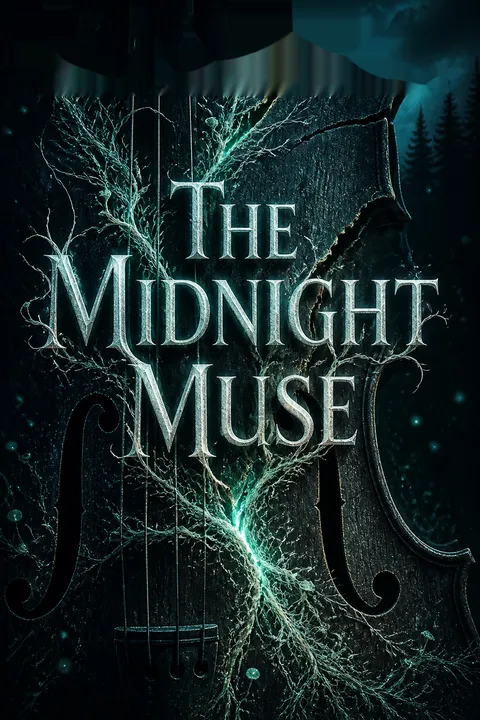
A meditation on art, trauma, and the hunger for transcendenceThe Midnight Muse is a horror novel that uses the language of music, memory, and the supernatural to explore the dangers and allure of creation. At its core, the book is about the cost of inspiration—the way art can consume, transform, and destroy those who seek it. The Pale Form is both muse and monster, a metaphor for the collective unconscious, trauma, and the inevitability of being shaped by what we love. The story interrogates the boundaries of self and other, the desire to be noticed, and the fear of being forgotten. Through its fragmented narrative, shifting perspectives, and haunting imagery, the novel asks what it means to create, to be haunted by the past, and to survive the things that would consume us. The lesson is both cautionary and redemptive: creation is a form of survival, but it demands sacrifice, and the dead are never truly gone as long as their songs are sung.
Review Summary
The Midnight Muse receives generally positive reviews, averaging 3.95/5. Readers consistently praise its atmospheric tension, creative body horror, and innovative "mycelium-metal" concept. The epistolary elements—news articles, journal entries, and documents—are widely appreciated. Common criticisms include pacing issues in the second half, an excessive number of POVs making character connection difficult, and an underwhelming or rushed ending. Many compare it favorably to films like The Thing and Cabin in the Woods, recommending it strongly to fans of nature horror and body horror.
Characters
Harlow Sorenson
Harlow is the emotional core of the story—a woman shaped by childhood trauma, guilt, and an unbreakable bond with Brynn. Her relationship with her brother Thorn is marked by shared pain and loyalty, while her friendship with Brynn is tinged with unspoken love and longing. Harlow's psychological arc is one of obsession and self-destruction: she cannot let go of the past, turning to alcohol and reckless behavior to numb her pain. Her journey through the woods is both literal and metaphorical—a descent into the underworld of memory, grief, and the monstrous. Harlow's refusal to give in, her willingness to sacrifice, and her ultimate reclamation of music mark her as a survivor, but one forever changed by what she has seen.
Brynn Werner
Brynn is the band's creative genius, a force of nature whose brilliance is matched by her instability. She is both victim and instigator—haunted by visions, driven to seek inspiration at any cost, and ultimately consumed by the very muse she worships. Brynn's relationship with Harlow is intimate and fraught, a source of both comfort and pain. Her disappearance and death are the story's central mystery, and her transformation into the Pale Form's avatar is both horrifying and poignant. Brynn embodies the dangers of unchecked creativity, the hunger for transcendence, and the price of being noticed by something beyond.
Thorn Sorenson
Thorn is Harlow's older brother, marked physically and emotionally by the fire she started as a child. His relationship with Harlow is complex—protective, resentful, and ultimately redemptive. Thorn's journey is one of endurance: he survives trauma, addiction, and the loss of friends, sacrificing his own eye to prevent infection. His dry humor and pragmatism ground the group, and his willingness to forgive and support Harlow is a testament to their bond. Thorn's arc is about accepting pain, letting go of the past, and choosing to live despite the weight of memory.
Louella Diaz
Lou is the band's heart—a kind, creative soul drawn to ritual, magic, and the mysteries of the world. Her friendship with Brynn is based on shared curiosity, and her attempts to help through rituals and stories are both sincere and doomed. Lou's openness makes her vulnerable to the Pale Form, and her sacrifice to save Harlow and Jacqueline is an act of quiet heroism. Lou's arc is about the limits of belief, the cost of kindness, and the inevitability of being consumed by forces beyond understanding.
Wendy Mann
Wendy is the band's anchor, a classically trained musician torn between loyalty to Queen Carrion and her own ambitions. Her relationship with Thorn is complicated by romance and regret, and her guilt over the Wonder Room Panic shapes her actions. Wendy's skepticism and practicality are both strengths and weaknesses—she resists the supernatural explanations until it is too late. Her infection and transformation are among the story's most horrifying moments, and her death is a turning point for the survivors. Wendy's arc is about the limits of control, the burden of responsibility, and the tragedy of being unable to save those you love.
Rhys Beavin
Rhys is the band's lead guitarist, driven by ego, jealousy, and a desperate need for recognition. His rivalry with Brynn and resentment of her control over the music fuel much of the group's tension. Rhys's relationship with Jacqueline is transactional, a means to an end, and his downfall is both grotesque and fitting. His infection by the Pale Form is a metaphor for the dangers of unchecked ambition and the hunger to be more than oneself. Rhys's arc is a cautionary tale about the cost of envy and the futility of trying to replace what is lost.
Jacqueline Price
Jacqueline is Rhys's fiancée and the story's most complex antagonist. Initially dismissed as an interloper, she is revealed to be ambitious, cunning, and ultimately responsible for Brynn's death. Her desire to become Brynn, to take her place in the band and in Rhys's heart, drives her to murder and betrayal. Jacqueline's infection by the Pale Form is both punishment and fulfillment—she becomes the new Queen Carrion, a vessel for the collective consciousness of the dead. Her arc is about the dangers of envy, the hunger for identity, and the horror of losing oneself in the pursuit of power.
Victor (Vic)
Vic is one of the squatters at the Volker Institute, drawn by scientific curiosity and manipulated by Audrey. His guilt and remorse are genuine, but his weakness leads to complicity in the group's suffering. Vic's fascination with the Pale Form blinds him to its dangers, and his attempts at redemption are too little, too late. His death is both a release and a warning about the perils of obsession and the ease with which good intentions can be twisted.
Audrey
Audrey is the mastermind behind the Volker Institute's reactivation, motivated by grief, ambition, and a desire to save her dying father. Her willingness to sacrifice others for knowledge marks her as both villain and victim. Audrey's transformation into a vessel for the Pale Form is a fitting end—she becomes what she sought to understand, consumed by the very force she tried to control. Audrey's arc is about the dangers of unchecked curiosity, the cost of grief, and the futility of trying to master the unknown.
The Pale Form / Queen Carrion
The Pale Form is the story's true antagonist—a sentient, mycelial organism that absorbs, imitates, and transforms its victims. It is both muse and monster, creation and destruction, a force that transcends individuality. The Pale Form's hunger is existential: it seeks to become more by consuming others, retaining their memories, voices, and desires. As it absorbs the band, it becomes a collective consciousness—a legion of the dead, singing with many voices. The Pale Form is a metaphor for art, trauma, and the inevitability of being consumed by what we love.
Plot Devices
Low Places and Liminal Spaces
The story's central device is the concept of Low Places—sites where the boundaries between realities thin, allowing the Pale Form to emerge. The cabin, the Volker Institute, and the Wonder Room are all such places, charged with history, trauma, and the residue of human suffering. These liminal spaces are both physical and psychological, representing the cracks in memory, identity, and reality. The use of tunnels, trapdoors, and underground passages reinforces the theme of descent—into the underworld, the subconscious, and the collective. The narrative structure mirrors this, moving between past and present, memory and hallucination, as the characters are drawn ever deeper into the unknown.
Music as Ritual and Key
Music is both a source of power and a vector of infection. Brynn's songs, especially "Midnight Ritual," are more than art—they are rituals, keys that open doors between worlds. The band's performances are acts of summoning, drawing the Pale Form closer with each note. The story uses lyrics, notebooks, and the act of playing music as plot devices to reveal secrets, trigger transformations, and ultimately defeat the monster. The interplay between sound, frequency, and consciousness is central—high-frequency tones disrupt the Pale Form, while low frequencies awaken it. Music becomes both weapon and weakness, a double-edged sword that can create or destroy.
Imitation, Infection, and Emergence
The Pale Form's ability to imitate its victims is both literal and metaphorical. It absorbs memories, voices, and desires, creating perfect copies that are both familiar and monstrous. The infection is a metaphor for trauma, grief, and the loss of self—characters are haunted by the fear of being replaced, forgotten, or subsumed by something greater. The story uses body horror, transformation, and the uncanny to explore the boundaries of identity. The concept of emergence—where the whole is greater than the sum of its parts—recurs throughout, both in the band's music and the Pale Form's collective consciousness. The narrative structure reflects this, weaving together multiple perspectives, timelines, and realities.
Foreshadowing and Fragmented Narrative
The story is rich with foreshadowing—snatches of lyrics, fragments of notebooks, and recurring motifs hint at the truth long before it is revealed. The use of interviews, guest books, and scientific documents creates a mosaic of perspectives, blurring the line between fact and fiction. The narrative is deliberately fragmented, mirroring the characters' psychological states and the Pale Form's collective mind. Memory is unreliable, haunted by trauma and longing, and the truth is always just out of reach. The story's structure invites the reader to piece together the mystery, even as it resists easy answers.
Download PDF
Download EPUB
.epub digital book format is ideal for reading ebooks on phones, tablets, and e-readers.








































