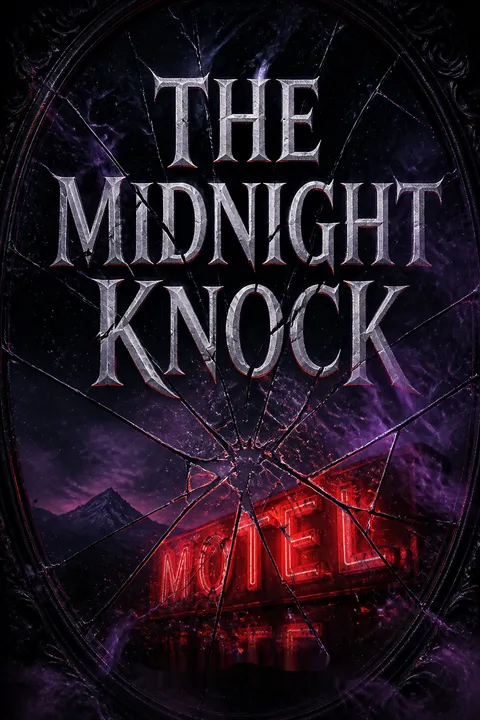

Plot Summary
Dawn Flight, Ashes Behind
Ethan, desperate to escape his dead-end life and the trauma of his brother's suicide, flees his Texas hometown at dawn with Hunter, a mysterious drifter. Their departure is marked by fire and death—Ethan's brother's body left behind, the family shop in flames. Hunter, whose past is as shadowy as his intentions, orchestrates their escape, urging Ethan to assume his dead brother's identity. As they drive west, Ethan clings to the hope of reinvention in California, unaware that the journey will lead them into a nightmare far stranger than the one they left behind. The emotional weight of loss, guilt, and the allure of second chances sets the tone for the story's exploration of fate, identity, and the cost of running from the past.
The Motel's Silver Glare
As Ethan and Hunter travel the backroads, they encounter a desolate landscape and a series of omens. A blinding silver glare sweeps the sky as they near the Brake Inn Motel, a remote, oddly pristine establishment in the shadow of a forbidding mountain. The motel is run by twins, Thomas and Tabitha, who seem trapped in their own ritualistic routines. The silver light, unsettling and unnatural, signals the beginning of something uncanny—a liminal moment that hints at time's instability and the motel's connection to forces beyond the ordinary. The sense of déjà vu and the twins' cryptic warnings foreshadow the cyclical, reality-bending events to come.
Strangers, Stories, and Warnings
The Brake Inn draws a cast of desperate travelers: Kyla and Fernanda, fleeing cartel violence with incriminating evidence; Penelope, a traumatized teen, and her grandfather Stanley; and Ryan, a man with unfinished promises. Each is running from something, and each is drawn by fate or misfortune to the motel. At a diner en route, Ethan meets Jack Allen, a man in a gabardine suit who spins tales of the Dust Road's curse and a vanished motel. Jack's warnings about the road's hunger and the Brake Inn's haunted history are laced with menace and prophecy, setting the stage for the supernatural siege to come.
The Dust Road's Curse
Tensions flare as the travelers' paths cross. Prejudice and paranoia ignite violence at a roadside diner, where Hunter's ruthlessness is revealed. Forced onto the Dust Road, Ethan and Hunter's truck fails, stranding them near the Brake Inn. The sense of being trapped—by geography, by fate, by their own choices—intensifies. The motel's isolation is both physical and metaphysical, a place where the past is inescapable and the future uncertain. The Dust Road becomes a symbol of the story's central dilemma: there is no way back, and every way forward leads deeper into danger.
The Guests Assemble
As night falls, the Brake Inn fills with guests, each with secrets and motives. The twins' odd hospitality, the presence of a mysterious house behind the motel, and the arrival of Sarah Powers—a woman with ties to many of the guests—heighten the sense of unreality. Old grudges, hidden agendas, and unresolved traumas simmer beneath the surface. The guests' interactions are fraught with suspicion and longing, as alliances form and fracture. The stage is set for a night where survival will depend on confronting not just external threats, but the truths each has tried to bury.
The Cracked Mirror
A crack appears in a bathroom mirror, an omen of the night's unraveling. Time begins to slip: hours pass in moments, and déjà vu intensifies. Kyla dreams of a dead city and a man with a grinding smile—Jack Allen—who seems to know her name and fate. The mirror's crack is both literal and symbolic, a breach between worlds and times. The guests sense that reality is unstable, that they are caught in a loop or ritual they do not understand. The mirror's fracture foreshadows the coming collapse of boundaries between past, present, and possible futures.
The Night's First Death
The night's fragile equilibrium shatters when Sarah Powers is found murdered in her room, her death staged with ritualistic violence. The twins, invoking ancient law, demand that the guests solve the murder by midnight or be left to die. The murder is both a crime and a catalyst, triggering the motel's supernatural defenses—monstrous Guardians that encircle the lighted grounds. The guests are forced into uneasy cooperation, their survival hinging on unraveling not just the mystery of Sarah's death, but the deeper mystery of the motel and the forces it contains.
The Ultimatum: Solve or Die
With the Guardians closing in and the lights threatening to fail, the guests scramble to investigate Sarah's murder. Old wounds and new suspicions surface: Hunter's violent past, Fernanda's secrets, Kyla's guilt, and Ethan's hidden identity. Time accelerates, and the pressure mounts. The twins' ultimatum is both a test and a trap, designed to perpetuate a cycle of violence that sustains the motel's curse. As midnight approaches, the guests must decide whom to trust, what truths to face, and whether to play by the rules of a rigged game.
The Guardians Encircle
As the clock ticks toward midnight, the motel is besieged by the Guardians—monstrous, part-human, part-bird, part-serpent creatures that enforce the boundaries of the ceremony. The lights flicker and die, and the guests' barricades are tested. Violence erupts: Stanley is torn apart, others are hunted. The Guardians are both literal monsters and metaphors for the inescapable consequences of the past. The siege is relentless, and the guests' only hope lies in understanding the true nature of the ceremony and the role each must play in breaking the cycle.
Time Slips, Truths Unravel
As the night spirals into chaos, time fractures further. Some guests begin to remember previous nights—lives and deaths repeated endlessly. The truth emerges: the Brake Inn is the site of a failed ancient ceremony meant to contain a godlike being, Te'lo'hi, whose awakening would end the world. The ceremony requires a murder to power its cycle, trapping the guests in a time loop. Jack Allen, revealed as Ethan's grandfather and the architect of the original disaster, seeks to exploit the god's power for himself. The guests must confront their own complicity, the cost of survival, and the possibility of redemption.
The Ceremony's Secret
The survivors discover the entrance to a hidden city within the mountain, the heart of the ceremony. There, they meet Te'lo'hi—a childlike, alien god in pain, desperate not to be alone. The ceremony's true purpose is revealed: to delay the god's awakening by trapping souls in a cycle of violence and sacrifice. The guests must choose whether to perpetuate the cycle, break it and risk annihilation, or find a new way. The city's collapse mirrors the unraveling of the ceremony, and the survivors' choices will determine the fate of the world.
The City in the Mountain
Ethan, Kyla, and the others traverse the dead city, encountering visions of their pasts, possible futures, and the consequences of their actions. The city is a labyrinth of regret and hope, a place where the boundaries between self and other, life and death, are blurred. The god's pain is palpable, and the survivors realize that only by facing their own truths—and offering compassion—can they hope to change the story. The city becomes a crucible for transformation, where sacrifice and forgiveness are the keys to freedom.
The God's Awakening
At the city's heart, the survivors confront Te'lo'hi and Jack Allen, who seeks to seize the god's power. A final battle ensues, with Hunter sacrificing himself to stop Jack and save Ethan. The god's awakening threatens to destroy everything, but compassion and connection offer a new path. Fernanda and Adeline, the story's most wounded souls, choose to accompany Te'lo'hi on his journey, ensuring he will not be alone. The survivors are offered a choice: to join the god in the unknown, or to return to the world and face the future.
The Grandfather's Gambit
Jack Allen, revealed as both villain and victim, embodies the dangers of unchecked ambition and the refusal to accept loss. His attempt to control Te'lo'hi and remake the world in his image is thwarted by the survivors' courage and Hunter's sacrifice. Jack's defeat is both personal and cosmic—a warning about the cost of trying to bend fate to one's will. The story's emotional climax is not in violence, but in the willingness to let go, to accept change, and to choose hope over fear.
The Final Choice
With the ceremony broken and the god freed, the survivors must choose their paths. Fernanda and Adeline choose to accompany Te'lo'hi, offering him the companionship he craves and ensuring the world's safety. Ethan and Kyla, changed by their ordeal, choose to return to the world, carrying with them the memory of what they have endured and the hope of new beginnings. The cycle of violence is broken not by force, but by compassion, sacrifice, and the refusal to repeat the mistakes of the past.
Breaking the Cycle
The survivors emerge from the mountain to find the world changed. The Brake Inn is a ruin, the past's grip loosened. The old powers—Frank O'Shea, the cartel, the cycles of abuse and violence—are broken. Ethan and Kyla part ways, each carrying the lessons and scars of their journey. The story ends not with triumph, but with the quiet possibility of healing, forgiveness, and the courage to face the unknown. The mountain's power is no longer a curse, but a reminder that the future is unwritten.
Tomorrow's First Light
As the sun rises, Ethan and Kyla step into new lives, forever changed by what they have seen and done. The story's final note is one of bittersweet hope: the past cannot be undone, but it can be faced; the future is uncertain, but it is theirs to shape. The cycle is broken, but the journey continues. The mountain, the god, and the survivors are all part of a larger story—one of loss, love, and the endless search for meaning in a world where every ending is also a beginning.
Analysis
A modern fable about trauma, cycles, and the courage to changeThe Midnight Knock is a genre-bending blend of supernatural thriller, locked-room mystery, and cosmic horror, but at its core, it is a meditation on trauma, complicity, and the possibility of breaking free from destructive cycles. The Brake Inn Motel is both a literal and metaphorical prison, trapping its guests in patterns of violence, denial, and repetition. The story interrogates the ways in which individuals and societies become complicit in their own suffering—through obedience, fear, or the refusal to act—and the cost of breaking free. The time loop is a powerful metaphor for generational trauma, addiction, and the inertia of systems that perpetuate harm. The novel's resolution is both hopeful and bittersweet: freedom is possible, but it requires sacrifice, honesty, and the willingness to face the unknown. The god at the story's heart is not a monster, but a child in pain—a reminder that even the most terrifying forces can be transformed by compassion. In a world haunted by the past, The Midnight Knock offers a vision of healing that is hard-won, imperfect, and deeply human.
Review Summary
The Midnight Knock receives polarizing reviews (3.4/5 stars). Readers praise its creative, genre-bending blend of locked-room mystery, supernatural horror, and science fiction, with atmospheric tension and complex plotting. Fans appreciate the isolated Texas motel setting, morally gray characters, and innovative time-loop structure. However, critics cite repetitive pacing, convoluted plot layers, and an underwhelming or overly simplistic ending after an intense buildup. The supernatural/sci-fi elements particularly divide readers. Many note it's best experienced without prior knowledge. Common comparisons include Stuart Turton, Blake Crouch, and Stephen King, with a Twilight Zone atmosphere.
Characters
Ethan Cross
Ethan is the emotional heart of the novel—a young man fleeing the wreckage of his family and his own failures, desperate for a new start. His journey is one of self-discovery, as he is forced to confront the truth about his identity, his complicity in violence, and the limits of his empathy. Ethan's relationship with Hunter is both redemptive and destructive, a mirror of his longing for connection and his fear of being trapped. As the story unfolds, Ethan's innate decency and capacity for forgiveness become the key to breaking the cycle of violence. His arc is one of painful growth: from passive victim to active agent, from denial to acceptance, from isolation to the courage to love and let go.
Hunter
Hunter is a man forged by trauma and brutality—a killer with a code, whose love for Ethan is both his salvation and his doom. His past as a specialist in violence, his time in prison, and his terminal illness all shape his actions and his sense of self. Hunter's inability to escape his own nature is both his tragedy and his strength; he is the only one capable of confronting the story's greatest threats, but he is also the one most in need of redemption. His sacrifice at the story's climax is both an act of love and an acceptance of responsibility, allowing Ethan and the others to break free from the cycle he helped perpetuate.
Kyla Hewitt
Kyla is a woman marked by loss, guilt, and the burden of inaction. Her journey from passive observer to active participant mirrors the story's central theme: the necessity of facing the past and choosing to act, even when the cost is high. Kyla's dreams of the dead city, her connection to her grandfather, and her role in the ceremony's unraveling position her as both a victim and a catalyst. Her relationship with Fernanda and her willingness to risk everything for a chance at redemption make her one of the novel's most compelling figures—a testament to the power of ordinary people to change the story.
Fernanda
Fernanda is a woman shaped by trauma, resilience, and the power of narrative. Her ability to soothe, to connect, and to endure is both her armor and her gift. Trapped by the cartel, haunted by the fate of her brother, Fernanda's journey is one of reclaiming agency and choosing hope over despair. Her ultimate decision to accompany Te'lo'hi into the unknown is an act of profound courage and compassion, offering the god the companionship he needs and ensuring the world's safety. Fernanda embodies the story's faith in the redemptive power of stories and the possibility of healing.
Jack Allen
Jack Allen is both villain and victim—a man whose refusal to accept loss, whose hunger for control, and whose inability to let go drive the story's central conflict. As Ethan's grandfather and the architect of the original disaster, Jack is a cautionary figure: the dangers of unchecked ambition, the cost of trying to bend fate to one's will, and the tragedy of a life defined by resentment. His defeat is both personal and cosmic, a warning about the limits of power and the necessity of acceptance.
Thomas and Tabitha
The twins are both jailers and prisoners, bound by duty, guilt, and the weight of their father's legacy. Their ritualistic routines, their disagreements about the ceremony's meaning, and their ultimate fates reflect the story's themes of tradition, responsibility, and the cost of obedience. Tabitha's willingness to question, and Thomas's fear of change, embody the tension between preservation and transformation. Their tragedy is the tragedy of those who inherit broken systems and lack the courage—or the knowledge—to break free.
Sarah Powers
Sarah is the story's sacrificial victim, a woman whose quest to save her children and atone for her failures leads her to embrace a terrible fate. Her intelligence, her courage, and her willingness to die for others make her both a victim and a hero. Sarah's death is the engine of the ceremony, but her legacy is one of hope: the possibility that even the most broken stories can be rewritten, that even the most painful sacrifices can lead to renewal.
Ryan Phan
Ryan is a man defined by regret, loyalty, and the struggle to do right in a world that punishes decency. His promise to protect Penelope, his complicated history with Hunter, and his role in the unfolding mystery position him as both outsider and insider. Ryan's journey through the city, his battles with the Guardians, and his ultimate fate are a testament to the power of perseverance and the importance of keeping faith, even when the odds are impossible.
Penelope and Adeline
Penelope, a survivor of violence and loss, and Adeline, her spectral sister, are the story's most vulnerable and most powerful figures. Their bond, their ability to hide from Jack Allen, and their role in the ceremony's unraveling highlight the importance of compassion, memory, and the refusal to be defined by trauma. Adeline's choice to accompany Te'lo'hi is an act of grace, offering the god the companionship he needs and ensuring that the cycle of violence is not repeated.
Te'lo'hi (The Lake That Travels)
Te'lo'hi is both monster and child, a being of unimaginable power and profound loneliness. His pain, his fear of abandonment, and his longing for connection drive the story's central conflict. Te'lo'hi is a mirror for the human characters: their fears, their hopes, their capacity for destruction and for love. The god's awakening is both a threat and an opportunity—a chance to break the cycle, to choose compassion over violence, and to imagine a future beyond the limits of fate.
Plot Devices
Time Loops and Ritual Cycles
The novel's central device is the time loop—a single night at the Brake Inn Motel that repeats endlessly, sustained by the ritual murder of Sarah Powers. This cycle is both a literal prison and a metaphor for the patterns of trauma, violence, and complicity that trap individuals and societies. The loop is enforced by supernatural Guardians and by the rules of the ceremony, which require both participation and ignorance. The gradual return of memory, the unraveling of the cycle, and the possibility of breaking free are the engines of suspense and transformation.
Unreliable Reality and Fractured Memory
The story uses fractured time, déjà vu, and shifting perspectives to create a sense of unreality and suspense. Characters experience memories from previous loops, dreams of other worlds, and visions of possible futures. Mirrors, photographs, and the city in the mountain serve as portals between realities, blurring the boundaries between past, present, and future. This instability reflects the characters' psychological states and the story's themes of trauma, denial, and the struggle to change.
Locked Room Mystery and Whodunit
The murder of Sarah Powers is presented as a classic locked-room mystery, with the guests forced to investigate under threat of death. Clues, red herrings, and shifting alibis drive the plot, but the real mystery is the nature of the ceremony, the identity of the true villain, and the possibility of breaking the cycle. The whodunit structure is both homage and subversion, using genre conventions to explore deeper questions of guilt, responsibility, and the cost of survival.
Supernatural Siege and Monstrous Guardians
The Guardians—monstrous, shape-shifting enforcers of the ceremony—are both literal threats and metaphors for the consequences of violence and the inescapability of the past. The siege of the motel, the shrinking circle of light, and the relentless approach of midnight create a sense of claustrophobia and urgency. The monsters are not just obstacles, but reflections of the characters' fears, regrets, and the systems that perpetuate harm.
Intergenerational Trauma and Legacy
The story is haunted by the legacies of abuse, ambition, and failed rituals. Jack Allen's quest for power, the twins' obedience to their father's instructions, and the survivors' struggle to break free are all shaped by the choices and traumas of previous generations. The cycle of violence is both personal and cosmic, and the possibility of change depends on the willingness to confront, forgive, and move beyond the past.
Compassion as Salvation
The ultimate resolution of the story is not achieved through violence or cleverness, but through compassion, sacrifice, and the refusal to perpetuate harm. Fernanda and Adeline's choice to accompany Te'lo'hi, Ethan's willingness to forgive, and Kyla's determination to act are all acts of grace that break the cycle and offer hope for the future. The story's message is that healing is possible, but only if we are willing to face the truth, accept responsibility, and choose love over fear.
Download PDF
Download EPUB
.epub digital book format is ideal for reading ebooks on phones, tablets, and e-readers.








































