
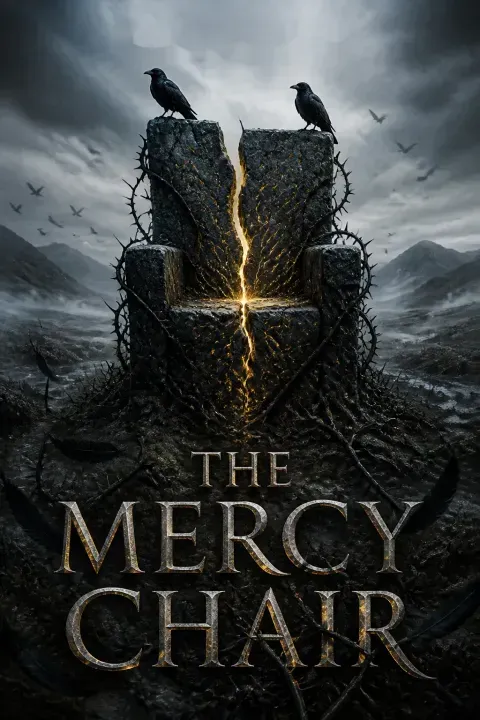


Plot Summary
Prologue
Crows gather at a Shap graveyard, black as gunpowder, tearing at flesh with pickaxe beaks. They feast on what badgers have unearthed from a collapsed grave: a body hidden beneath a coffin, wrapped in plastic sheeting.
The birds mob the remains with voracious appetite, their rattling cackles filling the cold air. Dozens of them, enough for a murder. They are nature's clean-up crew, and they have found something that should never have been disturbed.
The crows function as a primal symbol of death made visible, nature's mechanism for exposing what humans bury. The prologue establishes the novel's central imagery: what is hidden will eventually be unearthed. Crows appear throughout the narrative as Poe's nightmare fuel, but they are not the cause of his trauma. They are the bookend, the witness, the cleanup crew for atrocities committed in God's name. The phrase 'enough for a murder' plays on the collective noun while foreshadowing the multiple killings at the story's core.
Therapy Begins With Crows
Detective Sergeant Washington Poe1 sits in a psychiatric hospital, meeting trauma therapist Doctor Clara Lang.3 The institutional green corridor, the handleless doors, the distant screams all mark this as a secure facility.
Doctor Lang,3 a shy woman in her early thirties wearing a quilted green dress, reviews his self-assessment form. She notes his refusal of sleeping medication and asks what happens when he tries to sleep. Poe,1 his hands calloused and smelling of the sea, admits he lies awake to avoid the nightmares.
When she presses, his eyes grow haunted and wet. He tells her he sees crows. Not childhood memories, not symbolic displacement, but literal crows. Doctor Lang3 knows the official case file mentions no crows, which means whatever haunts Poe1 began before the investigation officially started.
This opening establishes the therapeutic frame as the lens through which the entire story will be told. Poe, a man who prides himself on emotional invulnerability, is forced to confront his psychological wounds. Doctor Lang immediately demonstrates clinical acuity by rejecting Freudian displacement in favor of literal interpretation, a move that mirrors Poe's own investigative philosophy. The setup is deceptively simple: a detective with PTSD, a therapist, and an investigation to recount. But the room itself, with its heavy furniture, plastic treasury tags, and absence of pens, already hints that this is no ordinary therapy session.
Badgers Unearth Hidden Dead
Nine months earlier, Poe1 sits in the Crown Inn nursing a pint when a distraught man bursts in shouting about badgers digging up his mother's grave. Moments later, Anthony Lawson, the church groundskeeper, arrives to fetch Poe1 to St Michael's Church.
Behind the tower, the ground resembles a ploughed field, clawed into mounds by a cete of badgers. They had tunneled parallel to Mrs Hetherington's grave, collapsing it when they dug deeper than six feet. The coffin toppled into the sett, and foxes and crows feasted on what emerged.
But the badgers had unearthed something the coffin had concealed: a second body hidden underneath it, wrapped in plastic. The young man's remains were old, barely anything left. Someone had used the grave as a deposition site, knowing no one would look beneath a coffin sealed by a headstone.
The badger exhumation serves as the narrative's unwitting catalyst, nature's own investigation disrupting human secrecy. Poe's involvement is purely accidental: he is simply the nearest officer with a warrant card. This randomness underscores a recurring theme: evil flourishes in hidden spaces until chance, or nature, exposes it. The method of concealment, exploiting the sanctity of a grave to hide murder, is both ingenious and profane. It establishes the pattern of using sacred spaces to conceal the unspeakable, a motif that will expand dramatically as the investigation unfolds.
The Lightning Tree Victim
Five months after the graveyard discovery, Poe1 is pulled from a tedious London meeting by DI Stephanie Flynn.5 She sends him to Cumbria with Tilly Bradshaw2 and an insufferable young man named Linus Jorgensen,11 supposedly an intern from the National Audit Office.
Superintendent Jo Nightingale12 briefs them: two nights earlier, Druids found a body tied to the Lightning Tree, an ancient dead oak on a hillside. The victim, Cornelius Green,10 had been stoned to death. His face was so destroyed his own mother would not have recognized him.
Torso photographs reveal something extraordinary: every inch of his skin, from neck to groin, is covered in religious iconography. Crosses, crucifixes, Bible passages, angels, demons, the Virgin Mary. The tattoos are so dense they have merged into a single full-body mural of faith.
The stoning introduces a method of execution with deep biblical resonance, immediately signaling religious motivation. Cornelius Green's tattoos transform him from murder victim into puzzle box: his skin is a document that must be read. The choice of the Lightning Tree as execution site, a place sacred to Druids, layers pagan and Christian symbolism. Poe's reluctant assignment, combined with Linus's suspicious presence, establishes the investigation as both a murder case and something more politically charged, with MI5 already circling.
The Bishop's Secret File
Poe1 ditches Linus11 at a Keswick Greggs and drives Tilly2 to Carlisle Cathedral, where Bishop Nicholas Oldwater15 awaits. After an evensong service, Oldwater15 asks Poe1 whether he believes in God, then produces a thick file on the Children of Job, the organization Cornelius Green10 founded.
The documents reveal a group that runs residential courses with a hidden curriculum: opposition to same-sex marriage, teaching Creationism in schools, reclaiming male household dominance, and practicing female dependency. Most disturbing is an intermittent course called Restored Faith, which is thinly disguised conversion therapy attempting to pray away homosexuality.
Oldwater15 explains the group has repeatedly failed to achieve charitable status because their framework lacks identifiable positive moral and ethical grounding. Cornelius Green,10 an American who fled to Cumbria forty years ago after suspected involvement in firebombing abortion clinics, founded and funded the entire operation.
The bishop's covert intelligence-sharing reveals the Church of England's internal battle against extremism. Oldwater uses Poe as a proxy warrior, knowing the investigation will publicly discredit the Children of Job in ways ecclesiastical politics cannot. The conversion therapy program introduces the novel's central moral horror: the systematic psychological destruction of vulnerable young people justified through distorted faith. Cornelius Green emerges not as a mere victim but as a zealot whose death may represent something more complex than simple murder.
Mad Alice and Israel Cobb
At the Children of Job compound, Poe1 meets acting leader Joshua Meade14 and tours the walled gardens and dormitories. In the old gymnasium, a wild-haired woman called Mad Alice8 bursts in shrieking that they are sinners. Later, a handwritten note appears under Poe1's windscreen wiper: seek out Israel Cobb9 and ask why the courses stopped.
That evening, Poe,1 Tilly,2 and Linus11 drive to Skelton and find Cobb9 living in near-dereliction, gaunt and alcoholic, with toenails like baked beans. When Poe1 mentions Cornelius Green10 was stoned to death, Cobb9 erupts into hysterical, tear-streaming laughter.
But when Poe1 asks about the courses that stopped, Cobb9's demeanor freezes. He orders them out. As he turns, his dressing gown flares up, and Poe1 glimpses alphanumeric tattoos on Cobb9's lower back, identical in style to the ones on Cornelius Green10's corpse.
Cobb's explosive reaction to Cornelius's death signals intimate knowledge rather than mere acquaintance; genuine hate requires genuine closeness. The glimpse of matching tattoos creates the first tangible link between the living and the dead, suggesting a shared history written on their bodies. Alice's intervention as both madwoman and secret informant introduces the theme of performed identity: people wearing masks to survive within toxic systems. The compound itself, with its maintained facade and hidden basement, mirrors the duality of its inhabitants.
Suicide by Loft Hatch
Tilly2 identifies two attendees of the secret courses through credit card records: Aaron Bowman7 in 2007 and Nathan Rose13 in 2004. Aaron7 was killed in the infamous Bowman family massacre of 2012, when his sister Bethany3 allegedly murdered her parents and brother.
Poe1 and Linus11 visit Nathan Rose13 in Portinscale. Poe,1 still angry from reading Bethany's journal documenting her parents' abuse, antagonizes Nathan13's wife Virginia17 and makes a joke about Jesus looking like Bjorn Borg. When Poe1 presses Nathan13 about the course, the man retreats to the loft.
Minutes later, a thunderous crash. Nathan13 has fastened a tow rope to a roof beam, looped it around his neck, and stepped through the hatch. His suicide note reads: 'I'm sorry, Virgy,17 the time has come for me to sit on the mercy chair. 'His bare right foot reveals a matching alphanumeric tattoo.
Nathan's suicide transforms the investigation from academic inquiry into lethal catalyst. The phrase 'mercy chair' introduces a concrete object whose name grotesquely inverts its function. Poe's culpability, while professionally defensible, carries psychological weight that feeds his emerging PTSD. Virginia Rose's later complaint weaponizes Poe's insensitivity, demonstrating how investigations can be politically manipulated. The tattoo on Nathan's foot confirms a pattern: participants in Cornelius Green's secret courses were permanently marked, their bodies turned into ledgers of shared trauma.
Graves Become Coordinates
Tilly2 works through the night with religious texts and church records. When Poe1 offhandedly mentions saturated fat will kill him, she makes a connection: grave location systems use letters and numbers. The alphanumeric codes map to specific graves across Cumbrian churchyards.
CSM.12.R2.CL decodes to Christ and Saint Mary church in Ulverston, grave twelve, row two, Circle Lawn plot. Each tattoo corresponds to a real burial that occurred within days of one of the six secret courses. Most disturbingly, SM.15.NP points to St Michael's Church in Shap, grave fifteen, north plot.
That is the exact grave where the badgers unearthed the extra body months earlier. Five of the six tattoos match graves from 2001 to 2007. The sixth tattoo identifies the grave of a German officer who died in 1943, but Tilly2 discovers his remains were moved in 2007, four days after Aaron Bowman7's course ended.
The decoding shifts the investigation from murder inquiry to the excavation of a systematic killing program spanning years. The tattoos are not random identifiers but a filing system written on human skin. That the Shap badger grave matches one of Cornelius's codes creates retrospective dread: the investigation was always going to lead here. Tilly's methodical brilliance, converting Poe's dietary joke into a breakthrough through pure lateral thinking, demonstrates why MI5 covets her abilities. The tattoos function as both trophy and insurance policy, permanently linking participants to specific crimes.
Cobb's Full Confession
Poe1 returns to Israel Cobb9 alone at night and threatens to destroy his reputation in the village if he does not talk. Cobb,9 drinking neat vodka, strips to his underwear and reveals six matching tattoos on his body, all penned by Cornelius Green.10 Then he confesses. The secret courses went far beyond conversion therapy.
Boys were strapped into a device called the mercy chair, an old execution chair shipped from America, and had the soles of their feet whipped with a sand-filled hosepipe while being shown gay pornography. This was 'essential conditioning' for what came next. Cornelius10 trawled the streets of Manchester, Newcastle, and Glasgow for homeless gay men no one would miss.
He brought them to the compound, strapped them into the mercy chair, and forced each boy to stone them to death as 'graduation.' Two boys actually killed their victims with head shots. The others threw stones but could not bring themselves to aim true. Cobb9 then slit each victim's throat with a Stanley knife.
The confession transforms the case from a murder investigation into the exposure of a state-sized atrocity committed in the name of faith. The mercy chair, with its deliberately ironic name, becomes the novel's central symbol of institutionalized cruelty masquerading as salvation. Cobb's willing confession, prompted by Poe's crude but effective blackmail, suggests a man already drowning in guilt who needed only permission to sink. The grooming arc from foot-whipping to murder mirrors real-world radicalization processes: incremental desensitization leading to acts the participants could never have imagined themselves capable of committing.
Six Videotaped Executions
Cobb9 produces six VHS tapes from a cabinet beneath his old television. He tells Poe1 that if he does not watch them all, in chronological order, he will never learn where Bethany Bowman3 is buried. Poe1 dons forensic gloves and endures the recordings.
Each video shows a young man strapped to the mercy chair, a terrified boy brought in, Cornelius Green10 ranting and foaming until the boy throws rocks at the victim, and finally Cobb9 finishing the job with his Stanley knife. The fifth tape shows Nathan Rose13 throwing stones with lethal accuracy at a teenage victim, eerily calm throughout.
Before the sixth tape plays, Cobb9 reveals Aaron Bowman7 was not gay. His crime was developing an obsessive crush on his sister Bethany,3 stealing her underwear. When their parents discovered this, they consulted Cornelius Green,10 who devised a cure: Aaron7 would stone his sister to death to purge his unnatural desires.
The forced viewing constitutes a form of psychological torture Poe willingly endures, demonstrating his pathological commitment to seeing investigations through to their darkest conclusions. The videos transform abstract testimony into irrefutable evidence, but they also serve Cobb's agenda: by making Poe witness Bethany's supposed death, he hopes to convince the police she is truly gone, protecting his daughter one final time. The revelation about Aaron's motivation reframes the entire Bowman family tragedy, replacing a simple narrative of religious abuse with something more psychologically complex and ultimately more devastating.
Bethany Bowman's Execution
The sixth video is different. The mercy chair is empty. Cornelius Green10 stands with Aaron Bowman,7 whispering into his ear, his face ecstatic. Then Cobb9 walks onscreen pushing a small figure into the chair. It is Bethany Bowman,3 fourteen years old, fierce even as leather straps pin her limbs.
Aaron7 is handed a rock but can barely lift it. His first throw bounces harmlessly off her shoulder. Cornelius10 and Cobb9 argue: Cobb9 begs for Bethany3 to be given a hood, but Cornelius10 refuses, punishing Cobb9 for the affair that produced Bethany.3 Bethany,3 unhooded, screams defiance at her killers, calling them bad biscuits and sinners.
Aaron7 throws seven rocks in total, none fatal. Eventually Cornelius10 orders Cobb9 to finish it. Cobb9 jerks Bethany3's head back and draws his Stanley knife across her throat. Blood gushes. She goes still. The camera keeps rolling as the three kneel to pray beside her body.
Bethany's murder is the emotional nadir of the investigation, a fourteen-year-old sacrificed to cure her brother's misplaced desire and to punish her biological father's hypocrisy. Her defiance in the face of death, lacking even proper swear words but burning with righteous fury, marks her as the story's true moral center. The video footage, preserved as both trophy and blackmail material, ensures the crime can never be denied. Cobb's retracted blade, unknown to Cornelius, will later transform this execution into an improbable rescue, but in the moment of watching, Poe believes he is witnessing a child's murder.
Eve's Basement Trap
Shattered and barely functional, Poe1 drives to Eve Bowman6's Underbarrow farmhouse to tell her the truth before the press does. He explains Bethany3 did not kill their parents or Aaron;7 she was already dead. Aaron7 likely killed their parents and faked his own death.
Eve6 receives the news with mounting distress, then asks Poe1 to follow her to the basement to retrieve photographs of Aaron.7 In the basement, she picks up a tent-peg mallet, calls him a bothersome man, and smashes it into his skull. Poe1 wakes concussed, tied to a supporting post, one eye socket fractured and loose. Eve6 and her husband Thomas7 stand over him.
Poe1's muddled brain finally connects the details: the isolated house, the husband who would not work locally, the refusal to provide Aaron7's photograph. He looks at Thomas7 and says, 'Hello, Aaron.7 'Eve6 admits she killed their parents, slit their throats with Bethany3's clasp knife, and framed her dead sister. She raises the mallet to kill Poe.1
Eve's transformation from grieving sister to cold-blooded killer recontextualizes every previous interaction. Her jam-making, her yoga, her anecdotes about Bethany were all performance art concealing a decade-long conspiracy with her brother-husband. The basement setting, with its shot-at-dawn posts, echoes the mercy chair's basement, suggesting these spaces of hidden violence replicate across the story's world. Poe's concussion-induced deduction, piecing together clues his conscious mind had registered but not synthesized, demonstrates how his investigative instincts operate below the surface of rational thought.
Bethany Walks Downstairs
The doorbell rings. Aaron7 goes upstairs to answer it. Footsteps descend the basement stairs, but the person who appears is not Aaron7 returning. It is Bethany Bowman,3 alive, holding the stun gun she used on Cornelius Green.10 She zaps Eve6 into unconsciousness, then drags Aaron7 down the stairs by his legs, his head bouncing on every concrete step.
Once both are secured to posts beside Poe,1 she explains. Israel Cobb9 retracted the Stanley knife blade, leaving only a millimeter exposed, enough to cut her skin and produce blood but not enough to kill. He then smuggled her through an underground network of anti-abortion activists to a family in Germany, where a doctor patched her neck.
She built a life as Clara Lang,3 trauma therapist, until a news report about the badger-exhumed body triggered her dissociation. Her alter, Bethany,3 returned to Cumbria and lured Cornelius Green10 to the Lightning Tree with a fake letter. She stoned him to death exactly as he had wanted done to her.
Bethany's return from the dead transforms the narrative from tragedy into something approaching gothic revenge. The stun gun she uses on Eve is the same one that subdued Cornelius Green, creating a chain of violence that links each killing. Her survival depended on an extraordinary sequence: a retracted blade, a desperate father's betrayal of his co-conspirator, an underground network of doctors and families, and sixteen years of psychological compartmentalization. Her dual identity as Bethany and Clara Lang literalizes the dissociation trauma survivors employ, making the psychological mechanism a physical plot device.
Sisters' Bloody Reckoning
Bethany3 reveals the final truth: she is Israel Cobb9's biological daughter, the product of an affair between Cobb9 and Grace Bowman. Noah Bowman knew, which is why both parents hated her. Eve,6 driven by sexual jealousy over Aaron,7 planted Bethany3's underwear in Aaron7's room, knowing their parents would overreact.
Her manipulation sent Bethany3 to the mercy chair. Bethany3 offers Aaron7 a hood, the mercy she was denied. He refuses, blaming everything on Eve.6 Bethany3 kisses Eve6 goodbye and smashes the mallet into her jaw, then beats her to death with methodical fury. She turns to Aaron,7 who begs and weeps, offering to help hide Poe1's body.
Bethany3 reminds him that he said nothing when she needed him, and kills him with the same mallet. She then places a canvas tent-peg bag over Poe1's head, preparing to kill him too. But she pauses. A voice argues. Bethany3's alternate personality, Doctor Clara Lang,3 wrests back control and spares his life.
The execution scene completes the revenge narrative while introducing its most psychologically sophisticated element: Bethany is not a unified avenger but a fractured consciousness. The argument between Bethany and Clara, which Poe initially mistakes for Alice's intervention, represents the internal battle of Dissociative Identity Disorder made external. Bethany kills those who wronged her; Clara refuses to kill an innocent. Aaron's final cowardice, offering to help dispose of Poe's body, confirms he learned nothing from his trauma and remained morally hollow. Eve's death is the most brutal, reflecting Bethany's understanding that her sister, not her parents, was the true architect of her destruction.
The Scar Reveals All
Back in the therapy room, Poe1 reveals to Doctor Lang3 that she is Bethany Bowman.3 She protests: she grew up in Germany, her parents are teachers, she studied psychotraumatology in Munich. Poe1 asks her to describe her tenth birthday. She cannot. Her childhood memories are a blank wall.
He explains Dissociative Identity Disorder: her mind created Doctor Clara Lang3 to survive the trauma, while Bethany3 remained the protective alter who emerges under threat. He unrolls a makeshift mirror, a reflective sheet fixed to paper. She looks at her face, then at the scar running from ear to ear across her neck, the scar Israel Cobb9 gave her sixteen years ago.
Her eyes glaze. Bethany3 emerges, screaming 'bad biscuit,' and lunges across the table to gouge out Poe1's eyes. Orderlies restrain her. When she wakes, Doctor Lang3 returns and asks, with genuine curiosity, whether Tilly2 ever had tea with Bugger Rumble,16 the first shared memory between the identities.
The therapeutic frame, which seemed to be a simple narrative device, is revealed as the story's true climax. Poe is not merely recounting his trauma; he is participating in an experimental therapy where his real PTSD is treated by the very person whose actions caused it. The mirror scene, forcing Bethany/Clara to confront the physical evidence of her suppressed identity, is both cruel and necessary. The breakthrough when Doctor Lang asks about Bugger Rumble represents the first integration of the two personalities, a clinical milestone that justifies the dangerous intimacy of Poe's sessions.
Epilogue
Poe1 leaves the hospital with Estelle Doyle.4 Doctor Richard Gray confirms genuine progress: the two identities are beginning to bleed into each other. Alice Symonds,8 who has moved nearby to serve as Bethany3's advocate, attends every session. Poe1 reflects on his own nightmares of crows, which still plague him.
But he has made a commitment to keep visiting Bethany,3 and he recognizes that however bad his dreams become, they will never match what Bethany Bowman3 sees when the shadows lengthen. If she survived the mercy chair, he can survive this. He links his arm through Doyle4's and heads home.
The epilogue completes the therapeutic arc while acknowledging that healing is not a destination but an ongoing process. Poe's commitment to Bethany, despite what she did to him, represents his understanding that victim and perpetrator can inhabit the same body. The crows, which bookended his trauma, are not defeated but accepted. Doyle's silent presence, her arm linked with his, demonstrates that Poe has finally learned to accept support. The novel's moral calculus is deliberately unsettled: Bethany is both murderer and victim, both the cause of Poe's PTSD and the only therapist who can treat it. Justice and healing operate on parallel but separate tracks.
Analysis
The Mercy Chair excavates the dark geology of religious extremism, layer by layer, until it strikes the molten core where faith becomes a license to murder. The novel operates as both police procedural and trauma narrative, using Poe1's therapy sessions as a frame that ultimately swallows the picture. The central insight is devastating in its simplicity: the people who should protect children are often the ones who destroy them. Noah and Grace Bowman sacrificed their daughter3 to cure their son.7 Cornelius Green10 sacrificed street kids to save souls. Eve Bowman6 sacrificed her sister3 to claim her brother.7 Only Israel Cobb,9 the most visibly broken of them all, found the sliver of humanity needed to retract a blade.
The book's structure mirrors its psychological subject matter. The investigation proceeds linearly, accumulating horrors, until the therapy frame reveals that the story was always being told by the traumatized to the traumatizer, the hunter to the hunted. Poe1 and Bethany3 are bound together by shared damage: both survived childhoods that should have killed them, both developed protective shells of sarcasm or dissociation, both found their way to a hospital room where they could finally speak the truth.
The mercy chair itself is the novel's governing metaphor. It promises salvation through suffering but delivers only death. It is both literal object and symbolic throne: every character in the story sits in some version of it. The alphanumeric tattoos, carved into skin as permanent mementos, transform bodies into maps of atrocity. The crows that bookend the narrative are neither harbingers nor symbols. They are simply the cleanup crew, nature's way of ensuring that what is buried will eventually be brought into the light.
Review Summary
The Mercy Chair is a dark, twisted thriller that continues the popular Washington Poe series. Readers praise Craven's intricate plot, unexpected twists, and the engaging duo of Poe and Tilly. The book delves into disturbing themes, including religious cults and child abuse, while maintaining moments of humor. Some readers found it the best in the series, while others felt it deviated from previous installments. Overall, it's a gripping, intense read that left most fans eagerly anticipating the next book.
Characters
Washington Poe
Relentless NCA detective sergeantA Cumbrian detective in his forties with a fierce, uncompromising commitment to uncovering truth. He lives in an isolated shepherd's cottage called Herdwick Croft with his springer spaniel Edgar. Engaged to forensic pathologist Estelle Doyle4, who proposed to him with finger bones in her mortuary. Abandoned by his mother as a toddler, he has constructed emotional walls that only a handful of people have breached. His investigative style is confrontational and intuitive: he provokes reactions to expose hidden truths, often at significant personal cost. He is rude, sarcastic, and deeply loyal to the few people he trusts, particularly Tilly Bradshaw2. His hands are permanently scratched and calloused from his current assignment searching fishing vessels for drugs.
Tilly Bradshaw
Mathematical genius and analystA once-in-a-generation intellect who attended Oxford at thirteen and stayed into her early thirties. Pale, wears Harry Potter glasses, has an awkward haircut and no social embarrassment threshold whatsoever. She once asked a woman if her chin hairs were caused by werewolf syndrome. Fiercely loyal to Poe1, whom she considers her best friend. Her ability to decode complex patterns and see connections others miss makes her indispensable to investigations. She wrote an age-progression program with 98 percent accuracy and once hacked an MoD laptop in under two minutes. MI5 has tried to recruit her multiple times. She is Poe1's human mirror, reflecting back his best self.
Bethany Bowman
Survivor, avenger, and patientA woman who endured a childhood of profound emotional abuse, called 'It' by parents who hated her for being the product of her mother's affair with Israel Cobb9. At fourteen, she was strapped into the mercy chair and forced to endure her brother Aaron7 throwing rocks at her, then had her throat cut by her biological father9, who secretly spared her life. She survived by being smuggled to Germany and constructing a new identity as Doctor Clara Lang, a trauma therapist. When triggered, her protective alter Bethany emerges, a fierce survivor personality who killed Cornelius Green10 and her siblings. She suffers from Dissociative Identity Disorder, with Doctor Lang and Bethany as competing but gradually integrating selves.
Estelle Doyle
Forensic pathologist and fiancéeOne of the world's foremost forensic pathologists, described as both terrifying and beloved by Poe1. She proposed to him using forty-seven finger bones arranged to spell 'Will you marry me?' complete with an ethmoid bone for the question mark's dot. In the mortuary she is cold, precise, and does not tolerate interruption; outside it she is warm, perceptive, and Poe1's emotional anchor. She recognized that Poe1 needed real therapy and suggested he become Doctor Lang3's patient, knowing his actual PTSD would be more effective than any simulated case. She owns a temperamental 1974 MGB Roadster.
DI Stephanie Flynn
Poe's boss and former subordinateA capable detective inspector who runs the Serious Crime Analysis Section. She and Poe1 have an old-married-couple dynamic born of years working together, including a period when he outranked her. She has a young son and a partner who wants her in a less dangerous role. Practical and no-nonsense, she manages Poe1's difficult personality with patience, exasperation, and strategic deployments to meetings he will hate. She is fiercely protective of her team and fought against the unit's disbanding.
Eve Bowman
Aaron's sister, manipulative killerThe eldest Bowman sibling, now in her early thirties. Athletic, makes award-winning jam, appears to be a grieving survivor of the family massacre. She presents herself as the sole living victim of her sister Bethany3's murderous rampage. In truth, she engineered Bethany3's destruction as a teenager by planting underwear in Aaron7's room, knowing it would trigger their parents' homicidal response. She murdered her parents in 2012 using Bethany3's clasp knife, framed her dead sister, and then lived with Aaron7 as husband and wife under the identity of Thomas Gruffud7. She is a master manipulator whose entire adult life has been a performance.
Aaron Bowman
Eve's brother-husband, coerced killerThe middle Bowman child, small for his age, timid and easily dominated. He developed an obsessive crush on his sister Bethany3 during puberty, leading their parents to deliver him to Cornelius Green10 for a cure. Under duress, he threw rocks at Bethany3 in the mercy chair but could not bring himself to aim true. After Bethany3's supposed death, he was molded by Eve6 into her partner, living as Thomas Gruffud, a Welsh graphic designer. He participated in disposing of their parents' bodies and maintained the deception for over a decade. Cowardly and weak, he offered to help Bethany3 hide Poe1's body even as she prepared to kill him.
Alice Symonds
Bethany's devoted childhood friendBethany Bowman3's best friend from school, who refused to believe Bethany3 was capable of murdering her family. She has spent fifteen years undercover at the Children of Job compound, adopting the persona of 'Mad Alice' to move unnoticed among the group. She kept Bethany's journal safe for sixteen years, and it was her note under Poe1's windscreen wiper that pointed the investigation toward Israel Cobb9. She works for a domestic abuse charity and has moved near the psychiatric hospital to serve as Bethany3's designated advocate, visiting every therapy session.
Israel Cobb
Bethany's father, repentant killerA former religious zealot who served as Cornelius Green10's enforcer. He had an affair with Grace Bowman, producing Bethany3, and Cornelius10 forced him to participate in her murder as punishment. At the last moment, he retracted the Stanley knife blade and saved her life, smuggling her to Germany. He fled the Children of Job afterward, living as a reclusive alcoholic in a derelict cottage. When Poe1 presented him with Bethany3's age-progressed photograph, he confessed to everything and showed Poe1 the videotapes, then killed himself in police custody by stuffing toilet paper down his throat, ensuring he could never be forced to reveal Bethany3's survival.
Cornelius Green
Founder of the Children of JobAn American zealot who fled to Cumbria forty years ago after suspected involvement in firebombing abortion clinics. He founded the Children of Job on a converted boarding school estate, funded by a revivalist preacher. Charismatic but cruel, he was easy to admire and impossible to like. He genuinely believed in conversion therapy and developed the mercy chair protocol: abduct vulnerable gay men from city streets, force boys to stone them to death as a 'cure' for homosexuality, and film everything as insurance. He was stoned to death by Bethany Bowman3 at the Lightning Tree, the same method he used on his victims. His body was covered in religious tattoos.
Linus Jorgensen
MI5 operative posing as auditorA young intelligence officer sent to evaluate Tilly Bradshaw2 for recruitment by the security services. He posed as an intern from the National Audit Office but was exposed when Poe1 used a street entertainer to surveil him. He studied theology at Durham, which made his cover plausible. Despite Poe1's relentless hostility and demeaning nicknames like 'Snoopy,' Linus ultimately wrote a report recommending Tilly2 remain with SCAS, acknowledging her unique value where she was. His report was overruled by higher authorities who had already decided to disband the unit.
Superintendent Jo Nightingale
Cumbria's senior investigating officerOne of the best SIOs Poe1 has worked with, capable and respected. She runs the sprawling investigation with professionalism despite its growing complexity: multiple murders, exhumations, a suicide, a death in custody, and an unprecedented historical conspiracy. She has a dark sense of humor that matches Poe1's and showed remarkable forbearance when he smashed through a false wall without permission. She correctly recognized that Poe1 was psychologically unraveling and repeatedly ordered him to go home, though he rarely complied.
Nathan Rose
Course attendee driven to suicideA man in his late thirties who attended one of Cornelius Green10's conversion therapy courses in 2004. He was one of only two boys who actually killed their victim, throwing stones with lethal accuracy at a teenage homeless man. He later entered a mixed-orientation marriage with Virginia17 to gain acceptance in his religious community. When Poe1 questioned him about the course, he retrieved materials from the loft and hanged himself. His suicide note mentioned the mercy chair, and his bare foot revealed a matching alphanumeric tattoo.
Joshua Meade
Children of Job's acting leaderA former barrister who served as chief instructor at the Children of Job and assumed temporary leadership after Cornelius Green10's death. Thin, officious, wore safari jackets. He represented the organization's newer, more media-savvy generation who wanted to rebrand as a political lobbying group. He claimed ignorance of the conversion therapy courses but refused to condemn Cornelius10's actions even after the murders were exposed. His intransigence ultimately caused the organization to collapse when members and income vanished.
Bishop Nicholas Oldwater
Bishop of Carlisle, covert allyA forward-thinking religious leader who believes science and faith can coexist. He secretly provided Poe1 with a comprehensive intelligence file on the Children of Job, obtained through his network of congregation members with backgrounds in espionage, law enforcement, and diplomacy. He wanted the organization discredited beyond repair and used Poe1 as his proxy warrior, knowing the investigation would achieve what ecclesiastical politics could not. He gave Poe1 his private number for emergencies.
Bugger Rumble
Eccentric street entertainer informantA Carlisle street entertainer of uncertain origins who was once Poe1's best informant. He wears a top hat, vampire suit, and fingerless gloves, with wild hair and a beard to his belly. Beneath the madness is a sharp mind with unparalleled knowledge of old books. He once performed a one-man mime of Euclid's Elements that Tilly2 immediately recognized. Poe1 used him to confirm that Linus11 arrived by black Range Rover rather than taxi, exposing the MI5 operative's cover.
Virginia Rose
Nathan's wife, Poe's accuserA thin, severe woman older than her husband, who entered a sexless marriage with Nathan13 to give him social cover in their deeply religious community. She understood conversion therapy did not work but accepted the pretense for practical reasons. After overhearing Poe1 make a joke comparing Jesus to Bjorn Borg, and witnessing her husband's suicide, she filed a formal complaint that provided MI5 with leverage to blackmail Tilly Bradshaw2 into service.
Plot Devices
The Mercy Chair
Torture and execution deviceA heavy oak chair shipped from America that Cornelius Green10 claimed was once used to execute criminals on death row. It featured leather restraints on the arms and legs, a removable panel on the seat, and mounting points for head clamps. The chair was used in two phases: first, boys were strapped in and had the soles of their feet whipped with a sand-filled hosepipe while being shown gay pornography. Second, abducted victims were secured in the chair and stoned to death by the boys as 'graduation.' After the courses stopped, Cornelius10 walled up the basement section containing the chair. Poe1 smashed through the false wall with a sledgehammer and found it still there, its oak stained with blood. DNA analysis linked it to Bethany Bowman3 and five missing men.
Alphanumeric Tattoos
Hidden grave location codesSix self-penned codes tattooed on Cornelius Green10's lower torso and thighs, upside down because he inked them himself. Each code corresponds to a specific grave location in a Cumbrian churchyard, using church initials, grave numbers, row designations, and plot abbreviations. The tattoos also appeared on Israel Cobb9 and on the soles of the course attendees' feet. Tilly Bradshaw2 decoded them by recognizing the format matched church grave location systems. The codes revealed that Cornelius10 used pre-dug graves to dispose of murder victims, hiding bodies beneath coffins just before funerals. One code, SM.15.NP, matched the Shap grave where badgers unearthed an extra body. The tattoos functioned as both trophy and mutual blackmail, permanently linking all participants to specific killings.
Bethany's Journal
Record of childhood abuseA leatherbound journal kept by Bethany Bowman3 from age twelve, stored at Alice Symonds8's house for safety. Written in bubbly, curved handwriting with elaborate doodles in the margins, it documented fourteen years of emotional abuse by Noah and Grace Bowman. Entries described being called 'It,' denied meals, stripped of bedding, blamed for everything, and excluded from family life while siblings Eve6 and Aaron7 were treated normally. The phrase 'bad biscuit' appeared twenty-seven times as her strongest insult. A two-page centerfold drawing depicted her parents bound to a tree with slit throats. The journal's final entry described overhearing Grace shouting at Aaron7 about something he had done, followed by Noah saying he would go see Cornelius10, two weeks before Aaron7's fateful course.
VHS Murder Tapes
Recorded evidence of six executionsSix videocassettes recorded by Cornelius Green10 and Israel Cobb9 documenting the mercy chair murders between 2001 and 2007. Each tape showed a victim strapped to the chair, a boy brought in and coerced into throwing rocks, and Cobb9 finishing the victim with a Stanley knife. The tapes were stored in plain cardboard sleeves with handwritten labels in Cobb9's derelict cottage. Cobb9 used them as both insurance policy and psychological weapon, forcing Poe1 to watch all six before revealing Bethany3's survival. The tapes were authenticated by Tilly Bradshaw2 and matched the basement's brickwork. They provided irrefutable evidence of the systematic killing program and explained Nathan Rose13's suicide: he knew the tapes existed and what they would reveal about his participation.
The Stun Gun
Non-lethal subduing weaponA commercially available stun gun legally purchased by Bethany Bowman3 in Germany before she traveled to Cumbria. She used it first on Cornelius Green10 at the Lightning Tree, incapacitating him before tying him to the tree and stoning him to death. The stun gun marks on Cornelius10's back, discovered during Estelle Doyle4's post-mortem, revealed that the killer did not need to be physically strong, as the victim was debilitated before being moved. Bethany3 later used the same weapon on Eve Bowman6 in the basement, pressing it against her chest for ten seconds before tying her to a post. The device enabled a woman of slight build to overpower multiple victims, making the police assumption that the killer must be a large man dangerously wrong.
FAQ
```markdown
Synopsis & Basic Details
What is The Mercy Chair about?
- Unearthing Buried Secrets: Detective Sergeant Washington Poe is plunged into a harrowing investigation after a badger unearths a hidden corpse, setting off a chain of events that connects to a ritualistic murder at the "Lightning Tree" and a sinister religious cult. The case forces Poe to confront not only a web of past crimes but also his own deep-seated trauma.
- Cult's Dark Practices: At the heart of the mystery lies the Children of Job, a seemingly devout religious organization led by the charismatic Cornelius Green, whose "conversion therapy" courses conceal a horrifying history of torture and murder, with victims buried in unmarked graves across Cumbria.
- Fractured Identities & Justice: The narrative unravels the tragic story of Bethany Bowman, a survivor of the cult's atrocities, whose fractured identity as Dr. Clara Lang becomes central to Poe's own healing journey, as he grapples with the psychological toll of uncovering such profound evil and the complex nature of justice.
Why should I read The Mercy Chair?
- Intricate, Layered Mystery: Readers will be captivated by a masterfully constructed plot that weaves together multiple timelines, hidden clues, and shocking twists, keeping them guessing until the very end. The novel's depth goes beyond a simple whodunit, exploring the 'why' behind unimaginable cruelty.
- Profound Character Exploration: M.W. Craven delves deep into the psychological impact of trauma, particularly on Washington Poe, offering a raw and honest portrayal of a detective pushed to his limits. The journey of Bethany Bowman/Dr. Clara Lang is a powerful study of survival, dissociation, and the quest for identity.
- Moral & Ethical Debates: The book tackles controversial themes like religious extremism, conversion therapy, and the nature of justice, prompting readers to consider complex moral questions without easy answers. It's a story that resonates long after the final page, sparking discussion on societal complicity and personal accountability.
What is the background of The Mercy Chair?
- Cumbrian Landscape as Character: The story is deeply rooted in the rugged, often isolated landscape of Cumbria, where ancient churches, remote fells, and close-knit communities provide a stark backdrop for hidden evils. The contrast between the picturesque setting and the dark deeds committed within it amplifies the novel's unsettling atmosphere.
- Critique of Religious Extremism: The novel explores the dangers of biblical literalism and unchecked religious authority, particularly through the Children of Job cult. It highlights how extremist interpretations of faith can lead to profound psychological abuse and violence, drawing parallels to real-world cult phenomena and their devastating impact.
- Psychological Realism: The narrative is grounded in a realistic portrayal of trauma and its effects, notably Dissociative Identity Disorder (DID) and PTSD. The author meticulously researches these conditions, lending authenticity to the characters' struggles and the therapeutic process, making the psychological elements as compelling as the crime itself.
What are the most memorable quotes in The Mercy Chair?
- "Three may keep a secret, if two of them are dead.": This Benjamin Franklin quote, serving as an epigraph, chillingly foreshadows the novel's central theme of buried secrets and the extreme measures taken to keep them. It encapsulates the deadly silence surrounding the Children of Job's atrocities and the ultimate cost of their concealment.
- "Life is decay. We're all going to die and at some point we'll be forgotten.": Poe's bleak reflection to Estelle, "Life is decay. We're all going to die and at some point we'll be forgotten," reveals his profound existential weariness and the cumulative toll of his work. It underscores the novel's exploration of mortality, legacy, and the struggle to find meaning amidst overwhelming darkness.
- "You BAD BISCUIT!": This raw, primal scream from Bethany Bowman, directed at Poe, is a powerful callback to her childhood abuse and the dehumanizing language used by her parents. It marks a pivotal moment of dissociation, where the traumatized child's rage erupts, highlighting the deep psychological scars that define her fractured identity.
What writing style, narrative choices, and literary techniques does M.W. Craven use?
- Dual Narrative Structure: Craven employs a compelling dual timeline, alternating between Poe's present-day therapy sessions with Dr. Lang and his recounting of the investigation. This narrative choice not only builds suspense but also mirrors the psychological process of confronting and integrating traumatic memories, making the reader complicit in Poe's journey of discovery.
- Sharp, Witty Dialogue: Despite the dark subject matter, the novel is punctuated by M.W. Craven's signature dry wit and sarcastic banter, particularly from Poe and Tilly. This serves as a crucial coping mechanism for the characters and provides moments of levity, preventing the narrative from becoming overwhelmingly bleak, while also highlighting character dynamics.
- Symbolism and Metaphor: Craven masterfully uses recurring symbols like the "crows" (representing unprocessed trauma and judgment) and the "mercy chair" (embodying perverted faith and torture) to deepen thematic resonance. Environmental descriptions, such as the contrast between Cumbria's beauty and its hidden horrors, also function metaphorically, reflecting the characters' internal states and the story's moral landscape.
Hidden Details & Subtle Connections
What are some minor details that add significant meaning?
- Poe's Calloused Hands: Early in the novel, Poe's hands are described as "heavily calloused, covered in scratches and smelled of the sea" (Chapter 1). This seemingly throwaway detail subtly foreshadows his eventual "punishment job" with the Border Force, where he roots through fish guts, linking his physical state to his professional and psychological burdens.
- The "Bad Biscuit" Insult: Bethany's journal frequently uses the term "bad biscuit" as a childhood insult (Chapter 62). This seemingly childish phrase later becomes a chilling trigger for Bethany's dissociated personality, Clara Lang, revealing the deep-seated trauma associated with her parents' dehumanizing language and highlighting the lasting impact of emotional abuse.
- The Cathedral Policeman Grotesque: Poe's habit of acknowledging the grotesque of PC George Russell on Carlisle Cathedral (Chapter 19) is a subtle nod to the enduring presence of law enforcement, even in sacred spaces, and foreshadows the pervasive nature of the crimes he investigates, which infiltrate religious institutions and challenge traditional notions of sanctity.
What are some subtle foreshadowing and callbacks?
- Poe's "Asthmatic Bulldog" Comment: Poe's unconscious remark about Estelle sounding like an "asthmatic bulldog" while she snores (Chapter 49) is a subtle callback to his earlier, unacknowledged trauma. It hints at his subconscious distress and the way his mind processes discomfort, even before he fully confronts the source of his nightmares.
- The "Swamp Bubble" Metaphor: Poe's declaration to Israel Cobb that "The truth's a swamp bubble... It doesn't matter how thick the mud is; eventually it'll work its way to the top" (Chapter 47) subtly foreshadows the inevitable unearthing of the cult's deeply buried secrets. It reinforces the theme that truth, however unpleasant, cannot remain hidden indefinitely.
- Tilly's "What's the Worst That Could Happen?": Tilly's seemingly innocuous question, "What's the worst that could happen?" (Chapter 71), when agreeing to Linus observing her, is a classic literary device that immediately signals impending disaster. It subtly builds tension and foreshadows the profound personal and professional consequences that will befall Poe and Tilly.
What are some unexpected character connections?
- Israel Cobb as Bethany's Father: The revelation that Israel Cobb is Bethany Bowman's biological father (Chapter 122) is a profound and unexpected connection. It recontextualizes Cobb's actions, explaining his desperate attempt to save Bethany from the mercy chair and his later confession to Poe, driven by a complex mix of guilt and paternal love.
- Eve and Aaron's Incestuous Relationship: The shocking truth that Eve and Aaron Bowman were in a sexual relationship, living as husband and wife (Chapter 115), is a deeply disturbing and unexpected connection. It reveals the extreme dysfunction within the Bowman family and provides a twisted motivation for Eve's manipulation and murders, far beyond simple sibling rivalry.
- Dr. Clara Lang as Bethany Bowman: The ultimate reveal that Poe's trauma therapist, Dr. Clara Lang, is actually Bethany Bowman, suffering from Dissociative Identity Disorder (DID) (Chapter 133), is the most unexpected and impactful character connection. It reframes the entire narrative, turning the therapy sessions into a mutual journey of healing and exposing the profound psychological cost of the cult's abuse.
Who are the most significant supporting characters?
- Alice Symonds, the Unwavering Friend: Alice's fifteen-year undercover operation as "Mad Alice" within the Children of Job compound (Chapter 53) is crucial. Her unwavering loyalty to Bethany, her intelligence gathering, and her eventual intervention in Eve's basement directly save Poe's life and provide critical evidence, making her a silent hero and a testament to enduring friendship.
- Superintendent Jo Nightingale, the Steadfast SIO: Nightingale, Poe's senior investigating officer, is vital for her pragmatic leadership and moral compass. Despite the immense pressure and the bizarre nature of the case, she consistently supports Poe, authorizes necessary (and sometimes unconventional) actions like the exhumations, and ultimately ensures justice is pursued, even when it implicates her own force.
- Bugger Rumble, the Unlikely Informant: The eccentric street entertainer, Bugger Rumble, initially appears as comic relief but proves to be a surprisingly astute source of "HUMINT" (Chapter 28). His observation of Linus Jorgensen's movements exposes MI5's surveillance, demonstrating how seemingly insignificant individuals can hold crucial pieces of a larger puzzle.
Psychological, Emotional, & Relational Analysis
What are some unspoken motivations of the characters?
- Noah and Grace Bowman's Dehumanization of Bethany: Their unspoken motivation for actively hating Bethany and referring to her as "It" (Chapter 62) stems from her being the product of Grace's infidelity with Israel Cobb. Bethany was a constant, living reminder of their "sin" and Noah's cuckoldry, leading to a profound, religiously-fueled rejection that went beyond mere disfavor.
- Nathan Rose's Suicide for Self-Preservation: Nathan's unspoken motivation for suicide, beyond the immediate trauma of Poe's questions, was to avoid exposure for his complicity in murder. His note, "the time has come for me to sit on the mercy chair" (Chapter 68), suggests a deep-seated guilt and fear of facing the consequences of his past actions, rather than just reliving the aversion therapy.
- Israel Cobb's Confession as Redemption: Cobb's unspoken motivation for confessing to Poe, even admitting to murders he didn't have to (Chapter 103), was a desperate attempt at redemption and to protect Bethany. His visceral reaction to Tilly's age-progressed photo of Bethany (Chapter 91) suggests a profound, long-suppressed guilt and a desire to ensure his daughter's safety, even at the cost of his own freedom.
What psychological complexities do the characters exhibit?
- Poe's Trauma-Induced Dissociation: Poe exhibits complex PTSD, manifesting as nightmares of crows and a tendency to use sarcasm and humor as a deflection (Chapter 22). His eventual "visual hallucination" of Bethany (Chapter 111) and his later delusion that Dr. Lang is his therapist (Chapter 131) highlight his mind's struggle to process overwhelming trauma, blurring the lines between reality and coping mechanisms.
- Bethany's Dissociative Identity Disorder (DID): Bethany's DID is a profound psychological complexity, allowing her to survive unimaginable abuse by creating the persona of Dr. Clara Lang (Chapter 133). This fragmentation is a testament to the mind's resilience, but also a tragic consequence of her childhood, where the "fierce and protective" Bethany Bowman emerges only in moments of extreme danger or stress.
- Eve and Aaron's Shared Delusion and Codependency: The siblings exhibit a deeply pathological codependency, fueled by their incestuous relationship and shared trauma. Their elaborate lies, including framing Bethany and faking Aaron's death, demonstrate a shared delusion of blamelessness and a ruthless commitment to protecting their twisted reality, even through murder (Chapter 114).
What are the major emotional turning points?
- Poe's Confrontation with Nathan Rose's Suicide: Nathan Rose's suicide (Chapter 68) is a major emotional turning point for Poe, forcing him to confront the direct, devastating impact of his investigation. It shatters his professional detachment and ignites a profound sense of guilt, leading him to question his methods and the human cost of his relentless pursuit of truth.
- Discovery of the Mercy Chair Videos: Watching the snuff films (Chapter 94) is a critical emotional turning point, pushing Poe to the brink of his psychological endurance. The sheer depravity and the forced complicity of the boys in the murders inflict deep emotional scars, fundamentally altering his perception of humanity and justice.
- Bethany's Revelation of Her True Parentage: Bethany's disclosure that Israel Cobb is her biological father (Chapter 122) is an emotional earthquake, not only for Eve and Aaron but also for Poe. It recontextualizes the entire Bowman family dynamic, revealing the root cause of their hatred for Bethany and adding a layer of tragic irony to Israel's actions.
How do relationship dynamics evolve?
- Poe and Tilly's Deepening Bond: Their relationship evolves from a professional partnership to an unbreakable friendship, tested by extreme trauma. Tilly's unwavering loyalty, her willingness to defy orders for Poe (Chapter 108), and her emotional support during his breakdown (Chapter 109) solidify their bond, highlighting her role as his emotional anchor and intellectual equal.
- Poe and Estelle's Mutual Support: Their engagement and subsequent shared trauma deepen their relationship, moving beyond unconventional romance to profound mutual support. Estelle's immediate return from Brussels (Chapter 104) and her role in Poe's recovery demonstrate her fierce protectiveness and the strength of their connection, emphasizing that even the most independent individuals need an emotional anchor.
- The Bowman Siblings' Corrosive Dynamics: The relationship between Eve, Aaron, and Bethany devolves from a complex, abusive sibling dynamic to one of ultimate betrayal and vengeance. Eve and Aaron's initial complicity in Bethany's torture and later framing her for their parents' murder (Chapter 121) culminates in Bethany's brutal retribution, showcasing the destructive power of unresolved trauma and familial hatred.
Interpretation & Debate
Which parts of the story remain ambiguous or open-ended?
- Bethany's Future Integration: While Dr. Lang and Bethany Bowman begin to "bleed into each other" (Chapter 137), the full extent of Bethany's recovery and the integration of her identities remains open-ended. The novel leaves readers to ponder whether she will ever achieve true peace or if the scars of her past will forever define her existence.
- The Extent of Societal Complicity: The story hints at broader societal and institutional failures that allowed the Children of Job to operate for so long, with the Bishop's dossier and Joshua Meade's political maneuvering (Chapter 26, 105). The novel leaves open the question of how many other "Children of Job" exist and the ongoing struggle against such insidious forms of extremism.
- Poe's Long-Term Healing: Despite beginning therapy, Poe's nightmares of crows persist at the novel's end (Chapter 129). His new "punishment job" and the disbandment of his unit leave his professional future uncertain, suggesting that his journey of healing is far from over and that the cumulative trauma of his career will be an ongoing battle.
What are some debatable, controversial scenes or moments in The Mercy Chair?
- The Mercy Chair Torture and Murders: The detailed descriptions of the "mercy chair" torture and the forced stoning of gay men (Chapter 90, 96) are highly controversial. Readers may debate the necessity of such graphic depictions, weighing their impact on the narrative's realism and thematic weight against potential gratuitousness or emotional distress.
- Bethany's Retributive Justice: Bethany's brutal murders of Eve and Aaron (Chapter 124, 125) present a controversial moment of vigilante justice. While her actions are driven by unimaginable trauma and betrayal, the debate centers on whether her vengeance is justified, or if it perpetuates a cycle of violence, challenging the reader's moral compass.
- Israel Cobb's "Redemption" and Suicide: Cobb's confession and subsequent suicide (Chapter 91, 123) are debatable. His claim of "saving souls" while participating in torture, and his final act of self-preservation to protect Bethany, raise questions about the nature of redemption, the limits of forgiveness, and whether his death truly atoned for his monstrous deeds.
The Mercy Chair Ending Explained: How It Ends & What It Means
- The Final Revelation: Bethany's Survival and DID: The novel culminates in the shocking reveal that Dr. Clara Lang, Poe's therapist, is actually Bethany Bowman, who survived her supposed murder in the mercy chair thanks to Israel Cobb's last-minute intervention (Chapter 122). Bethany developed Dissociative Identity Disorder (DID) to cope with the trauma, creating the persona of Clara Lang, a trauma therapist. This explains her initial appearance as Poe's doctor and her later violent outbursts as Bethany.
- Justice and Vengeance: The Bowman Family's Demise: Bethany, driven by a need for justice and vengeance, returns to confront her half-siblings, Eve and Aaron (who had been living as Thomas Gruffud).
Download PDF
Download EPUB
.epub digital book format is ideal for reading ebooks on phones, tablets, and e-readers.








































