
Key Takeaways
1. Reality is a Brain-Constructed Illusion, Not a Direct Sensory Input.
What we perceive to be the absolute truth of the world around us is a complex reconstruction, a virtual reality recreated by the machinations of our minds and our nervous systems.
Our senses deceive. We rely on our five senses to perceive reality, yet this perception is far from an absolute truth. The book argues that our brains and nervous systems actively reconstruct the world, translating raw sensory data into experiences with conscious meaning. This intricate process is largely invisible and beyond our control, leading us to believe in a reality that is, in essence, a sophisticated internal simulation.
Complex translation. Consider the pattern of light on the retina transforming into the face of a loved one, or sound waves becoming a favourite song. These are not passive recordings but active interpretations. Neurologist Guy Leschziner explores how disruptions in these processes can turn lives upside down, revealing the inherent unreliability of our sensory experiences. The cases presented, though extreme, highlight how our reality is ultimately defined by the complexities of our nervous systems.
Beyond the obvious. The book challenges our fundamental trust in what we see, hear, taste, smell, and touch. It suggests that our perception is an illusion, built layer upon layer of sensory processing and interpretation based on our expectations. This means that what we experience as solid, crisp, and distinct is a highly abstracted and integrated version of the external world, making us susceptible to "falsehoods perpetrated by our own brains."
2. Pain: A Crucial, Yet Often Unappreciated, Survival Mechanism.
Pain prevents us from injuring ourselves, or at least from making the same mistake twice.
A vital warning. Pain, often seen as a torment, is fundamentally a life-saving sensation. It screams into our consciousness, demanding immediate attention and action, teaching us to avoid harmful objects and protecting injured body parts for healing. Without it, individuals like Paul, who suffers from congenital insensitivity to pain (CIP) due to a genetic mutation, face a life of constant self-inflicted injury and broken bones.
Beyond physical hurt. Paul's story reveals that while he feels no physical pain, his capacity for emotional pain (loss, heartbreak) remains intact. This disconnect highlights pain's dual nature: a sensory-discriminative component (where it is) and an affective component (the unpleasantness and fear). Brain areas involved in emotional processing, like the limbic system and anterior cingulate cortex, are crucial for this affective aspect, driving us to learn from and avoid painful experiences.
The brain's role. Even the perception of pain is not solely determined by the injury itself. Factors like distraction, anxiety, and expectation significantly influence its intensity. War surgeon Henry K. Beecher observed that wounded soldiers often reported less pain than civilians with similar injuries, attributing it to the euphoria of escaping danger. This demonstrates how the brain can "dial up or dial down" pain signals, even at the spinal cord level, through descending neural pathways and endogenous opioids, illustrating pain as a complex brain construct.
3. Vision: The Brain's Creative Act, Even in Blindness.
Just because you see something, it doesn’t mean to say it’s there. And if you don’t see something it doesn’t mean to say it’s not there, it’s only what your senses bring to your attention.
Seeing is believing, or is it? Vision is not merely light hitting the retina; it's a sophisticated brain process that interprets, fills gaps, and even creates images. Nina, who became almost completely blind, experiences vivid visual hallucinations (Charles Bonnet syndrome) – from geometric shapes and colours to cartoon and zombie faces. Her brain, deprived of external input, generates its own visual world, demonstrating its inherent desire to "see."
Beyond the eyes. Visual disturbances can originate from the brain, not just the eyes. Susan's photosensitive epilepsy, caused by cortical malformations, triggers visual auras like pulsating coloured balls or "X-ray vision" (seeing through objects). These phenomena show that hallucinations arise from the cerebral cortex, with their nature depending on the specific brain areas involved in visual processing, such as the "what" (object recognition) and "where" (spatial location) pathways.
Unconscious sight. Oliver, born with blindness in half his visual field due to a perinatal stroke, was unaware of his deficit for decades. Despite his "cortical blindness," he exhibits the Riddoch phenomenon, perceiving movement in his blind spot. This suggests alternative visual pathways bypass the primary visual cortex, allowing unconscious perception. These cases underscore that vision is a complex, multi-layered brain function, where "blindness" doesn't always mean a complete absence of visual information.
4. Smell and Taste: Ancient Chemical Senses, Keys to Emotion and Memory.
Nothing revives the past so completely as a smell that was once associated with it.
Chemical interpreters. Unlike vision or hearing, smell and taste are chemical senses, interpreting molecules in the air or food. They are primitive, less granular, and often difficult to localize, yet profoundly subjective. What we perceive as "taste" is actually "flavour"—a complex illusion combining basic tastes (sweet, salty, sour, bitter, umami, fat), retronasal smell (odours from the mouth reaching the nose), and mouth-feel (texture, temperature).
Profound impact. Joanne's parosmia, a distortion of smell that made everything reek of "rotting flesh or sewage" after a cold, highlights the devastating impact of olfactory disorders on quality of life, leading to social isolation and depression. Abi, born without a sense of smell (anosmia), struggles with food aversion and safety, relying on texture and basic tastes. These stories reveal how crucial smell is, not just for pleasure, but for survival and social interaction.
Direct brain links. Smell has a unique, direct pathway to the limbic system, the brain's emotional and memory centres (amygdala, hippocampus). This explains why smells are potent triggers for emotional memories, as famously described by Proust. This deep connection also means that smell impairment is linked to depression, and conversely, emotional states can influence olfactory function. Beyond memory, unconscious chemosignals in body odour influence fear, stress, and even mate selection, guiding our most fundamental behaviours.
5. Hearing and Balance: The Unseen Architects of Our Spatial World.
Every time you talk to someone, you are effectively engaging in something that can only be described as telepathic activity, as you are effectively “beaming your thoughts into the other person’s head,” using as your medium a form of “invisible vibrations.”
Beyond sound waves. Hearing is a complex interpretation of pressure waves, not a simple recording. The ear's intricate mechanics, from the eardrum and ossicles to the cochlea's hair cells, convert vast ranges of sound energy and frequencies into electrical signals. Our brains then process tiny differences in timing, volume, and tone between our two ears to pinpoint sound location, a temporal resolution far exceeding other senses.
Balance's silent role. Intimately linked to hearing, the vestibular system in the inner ear (semicircular canals, utricle, saccule) constantly informs our brain about head movement, gravity, and spatial orientation. This "sixth sense" is crucial for maintaining balance, coordinating eye movements (doll's eye reflex), and preventing dizziness. Its disruption, as seen in conditions like benign paroxysmal positional vertigo (BPPV) or Ménière’s disease, can be profoundly debilitating.
Sensory amplification and distortion. Mark's superior canal dehiscence syndrome (SCDS), a bony defect in his inner ear, caused "bone hyperacusis"—hearing his own body sounds (footsteps, eyeballs moving) with painful intensity, and sound-induced dizziness (Tullio phenomenon). Bill Oddie, with age-related hearing loss (presbyacusis), experiences musical hallucinations, where his brain generates old songs. These cases illustrate how the auditory system can amplify or create sounds in response to deprivation or structural anomalies, highlighting the brain's active role in constructing our soundscape.
6. Touch: More Than Skin Deep, It Defines Our Body and Self.
It is strange that the tactile sense, which is so infinitely less precious to men than sight, becomes at critical moments our main, if not only, handle to reality.
A multifaceted sense. Touch is not a single sense but a rich array of modalities, from pressure and texture to temperature and pain, detected by specialized receptors and nerve fibres in our skin. These signals travel through the spinal cord to the brain's sensory cortex, where they are processed and given meaning. The "sensory homunculus" in the brain distorts our body map, allocating larger cortical areas to more sensitive parts like hands and face, reflecting their importance in our interaction with the world.
Disruptions reveal complexity. Miriam's primary erythromelalgia (PE), a genetic condition causing intense burning pain in her feet, and Alison's ciguatera poisoning, which reversed her temperature sensation (hot felt cold, cold felt hot), demonstrate how genetic mutations or toxins can hijack specific molecular channels (like Nav1.7) to create profound sensory illusions. These conditions highlight the fine line between pain and pleasure, and how our nervous system can be "deceived or betrayed by your own body."
Beyond the physical. Touch is deeply integrated with our emotions, memories, and sense of self. Rahel's loss of proprioception (joint position sense) due to cancer left her unable to walk, illustrating how this unconscious aspect of touch is fundamental to movement and body awareness. Dawn's trigeminal neuralgia, excruciating facial pain caused by a tumour irritating a nerve, shows how nerve compression can generate intense, unprovoked pain. Even phantom limb sensations after amputation reveal the brain's persistent "body map" in the parietal lobe, demonstrating that our physical self is a brain construct.
7. Synaesthesia and Aphantasia: Glimpses into Diverse Human Realities.
There are so many ways of experiencing the world.
Beyond the norm. While most people share a broadly similar sensory experience, conditions like synaesthesia and aphantasia reveal the vast spectrum of human perception. Synaesthesia involves the involuntary merging of senses, such as James experiencing specific tastes and textures from words or Valeria seeing colours and feeling sensations from music. These are not mere metaphors but real, consistent, and often genetically linked experiences, demonstrating hyperconnectivity in the brain.
The mind's eye. Aphantasia, the absence of visual imagination, highlights another dimension of internal reality. Sheri, a painter, lost her "mind's eye" after a stroke, finding it more traumatic than relearning to walk. She can no longer conjure mental images, profoundly impacting her art and daily life. Conversely, many people are born aphantasic, unaware they lack this internal visual world until adulthood, underscoring how subjective our internal experiences can be.
Multiple realities. These conditions challenge the notion of a single, objective reality. If one person tastes "fudge" from a name and another sees "green" from a musical chord, whose reality is "true"? The book suggests that our individual realities are products of our unique brain structures and functions. Synaesthesia, though seemingly unusual, may even confer evolutionary advantages like enhanced creativity or communication, demonstrating that what we consider "normal" is just one configuration of a highly adaptable system.
8. Our Brains Are Prediction Machines, Constantly Guessing Our World into Existence.
Perception is nothing more than a controlled hallucination.
The brain's shortcut. Our brains don't passively absorb reality; they actively predict and construct it. This "controlled hallucination" is a necessary shortcut to overcome inherent limitations: the vast quantity of sensory information, the delay in processing signals, and the intrinsic ambiguity of any sensory input. Our perception is a "best guess" based on an internal model of the world, constantly refined by experience and expectation.
Expectation shapes reality. The "McGurk effect," where watching lip movements influences what we hear, or the viral "black and blue/white and gold dress" debate, vividly illustrate how our expectations directly influence our sensory perception. If our brain predicts a certain outcome, it can override or reinterpret incoming sensory data, leading to illusions or, in extreme cases, full-blown psychosis when internal predictions overpower external inputs.
Evolutionary design. This predictive mechanism is not about revealing objective truth but about facilitating survival. Donald D. Hoffman's "user interface" theory posits that our brains evolved to hide reality, presenting a simplified, codified world that enables us to act effectively without needing to comprehend the underlying complexity of space, time, or matter. Our senses are gateways to intelligence, but the reality they present is a functional construct, not necessarily the absolute truth.
Review Summary
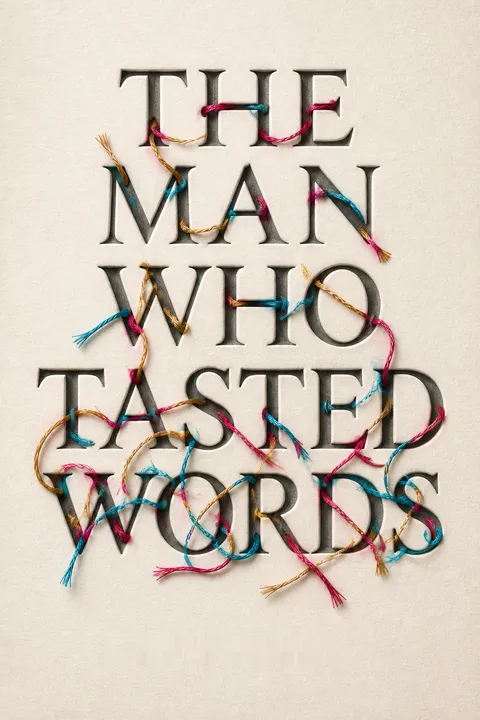
Reviews of The Man Who Tasted Words are overwhelmingly positive, averaging 4.04/5. Readers praise Leschziner's accessible, engaging writing style and compassionate portrayal of patients with extraordinary neurological conditions. Many compare the book favorably to Oliver Sacks' work. Highlights include fascinating case studies exploring synesthesia, pain insensitivity, and sensory disorders, alongside philosophical questions about the nature of reality. Some readers wished for deeper scientific detail or more coverage of synesthesia specifically, but most found it thought-provoking and highly readable.
People Also Read
About the Author
Other books by Guy Leschziner
Download PDF
Download EPUB
.epub digital book format is ideal for reading ebooks on phones, tablets, and e-readers.








































