
Key Takeaways
1. American Labor Exceptionalism Was Forged, Not Innate
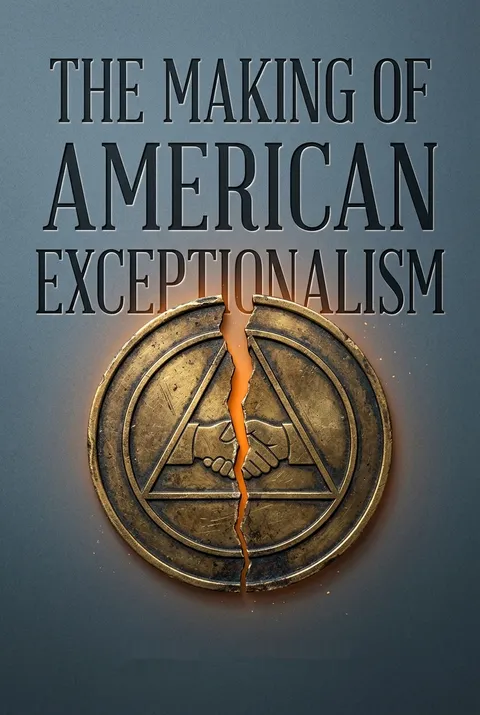
The American labor movement was not born "different," or "more limited," or more "job conscious" than other labor movements; it became that way in the wake of the collapse of the Knights of Labor.
A pivotal moment. American labor's distinct path—characterized by weak institutions and political conservatism—was not an inherent feature of the nation's development. Instead, it was a historical outcome, specifically shaped by the dramatic collapse of the Knights of Labor (KOL) in the late 1880s. This event marked a critical juncture, diverting the American labor movement from a trajectory that had previously aligned closely with its European counterparts.
Challenging assumptions. Traditional explanations for American exceptionalism often point to immutable aspects of American society, such as pervasive individualism or abundant capitalism, as precluding a strong, class-conscious labor movement. However, this perspective overlooks the dynamic nature of historical processes. The evidence suggests that before the KOL's decline, American workers demonstrated a capacity for collective action and class consciousness comparable to workers in Britain and France.
The consequence of defeat. The failure of the Knights of Labor was not merely an organizational setback; it fundamentally altered the possibilities for American labor. It foreclosed avenues for broad-based, politically engaged unionism for nearly half a century, leaving a lasting imprint on industrial relations and labor politics. Understanding this pivotal defeat is key to reinterpreting why American labor ultimately became "exceptional."
2. Early American Labor Movements Mirrored European Counterparts
At the first moment of working-class formation, the American working class did not differ markedly from the French and English.
Shared origins. The first stirrings of a distinct working-class consciousness emerged in the United States, England, and France around the 1830s, driven by similar economic transformations like market expansion and the "bastardization" of artisan trades. In all three nations, skilled journeymen artisans formed organizations like America's General Trades' Unions (GTU) to unite different crafts, articulating a new language of class.
A common critique. This nascent class language drew from shared intellectual roots in political radicalism, transforming traditional republican ideals to critique the burgeoning capitalist economy. Workers across the Atlantic asserted their identity as "producers," condemned capitalists as a new "aristocracy," and claimed their skills as "property," demanding collective control over their labor. They also envisioned similar cooperative alternatives to the competitive economic system.
Limited, yet unified. While these early movements were not fully developed proletarianisms and often excluded less-skilled workers, women, and recent immigrants, their foundational grievances, organizational forms, and ideological frameworks exhibited striking similarities. The notion that American workers were inherently less class-conscious or more individualistic at this stage is not supported by comparative historical evidence.
3. Industrialization Catalyzed a Convergence of Worker Experiences
When examining the American industrial economy of the 1830s, it is possible to distinguish three types of less-skilled workers: outworkers, unskilled laborers, and factory operatives.
From divergence to commonality. In the 1830s, less-skilled workers—such as outworkers, day laborers, and rural factory operatives—existed in worlds distinct from urban artisans, separated by working conditions, pay, gender, ethnicity, and geography. However, the rapid industrialization following the Civil War, intensified by a worldwide depression in the 1870s, began to homogenize these disparate experiences.
New industrial realities. Manufacturers, facing intense pressure to cut costs, introduced:
- Mechanization: Increased use of steam and machinery, displacing traditional craft skills.
- Work Reorganization: Subdivision of tasks, leading to more semi-skilled factory operative roles.
- Factory Expansion: Larger establishments became the norm, concentrating workers.
- Urbanization: Factories increasingly located in metropolitan centers, bringing diverse workers into closer proximity.
Shared grievances. These changes meant that both skilled "factory artisans" and less-skilled operatives increasingly worked in similar factory settings, faced arbitrary authority, long hours, and intensified production schedules. While ethnic diversity and gender differences remained, the growing commonality of workplace experiences created a more fertile ground for broad-based labor organization than had existed in earlier decades.
4. The Knights of Labor Offered a Broad, Inclusive Vision for All Workers
Organized as a secret society by Philadelphia garment workers in 1869, the Noble and Holy Order of the Knights of Labor attempted to organize all workers, regardless of skill, race, or gender.
A new model of solidarity. Founded by Uriah S. Stephens, the Knights of Labor emerged from a recognition that traditional craft unionism was insufficient to address the systemic issues of "wage slavery." The KOL's core principle, "An injury to one is the concern of all," reflected an unprecedented commitment to inclusivity, welcoming unskilled, female, black, and foreign-born workers alongside skilled craftsmen.
Evolving republicanism. The Knights' ideology, "working-class republicanism," built upon antebellum labor rhetoric but was significantly more expansive and oppositional. It argued that:
- Wage labor threatened the Republic by creating a dependent citizenry.
- Citizenship should guarantee economic rights, including the right to organize, set wages, and work reasonable hours.
- Workers' productivity was the source of social progress, demanding a fair share of wealth.
- State action (e.g., public ownership of utilities, labor laws) was necessary to regulate concentrated capital.
A cooperative commonwealth. Beyond immediate reforms, the Knights envisioned a "cooperative commonwealth" where decentralized, worker-managed enterprises would replace competitive capitalism. They actively established producer and consumer cooperatives, viewing them as both practical self-help and moral demonstrations of a superior economic system. This radical, yet non-revolutionary, vision aimed to democratize industry and society, distinguishing it from earlier, narrower artisan movements.
5. Community Ties, Not Industrial Sectors, Fueled Knights of Labor Solidarity
Within the Knights, then, community, rather than industry, was the most promising foundation on which to build an inclusive labor movement.
Local mobilization. The Knights of Labor's rapid growth in New Jersey was significantly driven by its ability to leverage community ties. Statistical analysis revealed that the presence of a Knights craft assembly in the community (but not necessarily within the same local industry) was the strongest predictor of new less-skilled worker organization. This suggests that skilled workers often aided their less-skilled neighbors, even if they worked in different trades.
The organizer's role. This community-centric mobilization was facilitated by the Knights' system of district organizers. These organizers, often skilled workers themselves, were commissioned to establish new locals across all trades within a district. They likely prioritized organizing less-skilled workers in industries where skilled workers were not yet organized, or where existing craft locals were ambivalent about organizing their own underlings, thus fostering broader community-wide solidarity.
Pragmatism and power. For many skilled workers, supporting community-wide organization was a pragmatic choice. They recognized that a broad base of support, encompassing diverse workers and local businesses, offered greater leverage against employers through tactics like boycotts. This collective power, rooted in community cohesion, was seen as essential for winning day-to-day battles and advancing the larger goal of a cooperative commonwealth.
6. The Knights' Collapse Was Not Primarily Due to Internal Worker Divisions
The Knights' decline, at least as measured by the failure of the New Jersey assemblies, was not due to a failure of solidarity between skilled and less-skilled workers, nor due to competition between the Knights and the trade unions.
Challenging conventional wisdom. Contrary to prevailing historical narratives, the statistical analysis of Knights of Labor local assembly failures in New Jersey found little evidence that internal divisions among workers were the primary cause of the Order's demise. Specifically:
- No skilled defection: The presence of less-skilled workers in the Knights did not lead to a higher collapse rate for skilled-workers' locals.
- No inter-union rivalry: Competition from trade unions (like those affiliated with the AFL) did not significantly impact the survival of Knights locals.
- Solidarity persisted: In fact, after 1886, the presence of skilled-workers' assemblies in a local industry actually had a positive effect on the longevity of less-skilled-workers' assemblies, suggesting continued cooperation.
Complex dynamics of failure. While factors like rapid proliferation of less-skilled locals (straining resources), high wage differentials, and industrial diversity (for less-skilled locals) were correlated with decline, they were not the overarching cause. The evidence points away from a fundamental "failure of solidarity" as the central explanation for the Knights' collapse.
7. Aggressive Employer Counter-Mobilization Proved Decisive in the Knights' Downfall
Skilled-workers craft assemblies collapsed 230 percent faster when employers organized, and less-skilled-workers' assemblies disappeared 70 percent faster when employers organized than when they did not.
The true adversary. The most devastating factor contributing to the collapse of Knights of Labor local assemblies in New Jersey was the organized opposition of employers. The presence of employers' associations significantly accelerated the failure rate for both skilled and less-skilled workers' locals, particularly after 1886. This finding shifts the focus from internal labor weaknesses to external capitalist strength.
Newark's lockout. The 1887 lockout of Newark's leatherworkers vividly illustrates this dynamic. After initial labor victories, leather manufacturers formed the Leather Manufacturers' Association of New Jersey (LMANJ). This association:
- Enforced solidarity: Used financial bonds to prevent members from breaking ranks.
- Mobilized resources: Pooled capital to withstand strikes and recruit strikebreakers from abroad.
- Sustained pressure: Maintained a prolonged lockout, despite short-term profit losses.
Overwhelming power. The LMANJ's unified and well-resourced campaign overwhelmed the Knights, who, despite their solidarity, lacked comparable financial depth and strategic leverage. This defeat not only destroyed union organization in Newark's leather industry but also severely undermined the broader labor movement in the city.
8. A Laissez-Faire State Empowered American Employers Uniquely
In the United States, on the other hand, neither the federal nor the state government intervened directly with any frequency, even when strikes were massive. And on the occasions when the government did intervene, it acted—often violently—against the strikers.
A distinct political landscape. The American state in the late 19th century played a crucial, albeit often indirect, role in empowering employers against labor. Unlike European nations, the U.S. featured a fragmented "state of courts and parties" with diffuse power, which generally adhered to a laissez-faire ideology regarding economic and social issues.
Limited intervention, biased outcomes. While the state rarely intervened directly in labor disputes to mediate or encourage compromise (as in Britain and France), its actions consistently favored capital:
- Legal system: Conspiracy laws were used against unions, and courts expanded property rights to protect employers' prerogatives, making collective action risky.
- Corporate charters: New Jersey, for instance, actively facilitated the formation of trusts and holding companies, providing legal frameworks for corporate consolidation that strengthened employer power.
- Repression: When the state did intervene, it was often to protect strikebreakers with police or militia, or through judicial actions like injunctions (though less common before 1894), effectively acting against workers.
A unique disadvantage. This combination of strong, organized employers and a non-interventionist, often repressive, state created a uniquely challenging environment for the American labor movement. Even if American employers had been no stronger than their European counterparts, the state's stance would have amplified their impact on unions.
9. The Knights' Ideology Shaped a Demoralizing Interpretation of Defeat
Working-class republicanism provided few conceptual resources for interpreting the Knights' defeat in any but the bleakest of terms.
The double-edged sword of republicanism. The Knights' "working-class republicanism," while powerful in mobilizing workers, proved inadequate in framing their ultimate defeat. This ideology posited that if workers organized thoroughly and demonstrated their power and moral rectitude, they could persuade the broader society, including small employers, of the justice of their cause and rescue the nation from concentrated capital.
Self-blame and "cognitive encumbrance." When the Knights were decisively defeated by organized employers, particularly in conflicts like the Newark lockout, this ideological framework offered little room for external blame. Instead, it implicitly placed the responsibility for failure squarely on the workers themselves. This led to a process of "cognitive encumbrance," where:
- Demoralization: Activists and members were plunged into despair, believing broad organization and radical goals were inherently doomed.
- Discrediting the vision: The cooperative commonwealth ideal was seen as impractical, and the very notion of class-wide solidarity lost legitimacy.
- Lack of analysis: Leaders struggled to offer convincing explanations for the defeat, often resorting to mutual recriminations rather than systemic critiques.
A lost narrative. Unlike socialist movements that could frame defeats as inevitable stages in a historical struggle, the Knights' republican framework left them without a compelling narrative for resilience. This ideological vacuum hastened the Order's demise and left a legacy of pessimism regarding inclusive unionism in America.
10. The Knights' Demise Set the Stage for Decades of Weak, Sectional Unionism
After the Knights of Labor disintegrated, the American labor movement once again became the domain of a small group of skilled workers, organized primarily along craft lines.
A path not taken. The collapse of the Knights of Labor was the critical "nul" that prevented the American labor movement from following a trajectory similar to Britain's "new unions" or France's CGT. These European movements, despite setbacks, survived to provide an organizational foundation for future waves of militancy, leading to permanent broadening of their social base and political influence.
The AFL's ascendance. In the vacuum left by the Knights' defeat, the American Federation of Labor (AFL) solidified its dominance. The AFL's commitment to "pure and simple" trade unionism, emphasizing sectional craft interests and pragmatic, non-radical politics, became the prevailing model. This meant:
- Exclusive jurisdiction: The AFL actively prevented industrial unions from challenging craft monopolies.
- Limited political ambition: Union leaders largely eschewed independent labor parties, focusing instead on lobbying within existing multi-class parties.
- Reinforced divisions: The AFL's policies exacerbated existing cleavages within the working class, particularly along ethnic and skill lines.
Long-term consequences. The repercussions extended beyond union structure. The period after the 1890s saw:
- Increased diversity and segmentation: New waves of immigration from Southern and Eastern Europe, coupled with employer strategies of ethnic segmentation, made class unity even harder.
- Widening wage differentials: The economic gap between skilled and unskilled workers grew, further undermining solidarity.
- Spatial segregation: Urban development led to skilled workers living further from less-skilled, eroding community ties.
These ideological, organizational, and structural changes effectively "doomed" broad-based unionism for two generations, until the New Deal era provided a new context for its resurgence.
Download PDF
Download EPUB
.epub digital book format is ideal for reading ebooks on phones, tablets, and e-readers.








































