
Plot Summary
Blood on the Tiles
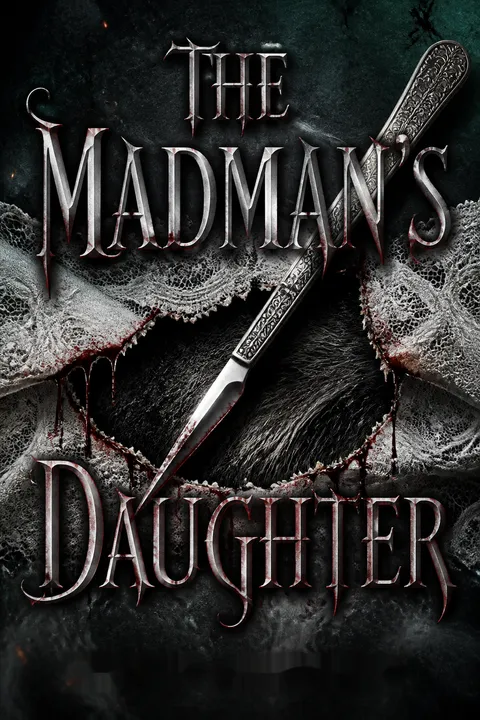
In the cold, echoing halls of King's College, Juliet Moreau scrubs away the stains left by medical students, her hands raw and her spirit hardened by years of disgrace. Once the daughter of London's most celebrated surgeon, she is now an outcast, marked by her father's scandal and disappearance. The world sees her as the madman's daughter, and she feels the weight of that inheritance in every leering glance and every drop of blood she cannot wash away. Her only solace is her sharp mind and the memory of a childhood filled with scientific curiosity, now twisted by the darkness of her family's fall. The city's cruelty and her own resilience shape her, but beneath her composure, Juliet is restless, desperate for answers about her father and her own place in a world that has turned its back on her.
Shadows of Scandal
Juliet's friendship with Lucy, a rebellious socialite, offers brief respite from her daily struggles. Together, they navigate the fringes of polite society, where Juliet's poverty and infamous surname make her both invisible and vulnerable. A late-night dare leads Juliet and a group of medical students into forbidden university halls, where a vivisection gone wrong forces Juliet to act with brutal decisiveness. The incident leaves her shaken, but it also uncovers a clue—a bloodstained diagram in her father's handwriting. The memory of her family's disgrace, her mother's death, and her own survival sharpen her resolve. Juliet's analytical mind, shaped by years of watching and learning from the shadows, drives her to seek the truth behind her father's disappearance, even as the city's dangers close in around her.
The Blue Boar Clue
Driven by the diagram's promise, Juliet tracks its origin to the Blue Boar Inn, a seedy establishment on the city's edge. There, she is ambushed and drugged by a beastly man, only to awaken in the company of Montgomery, her childhood friend and her father's former servant. The reunion is fraught with confusion and longing—Montgomery is changed, both familiar and foreign, and he holds secrets about her father's fate. Juliet learns that her father is alive, exiled to a remote island, and that Montgomery is now his assistant. The revelation is both a betrayal and a lifeline, offering Juliet a chance to confront the man who shaped—and shattered—her life. The encounter sets Juliet on a path that will test her loyalty, her intellect, and her capacity for forgiveness.
Reunion in the Dark
The emotional reunion with Montgomery is complicated by the revelation that he has been living with Juliet's father, serving as both assistant and surrogate son. Juliet's feelings for Montgomery are tangled with resentment—he left her behind, yet he is the only person who knows her true self. Their shared history is a lifeline in a world that has otherwise abandoned her. As Montgomery prepares to return to the island, Juliet's desperation grows. When her own safety in London is threatened, she makes a fateful decision: she will follow Montgomery, no matter the cost. The journey ahead promises danger, but also the possibility of answers and redemption.
The Island's Invitation
Cast out of her job and home after defending herself from a predatory superior, Juliet is left with nothing but her wits and a handful of coins. Lucy's friendship offers a brief comfort, but Juliet knows she cannot stay. She confronts Montgomery, demanding passage to the island where her father hides. The journey is not just an escape from London's cruelty, but a quest for identity and truth. As they board a decrepit ship bound for the unknown, Juliet is both terrified and exhilarated. The island represents everything she fears and desires: the chance to confront her father, to reclaim her legacy, and to discover whether she is her father's daughter—or something more.
Cargo of Secrets
The ship to the island is a floating menagerie, filled with caged animals destined for her father's experiments. The crew is rough, the conditions harsh, and Juliet is forced to rely on Montgomery and the enigmatic Balthazar, a gentle giant with beastly features. The journey is marked by storms, illness, and the constant threat of violence from both man and nature. Juliet's growing feelings for Montgomery are complicated by the arrival of Edward, a castaway with a mysterious past and a haunted gaze. The ship becomes a crucible, forging alliances and rivalries that will shape Juliet's fate on the island.
Storm and Survival
The ship is battered by a violent storm, and Juliet's world is upended by the rescue of Edward, a young man found adrift and near death. Edward's presence is both a blessing and a curse—he is charming, intelligent, and clearly drawn to Juliet, but his past is shrouded in secrets. As the ship limps toward the island, tensions rise between Montgomery and Edward, each vying for Juliet's trust and affection. The storm is both literal and metaphorical, foreshadowing the chaos and danger that await them on the island's shores.
Castaway's Arrival
Edward's recovery is slow, and his fragmented memories hint at trauma and loss. Juliet is drawn to his vulnerability, even as she senses something dangerous beneath his surface. The ship finally reaches the island, a place of wild beauty and lurking menace. The arrival is marked by unease—her father's servants are deformed, the animals restless, and the islanders' eyes are filled with fear. Juliet's reunion with her father is tense and unsettling, as he oscillates between warmth and coldness, genius and madness. The island is a world apart, governed by its own rules and haunted by the specter of violence.
The Doctor's Domain
The compound is both sanctuary and prison, a fortress of science and secrecy. Juliet is introduced to her father's work, his strange household, and the island's rigid hierarchy. The servants are not what they seem—each bears the mark of her father's experiments, a blend of animal and human traits. Juliet's father is both brilliant and monstrous, his love for her twisted by obsession and pride. The compound's rules are strict, and Juliet is both guest and captive, forced to navigate a world where science has blurred the boundaries of humanity.
The Compound's Rules
Juliet struggles to adapt to the island's routines, where every action is dictated by her father's commandments and the ever-present threat of violence. The islanders, creations of her father's surgical genius, live in fear of regression—without regular treatments, they risk losing their humanity and becoming beasts once more. Juliet's relationships with Montgomery and Edward deepen, each offering a different vision of love and loyalty. The compound is a microcosm of her father's philosophy: order imposed on chaos, reason battling instinct, and the constant danger of slipping into savagery.
The Beasts Among Us
Juliet's curiosity leads her to the island's village, where she witnesses the islanders' strange rituals and the commandments that govern their lives. The islanders are both pitiable and terrifying, their humanity fragile and easily lost. A series of brutal murders shatters the uneasy peace, and suspicion falls on Jaguar, the most advanced and dangerous of her father's creations. Juliet is forced to confront the reality of her father's work—the pain, the suffering, and the monstrous consequences of playing God. The island becomes a place of fear, where every shadow hides a potential killer.
The Monster's Mark
As the murders escalate, Juliet is drawn into a web of suspicion and betrayal. The monster leaves a distinctive mark—three slashes across the victims' chests—and the islanders live in terror of the beast among them. Juliet's investigation leads her to question everyone, including Montgomery and Edward. The truth is elusive, hidden beneath layers of lies and self-deception. Juliet's own darkness surfaces, as she is forced to make choices that blur the line between justice and vengeance, love and survival.
The Village Commandments
The regression of the islanders accelerates as treatments run out, and the village descends into chaos. The commandments that once held them together are forgotten, and violence erupts. Juliet witnesses the collapse of her father's experiment, the failure of science to contain the animal within. The islanders turn on their creator, and the compound is besieged. Juliet must choose between loyalty to her father and the safety of those she loves. The island's beauty is overshadowed by the horror of what has been unleashed.
The Truth in Chains
Imprisoned by her father, Juliet uncovers the files that reveal the truth of her origins. She is not merely the madman's daughter—she is his first experiment, saved from death by the transplantation of animal organs. The revelation shatters her sense of self, forcing her to confront the possibility that she is neither fully human nor fully beast. Her father's love is revealed as a form of possession, his genius inseparable from his cruelty. Juliet's identity is forever altered, and her choices become a matter of survival, not just for herself but for everyone on the island.
The Monster Within
The final confrontation exposes Edward as the monster, a creation of her father's new technique—part human, part animal, capable of both love and unspeakable violence. Edward's struggle with his dual nature mirrors Juliet's own internal battle. The love triangle between Juliet, Montgomery, and Edward reaches its breaking point, as each is forced to choose between desire and duty, humanity and instinct. The island's collapse is mirrored in the collapse of their relationships, as trust is shattered and only the strongest will survive.
The Burning Laboratory
As the beasts overrun the compound and the fires spread, Juliet is faced with an impossible choice: save her father or let him be destroyed by the monsters he created. In a moment of both vengeance and mercy, she opens the laboratory door, allowing Jaguar to exact retribution. The laboratory, symbol of her father's hubris, becomes his tomb. Juliet's act is both a rejection of her father's legacy and an acceptance of her own darkness. The island burns, erasing the evidence of her father's crimes and the possibility of redemption.
Escape into the Sea
With the compound in flames and the islanders regressed to savagery, Juliet, Montgomery, and Balthazar make a desperate escape. The launch is their only hope, but the cost is high—Montgomery chooses to stay behind, bound by loyalty to the creatures he helped create. Juliet is left alone, adrift at sea, her future uncertain. The island disappears into the night, taking with it the secrets of her father's genius and madness. Juliet's story ends not with triumph, but with survival—a testament to the resilience of the human spirit, even when shaped by darkness.
Analysis
Megan Shepherd's The Madman's Daughter is a gothic reimagining of H.G. Wells's The Island of Doctor Moreau, but it is also a deeply psychological exploration of identity, morality, and the boundaries of humanity. At its core, the novel asks what it means to be human in a world where science can blur the lines between man and beast, creator and creation. Juliet's journey is both external and internal—a quest to find her father, but also to confront the darkness within herself. The love triangle between Juliet, Montgomery, and Edward is not just romantic, but symbolic of the choices we make between reason and instinct, loyalty and desire. The island is a microcosm of society, where order is imposed by violence and fear, and where the collapse of that order reveals the animal lurking beneath the surface. The novel's use of gothic atmosphere, unreliable narration, and rich symbolism creates a sense of unease and ambiguity, forcing the reader to question the nature of monstrosity and the cost of survival. In the end, The Madman's Daughter is a story of resilience in the face of horror, a meditation on the dangers of unchecked ambition, and a testament to the enduring power of the human spirit—even when shaped by darkness.
Review Summary
The Madman's Daughter receives mixed reviews averaging 3.68 stars. Readers praise its dark, gothic atmosphere, strong protagonist Juliet Moreau, and surprising plot twists. Many appreciate the creative retelling of H.G. Wells' classic and the book's genuinely creepy, gory elements. However, the love triangle between Juliet, Montgomery, and Edward divides opinion significantly. Common criticisms include slow pacing, especially in the middle sections, excessive focus on romance over thriller elements, and inconsistent characterization. Some find the scientific explanations unconvincing. Animal lovers are warned about disturbing vivisection scenes. Despite flaws, most reviewers acknowledge the atmospheric writing and compelling premise.
People Also Read
Characters
Juliet Moreau
Juliet is the daughter of the infamous Dr. Moreau, marked by scandal and shaped by loss. Her intelligence and resilience are matched by a deep well of pain and longing—for family, for love, for a place to belong. Juliet's journey is one of self-discovery, as she confronts the darkness within herself and the legacy of her father's genius and cruelty. Her relationships with Montgomery and Edward are fraught with desire, betrayal, and the search for identity. Juliet's greatest struggle is not with the monsters around her, but with the possibility that she is one herself. Her arc is a descent into the heart of darkness, and a hard-won emergence into self-acceptance and survival.
Dr. Henri Moreau
Dr. Moreau is both father and tormentor, a man whose genius is inseparable from his madness. His experiments blur the line between human and animal, driven by a desire to conquer nature and achieve the ideal form. Moreau's love for Juliet is twisted by his need for control and his inability to see others as anything but subjects for his work. He is both charismatic and terrifying, capable of tenderness and unspeakable cruelty. Moreau's downfall is his hubris—his belief that he can play God without consequence. His legacy is one of pain, both for his creations and for his daughter.
Montgomery
Montgomery is Juliet's childhood friend, transformed by years of service to Dr. Moreau. He is both protector and accomplice, complicit in the island's horrors but driven by a deep sense of responsibility. Montgomery's love for Juliet is sincere, but complicated by his own self-loathing and the burden of his actions. He is a man caught between worlds—neither fully servant nor master, neither innocent nor guilty. Montgomery's arc is one of sacrifice, as he chooses to stay behind and care for the island's creatures, accepting his place among the damned.
Edward/Black Prince
Edward is both victim and monster, a product of Moreau's latest experiment. Outwardly human, he is haunted by the animal within, capable of both tenderness and violence. His love for Juliet is genuine, but doomed by his inability to control his darker nature. Edward's struggle is the story's central metaphor—the battle between reason and instinct, humanity and savagery. His arc is one of self-awareness and tragic acceptance, as he recognizes that he can never truly escape what he is.
Balthazar
Balthazar is one of Moreau's earliest and most successful creations, a blend of dog and bear with a childlike heart. He is loyal, kind, and eager to please, serving as both protector and comic relief. Balthazar's innocence is a stark contrast to the darkness of the island, and his fate is a reminder of the cost of Moreau's experiments. His desire to belong and be loved is deeply moving, and his ultimate abandonment is one of the story's most poignant tragedies.
Alice
Alice appears to be a shy, gentle girl, but is revealed to be one of Montgomery's own creations—a blend of sheep and rabbit, made to prove himself to Moreau. Her innocence and vulnerability make her death all the more devastating. Alice's existence raises questions about the nature of humanity, the ethics of creation, and the possibility of love between creator and creation. Her fate is a catalyst for Montgomery's final choices.
Jaguar/Ajax
Jaguar, once known as Ajax, is the most advanced and dangerous of Moreau's creations. He is both brother and rival to Montgomery, embodying the potential and peril of Moreau's science. As the island descends into chaos, Jaguar becomes both avenger and executioner, leading the beasts in their revolt against their creator. His relationship with Juliet is complex—he is both threat and ally, a mirror of her own struggle with the animal within.
Lucy
Lucy is Juliet's only friend in London, a rebellious socialite who defies her family's expectations. She offers Juliet comfort, support, and a glimpse of the life she has lost. Lucy's loyalty is unwavering, and her willingness to help Juliet in times of crisis is a testament to the power of friendship. She represents the world outside the island, a world of possibility and hope.
Puck
Puck is one of Moreau's creations, a blend of human and reptile, serving as both helper and spy. His presence is unsettling, a reminder of the unnaturalness of the compound and the ever-present threat of regression. Puck's loyalty is to Moreau, but his actions are driven by self-preservation and fear.
Cymbeline
Cymbeline is a young islander, a blend of animal and human, whose innocence is gradually eroded by the island's violence. His presence is a reminder of what is lost in the pursuit of perfection, and his fate is a warning of the dangers of unchecked ambition.
Plot Devices
Gothic Setting and Atmosphere
The novel's settings—Victorian London, the decrepit ship, and the island compound—are steeped in gothic atmosphere. The physical darkness, decaying structures, and ever-present threat of violence reflect the characters' psychological struggles. The island itself is a character, both beautiful and menacing, a place where the boundaries between human and animal, reason and madness, are constantly blurred.
Science as Both Salvation and Damnation
Moreau's experiments are both miraculous and monstrous, offering the promise of healing and the horror of unchecked ambition. The novel explores the ethical limits of science, the dangers of playing God, and the consequences of crossing natural boundaries. The treatments that sustain the islanders—and Juliet herself—are both lifelines and chains, binding them to Moreau's will and the threat of regression.
Unreliable Narration and Self-Deception
Juliet's narration is marked by self-doubt, denial, and the gradual uncovering of painful truths. The novel uses foreshadowing and misdirection to keep both Juliet and the reader uncertain about the nature of the monsters, the trustworthiness of allies, and the reality of her own identity. The love triangle is fraught with ambiguity, as each character's motives are suspect and their loyalties divided.
The Monster Within
The central metaphor of the novel is the struggle between reason and instinct, humanity and savagery. Each character embodies this duality—Juliet's scientific curiosity and capacity for violence, Montgomery's loyalty and guilt, Edward's love and monstrousness, Moreau's genius and cruelty. The regression of the islanders is both a literal and symbolic descent into the animal within, a warning of what is lost when the boundaries of humanity are crossed.
Foreshadowing and Symbolism
The novel is rich in symbols—the bloodstained tiles, the broken mirror, the three-clawed mark, the burning laboratory. Each foreshadows the unraveling of order, the collapse of identity, and the inevitability of destruction. The use of Shakespearean names and references underscores the themes of fate, ambition, and the tragic consequences of hubris.
Narrative Structure
The story is structured as a gradual descent into chaos, with each chapter peeling back another layer of deception and self-delusion. The pacing accelerates as the island's society collapses, leading to a series of climactic confrontations and revelations. The final chapters offer both catharsis and ambiguity, as Juliet survives but is forever changed by what she has seen and done.
The Madman’s Daughter Series
Download PDF
Download EPUB
.epub digital book format is ideal for reading ebooks on phones, tablets, and e-readers.








































