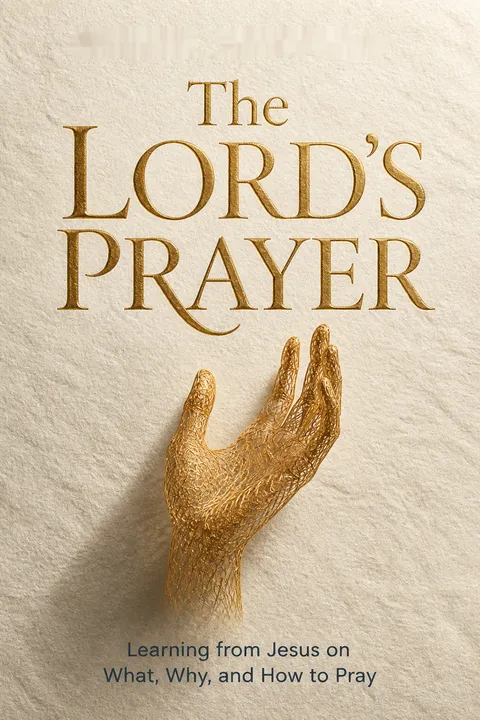

Key Takeaways
1. Prayer is a Relationship, Not a Ritual.
Prayer is a relationship.
Beyond obligation. Many Christians feel prayer is an essential yet discouraging activity, often viewing it as a duty they fail to perform adequately. However, Jesus's teaching on prayer focuses less on the will to pray and more on how to pray, shifting the emphasis from a burdensome obligation to a relational invitation. He assumes we will pray, not just should.
Avoid pretense. Jesus warns against two pitfalls in prayer:
- Hypocrisy: Praying to be seen by others, seeking human applause rather than God's approval. True prayer is often done in secret, believing God sees and rewards.
- Paganism: Heaping up empty phrases or vain repetitions, thinking many words will make God hear. God already knows our needs; prayer is not about impressing Him with eloquence or quantity.
Faith in action. Prayer is an act of faith, a direct conversation with a God who sees, hears, and rewards. It's about trusting that our heavenly Father is listening and cares, rather than performing a mechanical ritual. This understanding transforms prayer from a guilt-inducing task into a joyful communion.
2. Approach God as "Our Father" with Intimacy and Awe.
To pray with intimacy to God as father is not a human right; it is a spiritual privilege.
A profound privilege. The very first word of the Lord's Prayer in Greek, "Pater" (Father), invites us to marvel at the astonishing intimacy God offers. This isn't a universal birthright but a spiritual privilege reserved for those born again by the Spirit, allowing us to approach the Creator of the universe with the trust and affection of a child. God reveals Himself as Father, King, and Husband, consistently using masculine pronouns and titles, which we must respect as His chosen self-revelation.
Intimacy and authority. Addressing God as "Our Father in heaven" beautifully balances intimacy with authority. He is both the loving parent who cares deeply for us and the sovereign King who reigns over all. This dual perspective is crucial; drab thoughts of God lead to dull prayers, but a vibrant, true understanding of His character ignites eager conversation.
Community in prayer. The use of "Our" throughout the prayer emphasizes its corporate nature. Even in private prayer, we are connected to the larger body of Christ, praying for collective needs. This encourages communal prayer, whether with family, small groups, or the church, reminding us that we are part of a spiritual family.
3. Prioritize God's Glory: Hallow His Name First.
To hallow means, “May all the world and all created things see God for who he is, and may his human creatures, especially, adore and obey him.”
God's honor above all. The first petition, "Hallowed be your name," is foundational, setting the right focus for all subsequent requests. It's not about making God's name holier, but about desiring that His name—the sum of all His attributes and works—be recognized, revered, and glorified by all people. This prayer expresses our chief desire: to praise God and want the entire world to praise Him.
A humble request. This petition puts all other prayers in proper perspective. It's a humble acknowledgment that God's honor is paramount, shaping our desires and ensuring our requests align with His purposes. When we pray for God's name to be hallowed, we are asking for a miracle in our hearts and in the world, that His unique holiness would be set apart and adored.
Chief end of man. As the Westminster Shorter Catechism states, man's chief end is to glorify God and enjoy Him forever. These are not separate goals but intertwined realities. The happiest and most fulfilling life is one lived for God's glory, making this first petition a prayer for our ultimate good as well.
4. Commit to God's Kingdom: It's Already Here and Still Coming.
The kingdom of God is not a society to be built but a gift to be received.
God's reign and rule. The petition "Your kingdom come, your will be done, on earth as it is in heaven" expresses a deep commitment to God's reign. The kingdom of God is His redemptive presence breaking into earthly existence, a reality that is both "already" present (in Christ and the church) and "not yet" fully realized (awaiting Christ's return). We pray for its full consummation and for His will to be obeyed on earth as perfectly as it is in heaven.
Kingdom vs. Church. While the church is an "outpost" or "embassy" of the kingdom, it is not identical to it. The church exists to advance the kingdom's interests, embodying its values and rules. However, the kingdom is not built by human efforts like elections, social programs, or art; it comes when the King is known, loved, and worshiped.
Living for the kingdom. To pray this petition means living obediently, outwardly, and expectantly:
- Obediently: Submitting our own wills to God's, starting with personal transformation.
- Outwardly: Proclaiming the gospel, as the kingdom advances through the Spirit working through the Word.
- Expectantly: Trusting in God's mighty power and inviting others to His coming feast.
5. Pray for Daily Provision, Recognizing Our Dependence.
Even in the land of plenty, we ought to pray day by day for our daily bread.
Humble dependence. The request "Give us this day our daily bread" is a profound lesson in faith and dependence. It's not a demanding "gimme" prayer, but a humble acknowledgment that we rely on God for everything, not just once, but every single day. This daily asking fosters a poverty of spirit, reminding us that life is fragile and our security rests solely in God's unchanging character.
Beyond food. "Bread" encompasses more than just physical sustenance; it includes all things necessary for life and godliness. This means:
- Physical needs: Food, water, clothing, shelter.
- Spiritual needs: God's Word (man does not live by bread alone) and Jesus Himself, who is the Bread of Life.
- Community: The "us" reminds us to pray for the well-being of all God's people, especially those in need.
Cure for anxiety. This petition directly counters worry. Jesus teaches us not to be anxious about tomorrow, for today's grace is sufficient for today's trials. By asking for daily bread, we confess our dependence and trust that God, our kind Father, will meet us with new mercies every morning, preparing our meal rather than just dumping a lifetime supply.
6. Seek Daily Forgiveness, and Be Ready to Forgive Others.
The Bible is clear that the unforgiving person is an unforgiven person.
Daily pardon. Just as we need daily bread, we need daily forgiveness for our "debts"—the many sins we commit, both of omission and commission. This isn't about being justified anew, but about restoring the Father-child relationship that sin disrupts. It's the cry of a loving child acknowledging wrongdoing, not a frightened litigant fearing condemnation.
Forgiven people forgive. The second half of the petition, "as we also have forgiven our debtors," is a powerful and challenging condition. It means we ask God to treat us as we treat others. This is not a legalistic formula, but a statement of recognition: those who have truly experienced God's immense forgiveness will, in turn, be eager to forgive others.
Understanding forgiveness. Forgiveness is:
- Canceling a debt: Releasing someone from the moral payment they owe us.
- An act of will: A decision to not seek revenge, wish well, and pursue reconciliation.
- Relational: It involves two parties, ideally with repentance from one side and the removal of debt from the other.
It is not the absence of consequences, the elimination of authority structures, or the complete absence of all judgment.
7. Plead for Protection from Temptation and the Evil One.
We seldom realize the danger we are in and sometimes not until it is too late.
Spiritual protection. The petition "Lead us not into temptation, but deliver us from evil" is a plea for spiritual safeguarding. It acknowledges our inherent weakness and the constant dangers we face, both from within (our fallen desires) and without (the world's allurements and the devil's schemes). God never tempts us to sin, but we pray that He would not allow us to be led into situations where the enticement to sin is overwhelming.
The devil's tactics. The "evil one" (the devil) tempts us with the same three strategies he used against Jesus in the wilderness:
- Pleasure: Seeking immediate gratification over God's sustaining word.
- Pride: Demanding God prove Himself or seeking self-glory rather than humble worship.
- Power: Taking shortcuts to achieve legitimate ends, bypassing God's appointed means.
Recognizing our personal weaknesses in these areas is crucial for effective prayer and resistance.
Daily battle. This prayer reminds us that we live perilous lives, constantly at war with our flesh and stalked by a cunning enemy. We must not be blissfully ignorant of spiritual danger. Just as we pray for daily bread and pardon, we must pray for daily protection, trusting that God, our heavenly Father, is mighty to deliver and will provide the strength and refuge we need.
8. God's Kingdom, Power, and Glory Are Our Confident Hope.
Our Father in heaven is stronger than the strong man.
A fitting crescendo. The traditional doxology, "For yours is the kingdom and the power and the glory forever. Amen," provides a magnificent and fitting conclusion to the Lord's Prayer. While not present in the oldest Matthew 6 manuscripts, it is deeply rooted in Old Testament Scripture (1 Chronicles 29) and reflects the early church's practice, reinforcing the prayer's overarching theme of God's glory.
Confidence in God. This ending bookends the prayer, beginning and ending with God's glory as our chief concern. It expresses unwavering confidence in God's:
- Kingdom: His sovereign reign and ultimate victory.
- Power: His limitless ability to accomplish all His will and answer our prayers.
- Glory: His inherent majesty and worthiness of all praise.
This acclamation lifts our petitions to heaven, assuring us that God hears and will respond with mercy and might.
Sealed with "Amen." Concluding with "Amen" is more than just saying "the end"; it means "yes," "truly," or "so shall it be!" It signifies our complete agreement, confidence, and hope in the God to whom we pray. It reminds us that despite the world, the flesh, and the devil, God alone holds the final victory, and all perfection belongs to Him.
Review Summary
Most reviewers praise The Lord's Prayer by Kevin DeYoung as an insightful, accessible, and theologically rich exploration of the prayer's meaning. Readers appreciate its concise format, phrase-by-phrase structure, and practical application for both new and mature believers. Many note it revitalized their prayer lives without inducing guilt. A few critics found it oversimplified or condescending. The closing prayer DeYoung wrote received particular acclaim. Overall, the book is widely recommended for anyone seeking deeper understanding of prayer.
People Also Read







About the Author


Download PDF
Download EPUB
.epub digital book format is ideal for reading ebooks on phones, tablets, and e-readers.








































