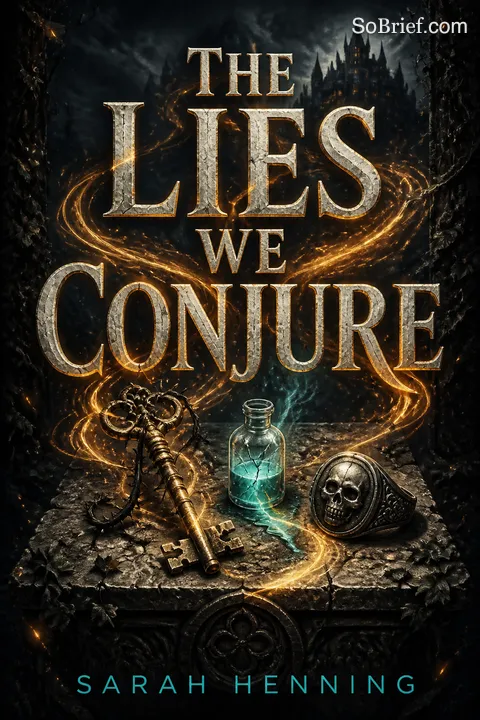
Plot Summary
Strangers Inherit the Lie
Ruby and Wren Jourdain, struggling Colorado teens, are offered a lucrative but mysterious job by Marsyas Blackgate: impersonate her granddaughters at an exclusive dinner party at Hegemony Manor. Both are uneasy, but the promise of quick cash and Wren's adventurous enthusiasm outweigh their doubts. Donning black dresses and fake British accents, they enter a world neither belongs to, each hoping this eccentric gig will end quietly. Instead, the lie they inherit is not just social deception but something ancient, influential, and dangerous—one with generations of consequences. The weight of history and expectation settles upon them, unaware that their performance will have real, and potentially deadly, stakes.
The Gothic Dinner Party
At Hegemony Manor, Ruby and Wren step into a tableau of strange, interconnected witch families: the Hegemonys, Cerises, Starwoods, and the very Blackgates they're impersonating. Strict matriarch Ursula Hegemony presides, with her grandchildren Evander, Winter, and Auden providing varying degrees of chilly welcome and scrutiny. At dinner, subtle but pointed questions buzz under the surface, with each guest carrying secrets and ambitions. The opulent, dark manor is rife with magical undercurrents and familial rivalries. Ruby and Wren wobble beneath the heavy gaze of lineage, suspicion, and the unshakable feeling something is very wrong beneath the pleasantries.
Witch Families Unveiled
As dinner unfolds, Ruby and Wren become intimate with the peculiar customs of the witch elite: heirlooms, magical relics, and family myths surface alongside biting repartee. The Hegemonys' ironclad rule over North American magic is apparent, but so are ancient grudges—especially surrounding the Blackgate line's shadowed history. The sisters must juggle their roles while absorbing revelations about elemental, blood, death, and celestial magic, picking up on simmering tensions and the sense that every family is both vying for power and haunted by loss. The atmosphere thickens with enchantment, rules, and the ever-present threat of being discovered as imposters.
Deadly Games Begin
During Ursula's ceremonial speech, she dies spectacularly—collapsing, bleeding, her magic shattering the room's illusions. Chaos seizes the party: the manor locks down, the staff fall as if asleep, and Ursula's ghostly "soul's truth" accuses the room—"I have been murdered." The grounds are sealed by magic until her murderer is named and punished. The will institutes a terrifying game: solve the murder, recover four master relics, and prevent more deaths. Ruby and Wren's deception is now worse than a social misstep; it's a literal death sentence if they're caught. The locked-room mystery is no longer pretend—it's real, and everyone is a suspect.
Masks, Magic, and Murder
Panic leads to the first wave of suspicion. Ruby and Wren scramble to keep their cover as investigations begin, while the High Families grieve, intrigue, and compete in earnest. Truth spells force confessions, magical traditions become weaponized, and the hunt for shrouded relics becomes deadly. The house's wards and supernatural bindings tighten their grip. As alliances shift, fraught relationships and old betrayals flare—the twins Hex and Ada Cerise, Infinity Starwood, Evander and Auden Hegemony, and the missing Marsyas all cross lines between victim, investigator, and perpetrator. The imposters' guilt draws dangerously close to exposure.
The Manor Seals Shut
Attempts at escape fail brutally—magical wards savagely wound Ruby and Wren. Marsyas vanishes, suspicion trails behind her, but new terrors emerge: murdered staff, impenetrable boundaries, and a threatening will that spells out high stakes and rigid rules. The families are confined together with old grudges intensifying, and the sisters realize that their outsider status, once a protection, now makes them perfect scapegoats. The sense of isolation intensifies as things grow ever more violent and strange within the sealed, gothic mansion.
A Will With Teeth
In Ursula's magically sealed study, her posthumous will broadcasts more than demands: every family must shed blood in a binding ceremony and swear to track down both her murderer and the house's hidden master relics. Whosoever collects all four will seize control of all North American magic—a prize for which rivals would certainly kill. Old grievances resurface, especially around the decades-old execution of Marcos Blackgate. Every utterance, heirloom, and family dynamic is weaponized, and the will's magical rules are enforced instantly and mercilessly, setting the stage for a ruthless magical contest and terrifying investigation.
The Hunt for Relics
The families race to decipher poetic, cryptic clues, triggering a witchy scavenger hunt around the estate and through the past. Tales of tragic deaths, haunted relics, and trial by element swirl. Ruby and Wren research to fake deeper knowledge, while the others reveal how master relics grant devastating powers. The first relic—Elemental—nearly kills, and each clue is a test of magical lineage and family memory. Tensions rise as the manor's history is literally and figuratively unearthed, and missing records hint that someone, or something, is stacking the deck.
Suspects, Secrets, Shields
As relics are found, trust frays. Ruby and Wren are subjected to grueling truth spells—barely scraping by as they hide their identities. The younger generation forms uneasy bonds, but the adults play a lethal game. Paranoia peaks after the discovery of more bodies and as magical "souls' truths" are revealed. The Cerises, the Starwoods, and the Hegemonys all maneuver to shield, implicate, or eliminate; oaths and blood spells entangle the group, and the imposters are increasingly desperate to avoid mortal consequences.
Blood, Bone, and Betrayals
The PTSD of the witch world comes roaring back: the reason for Marcos Blackgate's execution, the orphaning of the Hegemony cousins, and the infamous betrayals of generations. Mistrust crystallizes after another family matriarch—Luna Starwood—is murdered; the remaining families no longer believe Marsyas was the sole villain. Shock twists to horror: undead ancestors, zombies conjured from the past, and witch-on-witch violence erupts. The past's crimes are no longer background; they animate the present as alliances fracture.
Truth Spells and Traps
The truth slips free: after a disastrous truth spell, Ruby breaks, confessing she and Wren are imposters—ordinary girls from Grand Lake, tricked into playing the long-lost Blackgate heirs. The revelation detonates across the survivors: Hex, Ada, Infinity, Evander, Winter, Auden. All feel betrayed and terrified. The sisters are contained—one in a magical prison, the other in a guard's grasp—but the focus shifts: someone has broken the sanctity of the magical wards, and the real Blackgates may finally have arrived to claim vengeance and power.
The Bodies Start Falling
Marsyas returns with the true Blackgate sisters, wielding the master relic of Death magic. She unleashes an undead legion: reanimating the murdered witches' bodies, compelling ghosts and skeletons against her enemies. The magic grows chaotic and apocalyptic, as the Blackgates aim for nothing short of annihilation and revenge. The living scramble to protect each other—loyalties cemented not by blood but by shared survival. The imposters, now unmasked, are swept up in this magical civil war as bystanders, witnesses, and, surprisingly, essential allies.
The Ceremony of Accusations
In the aftermath, Marsyas is imprisoned and interrogated. She confesses to a decade-long plot of vengeance for her son, having colluded with, and then betrayed, other families. Masters and truths are wrung from her before she takes her own life in front of the assembly—her "soul's truth" confirming her crimes, motives, and the tangled grief lying beneath it all. The manor's magical lockdown at last ends, and each family is left to reckon with how much blood and secrecy this "unbreakable family" has truly cost.
Lies Exposed, Identities Shatter
Exhausted and shattered, the young survivors—Auden, Evander, Winter, Infinity, Hex, Ada—stare down the future without their elders and without the ensorcelled relics that ruled their lives. More honest now than ever, secrets spill: about past betrayals, about how the imposters changed everything, about why the family's "unbreakable" nature is itself a curse. For the first time, real conversations begin about breaking with the past and reforming the lines on new, dare they hope, more just and open terms.
The Undead Army Rises
In the climactic confrontation, the Blackgates and Marsyas animate the dead—raising armies to seize the relics. The descendants battle the undead, the magical, and the past itself in the bloody courtyard. Through fleeting alliances, clever tactics (and butter knives), Ruby and Wren prove once and for all their loyalty and bravery—ultimately helping Auden and Evander reclaim the relics, defeat Marsyas, and break the ancient chains holding the Four Lines captive to fate. Magic is loosed, the deadly pact fulfilled.
Masters Collide, Villains Fall
With the relics reclaimed and the last villains fallen, the survivors are confronted with Ursula's final command: the master relics are to be destroyed, the families freed to choose their new future. But the new generation, changed by loss and honesty, forges a new accord. The families decide—not by blood or vengeance, but by shared trauma and shared hope—to remake the lines as equals, with checks and balances to protect against new tyrannies. The "imposters"—now revealed as honest—are offered a place at the table, neither punished nor erased from memory.
The Five Lines Forged
Time passes. Ruby and Wren are invited back for another mysterious gathering—but now in full knowledge, with affection and hope from their magical friends. They and the surviving heirs formally join a new system: the Five Lines, with equal say and protections—the sisters as "the Fifth Line": the voice of outsiders and honesty. Past betrayals are atoned for, ancient enmities healed or at least put aside, and the next era begins with celebration (and romance). The cycle of lies ends; the cost of truth, honestly counted and paid.
Analysis
Henning's The Lies We Conjure
delivers a wild, imaginative subversion of both the locked-room mystery and magical inheritance fantasy by threading the poison of old secrets and new truths into every breath. It is a meditation on the cost of loyalty—to family, to tradition, to power—and an indictment of the violence that often underwrites supposedly "unbreakable" bonds. The story's use of "imposters"—two ordinary girls—compels the magical elite to confront their own deceptions, failures, and need for mercy, arguing that healing requires both honesty and vulnerability. The adults' crimes, passed down like inherited disease, set the stage for the younger generation to break, mourn, and ultimately reform the lines not by erasure but by inclusion and shared control. The solution—inviting outsiders as the new "Fifth Line"—suggests that systems only survive when they absorb new truths and voices rather than merely punishing or scapegoating them. Problems of memory, justice, and "who gets to tell the story" pulse throughout, encouraging the reader to question not simply whodunit, but whether winning is ever worth the cost. In a time when inherited violence and secrets threaten to break everything, the greatest magic is in facing—and transforming—the lies we conjure about ourselves, our families, and our futures.
Review Summary
Reviews for The Lies We Conjure are generally positive, averaging 3.63/5. Readers praise its clever premise—two non-magical sisters posing as witches during a murder mystery—and frequently compare it to Knives Out and The Inheritance Games. Many enjoyed the dual POV structure, atmospheric setting, and magical family dynamics. Common criticisms include slow pacing in the second half, predictable reveals, underdeveloped characters, and occasional info-dumping. Despite flaws, most found it an entertaining, fun read, particularly suited for autumn.
Characters
Ruby Jourdain
Ruby, practical, reserved, and fiercely protective of her younger sister Wren, becomes the story's lynchpin. As a struggling Colorado bookseller, she accepts Marsyas's offer out of necessity, only to find herself pretending to be Lavinia Blackgate, a witch-line heiress. Navigating guilt, terror, and burgeoning love for Auden Hegemony, Ruby is thrust into moral danger: hiding her identity even as the witches search for a killer among them. Her arc is one of increasing self-assurance and tenacity. She refuses to be merely a pawn; her decisive action during the climax—risking herself to help the true heirs defeat undead foes—demonstrates her blend of humility, resourcefulness, and immense courage. Her outsider's empathy ultimately cracks the cycle of secrecy.
Wren Jourdain
Wren is Ruby's extroverted opposite: vivacious, impulsive, hungry for stories and drama. Her giddy thrill at "playing parts" soon gives way to real terror, grief, and introspection as she is tested by magical truth spells and literal mortal peril. Wren's instinct to charm often saves them, but her impulsivity also lands them (and the heirs) in trouble. Still, she is the first to step forward during accusations, submitting herself to magical scrutiny, and is fiercely loyal to her sister. Wren proves crucial in the final showdown, her quick thinking helping buy time for the group to mount an effective defense and, ultimately, find redemption.
Auden Hegemony
Auden serves as executor of Ursula's will and moral center among the Hegemony heirs. Cerebral, poetic, and reserved, he is haunted by the legacy of magic, the trauma of his parents' deaths, and the competing claims of loyalty: to family, to the lines, and to justice. His growing affection for Ruby (before and after her true identity is revealed) softens—and deepens—his character. Initially a stickler for tradition, Auden becomes the first to question whether the system is worth defending at all costs, ultimately advocating for transparency, mercy, and radical change. His arc is bittersweet: love, trust, and a willingness to break old cycles.
Evander Hegemony
Evander is the physical, stubborn, and often brusque oathed heir. Haunted by survivor's guilt (he witnessed his father's death), he is desperate to maintain control—not just for himself, but out of a belief in family and duty. He pushes for investigation, interrogation, and swift action—sometimes to the detriment of nuance. Yet, when confronted with his own complicity (and the limitations of magical power), Evander is able to step back and yield, offering the role of High Sorcerer to others. His protectiveness of the other heirs, and of Ruby and Wren when they are at their most vulnerable, reveals deeper layers of loyalty and compassion.
Winter Hegemony
Winter is delicate, ambitious, and emotionally raw—a survivor of immense loss. She is both skeptical and nurturing, excelling at reading people. Winter grieves her grandmother, navigates bitter family politics, and ultimately acts as the pivotal voice for compromise and reform in the new "Five Lines." Her friendships—especially with Infinity Starwood—anchor her, and her arc is about using empathy (rather than magic or force) to mediate between factions, break cycles of vengeance, and help redefine what magic and family mean.
Hex Cerise
The Cerise twins, Hex and Ada, are the children of a family infamous for blood magic and ambition. Hex, the more sensitive, is battered by parental betrayal: his parents can literally control his actions via blood. Forced to violence, then to rebel, Hex's journey is from dumb bravado to traumatized honesty; his confession (and apology) about the knife attack is pivotal for breaking the impasse. Ultimately, Hex becomes a voice for change, openly naming the dangers of power without compassion.
Ada Cerise
Ada is a mirror and foil for her brother, pressed into becoming the heir in secret by her ruthlessly manipulative parents. Her arc is one of moving from passivity to decisive allied action, even as she suffers in the war against both her parents' ambition and Marsyas's necromancy. Ada's vulnerability and resilience help inspire the others to act as a collective, rather than as isolated "lines."
Infinity Starwood
Infinity, grandchild of Luna Starwood, is a figure of integrity and quiet strength. They are driven by an ethic of care—for family, for lines, for justice. Infinity's insistence on opting out of destructive games forms the ethical "other path" for survivors—one that validates dissent and the possibility of change even in the most rigid system. Infinity is non-binary, wise, and becomes closest to Winter; together, their friendship signals hope for future connection and healing.
Marsyas Blackgate
Marsyas is the driving antagonist: manipulator, bereaved mother, puppet-master, mass-murderer. She is adept at psychological warfare, using deception and opportunity to turn the heirs and imposters into her scapegoats, then orchestrating massive magical violence when that fails. Marsyas's obsession with revenge for her son's execution overshadows her judgment; her charisma and ruthlessness are terrifying. Yet, at her end, the confession of grief makes her both monstrous and human—a tragic figure whose wounds destroyed others.
Ursula Hegemony
Ursula, though killed early, remains ever-present as the matriarch whose methods, grief, and instructions shape the entire game. Her rules, murders, and wisdom echo through the survivors' choices, and her "soul's truth" confession reveals the costs and limits of power. Ursula is both revered and resented—a symbol of the dilemma faced by every heir: what should be preserved, what must be broken, and how love and vengeance destroy.
Plot Devices
Locked-Room Magical Mystery
The story uses the classic "locked-room" setup—none can escape or enter until impossible magical tasks are fulfilled: solve a murder, recover lost relics, and punish the guilty. This creates a cauldron of paranoia, alliances, and betrayals, while allowing the reader to experience both the external dangers (undead, deadly magic) and the inner conflicts (guilt, love, secrets).
Imposter Syndrome and Masks
Ruby and Wren's outsider status is a brilliant literalization of imposter syndrome—the fear of being discovered—while also being a metaphor for the heirs' own roles as not-quite-fitting-in heirs, children, or rebels. Masking and performance create layers of tension, raising the stakes as the truth spell machinery, identity slips, and magical detection close in.
Ancient Family Trauma and Historical Parallels
The legacy of violence—executions, betrayals, and cover-ups—cycles through the plot, with each generation both inheriting and failing to escape the consequences of denial, secrecy, and revenge. Echoes of Salem, blood feuds, and orphan-trauma provide psychological depth and sharpen the sense that these "games" are echoes of ancient, unsolved wounds.
MacGuffin Scavenger Hunt
The hunt for four master relics is a structured MacGuffin chase—each clue a puzzle, each item a symbol of (and test for) the magical families. The never-quite-neutral competition forces temporary coalitions, exposes weaknesses and motives, and propels the plot toward its crisis. The final twist—that the relics' union must/should be destroyed—upends the logic of the quest: sometimes the prize is a trap.
Truth Spells, Magical Oaths, and Rituals
Truth spells bind (and occasionally short-circuit) characters' confessions, enforcing brutal honesty or revealing lies by omission. Magical oaths, blood stamps, and rituals enforce rules that are otherwise unenforceable—imposing a sense of mythic justice but also revealing the legalistic, self-defeating logic of the old order.
Double and Triple Reversals
The book's structure relies on constant reversals: the imposters revealed, Marsyas's villainy unmasked, dead characters returning, the goalposts of victory shifting from "win" to "liberate." Even the reward—becoming High Sorcerer—becomes hollow. The final, biggest reversal is collective, collaborative reform.
Narrative Structure
Alternating between Ruby and Auden's first-person perspectives (occasionally others), the narrative arc allows both outsiders and insiders to move gradually toward empathy, understanding, and transformation—mirroring the reader's own engagement with a world of hidden laws and vulnerable hearts. These shifting lenses also foreshadow coming betrayals and emotionally pace the novel, making every twist hit with maximum emotional truth.
Download PDF
Download EPUB
.epub digital book format is ideal for reading ebooks on phones, tablets, and e-readers.








































