
Key Takeaways
1. The Devastating 1986 Central Library Fire
It was one of the biggest fires in the history of Los Angeles, and it was the single biggest library fire in the history of the United States.
A city's tragedy. On April 29, 1986, the Los Angeles Central Library, a 60-year-old architectural marvel, was engulfed in a massive fire that raged for over seven hours, reaching temperatures of 2000 degrees. This catastrophic event, which required over half of the city's firefighting resources, destroyed 400,000 books and damaged 700,000 more, marking the greatest loss to any public library in U.S. history. The fire's intensity was so extreme that firefighters described it as "surreal" and like "the bowels of hell," with flames appearing colorless and steel shelves glowing cherry red before collapsing.
A perfect storm. The library's design, with its narrow, concrete book "stacks" acting as chimneys, exacerbated the blaze. Despite repeated fire code violations and a 1967 report warning of a "very high" probability of a major fire, the building lacked sprinklers (then advised against by the American Library Association) and fire-resistant doors. The fire's timing also contributed to its overshadowed initial coverage; it occurred on the same day the Chernobyl nuclear meltdown dominated global news, relegating the library's destruction to page A14 of The New York Times.
Immediate aftermath. The fire left the library's interior a filthy, smoky ruin, with ash ankle-deep and melted shelving. The staff, many of whom considered the library a second home, were deeply traumatized, experiencing "crippling blackness" and "the library cough." The sheer scale of the destruction and the immediate need to salvage water-damaged books before mold set in presented an unprecedented challenge, requiring rapid, large-scale community mobilization.
2. The Enigma of Harry Peak and the Arson Investigation
The problem with Harry was that he didn’t just pick one lie and stick with it.
A suspect emerges. The fire, initially believed to be intentional, led investigators to Harry Peak, a charming but unreliable aspiring actor known for his "bullshitting" and compulsive fibbing. Harry's multiple, contradictory accounts of his whereabouts on the day of the fire—ranging from being carried out by a handsome fireman to being miles away on the freeway—made him a prime suspect, despite a lack of physical evidence. His changing appearance (cutting his hair and shaving his mustache) and a failed polygraph test further fueled suspicion.
Circumstantial case. The investigation, involving nineteen arson investigators and twenty federal agents, struggled with the public nature of the library, making it difficult to narrow down suspects. Harry's confessions to friends, though inconsistent, and his firsthand knowledge of minor details (like bumping into an elderly woman during the evacuation) that weren't publicly reported, were key elements in the case against him. However, the district attorney ultimately declined to press criminal charges, citing insufficient admissible evidence, much to the fury of the fire department.
Unresolved mystery. Harry's subsequent $15 million civil lawsuit against the city for false arrest and slander was met with a cross-complaint from the city, suing him for $23.6 million for the fire's damages. This legal battle highlighted the weaknesses in the case: no definitive proof of arson, and Harry's unreliable testimony. Fire investigation expert Paul Bieber later suggested that the fire's origin might have been impossible to pinpoint accurately, and that the "negative corpus" principle (assuming arson if no accidental cause is found) could have led to a wrongful accusation, leaving the true cause of the fire an enduring mystery.
3. Community Resilience and the Library's Rebirth
They created, for that short time, a system to protect and pass along shared knowledge, to save what we know for each other, which is what libraries do every day.
A city unites. In the immediate aftermath of the fire, thousands of volunteers, spurred by calls from city officials and local media, converged on the library. They formed human chains, working tirelessly for three days around the clock to pack over 700,000 water- and smoke-damaged books into 50,000 boxes. These books were then transported in refrigerated trucks to food warehouses, stored alongside frozen shrimp and broccoli florets at 70 degrees below zero, in an unprecedented salvage effort.
"Save the Books" campaign. The city launched a "Save the Books" campaign, co-chaired by ARCO head Lodwrick Cook, to raise $10 million for replacement books. Donations poured in from:
- Hollywood figures like George Lucas and Sidney Sheldon
- Institutions like the J. Paul Getty Trust
- Ordinary citizens, often with poignant notes about their personal connection to the library
The campaign also included unique fundraising events, such as a 24-hour telethon hosted by controversial pastor Gene Scott, featuring celebrities reading from their favorite books and generating millions in pledges.
Restoration and expansion. The restoration of the Goodhue Building began in 1988, alongside the groundbreaking for a new wing designed by architect Norman Pfeiffer. This expansion more than doubled the library's size, providing much-needed space and modern amenities, including an airy, sprinklered book storage area. The original building was meticulously restored, returning it to Bertram Goodhue's intended grandeur. The library's reopening symbolized a triumph of collective will and a renewed commitment to public knowledge.
4. Libraries as Enduring Public Sanctuaries
The publicness of the public library is an increasingly rare commodity.
A unique public space. Libraries stand as one of the few remaining public spaces that welcome everyone without charge, fostering a sense of community and shared purpose. From its earliest days in Los Angeles, the library served as a vital civic junction, a place where people from all walks of life could gather, learn, and connect. This commitment to inclusion is so powerful that many decisions about the library hinge on ensuring no subset of the public feels uninvited.
More than books. Beyond their role as book repositories, libraries have always functioned as essential community centers. Historically, they offered:
- Chess and checker games
- Trivia dispute resolution
- "Joy Hours for the Wee Folks" (children's story time)
- "Americanization" programs for immigrants
- Wartime information desks and book drives
In times of crisis, they become sanctuaries, offering solace and practical assistance, as seen during the Great Depression and the Watts riots.
A lifeline for the lonely. The library provides a haven for those seeking connection or escape. Essay contest entries after the fire revealed a "brutal sense of loneliness" eased only by the library's shared silence. Today, it remains a de facto community center for the homeless, offering access to computers, warmth, and a sense of belonging. Librarians often find themselves acting as informal counselors, recognizing the profound human need for a welcoming, non-judgmental space.
5. The Evolving Role of Librarians
I say if the girl wants to be a librarian, let her. You know, times have changed. From what I can see, a librarian’s got to be a right modern smart girl nowadays.
Beyond quiet custodians. The image of librarians has evolved dramatically from the "schoolmarmish and scoldy" figures of the 19th century to dynamic, multi-faceted professionals. Early librarians like Mary Foy and Tessa Kelso broke gender barriers and modernized the institution, expanding access and collections. Today, librarians are:
- Technology educators (teaching computer coding)
- Social workers (homeless outreach, flu shot programs)
- Community organizers (voter registration, speaker series)
- Advocates for free speech and immigrant rights
A demanding profession. Modern librarianship requires a blend of information management skills and a deep commitment to public service. They navigate complex issues like homelessness, mental illness, and digital literacy, often acting in loco parentis for vulnerable patrons. The job demands adaptability, empathy, and a willingness to engage with society's most challenging problems, making it far more dynamic than simply shelving books.
A new generation. The profession has seen a resurgence of interest, attracting younger applicants from diverse backgrounds in arts, social justice, and technology. These "spark-plug librarians" are re-envisioning libraries as vibrant information and knowledge centers, happily partnered with the Internet rather than in competition. Their dedication to public good and their ability to adapt to changing societal needs ensure the library's continued relevance and vitality.
6. The Historical Vulnerability and Indispensability of Books
Books are a sort of cultural DNA, the code for who, as a society, we are, and what we know.
A history of destruction. Libraries and books have been targets of destruction for millennia, often burned to suppress ideas or erase cultural memory. From Chinese Emperor Qin Shi Huang's incineration of history books in 213 BCE to the Spanish Inquisition's book-burning festivals and the Nazi "Feuersprüche," the act of destroying books is a potent form of terrorism, signaling that "nothing, and nowhere, is safe." The Library of Alexandria, a legendary repository of ancient knowledge, is said to have burned multiple times, its final destruction in AD 640 erasing it from history.
War's toll. World War II stands as the greatest slayer of libraries, with an estimated hundred million books destroyed by the Nazis alone. German soldiers paved streets with reference books and burned libraries across Europe, illustrating Heinrich Heine's chilling warning: "There where one burns books, one in the end burns men." More recent conflicts, from the Bosnian War to the Iraq War, have continued this devastating pattern, highlighting the fragility of cultural heritage in times of conflict.
The enduring power of the written word. Despite these acts of "libricide," books and the ideas they contain persist. Ray Bradbury, who wrote Fahrenheit 451 in a library, explored a dystopian future where firemen burn books, yet characters preserve literature by memorizing it, becoming "bums on the outside, libraries inside." This underscores the belief that books are more than paper and ink; they possess a "potency of life," a human vitality that makes their destruction feel like a "million little murders," yet their essence remains.
7. The Library as a Living, Adapting Organism
It is as if the city has a bloodstream flowing through it, oxygenated by books.
Constant flux. A library is not a static storeroom but an intricate, dynamic machine, constantly in motion. The Los Angeles Public Library's shipping department alone moves 32,000 books—the equivalent of an entire branch library—around the city five days a week, a "bloodstream" of knowledge flowing through its 73 branches. This constant circulation reflects the ever-changing needs and interests of its diverse patrons, from diet books after holidays to SAT guides during the school year.
Embracing technology. Libraries have proactively adapted to the digital age, becoming pioneers in online services. The LAPL, forced to rebuild its catalog after the 1986 fire, was one of the first major libraries to adopt an electronic system. Today, libraries offer:
- Free public Wi-Fi and computer stations
- Laptop and tablet lending programs
- E-book and audiobook loans through platforms like OverDrive
- Digital maker spaces and coding classes
These services transform libraries into essential "information centers" and "coworking spaces" for the 21st century.
Beyond books, beyond walls. The modern library's mission extends far beyond physical collections. It hosts diverse programs, from yoga and meditation classes to high school diploma programs for adults (Career Online High School). Mobile libraries, like book bikes in Los Angeles or donkey-powered "Biblioburros" in Colombia, ensure that knowledge reaches even the most remote communities. This continuous evolution, driven by a commitment to public good, ensures that libraries remain vital, adapting to new challenges and opportunities while preserving their core purpose.
8. A Personal Ode to Memory and Preservation
Writing a book, just like building a library, is an act of sheer defiance. It is a declaration that you believe in the persistence of memory.
The author's journey. The author's personal connection to libraries, rooted in childhood visits with her mother to the Bertram Woods branch, forms a poignant undercurrent throughout the narrative. This "dreamy, frictionless interlude" instilled a lifelong love of books and the unique autonomy a library offered. The rediscovery of this enchantment, sparked by taking her own son to a Los Angeles branch, became bittersweet as her mother began losing her memory to dementia.
Preserving shared memory. The act of writing this book became a deeply personal quest for the author to preserve those cherished memories, especially as her mother's recollections faded. She grappled with the terrifying idea of being forgotten, both personally and collectively, and the fear that if nothing lasts, nothing matters. The book itself became a vessel for saving these experiences, a "lifeline" against the "corrosive effect of time."
The library as consciousness. The author beautifully articulates the profound connection between individual memory and the collective memory housed in libraries. She notes the Senegalese expression for death: "his or her library has burned," recognizing that each person's consciousness is a "private library of a life lived." By sharing these internal volumes, whether through writing or storytelling, we ensure they "take on a life of their own," contributing to a larger, looping, unending story of who we are, defying oblivion.
Review Summary
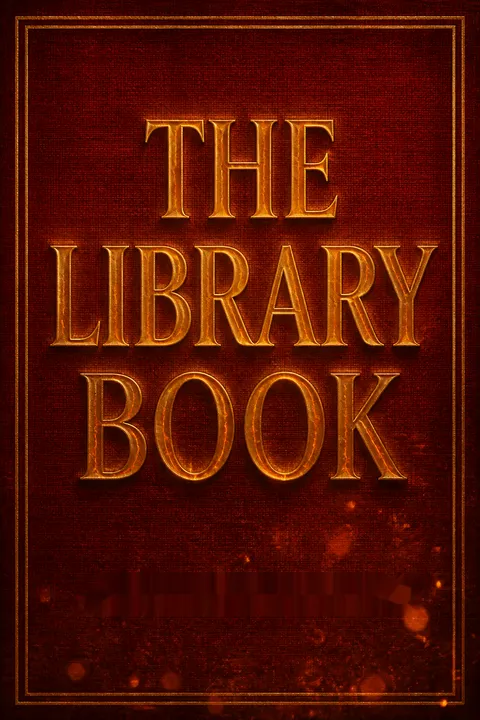
The Library Book by Susan Orlean chronicles the devastating 1986 fire at the Los Angeles Central Library that destroyed over 400,000 books and damaged 700,000 more. Reviews are overwhelmingly positive, praising Orlean's extensive research and compelling narrative that blends true crime, library history, and personal memoir. Readers appreciate the exploration of libraries' evolving roles in communities and the profiles of colorful librarians throughout history. Some critics found the structure disjointed, jumping between timelines and topics, while others felt it dragged with excessive detail. Most agree it's a moving tribute to libraries and their cultural importance.
People Also Read

Download PDF
Download EPUB
.epub digital book format is ideal for reading ebooks on phones, tablets, and e-readers.








































