
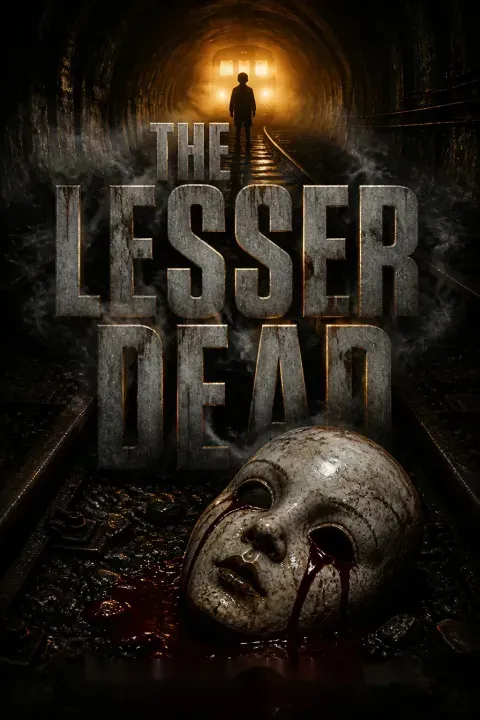


Plot Summary
Prologue
The narrator warns upfront: he is unreliable, and the story will break hearts. He describes Margaret,2 the colony's matriarch, discovering that Hunchers, the tunnel-dwelling homeless, have broken into her underground apartment.
She drops through a trapdoor and butchers four intruders with savage efficiency, taking a gunshot to the mouth that heals as she spits out teeth. When Joey1 calls her mother sarcastically, she tells him never to use that word again. He promises to introduce real monsters, the tunnels they inhabit, and a year, 1978, when everything fell apart in New York City.
The prologue functions as both a dare and a confession. The narrator's direct address implicates the reader in voyeuristic complicity; continuing means choosing to witness horror. Margaret's casual violence establishes the brutal pragmatism of vampire existence while her rejection of the word mother hints at deeper wounds. The frame device creates dramatic irony that will only fully land in the coda. We are being set up to trust a voice that has already told us it cannot be trusted. The Huncher massacre is our first glimpse of how casually this world dispenses death.
The Cameo and the Morgue
In 1933, fourteen-year-old Joey Peacock1 resents his family's new Irish cook, Margaret McMannis,2 for replacing the beloved Vilma. He steals his mother's coral cameo and slips it into Margaret's2 purse, then tells a servant he saw her take it.
Margaret2 is fired from the only job keeping her sick son alive. Two months later, she returns to the Peacock house as a vampire, throwing silver dollars at Joey's1 window and tormenting him for weeks. When Joey1 is hospitalized for an unrelated injury, Margaret2 impersonates a nurse, corners him during treatment, and drains his blood.
He dies, wakes in a morgue drawer, and she retrieves him, makes him feed on a real nurse, and wheels him out into Manhattan. She tells him they are even now: he took her life, and she took his.
This origin story is a dark fable about consequences and the banality of cruelty. Joey's petty, classist revenge destroys a poor woman's livelihood and triggers a chain of violence spanning forty-five years. The symmetry is precise: he steals her life, she steals his. But Margaret's turning of Joey is also a twisted adoption; she makes him family whether he wants it or not. The cameo, a Medusa head on coral, becomes a recurring symbol of how victims become monsters. Joey was always a predator in training; vampirism merely made his nature visible.
Ghost Children on the 6
On Valentine's Day 1978, Joey1 rides the 6 train and notices something wrong in the next car. Three barefoot children, a dark-haired girl and two blond boys, are charming a businessman. The girl wears heavy makeup on a seven-year-old face and leads the man off at Grand Central, his briefcase abandoned on the seat.
Joey1 recognizes the signs: they are vampires, impossibly young. He follows but loses them in the crowd. Shaken, he goes to the Ammonia punk club, feeds on a bouncer to steady his nerves, then returns to the tunnels to report what he saw.
Margaret,2 the colony's elected queen, calls a town meeting. The group of fourteen vampires must investigate these feral children who are hunting openly on the subway cars and threatening to expose them all.
The subway sighting violates two taboos simultaneously: the prohibition against turning children and the rule against hunting on public transit. These children represent chaos entering an ordered system. Joey's reaction, distraction through music, sex, and violence, reveals his core coping mechanism: appetite drowns fear. The abandoned briefcase becomes a haunting image of interrupted life, a man who will never return to his desk because he looked into the wrong child's eyes. The children are not hiding; they are announcing themselves, and that brazenness is the first clue they are something far more dangerous than lost fledglings.
The Castle's Bloody Larder
A rainy Saturday gives Joey1 enough cloud cover to search Central Park. He finds the children's lair in the boarded-up Belvedere Castle. Inside, amid trash and discarded clothes, he discovers a dying man named Gary Combs tied to a chair, brutalized by dozens of small bite marks kept from healing.
The children have been using him as a larder for days. Peter,4 the blond boy, introduces himself with a cheerful handshake and shows off his fangs like a schoolboy displaying a loose tooth. Camilla,5 the dark-haired girl, speaks in barely audible whispers.
Joey1 realizes they were turned without any instruction; they do not know how to feed without killing. He persuades them to come with him, gambling that Margaret's2 colony can teach them control before they attract police attention.
The castle scene crystallizes the story's central tension between empathy and self-preservation. Joey sees himself in these children: turned without consent, forced to learn predation alone. His decision to bring them in is the novel's most consequential moral choice, driven by genuine compassion that will prove catastrophic. The living larder, a man kept alive to be fed upon repeatedly, prefigures the children's ultimate relationship to all humans and vampires: not companions but resources. The cheerful handshake and the dying man coexist in the same room because these children cannot distinguish between play and predation.
Six Hungry Pupils
Margaret2 questions the six children at the abandoned 18th Street station. Peter,4 Camilla,5 Sammy,6 Manu, Alfie, and Duncan sob when asked about their parents but offer only fairy tales: their father was a king, their mother a queen of a castle with a dragon underneath.
Cvetko3 notices they speak German among themselves. Margaret,2 suspicious but swayed by the colony's sympathy, assigns Joey1 and Cvetko3 to teach them vampire survival skills. The children prove unnervingly strong and fast. Joey1 teaches them to flatten themselves between running rails, to hide from trains, to hunt without leaving evidence.
But their hunger is bottomless. They need to feed every few hours, and they cannot resist draining victims dry. Joey1 begins secretly feeding them from his own wrist, violating Margaret's2 strictest prohibition against vampires sharing blood.
The children's integration into the colony is a slow-motion disaster foretold by every fairy tale about strangers at the door. Their insatiable appetite is the first scientific clue that they are not ordinary vampires; their bodies metabolize blood differently because they are far older than they appear. Joey's decision to feed them his own blood is both compassionate and reckless, creating a bond that will later be used against him. The colony, craving purpose and family after decades of solitary predation, chooses to see lost innocents rather than ancient threats, a willful blindness that will cost them everything.
The Blind Rabbit Game
Joey1 and Cvetko3 follow the children's scent to the Balworth Theater, a shuttered playhouse the kids have claimed as a private slaughterhouse. In the prop room, surrounded by Alice in Wonderland costumes, they find a nightmare: a dead man propped in the front row with rabbit ears stapled to his head and his eyes gouged out. Five more bodies are stacked in the sound booth.
Small handprints in dried blood spell out messages about making victims into blind rabbits as part of a game. Cvetko3 insists they must burn the place and brick up the sewer entrance. Joey1 realizes the children are incorrigible, yet he has already bonded with them through shared blood. Margaret2 now wants them killed, but Joey1 and Luna8 have grown too attached to comply.
The theater massacre marks the point of no return. The Alice in Wonderland detritus is grotesquely appropriate: these children have fallen through a dark mirror where imagination becomes torture and play kills. The rabbits' eyes, a recurring motif, symbolize willful blindness, the colony's refusal to see what these children truly are. Cvetko's insistence on fire and brick reveals his growing desperation; he understands that the threat is existential but cannot yet voice the full extent of his knowledge. Joey's conflicted loyalty, torn between his new attachments and his old family, mirrors the colony's fatal indecision.
The Hessian's Innocent Treasure
The children name their maker as Varney, a fictional vampire from Victorian penny dreadfuls, and claim he is a Hessian mercenary turned wealthy Greenwich Village recluse. Margaret2 knows Wilhelm Messer,15 the Hessian,15 and doubts the story, but the Puerto Rican vampire gang called the Latin Hearts sees an opportunity. They attack Messer's15 fortified townhouse without permission, seeking his rumored treasure.
Only one returns: Gua Gua, blind and burned beyond recognition by white phosphorus grenades. He dies screaming accusations at Margaret.2 The colony's military wing is destroyed. Margaret's2 authority crumbles. The children, who fabricated the entire story, have eliminated the adults' strongest fighters without lifting a finger.
The Hessian subplot is a masterful piece of misdirection that reveals the children's true methodology. They do not fight; they manipulate. By inventing a predator and pointing the colony's greed and self-righteousness at a convenient target, they eliminate their strongest enemies through proxy violence. Gua Gua's horrific return, a blind, burning thing crawling through the tunnels, is the novel's most visceral image of what these children cause without ever dirtying their hands. The colony's internal divisions, greed, and factionalism make them easy prey for creatures who have been playing this game for a millennium.
Hey Mikey, He Didn't Like It
Joey1 returns to the Bakers, his favorite Upper East Side feeding family, to find a slaughterhouse. The parents have been killed and stacked in the bathtub. Their twelve-year-old son Mikey, now a ravenous newborn vampire, attacks Joey.1 They fight through the trashed apartment while a neighbor calls the police.
Joey1 is forced to decapitate the boy with a kitchen knife just as officers break down the door. He escapes out the window clutching the family's African gray parrot, Gonzalo. The New York Post runs the story as a satanic cult murder, complete with invented references to the Ramones and CBGB. The children have now exposed the colony to police scrutiny in the most spectacular way possible.
Mikey Baker is the story's most heartbreaking victim: an ordinary, television-addicted kid turned into a monster and then executed by the same vampire who once treated him as a joke. Joey's horror at what he is forced to do marks his moral turning point. He has spent decades treating humans as livestock; now he sees the consequences of predation through the eyes of someone who knew the victims. The Post's satanic panic framing, complete with fabricated punk rock details, underscores how thoroughly the truth will be buried under more comfortable narratives. Gonzalo the parrot becomes the story's lone innocent survivor.
Writing on the Tunnel Wall
At a tense town meeting, Margaret2 executes Baldy,14 a mob-connected vampire who brought an enforcer to challenge her authority. During the fight, bodies slam against the wall near the water pipe, scraping away decades of mold. A message appears: DON'T TRUST THE CHILDREN. Billy Bang7 scrapes further, revealing earlier graffiti depicting child vampires beheading kneeling adults, captioned JOHN IS FALSE.
The colony realizes previous vampires knew of these children and tried to warn future generations. But it is already too late. Ruth,10 Margaret's2 oldest and most loyal companion, has been murdered at the 18th Street station. The children have begun their war, and the colony is already losing.
The wall message is a palimpsest of tragedy, a warning from dead vampires who failed where this colony is about to fail. Its revelation comes at the exact moment it can do no good, underscoring the story's fatalistic structure. Margaret's execution of Baldy, strategically necessary but politically catastrophic, proves the children's implicit argument: the adults are dangerous and divided. The JOHN IS FALSE graffiti is the novel's most tantalizing clue about the true narrator, a detail that will only make sense in retrospect. The warning was always there, written in blood and covered by time.
The Old English Lullaby
Cvetko3 pieces together the truth. The siblings Peter,4 Camilla,5 and Alfie speak Old English when they think no one understands. They are Saxons, over a thousand years old, their child-sized bodies unable to retain blood efficiently.
They must feed constantly or stiffen into mummified husks, hence their insatiable hunger. They came to New York aboard a luxury yacht called the Étoile Mordante, slaughtering its crew during the Atlantic crossing. The other children, Sammy,6 Manu, and Duncan, are newer additions recruited over centuries.
The colony is not facing abandoned fledglings but ancient apex predators who have been refining their infiltration technique since before the Norman Conquest. Margaret2 prepares for war, but the children strike first.
The revelation that the children are ancients recasts every previous interaction. Their tears, their vulnerability, their claims of abuse were all performances honed over a thousand years of practice. They are not victims; they are the longest-running con in supernatural history. The yacht named Biting Star prefigures their method: move from city to city, infiltrate vampire colonies, consume them from within, then move on. The children are what vampires fear most: something older, hungrier, and infinitely more patient. They have turned predation into an art form, and the colony is their latest canvas.
Massacre at Union Square
The children corner the surviving vampires near the Union Square platform. As a train blocks their retreat, Peter4 climbs onto the platform and charms the waiting crowd. He tells them the adults are hurting the children, that they must pull off their heads and shock them on the third rail.
Glassy-eyed commuters pour onto the tracks. They swarm Margaret2 despite her savage resistance, forcing her against the electrified rail. She dies in flames. Old Boy9 is decapitated by a charmed student wielding her shovel.
Luna,8 blinded by Sammy's6 lighter and spray can, lays her neck on the running rails as another train approaches. Billy Bang7 vanishes into the chaos. The children escape in the pandemonium, having destroyed their enemies using the very humans the colony once preyed upon.
Union Square is the novel's Grand Guignol climax, weaponizing the vampire's own power against them. The children turn the colony's greatest advantage, the ability to charm humans, into its fatal vulnerability. Margaret's death by the third rail is darkly appropriate: she ruled the tunnels like a queen, and the tunnels kill her. The commuters become indistinguishable from the monsters they think they are fighting. Buehlman's point is brutal and clear: the line between civilization and mob violence is not a wall but a switch, and anyone can flip it. A sweet-faced child giving permission is all it takes.
Bricked In with the Dead
Joey1 runs. He flees through Manhattan, hunted by the children through St. Mark's Place, pausing only to feed from a kind artist who lets him drink from her wrist. A failed carjacking destroys several vehicles and draws police attention.
Eventually he returns underground, where the children ambush him. They drain his blood, remove his fangs, and carry him to Chloë's hidden chamber beneath the Brooklyn Bridge, the secret place where a teenage girl starved to death long ago and Joey1 has visited for years as a private confessional.
They tie his hand to her skeleton with human hair, circle them with candles, and perform a ritual, calling him their new god of small places. Then they brick up the wall and leave him to starve in absolute darkness.
The entombment transforms Joey's sanctuary into his tomb, completing the novel's most disturbing arc. His relationship with Chloë's skeleton was always a form of necromantic courtship; now he becomes her eternal companion. The children's ritual, making him a god of small places, reveals their theology: they do not merely kill, they consecrate. Their victims are offerings to whatever dark force sustains their unnatural longevity. Joey, who spent decades treating humans as disposable, has become disposable himself, a sacrifice to creatures far older and crueler than he ever was. His punishment is to become the thing he pitied.
Jesus Saves, Literally
Cvetko3 deduces the children's ritual pattern from photographs found among Manu's belongings. He recruits George,11 the nearly blind carpenter called Blond Jesus, who lives near Chloë's vault, and together they chip through the fresh brickwork. They find Joey1 desiccated, his fangs missing, his hand still tied to Chloë's12 bones.
Cvetko3 fills his own mouth with blood from his bitten wrist and from George,11 then shotguns it into Joey's1 mouth. Joey's1 fangs regrow. His eyes rehydrate. He returns from the edge of true death. Cvetko3 cuts him free from Chloë's12 skeleton and carries him out of the chamber. They flee the tunnels before the children realize their sacrifice has been reclaimed, leaving Chloë12 behind forever.
The rescue is the novel's sole moment of unambiguous grace, a vampire resurrection through borrowed blood. Cvetko, who has spent the entire story as the colony's conscience, performs the ultimate act of compassion. The image of him shotgunning blood into Joey's desiccated mouth is both grotesque and tender: a dark baptism, a rebirth through sacrifice. That a nearly blind carpenter named George helps save Joey is the story's most explicit Christ-imagery, and yet, as the coda will reveal, even this moment is poisoned by dramatic irony. The savior is also the predator, and the rescue serves purposes Joey cannot imagine.
California Night Swimming
Joey1 and Cvetko3 flee to Boston, joining a vampire community housed in apartments with secret passages. Months later, they part ways. Joey1 meets a girl vampire turned young like him, and they drive her Buick Centurion to California. The story closes on an image of the two of them night-swimming in Oceano in 1979, pale teenagers gliding through dark water, then retreating to a seaside cottage as the moon sets.
A German shepherd sniffs their footprints but cannot bark, only bays at the vanishing moon. Led Zeppelin's Fool in the Rain plays from a passing convertible. Joey1 types THE END and orders the reader to put the book down. For those who want a happy ending, he insists, this is it.
The California ending is a Hollywood fantasy deliberately grafted onto a horror novel, too perfect to be true. The mirroring couples, young vampires versus aging humans on the beach, the loyal dog who cannot name the evil he smells, the classic rock soundtrack: every detail signals a manufactured happy ending. Joey has gotten everything he wanted, a girlfriend, a car, a seaside cottage, eternal youth, and the massacre at Union Square is already fading in the rearview mirror. This is what a fourteen-year-old boy would write as his ideal conclusion, and the narrator's insistence that the reader stop here is the final test of our willful blindness.
Epilogue
The narrator drops the Joey Peacock1 persona and speaks in his true voice. He is not Joseph Hiram Peacock.1 He is the ancient vampire who infiltrated the colony posing as Cvetko,3 having killed the real Slovenian scholar in London years before.
He edited Joey's1 crude journal into a proper narrative, polishing the prose and adding literary allusions. The children, Peter,4 Camilla,5 and Alfie, are his charges, and he has been shepherding them from city to city for centuries, infiltrating vampire colonies and facilitating their destruction.
The Hessian15 was innocent; the children's abuse story was always a lie. The narrator is now taking Joey's1 persona as his next disguise, a stylish young New Yorker whose voice he has perfected by writing this very book.
The coda transforms The Lesser Dead from a vampire thriller into a meditation on narrative itself. Everything we trusted, Joey's voice, Cvetko's decency, the children's vulnerability, was a performance crafted by a predator who has mastered the art of becoming whatever a community needs to see. The true horror is not predation but deception: the way stories can be weapons, the way empathy can be exploited. The narrator's gleeful reveal implicates the reader, who was warned from page one about an unreliable narrator. We wanted a happy ending, so we accepted a fiction within a fiction. The book becomes a mousetrap, and we are the blind rabbits who walked into it willingly.
Analysis
The Lesser Dead operates as a trap disguised as a vampire novel, a narrative designed to make readers complicit in their own deception. Joey Peacock's1 voice, witty, profane, saturated with 1970s pop culture, seduces us into trusting a monster because he seems so recognizably human in his vanities and affections. That trust is the book's true subject: how easily we believe stories that flatter our assumptions, how readily we accept the narrator who makes us feel clever.
The novel's title works on multiple levels. The colony members are the lesser dead in contrast to ancient vampires like the Hessian15 or the children. They are also lesser in the sense of being doomed; they imagine themselves apex predators but are merely the latest in a centuries-long chain of victims. The children, a thousand years old and infinitely patient, are the greater dead, and the colony never stood a chance precisely because they could not conceive of a threat so far beyond their experience.
Buehlman uses vampirism to explore predation as a continuum rather than a binary. Joey1 drinks blood and manipulates humans but loves his friends and mourns his losses. The children play murderous games but genuinely care for one another. Even the true narrator, the ancient infiltrator, feels something like love for his charges. Evil in this world is not cackling villainy but systematic exploitation performed by beings who have organized their cruelty into routine.
The coda's revelation that everything we read was edited by the predator who destroyed the colony implicates the entire act of storytelling. The narrator has done to us what he did to the colony: gained trust through apparent vulnerability, then weaponized our credulity. We were warned from the first page. We continued anyway. The book suggests that this is not merely a literary game but a model of how power works in the real world: predators succeed by telling stories their victims want to believe.
People Also Read
Characters
Joey Peacock
Vampire boy, unreliable narratorThe apparent narrator, physically frozen at fourteen but nearly sixty in real years. Born to a wealthy Manhattan family in 1919, he was turned by Margaret McMannis2 in 1933 after framing her for theft and getting her fired. Joey is vain, charming, and steeped in 1970s pop culture: he loves television, disco, punk clubs, and fashion. He feeds by posing as a lost child. Despite selfishness, he possesses genuine loyalty to his underground family and surprising tenderness, as shown in his secret visits to a skeleton he calls Chloë12. His voice is witty, profane, and saturated with the slang of 1978 New York.
Margaret McMannis
Irish vampire queen of the tunnelsThe fierce, foul-mouthed matriarch of Manhattan's underground vampire colony. Turned in 1933 after losing her job as the Peacock family's cook, she built an organized community of vampires in abandoned tunnels and subway stations. She enforces strict rules, no killing, no turning children, no feeding openly, with brutal efficiency, wielding a sharpened shovel as her weapon. Her relationship with Joey1 is complex: she resents him for destroying her human life yet feels responsible for him as her only link to the past. Beneath her savagery lies grief for her disabled son, whom she gave up after being turned, and a fierce protective instinct toward those she considers hers.
Cvetko Štukelj
Scholarly mentor and moral compassA Slovenian scholar and vampire who serves as Joey's1 mentor. He was a linguistics professor before World War II, lost his wife and children to a partisan bombing, and emigrated to America only to be turned in the 1950s. Cvetko is kind, pedantic, and deeply ethical for a vampire: he writes letters to lonely elderly women asking permission before biting them, refuses to kill, and constantly challenges Joey1 to think more deeply. He wears horn-rimmed glasses, has a slight potbelly, and reads National Geographic to remember the sun. His gentle manner conceals sharp intelligence and a pragmatic survival instinct forged by war.
Peter
Cheerful child vampire, pack leaderA blond British child vampire who appears to be about eight years old. Cheerful, playful, and seemingly innocent, Peter is the de facto leader of the six child vampires. He shows off his fangs like a boy displaying a loose tooth, does Mick Jagger impersonations, and loves Star Wars. But his charm masks something far older and hungrier. He leads the children in their games, which include elaborate methods of torture and killing. His relationship with his siblings Camilla5 and Alfie is fiercely loyal, and he protects them with the ferocity of an older brother who has been doing so for a very, very long time.
Camilla
Whispering girl, true authorityA dark-haired girl vampire, seemingly about seven, who speaks almost entirely in whispers. She is Peter's4 older sister and the true authority among the children, though she rarely asserts dominance openly. She carries Raggedy Ann dolls stolen from victims and sings lullabies in a language only her brothers understand. Her quiet, watchful presence is far more unsettling than the boys' open aggression.
Sammy
Cruel redheaded child vampireA redheaded British child vampire, cruel and combative even by the children's standards. He delights in violence and resents authority, constantly testing boundaries. He carries a pencil he uses to blind victims. His relationship with Manu is marked by racial taunts and physical fights, yet they function as an effective predatory team. His cruelty is the most overt among the children.
Billy Bang
Musician vampire, colony bardA Black vampire and talented musician who plays steel guitar in subway stations. Turned in the 1970s by Clayton, he retains a performer's charisma and ironic wit. He serves as a bridge between Margaret's2 old guard and the colony's younger members. His music, often sad songs played in dark tunnels, provides the colony's unofficial soundtrack. He defuses tension with humor but proves a fierce fighter when war comes.
Luna
Maternal vampire, former prostituteA vampire who was a prostitute before being turned. Kind-hearted and maternal, she becomes one of the children's fiercest protectors, feeding them from her own neck. She was the protégée of Clayton, an older vampire who succumbed to night fever and walked into the sun. Her room is plastered with movie posters, and she loves Paul Newman films. Her maternal instinct toward the children proves fatal.
Old Boy
Silent bodyguard, Vietnam veteranA Vietnam War veteran turned vampire, serving as Margaret's2 silent, lethal bodyguard. His Marine recon background made him an expert in stealth and ambush before he was turned; vampirism amplified those skills. He rarely speaks, communicating through movement and gesture. He knows how to build and detect booby traps, a skill that saves lives when the war with the children begins. He also secretly feeds the children from his own blood.
Ruth
Margaret's oldest loyal soldierMargaret's2 oldest and most loyal companion, a square-jawed, mannish vampire turned in the 1940s. She was rescued by Margaret2 from the vampire who turned her, and her devotion is absolute. She looks permanently dead, her skin grayish-green, because she has learned to relax the charm that makes vampires appear living. She hates liars and serves as Margaret's2 unflinching enforcer.
Blond Jesus
Blind carpenter, holy innocentA nearly blind carpenter living in a vault beneath the Brooklyn Bridge, making furniture by lamplight. Gentle and devout, he accepts the presence of vampires with preternatural calm. His failing eyesight kept him out of Vietnam, a disappointment he transformed into a spiritual calling.
Chloë
Dead girl, silent confessorThe skeleton of a teenage girl who starved to death trapped in a brick chamber. Joey1 treats her as a secret confidante, bringing flowers and confessing his darkest thoughts. She represents the innocent dead, victims of a world that does not protect the vulnerable.
Mapache
Latino vampire gang leaderLeader of the Latin Hearts, a Puerto Rican vampire gang serving as Margaret's2 enforcers. Charismatic and ambitious, he resents Margaret's2 authority and sees the Hessian15 as a path to independence and wealth. His name means raccoon in Spanish, fitting his clever, nocturnal nature.
Balducci
Ex-mobster, scheming rivalA former mobster turned vampire who covets Margaret's2 leadership. Patient and calculating, he waits for opportunities to undermine her, using old connections to build an alternative power base. His ambition and resentment make him a useful tool for the children's plans.
Wilhelm Messer
Ancient Hessian vampireAn ancient German vampire who fought for the British during the American Revolution. Reclusive and wealthy, he lives in a fortified Greenwich Village townhouse filled with treasure and weapons. He refuses to live underground, considering tunnels unsafe, and is falsely accused by the children of creating them.
Plot Devices
Clayton's Codex
Lost vampire knowledge and loreThree watercolor sketchbooks created by Clayton, an older vampire who documented vampire encounters across America before succumbing to night fever and walking into the sun. The books contain paintings and handwritten notes about different vampire types, behaviors, and regional lore. Joey1 steals them from Margaret's2 locked trunk hoping to find a medical explanation for the children's insatiable hunger. Several pages have been torn out, suggesting someone has already censored the most dangerous information. The Codex represents the accumulated knowledge that might have saved the colony if studied sooner, and its missing pages embody the willful ignorance that dooms them.
The Medusa Cameo
Symbol of original sin and cyclesThe coral cameo pendant depicting Medusa that Joey1 stole from his mother and planted in Margaret's2 purse in 1933, framing her for theft. This single act of petty cruelty set the entire forty-five-year chain of events in motion. Margaret2 kept the cameo as a reminder of the injustice that destroyed her human life. Near the story's climax, Cvetko3 leaves it for Joey1 as a sign that he understands their shared history. The Medusa image, a woman transformed into a monster by forces beyond her control, mirrors Margaret's2 own arc from victim to predator, and the pendant's circular journey closes the narrative's central loop.
The Subway Tunnels
Underground sanctuary and battlegroundThe sprawling network of abandoned and active subway tunnels, experimental lines, service rooms, and vaults beneath Manhattan where the vampire colony makes its home. Key locations include the decommissioned 18th Street station, the elegant but unused Old City Hall station, and Margaret's2 lavishly appointed vault, a failed nineteenth-century demonstration project. The tunnels provide darkness, privacy, and easy access to human prey, but they also make the colony vulnerable to enemies who know the underground as well or better. The children covet the tunnels for exactly these reasons, having spent centuries migrating between cities and claiming underground spaces as their own.
Willy Pete Grenades
Vampire-destroying incendiary weaponWhite phosphorus grenades, military-grade incendiary weapons that burn at temperatures capable of destroying vampires permanently. Unlike ordinary fire, white phosphorus sticks to flesh and continues burning until it exhausts itself, making it one of the few weapons that can guarantee a vampire's true death. The Hessian15 uses them to defend his townhouse against the Latin Hearts. Old Boy9 later deploys them against the children. The grenades represent the brutal escalation from supernatural predation to modern warfare, and their horrific effects, described in visceral detail through Gua Gua's injuries, underscore the novel's thesis that humans are capable of inventing evils that rival anything supernatural.
Chloë's Chamber
Secret confessional and eventual tombA concealed brick room beneath the Brooklyn Bridge anchorage where a teenage girl starved to death after becoming trapped, her scratched-off fingertips and huddled posture testifying to a slow, desperate end. Joey1 discovered her skeleton years earlier and visits regularly, bringing fresh flowers and treating her as a secret confidante to whom he confesses his darkest thoughts. The chamber, accessible only through a rusty pipe and a loose-brick wall, serves as his private sanctuary away from colony politics. The girl's identity is unknown; Joey1 calls her Chloë12 and imagines a parallel life where they might have met as living children and fallen in love.


Download PDF
Download EPUB
.epub digital book format is ideal for reading ebooks on phones, tablets, and e-readers.








































