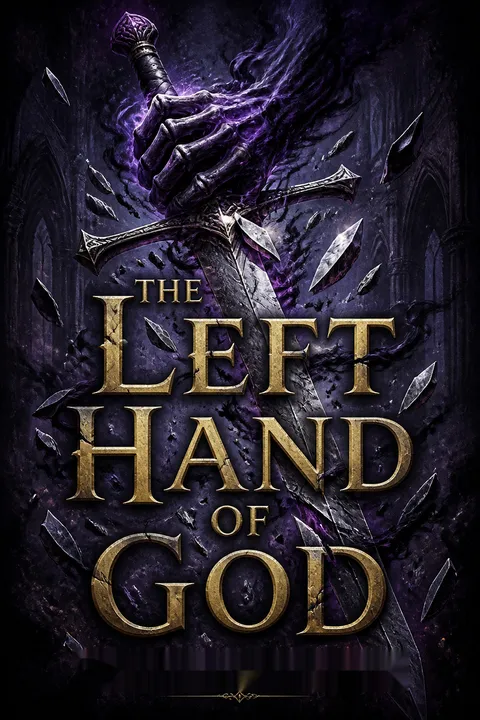

Plot Summary
The Cold Sanctuary Walls
The Sanctuary of the Redeemers is no place of salvation, but a grim fortress where young boys are indoctrinated, abused, and shaped for war. Thomas Cale, a boy whose past is erased and present dictated by the Redeemers' cruelty, learns early to suppress his feelings and survive by wit, compliance, and quick violence. The monotony of deprivation is broken only by unpredictable brutality and the obscure ambitions of Redeemer Bosco, whose gaze lingers on Cale—a boy marked for more than survival. In the grim corridors and icy mornings, Cale becomes hardened, but some spark remains: curiosity, an urge to break rules, and the faint ache for connection. This place demands obedience, but quietly breeds rebellion.
Freshbloods and Forbidden Doors
Amidst endless drills and sermons, Cale navigates the Sanctuary's labyrinth with two outcasts—Vague Henri and Kleist—each as damaged and sharp as himself. The arrival of new "freshbloods" spurs harsh punishments and tighter discipline, but also a chance encounter leads the trio to uncover a forbidden door—a physical embodiment of all that is taboo: privacy, secrecy, and hope. Behind it, a hidden tunnel and a taste of forbidden food become revolutionary moments, sparking friendship and a desire for more than endurance. The risk binds them as accomplices, revealing common desperation and some small trust in an otherwise friendless world.
Feast, Forbidden, and Fright
Driven by hunger, they find a kitchen laden with food and, by accident, witness a scene even further outside their known reality—a gathering of girls in pleasure and laughter utterly alien to their brutal world. But the true terror hides elsewhere: the presence of girls in the Sanctuary is not cause for celebration, but foreshadows horror. Their return to the acolyte dorms is frantic and fearful, marked by resurrection of old terrors and the constant nearness of death. And beneath this dangerous adventure, the trio glimpses life beyond raw survival and of a world both tempting and dangerous.
Cruelty in the Shadows
Harsh discipline resumes with dawn. The Redeemers' machinery grinds on: prayers, punishments, and endless training for a coming war. Cale's special status under Redeemer Bosco brings both perils and privileges, as well as isolation. Through trials both petty and grave—beatings for small acts of pride, forced displays of obedience—Cale shows himself as both brilliant and stubbornly independent. The boys' fragile friendship is tested by mutual suspicion and shared suffering. In this epoch of pain, Cale absorbs hard lessons in power and submission, proving that the most dangerous rebellion is to think and feel in defiance of pitiless authority.
Blood and Escape
Events spiral toward catastrophe when Cale stumbles upon Redeemer Picarbo dissecting a living girl as a holy experiment. In a burst of violence, Cale kills the Lord of Discipline—the first act of open rebellion in generations. This rupture forces Cale, Henri, and Kleist to flee alongside the girl Riba. Escape demands ingenuity, old scars, and risking everything. This rescue is not heroism in the conventional sense but a desperate assertion of agency. Their exodus is fraught with the legacy of trauma; acts of violence, however justified, cannot wash away the cost or ease the consequences that now follow them unrelentingly.
The Girl Called Riba
Riba, revealed to be a "bride" groomed for an unknown fate, is as much a survivor as the boys—her pampered innocence a mask for deep wounds and bewilderment. Her integration into the group is uneasy: she is at once their charge and a liability. Through Riba, the boys glimpse the perverse logic of the Redeemers' plans—a world where kindness is as calculated as suffering, and innocence is cultivated only to be corrupted. Riba's vulnerability rouses in Cale and Henri new, unfamiliar feelings—empathy, protectiveness—which threaten the numbness that had shielded them from a lifetime of pain.
Hair-Rope Descent
To escape the pursuing Redeemers, Cale enacts the plan he had long prepared: using a rope woven from scavenged hair, he abseils from the Sanctuary walls. Alone in the wilderness, he risks recapture, dogs, and the freezing wild. Meanwhile, the others hide in tunnels, relying on faith in an unproven plan. Cale must draw pursuers away, bluff and use every lesson in survival the Redeemers forced upon him. Their separation and the means of escape mark the crossing of a moral and literal threshold, from oppressed children to fugitives whose future is uncertain, but is now their own to claim or lose.
Pursued Across Wasteland
Wilderness is no sanctuary. Pursued by enemies, haunted by memories of violence, the fugitives' journey is perilous. Hunger, exhaustion, and Riba's frailty sap strength and hope; the boys debate leaving her behind but cannot bring themselves to abandon the vulnerable. Moral choices, once forced by authority, are now theirs, and carry new weight. Along the way they encounter the world outside the Sanctuary: mercenaries, chancellors, mythic bandits like IdrisPukke, and for the first time, their own capacity for kindness and treachery. The tension between desire for freedom and the trauma of the past plays out in acts of both self-preservation and compassion.
Riba's Story Unfolds
Safe for a time with IdrisPukke and later as prisoners of Materazzi forces, each survivor's story deepens. Riba's memories of happiness, deception, and loss become metaphors for innocence destroyed and longing for belonging. The boys, especially Vague Henri, experience both romantic yearning and guilt: desire, envy, and confusion swirl in the presence of someone so different and vulnerable. Amid new perils in Memphis, their separate paths converge and diverge—political machinations and social hierarchies exposing them to dangers both subtle and overt. The past intrudes in every interaction, whether with city power brokers, new allies, or relentless enemies.
Into Memphis Captive
Cale, Henri, Kleist, and Riba arrive in Memphis, first as bewildered wonders in a city of splendor, then as prisoners questioned and used by Chancellor Vipond and his network. The dazzling city offers both temptation and fresh threats—corruption, labyrinthine loyalties, the allure and dangers of status, and explosive social contrasts. The group's talents find new expression as Cale is apprenticed, Henri and Kleist adapt, and Riba's beauty and skills are both blessing and curse. Layered beneath their roles in the palace are schemes and plots, as Memphis prepares for the Redeemers' war that will upend all expectations.
Splendors and Sorrows of Memphis
The city's complexity exposes each to hope and pain: Cale attracts the attention of Vipond, gains enemies in the proud warrior Conn Materazzi, and arouses the ambiguous love of Arbell Swan-Neck; Kleist and Henri struggle with their place among the arrogant Mond, and Riba—once cherished then discarded by a jealous noblewoman—finds her truest self as Arbell's confidante. New bonds, especially between Cale and Arbell, complicate old ones. Jealousy, longing, and the memory of trauma infuse every victory with doubt. Memphis is no longer an unattainable fantasy but a stage for both reinvention and old wounds.
Schemes and New Loyalties
Politics and alliances define daily survival. Riba's ascent as Arbell's maid brings her into palace intrigue, while Cale and his friends, now bodyguards, must win over or outwit a suspicious city bent on proving them imposters. Meanwhile, outside Memphis, Kitty the Hare's tentacles reach ever inward, threatening to upend every precarious alliance. Simon, Arbell's silent brother, is rescued from neglect with the help of Cale's ingenuity and Henri's compassion, setting off events that will both humanize and estrange. For the first time, the main characters experience not only enmity but friendship rooted in gratitude and shared vulnerability.
Kitty Town and Alliances
Kitty the Hare, legendary underworld lord, aligns with both Redeemers and Materazzi for his own benefit, further muddying friend and foe. Cale's group is shadowed by assassins sent by Kitty and by the Redeemers—trust becomes ever riskier as even kindness is weaponized, and care taken, as with Simon, can evoke suspicion and unintended consequences. The city's underside is exposed: betrayal, temptation, the price of loyalty, and the realities of power. Alliances are tainted—help comes with a price; safety is always conditional. As war looms, everyone is caught in a trap of their own making or failing.
Apprentices and Ambitions
Cale, Henri, and Kleist undergo a martial apprenticeship under the Mond, facing the arrogance and cruelty of their social superiors, particularly the formidable Conn Materazzi. With every beating, slight, and humiliation, Cale's hunger for respect burns. Their extraordinary abilities—archery, sniper skills, tactical genius—captivate some and threaten others. Test after test, Cale's mastery and independence provoke confrontation: the most dangerous challenge is the promise of a duel with Conn—drawn as much by pride as by fate. The trio's rise from scorned outsiders signals both peril and possibility, and revenge simmers, awaiting release.
Conn Materazzi's Challenge
Cale's refusal to submit triggers the inevitable duel with Conn, watched by the city's elite. Their combat exposes deep differences: Conn's skill and privilege versus Cale's brutality, cunning, and injury-borne perception. The fight—raw, fast, and shocking—upends expectations when Cale, after enduring mockery and pain, turns the tables. The shattering of The Edge, a legendary sword, and Conn's defeat set the city afire with controversy. Cale's actions are both a demand for dignity and a declaration of war on the old order. The cost of pride is exile; the reward is neither safety nor acceptance, but emboldened enemies.
Banquets and Discoveries
Even triumph brings new trials. At a public banquet, Cale's achievements are officially acknowledged, yet Materazzi prejudice lingers. Simon's intelligence—long ignored—bursts forth via a new sign language developed by Koolhaus, redeemer of his silent suffering. Shifting perceptions bring joy and regret: the proud Marshal reclaims his son, but Cale's role as architect is nearly forgotten. For Cale and Arbell, forbidden love blossoms amidst political intrigue, their intimacy both solace and potential ruin. Others, especially Kleist, are left adrift between admiration and resentment. The cost of difference is constant danger; recognition is never without a price in Memphis.
The Weight of Genius
The Redeemers' war machine intensifies: Cale's insights, born of forced study and talent, become the very plans used against the Materazzi. Chains of command are muddled by pride, rivalries, and the absence of the Marshal. Cale—both left hand of God and unwilling prophet—is caught between loyalty, guilt, and cold survival logic. At Treetops, a brief respite with IdrisPukke exposes the paradoxes in his nature: both weary and wise, scarred and tender, he is haunted by both his past and unwanted fates. Peace is fleeting—danger, and the specter of purpose, always return.
Treetops: An Uneasy Peace
Brief months in the remote lodge Treetops offer rest but little true security. Cale and IdrisPukke reflect on the darkness of mankind, the meaning of trust, and the futility of politics. Pursuit is constant, from both Redeemers and the enigmatic Kitty the Hare. As Cale recovers, so does his longing—for belonging, for Arbell, for release from destiny. Other fates converge in Memphis, where Riba is both servant and confidante, and the roots of future heartbreak and betrayal are planted. But the next summons is unavoidable: war comes, and Cale's brilliance, and brutality, are both weapon and curse.
Machinations and Departures
Back in Memphis, new and old enemies plot: war is imminent, and the lines between ally and adversary blur. Cale's group is forcibly drawn into the city's internal intrigues, while Riba's rise as Arbell's aide intertwines her fate with political machination—her loyalty tested as she becomes informant to Arbell's mother. Meanwhile, betrayals compound in both low and high society: loyalties are cheapened, trust even among "friends" is elusive, and the Redeemers, with Kitty the Hare's reluctant assistance, arrange for bloodshed that will force the hand of empire and accelerate the downward spiral toward open war.
Arbell and the Changing Heart
Arbell Swan-Neck's feelings for Cale shift from fear and disdain to passion and dependence, triggered by Riba's intervention and Cale's selfless (and theatrical) care for her brother Simon. But tenderness is always shadowed by dread. Growing love is tainted both by Cale's violence and by Arbell's own refined repulsion; their union is treasured, but also unwieldy—a blend of worship and foreboding. Meanwhile, loyalty is tested, both to self and to others. The fear that Cale's wounds—both visible and invisible—are contagious, that his intensity spells ruin, grows in Arbell's breast even as her passion for him deepens.
The Assassin's Stake
Bosco and the Redeemers, aided by Kitty the Hare's criminal network, launch a bold assassination attempt on Arbell. The attack is devastating but not expertly executed; Cale and his friends, using their unique weapons and skills, repel it, earning both admiration and renewed suspicion among the Materazzi. The propaganda war intensifies—Arbell is smeared as the "Whore of Memphis," deepening her peril and isolating her emotionally. The failed assault confirms Cale's instincts: the Redeemers are willing to sacrifice anything, including their own, to provoke a war. The battle lines, literal and figurative, are drawn tighter than ever.
Duel in the Arena
A minor dispute with the powerful Solomon Solomon leads to a public duel—an orchestrated spectacle that exposes the savage heart of Materazzi justice. Facing a far stronger, more experienced fighter, Cale is gripped by mortal fear, but in the fight's crucible, trauma becomes weapon—he kills Solomon and, triumph mixed with contempt, drags the corpse before the jeering, stunned elite. The crowd's adulation curdles into loathing. For Cale, survival comes at the price of deeper isolation and exposure. His love for Arbell, once a shield, is now both reason for hope and fuel for the city's suspicion and his own damnation.
Collapse and Consequence
War's horror and betrayal.*
The Redeemers decimate Memphis's armies at Silbury Hill—Cale's own tactical genius turned against him. Chaos reigns; friends are lost, alliances shattered. Arbell's brother Simon is rescued in the midst of carnage, a rare act of hope in the maelstrom. Yet as city falls, Cale and his companions are betrayed and taken captive—Bosco's cunning, and the inertia of fate, bring Cale back to the hands that shaped him. Arbell, torn by love and duty, is forced into the final act of betrayal, delivering Cale to Bosco in exchange for her people's freedom. The circle closes—freedom is an illusion, and destiny, perhaps, was always inescapable.
The Redeemers' War Begins
With the capture of key characters, Bosco's larger design unfolds. The Redeemers exploit learned tactics, new weapons, and ruthless propaganda to crush both military and civilian targets—an unprecedented massacre signals the start of a new, even darker age. Memphis, its pride shattered, surrenders, and Arbell's sacrifice is completed. Cale's role as the "left hand of God"—the living Angel of Death—is confirmed by Bosco, who reveals a prophecy dating to his own youth: Cale is both redeemer and destroyer, the chosen instrument of annihilation. The story ends not in redemption, but in the inexorable march towards further bloodshed, carried on the wind of heartbreak.
Analysis
A meditation on trauma and powerPaul Hoffman's The Left Hand of God asks: what becomes of the soul forged in systematic cruelty yet marked for greatness? The novel, echoing the forms of classic "chosen one" fantasy, becomes instead a study in how evil is institutionalized, how survival mandates moral compromise, and how even love cannot wholly redeem the wounded. Like its anti-hero Thomas Cale, the book is driven by relentless motion—escape, pursuit, confrontation—yet finds its deepest resonance in moments where brutality and tenderness blur. The narrative critiques all systems: religious fanaticism, empire, meritocracy, and the seductive morality of love. Ultimately, the story warns that exceptional talent and destiny, when untempered by real compassion or justice, are as likely to destroy as to save. The "left hand of God" is not merely savior but destroyer—an angel whose gifts are as likely to end the world as to redeem it. Hoffman's contemporary lesson: suffering does not ennoble, authority corrupts, and the world's violence is cyclical, fed by the wounded children who inherit it. This is a story for a world weary of easy redemption—a warning and an elegy for what trauma makes of us all.
Review Summary
The Left Hand of God receives mixed reviews, averaging 3.65/5. Praise centers on the compelling protagonist Thomas Cale, dark atmospheric writing, and an intriguing premise involving a brutal religious sanctuary. Critics highlight inconsistent world-building that blends real and fictional elements confusingly, underdeveloped female characters, unfocused plotting, and an identity crisis between young adult and adult fantasy. Some readers found it an unputdownable page-turner; others abandoned it frustrated by poor characterisation and narrative structure. Most agree the book shows genuine talent alongside significant flaws.
People Also Read




Characters
Thomas Cale
Cale is the survivor shaped by trauma—a boy without a true past, who rises from victim to reluctant champion. Scarred both body and soul, he displays cold brilliance, tactical imagination, and a capacity for shocking violence. Psychoanalytically, Cale is distrustful, numb to emotion except in rare bursts—his capacity for love or tenderness is often in conflict with instinct and memory. Relationships for him are transactional, but flashes of empathy, especially for Riba and Arbell, reveal cracks in his armor. Driven first by survival, then by a growing awareness of destiny (as the left hand of God/Angel of Death), he vacillates between seeking autonomy and being drawn into the gravitational pull of others' schemes. His evolution is marked by an uneasy movement from passive victim, to active defier, to pawn—and, perhaps, prophet—of apocalyptic change.
Redeemer Bosco
Bosco is the architect of Cale's fate—the Redeemer Militant whose genius and fanaticism drive Sanctuaries' machinery of indoctrination. At once protector and tormentor, he shapes Cale through cruelty, discipline, and relentless ambition. He is both manipulator and true believer, his intentions inscrutable—he clearly identifies Cale's unique genius and grooms him for purposes both personal and prophetic. Bosco sees himself as (and perhaps truly is) an instrument of a higher malice, his violence always justified as serving a cosmic plan. He is patient, strategic, almost inhuman in his reserve, and yet experiences moments of genuine attachment (or projection) onto Cale—a mirror of his own contradictory humanity.
Vague Henri
Henri is the subtle resistor—by turns comic, evasive, and quietly defiant. His apparent vagueness is a front for rebellion: he refuses to let brutality snuff out wit or hope. In friendships, he is loyal to Cale, even as he senses the peril of such bonds. Henri's psychoanalysis reveals deep creativity as a means of survival, but also a hunger for connection not easily satisfied. In open spaces or with Riba, his gentleness emerges, but he is never far from the role of the scapegoat or jester, risking everything for small, symbolic acts of agency.
Kleist
Kleist, all bravado and sharpness, compensates for past pain with aggression and dark humor. He is skilled—especially as an archer—but slow to trust, quick to resent. Loyalty to Cale and Henri is as much strategic as personal, his partnership forged in mutual need. Violence is familiar to him; remorse and self-examination, foreign. Kleist's psychoanalytic makeup is defined by mistrust and a need for autonomy, masking both vulnerability and a small, unspoken longing for acceptance or admiration.
Riba
Riba's life is the narrative's conscience—her transition from comfort, to betrayal, to trauma, is emblematic of larger themes of lost innocence and the exploitation of weakness. Her presence humanizes Cale and the others, awakening feelings suppressed or denied. Psychoanalytically, she shifts from passive victim to active survivor, her kindness and beauty both salvation and danger. Her effect on others—softening hardness, exposing jealousy, and stirring hope—suggests the disruptive potential of true empathy in a world designed to extinguish it.
Redeemer Picarbo (Lord of Discipline)
Picarbo is the sadist idealized—his medical and "spiritual" abuses are both ordinary and unspeakable. As the Lord of Discipline, he represents the Sanctuary's ideology taken to perverse extremes: cruelty justified as necessary for order and faith. His psychoanalysis is straightforward—he is both product and perpetuator of a system that sanctifies violence. His brutal experiments on Riba and others are narrative pivot points, exposing the machinery of dehumanization at the story's core.
Arbell Swan-Neck
Arbell is both object of desire and agent of her own undoing. Raised to be an ornament of the Materazzi empire, she vacillates between vulnerability and refinement, love and dread. Her relationship with Cale is deeply ambivalent: passion/repulsion, gratitude/fear, autonomy/duty. Ultimately, she is a tragic figure—her pivotal betrayal, fated by position and circumstance, reflects the novel's themes of love's impossibility in a world corrupted by power and violence. Her psychoanalysis is rooted in the tension between self-preservation and the irresistible pull of things—and people—that threaten destruction.
IdrisPukke
IdrisPukke is the mercenary philosopher—a man who has lived many lives and knows the value and futility of cynicism. Both mentor and warning for Cale, his wit and self-deprecation conceal a deep wound and an urge for redemption he cannot quite claim. Psychoanalytically, he is drawn to proteges, perhaps out of guilt, perhaps out of hope. IdrisPukke's ability to laugh at himself and the world offers a counterpoint to the characters' self-seriousness; his insight is both gift and curse.
Chancellor Vipond
Vipond embodies the cold logic of power and reasoned control. His relationships are transactional, his loyalties to empire, not individual. He is wise, shrewd, and often right about human failings—and yet fails as often as he succeeds to mitigate the tide of destruction. His psychoanalysis is rooted in realpolitik: sentiment and justice are subordinate to survival. As both protector and manipulator, he mirrors Bosco in secular form.
Kitty the Hare
Kitty the Hare, the city's underworld lord, is mythic—less a person than a symbol of the amorality and shadow-economy that powers empires. Kitty navigates alliances for profit, indifferent to morality, history, or the suffering of others. His role is to demonstrate that every ideal (whether religious or rational) is undermined by the ever-present realities of appetite, corruption, and the commodification of life itself.
Plot Devices
Indoctrination and Psychological Torture
The novel constructs the physical and psychological world of the Sanctuary as a device for exploring indoctrination—the stripping of individuality, enforced ritual, and the constant threat of violence used to create both obedience and latent rebellion. The methodical cruelty and normalization of terror are revealed as not only disciplinary, but as the means by which exceptional (and broken) individuals like Cale are created. This device resonates throughout, shaping character choices and emotional reality.
Escape and Pursuit
The classic "escape the prison" plot is reshaped through the lens of psychological trauma: flight is both physical and existential. Pursuit—by Redeemers, fate, trauma, and even friends—perpetuates a narrative momentum, ensuring that no sanctuary (literal or figurative) is lasting. Each pursuit intensifies self-knowledge and reveals both allies and traitors, using movement and chase as mechanisms for both action and character development.
Hidden Knowledge, Prophecy, and Destiny
Prophecy—the visions of Bosco, the plans laid before Cale, the assertions that he is the "left hand of God"—weave together fate and autonomy. This device drives suspense: the possibility of choice is ever shadowed by the suggestion that destiny is inescapable. Foreshadowing is constant, in the Redeemers' plans and in Cale's own talents, talents he cannot escape nor entirely understand.
Symbolic Objects: Keys, Doors, Weapons
Keys unlock forbidden rooms; doors promise and punish hope; The Edge, the legendary sword, is both status and shackle; the glove of Brzica becomes an emblem of mechanized death. These objects are not only practical plot tools, but mark thematic transitions: thresholds crossed, identities transformed, violence sanctified or resisted.
Political Intrigue and Social Satire
Memphis, with its alliances, betrayals, Kitty the Hare's shadow economy and the interplay between privilege and merit, operates as a plot device for both suspense and misdirection. Political and social complexities shape action, revealing both the possibilities and limits of individual agency in a world built for the benefit of the few at the expense of the many.
War as Theater, as Trap
The narrative's war sequences are not background but the final test of character and ideology. Battle at Silbury Hill becomes a stage for both tactical genius and the randomness of suffering—a literal and symbolic enactment of the world's cruelty, pride, and indifference. Victory and disaster are equally hollow; the outcome is less a climax than an exposure of how fate, pride, and trauma are inextricably entwined.
Double Betrayals and Twists
Trust is weaponized; alliances are traps. Foreshadowed betrayals—especially Arbell's final sacrifice of Cale—are set up in small incremental acts and moments of apparent safety. Bosco's motives, and Cale's role, are only fully revealed at the end, making every previous event a matter of interpretation, not certainty.
Psychoanalytic Introspection
Frequent rumination, flashback, and introspective dialogue function as plot device and moral commentary. Characters are inextricably shaped—made and unmade—by the psychic violence of their upbringing and present choices, ensuring that development and fate feel both preordained and, tragically, self-willed.
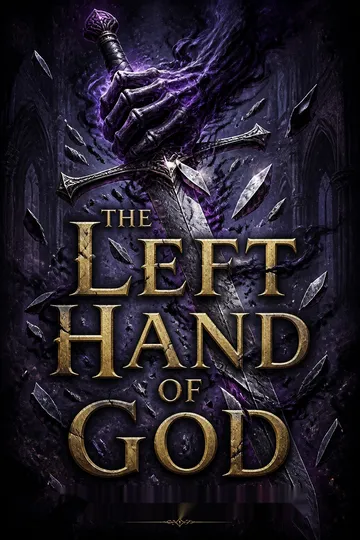
The Left Hand of God Series
Download PDF
Download EPUB
.epub digital book format is ideal for reading ebooks on phones, tablets, and e-readers.








































