
Plot Summary
Boarding Into Uncertainty
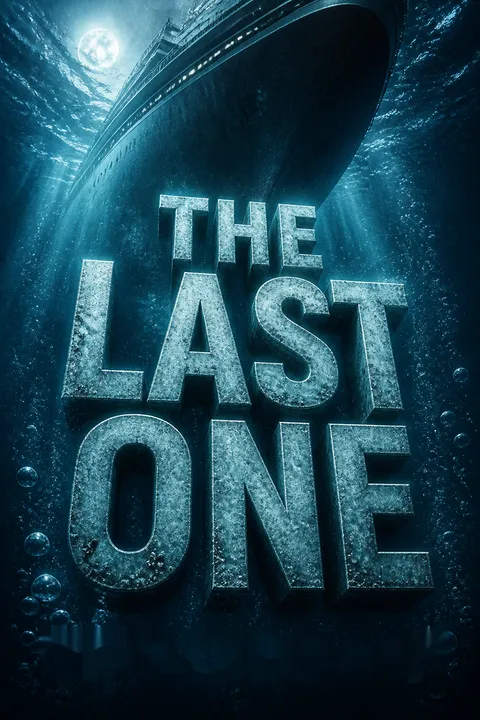
Caroline "Caz" Ripley and her boyfriend Pete embark on the RMS Atlantica, a grand ocean liner crossing the Atlantic. Caz, anxious and rooted in routine, is coaxed by Pete into this adventure. The ship is opulent, filled with anticipation and a diverse cast of passengers. Caz's unease is palpable, rooted in her family's troubled past and her own discomfort with travel and change. The couple settles into their cabin, navigating the rituals of shipboard life, from muster drills to formal dinners. The voyage promises escape and romance, but beneath the surface, Caz's anxieties simmer, hinting at deeper vulnerabilities and the unpredictable journey ahead.
Vanished Without a Trace
The next morning, Caz wakes to find Pete gone. At first, she assumes he's left for breakfast, but as she explores, she discovers the entire ship is deserted—no passengers, no crew, no sign of life. Panic mounts as she searches every deck, calling out for anyone. The ship, once bustling, is now eerily silent, amplifying her isolation. Caz's mind races through rational explanations—emergency evacuation, a missed announcement—but nothing fits. The lifeboats are untouched, the ship is still moving at full speed, and her attempts to contact the outside world fail. The overwhelming sense of abandonment and confusion sets the stage for a psychological ordeal.
Alone on the Atlantica
Caz's frantic search yields no answers. She checks the bridge, finding it deserted but the ship on autopilot, steaming steadily into the Atlantic. The absence of any rational explanation deepens her dread. She tries the radio, sending out Mayday calls, but receives only silence. The ship's systems are locked, and she cannot alter its course or speed. Caz's thoughts spiral—has she been left behind, or is something more sinister at play? The vastness of the empty ship mirrors her growing sense of insignificance and vulnerability. Her only solace is the hope that someone, somewhere, will notice the Atlantica's ghostly passage.
Searching for Answers
Amid her despair, Caz hears a tapping sound deep in the ship's crew quarters. Following the noise, she discovers Daniel Cho, another passenger who believes he's also alone. Their relief at finding each other is tempered by confusion and suspicion. Daniel, practical and resourceful, joins Caz in searching for clues and a way to communicate with the outside world. Together, they attempt to piece together what happened, but the ship's systems remain unresponsive. Their alliance offers comfort, but also raises new questions about trust and survival as they realize the enormity of their predicament.
Unexpected Allies
While searching the ship's library, Caz and Daniel find Francine "Frannie" Pepperdine, a young woman hiding in fear. Frannie's parents have vanished, and she's been researching historical ghost ships, convinced something supernatural or inexplicable has occurred. The trio forms a fragile alliance, pooling their knowledge and resources. Each brings unique strengths and traumas—Caz's pragmatism, Daniel's technical skills, Frannie's intellect and anxiety. Their interactions are fraught with suspicion, grief, and the need for leadership. As they strategize for survival, the psychological strain of isolation and uncertainty begins to test their unity.
Ghost Ship Theories
The group debates possible explanations: mass evacuation, piracy, supernatural events, or psychological manipulation. Frannie draws parallels to the Mary Celeste and other maritime mysteries, suggesting mass hysteria or an unknown force. Daniel clings to rationality, while Caz oscillates between hope and despair. The ship's course inexplicably changes, heading south instead of west, deepening their unease. The lack of communication, the untouched lifeboats, and the eerie silence fuel paranoia. The trio's discussions reveal their personal histories and vulnerabilities, as well as the human need to impose meaning on chaos.
Course Off Track
The group focuses on basic needs: food, water, warmth, and signaling for help. They attempt to access locked stores and lifeboats, only to find them inexplicably sealed. Their efforts to attract attention—SOS messages, fires, and flares—go unanswered. The ship's systems malfunction, plunging them into darkness and cold. The psychological toll mounts as hunger and thirst set in. The appearance of another survivor, Smith, a brash American with his own secrets, adds complexity and tension. The group's fragile cohesion is tested by scarcity, fear, and the ever-present sense of being watched.
Survival Strategies
The survivors scavenge for food and water, breaking into cabins and rationing supplies. They release the ship's dogs to combat a growing rat infestation, blurring the line between civilization and savagery. Smith's selfishness and hoarding spark conflict, while Frannie's anxiety and guilt intensify. The group debates whether to attempt escape in a lifeboat, but repeated failures and the ship's relentless movement thwart their plans. As physical needs become dire, moral boundaries erode. The survivors are forced to confront not only external threats but also the darkness within themselves and each other.
Locked Out, Locked In
The survivors discover hidden cameras and evidence that they are being watched and manipulated. A mysterious figure, "the Admiral," appears on screens, addressing them directly and revealing that their ordeal is being broadcast as a reality show. The rules are arbitrary, the challenges increasingly dangerous, and the promise of rescue elusive. The group is forced to participate in a series of psychological and physical trials—Mind, Water, Body, Air—each tailored to exploit their deepest fears and weaknesses. The realization that their suffering is entertainment for unseen millions shatters any remaining sense of agency.
SOS to the Void
The survivors endure harrowing ordeals: Smith's mind puzzle, Caz's near-fatal plunge into the ocean, Daniel's deadly climb, and Frannie's final test. Each challenge is rigged for maximum peril and spectacle. The group's unity dissolves under pressure, with betrayals and desperate choices leading to loss and grief. The revelation that some survivors are actors, and that the entire experience is a meticulously orchestrated spectacle, deepens the sense of violation and trauma. The survivors are left questioning what is real, who can be trusted, and whether escape is even possible.
The Watcher Among Us
As the survivors dwindle, the true nature of the Atlantica's ordeal is revealed. The show is streamed on the dark web, driven by audience interaction and escalating demands for violence and suffering. The boundaries between reality and performance blur, with actors embedded among the real participants. The ship's systems, challenges, and even rescues are controlled by unseen hands. The survivors' every move is commodified, their pain and desperation consumed as entertainment. The final escape becomes a test not only of physical endurance but of moral resilience and the will to reclaim autonomy.
Fragile Alliances
In the aftermath of the final challenge, Caz and Smith (Walter) attempt to escape the ship, only to confront the ultimate horror: a ballroom filled with the bodies of the missing passengers, a grotesque tableau staged for maximum shock. The revelation devastates them, shattering any remaining hope. In a final act of defiance, they leap into the sea, seeking freedom or oblivion. Caz survives, rescued by a boat and reunited with the other "survivors," only to learn that much of her ordeal was orchestrated, with actors and illusions blurring the line between truth and fiction. The trauma lingers, even as she returns to the world.
Theories and Confessions
Caz is celebrated as the winner, but the victory is hollow. She learns that her suffering was engineered for spectacle, her agency an illusion. The survivors are lauded, compensated, and interviewed, but the psychological scars remain. Caz grapples with guilt, grief, and the burden of restitution for her family's past. The experience forces her to confront the nature of reality, the ethics of entertainment, and the limits of forgiveness. The story ends with Caz seeking solace in the ordinary, determined to reclaim her life and resist the forces that would reduce her to a spectacle.
Analysis
A harrowing meditation on spectacle, agency, and survivalThe Last One is a psychological thriller that interrogates the ethics of entertainment, the fragility of autonomy, and the human need for meaning in chaos. By transforming a survival ordeal into a reality show, the novel critiques the appetite for spectacle and the dehumanizing effects of commodifying suffering. The manipulation of reality—through actors, staged horrors, and audience participation—blurs the line between truth and performance, forcing both characters and readers to question what is real and who can be trusted. The story's escalating challenges expose the limits of endurance, the corrosive effects of isolation, and the moral cost of survival. Ultimately, The Last One is a cautionary tale about the dangers of surrendering agency to unseen forces, the seductive power of spectacle, and the enduring need for connection, forgiveness, and self-determination in a world that would reduce us to mere entertainment.
Review Summary
Reviews for The Last One are polarizing, averaging 3.55/5. Many readers praise the gripping premise — a woman waking alone on a luxury cruise liner — and the relentless tension of short, cliffhanger-driven chapters. The first third is widely celebrated as compelling and atmospheric. However, opinions diverge sharply at the mid-book reveal, with some finding it brilliantly original and others dismissing it as implausible. Common criticisms include excessive length, repetitive backstory, and an ending that divides readers between delight and frustration.
People Also Read










Characters
Caroline "Caz" Ripley
Caz is the protagonist, a cautious, practical woman shaped by family trauma—her father's gambling addiction and suicide, her mother's decline, and her sister's struggles. She is deeply loyal, protective, and resourceful, but plagued by guilt and a need for control. Caz's journey on the Atlantica forces her to confront her deepest fears: abandonment, helplessness, and the loss of agency. Her relationships with Pete, her family, and the other survivors reveal her capacity for empathy and sacrifice. Caz's psychological arc is one of endurance, self-forgiveness, and the reclamation of autonomy in the face of manipulation and spectacle.
Daniel Cho
Daniel is a practical, athletic American with a background in water sports and a complicated family life. He is skilled, calm under pressure, and often takes on a leadership role. Daniel's past includes estrangement from his fiancée and daughter, and a stint in prison for violence. His need for redemption and connection drives his actions. Daniel's technical skills and physical prowess are vital to the group's survival, but his internal struggles with responsibility and self-worth add depth to his character. His ultimate fate—sacrificed for the show's spectacle—underscores the story's themes of exploitation and loss.
Francine "Frannie" Pepperdine
Frannie is a young Welsh woman, intelligent and sensitive, with a history of anxiety and a close bond with her parents. Her academic curiosity and philosophical bent lead her to research ghost ships and question reality. Frannie's vulnerability and honesty make her both endearing and fragile. She is haunted by guilt over deceiving her parents and by the escalating horrors of the Atlantica. Her eventual surrender—nominating Caz for the final challenge and ultimately taking her own life—reflects the crushing psychological toll of the ordeal and the limits of endurance.
Smith (Walter)
Smith is an older American, brash, self-serving, and initially abrasive. He hoards resources, challenges authority, and often clashes with the group. Beneath his bluster, Smith harbors deep wounds: a fractured family, a lost son, and a lifetime of disappointment. His survival instincts are strong, but so is his capacity for loyalty and sacrifice. Smith's journey is one of gradual vulnerability, culminating in his final act of trust—jumping with Caz into the sea. His fate is ambiguous, but his psychological arc is one of reckoning with regret and the search for redemption.
Pete Davenport
Pete is Caz's boyfriend, a stabilizing presence who encourages her to embrace change. His disappearance catalyzes Caz's ordeal, and his absence haunts her throughout. Pete's own past is marked by loss and secrecy, mirroring Caz's struggles. His eventual return offers a measure of closure and the possibility of healing, but also raises questions about agency and complicity in the spectacle.
Michelle / The Admiral
Michelle is the enigmatic "Admiral," the face of the show's manipulation. Initially a remote, authoritative figure, she is later revealed to be as much a pawn as the survivors, trapped and powerless. Her presence blurs the line between perpetrator and victim, authority and fellow captive. Michelle's arc reflects the story's critique of power, complicity, and the dehumanizing effects of spectacle.
Frannie (Jen) and Daniel (Actor)
In the story's final twist, Frannie and Daniel are revealed to be actors, embedded to heighten realism and manipulate the real participants. Their roles complicate the survivors' relationships and the reader's understanding of reality. Their presence underscores the story's themes of performance, authenticity, and the ethics of entertainment.
Gemma
Gemma is Caz's younger sister, a recovering addict and single mother. She is both a source of strength and vulnerability for Caz, embodying the burdens of family loyalty and the struggle for redemption. Gemma's resilience and dependence shape Caz's motivations and sense of responsibility.
Caz's Mother
Caz's mother, suffering from dementia, represents the enduring impact of trauma and the fragility of memory. Her decline is a constant reminder of the family's past and the need for forgiveness and care.
The Atlantica
The ship itself is a character—vast, indifferent, and ultimately malevolent. Its labyrinthine corridors, locked doors, and hidden systems mirror the psychological maze faced by the survivors. The Atlantica is both a stage and a prison, embodying the story's themes of isolation, manipulation, and the search for meaning.
Plot Devices
Reality Show as Ordeal
The central device is the transformation of a survival ordeal into a reality show, with the survivors' suffering broadcast and commodified for entertainment. The challenges—Mind, Water, Body, Air—are tailored to exploit each character's fears and weaknesses, escalating in danger and psychological impact. The manipulation of information, the presence of actors, and the arbitrary rules create a sense of paranoia and helplessness. The show's interactivity, with audience participation and dark web streaming, critiques the ethics of modern media and the appetite for ever-greater spectacle.
Unreliable Reality
The narrative structure employs unreliable narration, shifting perspectives, and the gradual revelation that much of what the survivors experience is orchestrated or illusory. The presence of actors among real participants, the manipulation of ship systems, and the staged horrors (such as the ballroom of bodies) destabilize the reader's and characters' sense of reality. This device heightens suspense and underscores the story's themes of authenticity, agency, and the dangers of spectacle.
Psychological Isolation
The ship's physical isolation mirrors the characters' psychological isolation. Locked doors, malfunctioning systems, and the absence of communication create a claustrophobic atmosphere. The survivors' internal struggles—guilt, trauma, the need for control—are amplified by the external ordeal. The narrative uses flashbacks, confessions, and shifting alliances to explore the impact of isolation on identity and morality.
Escalating Stakes and Consequences
Each challenge raises the stakes, forcing the survivors to confront not only physical danger but also ethical dilemmas—betrayal, sacrifice, complicity. The arbitrary and escalating nature of the trials reflects the logic of reality TV and the dark web, where only ever-greater extremes can hold attention. The survivors' choices are constrained, their agency undermined, and the consequences of action and inaction are equally dire.
Meta-Narrative and Audience
The story is self-reflexive, with characters aware of being watched, manipulated, and consumed as entertainment. The presence of the Admiral/Michelle, the revelation of actors, and the direct address to the audience create a meta-narrative that critiques the ethics of spectatorship and the commodification of suffering. The narrative structure invites the reader to question their own complicity and the boundaries between fiction and reality.
About the Author



Download PDF
Download EPUB
.epub digital book format is ideal for reading ebooks on phones, tablets, and e-readers.








































