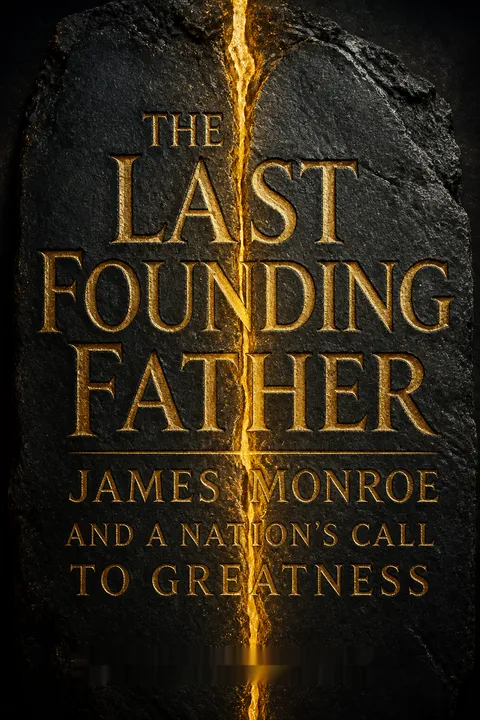

Key Takeaways
1. A Founding Father's Unwavering Service
"The zeal he discovered by entering the service at an early period, the character he supported in his regiment, and the manner in which he distinguished himself at Trenton, where he received a wound, induced me to appoint him to a captaincy in one of the additional regiments. . . . He has in every instance maintained the reputation of a brave active and sensible officer."
Humble beginnings. Born into a modest Virginia farming family, James Monroe's early life instilled in him a deep connection to the land and a practical understanding of self-reliance. His education, guided by his maternal uncle Judge Joseph Jones, exposed him to classical thought and the burgeoning political ideas of the Enlightenment at the College of William and Mary. This foundation prepared him not just for intellectual pursuits but for the tumultuous political landscape of revolutionary America.
Revolutionary War heroism. Monroe's commitment to liberty was forged in the crucible of the Revolutionary War, where he distinguished himself as a decorated soldier. He fought heroically at key battles like Trenton, where he was severely wounded, and endured the harsh winter at Valley Forge alongside George Washington. His valor earned him rapid promotions and the respect of his commanders, including Washington himself, who recognized his "brave, active, and sensible" leadership.
Lifelong dedication. Emerging from the war, Monroe dedicated the next four decades to public service, assuming more government posts than any other American in history. From state legislator to senator, governor, and multiple cabinet roles, his career exemplified a profound sense of duty and sacrifice. This unwavering commitment, often at great personal cost, underscored his belief in the republican ideal and his role in shaping the nascent nation.
2. Shaping the Nation's Early Governance
"I am perfectly persuaded the government is practicable and with a few alterations, the best that can be devised. Nothing is wanting but common sense and common honesty, in both of which necessary qualifications we are, it is to be lamented, very defective."
Confederation challenges. After the Revolutionary War, Monroe entered the political arena during the tumultuous Confederation era, a period marked by a weak central government and rampant interstate disputes. He witnessed firsthand the impotence of the Continental Congress, which lacked the power to tax, raise a standing army, or effectively regulate commerce. This experience deeply influenced his understanding of the need for a more robust federal structure, even as he remained wary of centralized authority.
Constitutional debates. Monroe initially sided with Antifederalists like Patrick Henry, opposing the ratification of the Constitution due to concerns about direct taxation, the absence of a Bill of Rights, and the potential for a standing army to threaten liberty. He argued passionately that the new government's powers were too broadly defined, fearing a "subversion of liberty" if not explicitly limited. His intellectual rigor in these debates showcased his commitment to safeguarding individual freedoms.
Evolution of thought. Despite his initial opposition, Monroe's views evolved, recognizing the necessity of a stronger national government to address the nation's pressing challenges, particularly western expansion and foreign relations. His eventual support for a Bill of Rights, championed by James Madison, helped bridge the divide between Federalists and Antifederalists. This pragmatic shift demonstrated his capacity for growth and his ultimate dedication to the stability and unity of the young republic.
3. La Belle Américaine: A Diplomat's Courageous Partner
"She left her state and her family and became a good Virginian."
Marriage and elegance. James Monroe's marriage to Elizabeth Kortright, a stunning and accomplished New Yorker, marked a significant turning point in his personal life. Elizabeth, known as "La Belle Américaine" in Paris, brought an unparalleled elegance and sophistication to his public persona. Her refined taste, fluency in French, and deep understanding of European culture made her an invaluable asset in diplomatic circles, elevating Monroe's standing on the international stage.
Courage and sacrifice. Elizabeth's commitment to her husband's career was matched by her extraordinary courage and willingness to sacrifice. She twice braved perilous transatlantic voyages with their young children to accompany Monroe on his diplomatic missions, enduring the dangers of war-torn Europe. Her most celebrated act of bravery involved navigating the volatile streets of revolutionary Paris to secure the release of Adrienne de Lafayette from prison, saving her from the guillotine.
White House hostess. As First Lady, Elizabeth transformed the White House into a showcase of American and French elegance, using her discerning eye to furnish it with exquisite pieces. Despite suffering from chronic illness, she hosted formal dinners and receptions that set new standards for presidential hospitality. Her dignified demeanor and unwavering support for her husband, even amidst personal suffering and public criticism, underscored her profound influence on Monroe's life and career.
4. Doubling the Nation: The Louisiana Purchase
"The acquisition [of Louisiana] as being of inestimable value to our country. In addition to the vast augmentation it makes to our exports in articles of the greatest value, to our wealth, our country, and political importance, it merits to be estimated in equal degree, by the tendency it will have to cement our union."
Western expansion imperative. The acquisition of the Louisiana Territory was a pivotal moment in American history, driven by the urgent need to secure navigation rights on the Mississippi River for burgeoning western settlements. With Spain's secret retrocession of Louisiana to France, President Jefferson feared French control of New Orleans would choke American expansion and lead to inevitable conflict. He dispatched Monroe to Paris with instructions to purchase New Orleans and the Floridas, recognizing Monroe's diplomatic acumen and Francophile leanings.
Unprecedented negotiation. Arriving in Paris, Monroe found an unexpected opportunity: a despondent Napoleon, bogged down by slave revolts in Santo Domingo and facing renewed war with Britain, offered to sell the entire Louisiana Territory. Despite exceeding his instructions and the allocated budget, Monroe, alongside Robert Livingston, seized the moment. They negotiated the purchase of nearly a million square miles for $15 million, effectively doubling the size of the United States without firing a shot.
Transformative impact. The Louisiana Purchase was a monumental triumph, securing vital trade routes, providing vast fertile lands for future generations, and extending American sovereignty to the Rocky Mountains. It fueled the "Republican revolution" of land ownership, empowering thousands of ordinary citizens and cementing the nation's westward destiny. This diplomatic coup, largely orchestrated by Monroe, laid the foundation for America's emergence as a continental power and profoundly shaped its economic and political future.
5. Navigating a World at War
"All will insult us, encroach on our rights, and plunder us if they can do it with impunity. Should they conclude that they have nothing to fear from us or . . . that we are not ready to resent injuries and to hazard much in defense of our rights honor and interests . . . they will pursue that system of policy towards us, which each may find its advantage in."
Diplomatic challenges. Following the Louisiana Purchase, Monroe's diplomatic efforts shifted to London, where he faced the daunting task of negotiating with a belligerent Great Britain. Renewed hostilities between Britain and France led to widespread depredations against American shipping, with both nations seizing vessels and impressing American seamen. Monroe's mission was to secure respect for American neutrality and end these violations, which were crippling the U.S. economy.
Disillusionment with Europe. His experiences in London and Madrid, where he failed to secure the Floridas or end impressment, profoundly changed Monroe's worldview. He realized that European powers, whether monarchies or republics, were driven solely by self-interest and would exploit American weakness if given the chance. This led him to conclude that America had "no sincere friends anywhere" and must be prepared to defend its rights through strength, a stark departure from his earlier Francophile idealism.
Shift to assertive policy. Monroe's diplomatic failures, coupled with British intransigence, convinced him that a more assertive stance was necessary. He began advocating for a stronger military and a willingness to use force to protect American interests, foreshadowing the principles of the Monroe Doctrine. This shift from a purely diplomatic approach to one backed by potential military action marked a maturation of American foreign policy and a recognition of the nation's growing power.
6. Leading Through Crisis: The War of 1812
"War, dreadful as the alternative is, could not do us more injury than the present state of things and would certainly be more honorable to the nation and gratifying to the public feelings."
Reluctant embrace of war. Despite his earlier efforts for peace, Monroe ultimately concluded that war with Great Britain was unavoidable given the continued impressment of American seamen and attacks on U.S. shipping. He supported President Madison's declaration of war, viewing it as a "second war of independence" necessary to defend national honor and secure American sovereignty. This decision marked a significant departure from his long-held pacific foreign policy.
Strategic military leadership. As Secretary of State and later acting Secretary of War, Monroe played a pivotal role in organizing the nation's defense during the War of 1812. He developed comprehensive plans for military reorganization, coastal fortifications, and even an invasion of Canada. His tireless efforts to rally troops, secure supplies, and deploy commanders like Andrew Jackson were crucial in turning the tide of a war that began with disastrous American setbacks, including the burning of Washington D.C.
Post-war recovery and national pride. Although the Treaty of Ghent largely restored the pre-war status quo, American victories at Lake Erie, Baltimore, and New Orleans fostered a powerful sense of national pride. Monroe skillfully leveraged this newfound confidence to advocate for a stronger standing army and navy, ensuring the nation's future security. His leadership during this critical period solidified his reputation as a capable and decisive leader, paving the way for his presidency.
7. The "Era of Good Feelings" and National Unity
"Discord does not belong to our system. . . . The American people . . . constitute one great family with a common interest."
Unifying the nation. James Monroe's presidency ushered in the "Era of Good Feelings," a period of unprecedented national unity and political harmony. Following the divisive War of 1812, Monroe consciously sought to heal partisan wounds, famously declaring his intention to be "president, not of a party, but of a great and powerful nation." His nationwide tours, reminiscent of George Washington's, were instrumental in fostering a sense of shared national identity and purpose, transcending regional and political differences.
Economic prosperity and internal improvements. This era saw remarkable economic growth, fueled by westward expansion and a renewed focus on internal improvements. Monroe championed the construction of roads, canals, and other infrastructure projects, such as the Cumberland Road, to link the nation's diverse regions and facilitate commerce. These initiatives, combined with the re-establishment of a national bank, spurred agricultural and industrial development, leading to widespread prosperity and the abolition of internal federal taxes.
Navigating sectional divides. While largely harmonious, the Era of Good Feelings was not without its challenges, most notably the Missouri Compromise. This delicate legislative act temporarily resolved the contentious issue of slavery's expansion by admitting Maine as a free state and Missouri as a slave state, while drawing a dividing line across the Louisiana Territory. Though Monroe initially believed such compromises would "wink away" the problem, he recognized the deep-seated tensions that threatened the nation's unity, a prescient observation of future conflicts.
8. Defining America's Global Stance: The Monroe Doctrine
"The American continents, by the free and independent condition which they have assumed and maintain, are henceforth not to be considered as subjects for future colonization by any European powers."
Asserting hemispheric dominance. In his seventh annual message to Congress, James Monroe unveiled a landmark foreign policy statement that would become known as the Monroe Doctrine. This bold declaration asserted the United States' supremacy in the Western Hemisphere, warning European powers against any further colonization or intervention in the Americas. It was a decisive move to protect the newly independent Latin American republics and safeguard American security interests.
Principles of non-interference. The Doctrine articulated a clear separation between the political systems of the Old and New Worlds. Monroe declared that the U.S. would not interfere in European internal affairs or existing colonies in the Americas. However, any attempt by European powers to extend their political system to the Western Hemisphere would be viewed as "dangerous to our peace and safety" and an "unfriendly disposition toward the United States."
A legacy of influence. The Monroe Doctrine, though initially met with mixed reactions in Europe, effectively established the United States as the dominant power in the Americas. It became a cornerstone of American foreign policy, invoked by subsequent presidents to justify territorial expansion, repel foreign influence, and assert American interests globally. This audacious pronouncement, born from Monroe's deep understanding of international power dynamics, solidified America's position on the world stage and defined its role as a protector of hemispheric independence.
9. The Personal Cost of Public Devotion
"My expenses abroad having exceeded by unavoidable necessity the compensation allowed me in the station I held, and the mismanagement of my estate in my absence, make it an object to me to command on loan the sum of about 10,000 dollars."
Financial ruin. Despite a lifetime of distinguished public service, James Monroe faced severe financial hardship upon retiring from the presidency. His dedication to the nation, often serving without adequate compensation or reimbursement for official expenses, led to mounting debts. His diplomatic missions, particularly the purchase of La Folie in Paris, incurred costs that the government later refused to fully cover, leaving him personally liable for substantial sums.
Loss of properties. The financial strain forced Monroe to sell off cherished family properties, including his beloved Highland plantation and vast tracts of western lands. This painful necessity, exacerbated by the economic panic of 1819 and the mismanagement of his estate during his long absences, left him land-poor and cash-strapped. His plight mirrored that of his mentor, Thomas Jefferson, who also died in debt after a lifetime of public service.
Personal tragedies. Beyond financial woes, Monroe endured profound personal losses. The death of his infant son, James Spence, and the chronic, debilitating illness of his wife, Elizabeth, cast a long shadow over his later years. The passing of his wife, his "partner in all the toils and cares," left him emotionally shattered, leading him to destroy all her personal papers in a fit of grief. These sacrifices highlight the immense personal toll of his unwavering devotion to the American republic.
10. A Lasting Legacy of Expansion and Principle
"The change, more than of any other man, living or dead, was the work of James Monroe."
Architect of expansion. James Monroe's most tangible legacy lies in his transformative impact on the geographical scope of the United States. Through the Louisiana Purchase, he doubled the nation's size, and his assertive diplomacy, culminating in Andrew Jackson's actions, secured the Floridas. These acquisitions expanded the American domain "from sea to shining sea," laying the groundwork for a continental empire and fulfilling the vision of westward expansion that defined the early republic.
Enduring foreign policy. The Monroe Doctrine remains a cornerstone of American foreign policy, a bold assertion of hemispheric dominance that has been invoked and reinterpreted by presidents for two centuries. It established the principle of non-intervention in European affairs while simultaneously declaring the Americas off-limits to further European colonization. This doctrine, born from Monroe's deep understanding of international power dynamics, solidified America's global standing.
Unsung hero. Despite his monumental achievements—from Revolutionary War heroics and diplomatic triumphs to unifying a fractured nation and defining its global posture—Monroe often remains an unsung hero among the Founding Fathers. His quiet dignity, unwavering commitment to republican ideals, and profound personal sacrifices for the nation's welfare underscore his indispensable role in shaping the United States into the powerful and prosperous nation it became. His life exemplifies a selfless devotion to country that few have matched.
Review Summary
The Last Founding Father receives mixed reviews, with ratings from 1-5 stars averaging 3.94. Critics frequently cite author bias, noting Unger portrays Monroe as flawless while dismissing Adams, Jefferson, and Madison as "caretakers." Reviewers criticize the book's hyperbolic praise, dismissal of Monroe's slavery involvement, and questionable historical accuracy—including a fabricated Congressional scene. Some appreciate learning about Monroe's accomplishments, military service, and the Monroe Doctrine, though many question Unger's defensive stance regarding John Quincy Adams's contributions. Despite entertainment value, most reviewers recommend seeking more balanced Monroe biographies.
People Also Read



Download PDF
Download EPUB
.epub digital book format is ideal for reading ebooks on phones, tablets, and e-readers.








































