
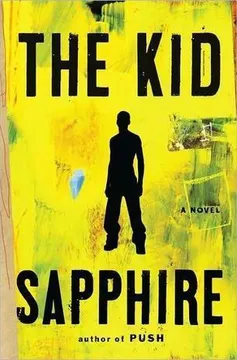


Plot Summary
Precious Goes to Ground
Abdul1 is nine years old when his mother Precious8 dies of AIDS in a Harlem hospital, her body threaded with tubes, a machine breathing for her. Rita,11 Precious's8 closest friend, dresses him in his good black suit and takes him to the funeral on Lenox Avenue. A massive woman — Precious's8 own abusive mother — lurches down the aisle screaming. The reverend preaches about love and forgiveness.
Rita11 reads Langston Hughes. When Abdul1 is forced to kiss his mother goodbye, her lips feel like a cold water fountain. Afterward, in a small office, Blue Rain13 — Precious's8 old teacher — tells him his father is also dead, and Rita11 confesses she's ill too. Tomorrow, a social worker will come. By morning, every anchor in Abdul's1 life will be gone.
The Checkerboard Floor
A caseworker delivers Abdul,1 clutching a garbage bag of clothes, to Miss Lillie's15 top-floor apartment in a building flanked by vacant lots. Two collie dogs and a heavyset woman in pink polka dots greet him. Miss Lillie15 renames him J.J. and assigns him a bunk in a room with black-and-white linoleum.
Before lunch, Batty Boy14 — a thirteen-year-old with dead eyes — punches Abdul1 unconscious and slams his skull against the floor. In the weeks that follow, through passages Abdul1 cannot fully remember, the older boys assault him sexually.
He wakes in a hospital with a drained skull, a surgically repaired sphincter, and a play therapist holding up dolls he refuses to animate. The foster home is shuttered. Abdul1 is placed next at St. Ailanthus School for Boys.
The Brothers' Promise
Brother John,6 a white man who claims Harlem raised him, holds Abdul's1 hand on his first day at St. Ailanthus. The school is bright and orderly, filled with boys in white shirts and black ties doing science experiments and painting murals.
Abdul1 thrives: he joins Mrs. Washington's13 accelerated English class, reads Shakespeare, studies earth science, and befriends Jaime,7 a small Dominican boy with curly hair. For the first time since Precious8 died, Abdul1 has structure — morning Mass, meals at set hours, lights out at nine.
But the structure conceals predation. Brother Samuel5 rapes Abdul1 repeatedly in his office, sometimes wearing a black leather hood. Brother John6 grooms him with gifts and compliments before demanding oral sex. The school that promised to replace his parents devours him instead.
King of Dorm Three
What the brothers do to Abdul1 at night, Abdul1 replicates. He creeps through the dormitory after lights-out to Jaime's7 bed, forcing himself on the smaller boy while the room pretends to sleep. He visits Dorm One — the younger children's ward — and molests Richie Jackson,20 Bobby's little brother, pulling back covers and touching him in sleep.
Abdul1 frames these acts as love, calling himself a king bestowing tenderness. The delusion is seamless: he believes the children enjoy it, that he is giving what was never given to him. Sunday at breakfast, Jaime7 weeps over untouched pancakes. Brother John6 asks Abdul1 what's going on. Abdul1 denies everything, and Brother John6 — who has his own reasons for looking away — lets it pass.
Drums in the Gymnasium
One afternoon Abdul1 and Jaime7 skip swim practice and wander upstairs at the 135th Street recreation center. In the gymnasium, four men in white robes sit behind tall drums. A flute screams, the drums erupt. Abdul1 feels something stop screaming inside his head. Imena,10 the dance teacher — dark-skinned with white hair and powerful muscles — tells the class to line up.
Abdul1 removes his shoes, gets in the back row, and begins to move. For the first time, his body belongs to him: not to the brothers, not to the dorm, not to whatever he does at night. He stamps his feet, plants imaginary seeds, and rises from the floor like weather. He fights Brother Samuel5 for permission to attend Saturday classes and loses — then goes anyway.
Pack Your Suitcase
Police wake Abdul1 at three in the morning. Two detectives escort him to the station, where they ask if he assaulted Richie Jackson.20 Abdul1 denies everything. Richie,20 trembling in Brother Bill's arms, admits he couldn't see who touched him.
The case dissolves, but the brothers need Abdul1 gone — he knows too much. Brother John6 hands him a brown suitcase and tells him to pack. Abdul1 grabs his books, his chess set, his kaleidoscope, and his paperback of Hamlet.
A car delivers him to a crumbling building on St. Nicholas Avenue where an ancient stranger claims kinship. Abdul1 drops his suitcase and bolts back to St. Ailanthus, sitting in Mrs. Washington's13 English class. Three brothers appear at the door, seize him, and twist his arm until he blacks out.
The Mirror at 805
After waking in Harlem Hospital's emergency room with a dislocated shoulder, Abdul1 is driven back to 805 St. Nicholas Avenue. The apartment reeks of old grease and mothballs; roaches scuttle from cracks in green-and-black paisley linoleum. Toosie Johnston3 — tiny, ancient, one leg swollen like an elephant's — claims to be his great-grandmother. Abdul1 does not believe her.
In a fit of rage, he rams his head into the oval bedroom mirror. A falling shard slices his cheek from temple to jaw, a wound that will scar permanently. He collapses on broken glass, sobbing, blood pooling on the floor. Toosie3 screams about seven years of bad luck. Abdul1 screams that his name is J.J., not Abdul. She tells him it is Abdul, that his mother named him that.
Toosie's Mississippi
Sitting in her blue-walled kitchen while roaches trek across the table, Toosie3 begins to talk and does not stop for what feels like days. She was raped at ten by a man who called himself Nigger Boy. She gave birth to twins in a cotton field — the boy died, the girl became Abdul's1 grandmother Mary.
At twelve she stole a dress off a clothesline and walked barefoot to New York with Mary on her back. A pimp named Beymour took her in, dressed her in orange silk, and put her to work in a Harlem brothel.
Beymour was murdered by his boss, who slit another woman's throat in the same hallway. Abdul1 listens frozen — each revelation another nail in the architecture of who he thought he was. When she finishes, he lays his kaleidoscope at her feet and walks out.
Roman's Bargain
Roman4 is tiny, pink-scalped from hair implants, and imperious — a former professional dancer teaching at Stride and the YMCA. He notices Abdul1 in class, calls him beautiful, and invites him home to a cream-leather apartment on Riverside Drive.
Roman4 tests Abdul1 for HIV, feeds him cognac, and performs oral sex on him. The arrangement crystallizes: Roman4 provides housing, daily ballet training, leather pants, and protection from the streets. Abdul1 provides his body. He tells Roman4 he is seventeen; he is thirteen.
For four years Abdul1 trains obsessively — plié, tendu, pirouette — building technique that transforms raw power into artistry. He creates the alias Arthur Stevens. He takes two classes daily. He hates Roman4 and endures him, urinating in the older man's mouth as small acts of revenge.
A Dancer Called Arthur
Through Roman's4 classes, Abdul1 meets Scott,9 a wealthy choreographer whose family fortune comes from the slave trade, and My Lai,2 a fierce adoptee-turned-director. They are building a dance collective called Herd. Abdul1 auditions using the name Arthur Stevens and is invited to join.
The group rehearses in Scott's9 TriBeCa loft, creating experimental work fusing dance, video, and spoken text. Abdul1 takes on maintenance of the space, which gives him his first private room with a lock on the door. He paints the walls blue.
He gets jobs at Starbucks and an Italian restaurant. For the first time, he has a schedule he controls: morning barre, afternoon rehearsal, evening shift. The downtown art world does not ask where he came from. It only cares that he can move.
Notebooks into Confetti
Abdul1 has been carrying his mother Precious's notebooks — filled with misspelled confessions about abuse, copied Langston Hughes poems, and raw testimony of suffering — since Toosie3 handed them to him. Roman4 discovered one and began asking invasive questions, hastening Abdul's1 departure.
Now Abdul1 decides the notebooks are evidence that could expose everything he has built. In Central Park, he tears them page by page into tiny pieces, scooping the shreds into his backpack.
At the 103rd Street subway platform, he hurls handfuls of paper into the tunnel's black void, screaming as a train roars toward him. The bits fly everywhere — up, down, back in his face. He turns his pack upside down and watches the last fragments drift onto the tracks, scattered across steel and gravel.
My Lai in the Blue Room
My Lai2 is rail-thin with a shaved head, scarred wrists, and relentless creative ambition. Their physical relationship begins after Amy17 — a tall blonde member of Herd — fails to arouse Abdul,1 leaving him devastated by impotence. With My Lai,2 desire becomes reciprocal.
She teaches him to use his mouth, to listen to her body, to stay present instead of dissociating. Their lovemaking in his blue-walled room, on cobalt sheets lit by white candles, feels like the first thing in his life that is mutual rather than transactional.
Together they create a performance piece about the My Lai massacre, in which Abdul's1 improvised solo — stamping, thrashing, channeling every buried fury through his body — becomes the centerpiece. Audiences scream his name.
Barbie Under the Table
During a Sunday rehearsal, My Lai2 reads from her notebook. She was found in a shopping bag on a church doorstep, adopted by a wealthy couple, renamed Noël. Her adoptive father called her racial slurs, dangled her by her braids, and raped her.
Her mother weaponized the abuse as blackmail leverage for marriage rather than stopping it. My Lai2 describes splitting into two selves — a day girl who reads and practices ballet, a night girl who endures. Abdul1 listens with recognition and terror.
Her story wears different skin than his, but the skeleton is identical: the powerful adult, the silenced child, the institution that averts its eyes. He grips her tighter as everyone chatters about staging, knowing that what binds them is also what could destroy them.
The Names Come Back
Abdul1 overhears Scott9 telling Snake16 and My Lai2 at Starbucks that he's uncomfortable — questioning who Abdul1 really is, noting the name changes, the creeping permanence at the loft. Then Jaime7 appears at the café and publicly accuses Abdul1 of raping him at St. Ailanthus when they were boys. My Lai2 drives Jaime7 away, but the accusation lingers.
Separately, while high on Ecstasy, My Lai2 begs Abdul1 to murder her father in Connecticut — the man who raped her. Abdul1 refuses. He visits St. Ailanthus and learns Brother Samuel5 has hanged himself naked in the library, still wearing the black leather hood. Brother John6 has been transferred to a South Dakota reservation. The old world is dying around Abdul.1 His new one is fracturing beneath his feet.
Silver Knife at the Party
At an after-party celebrating Herd's performance, a small child — Amy's17 cousin — needs help reaching grapes and then the bathroom. Abdul1 offers to take him. Walking with Amy,17 a violent sexual fantasy about the child blazes through his mind in nanoseconds — an echo of every predatory act committed against him and by him.
Then he is on one side of a locked bathroom door with the boy, and Amy17 is on the other, kicking. She and Scott9 break through. Scott9 scoops up the child and tells Abdul1 he has destroyed everything. A crushing migraine splits Abdul's1 skull. He picks up a silver plastic knife from the buffet table, returns to the bathroom, and methodically slices both wrists. Blood pools on the tile.
Fluorescent Lights Never Off
Abdul1 wakes in a psychiatric facility he cannot identify, restrained in a bed beneath fluorescent tubes that never dim. An orderly named Watkins19 taunts him with slurs, administers injections that paralyze his tongue, and drags him to electroshock treatments that make his body convulse under the straps.
His bowels empty involuntarily. He cannot speak, cannot remember his name, cannot tell whether days or years are passing. He bites his own wrists to feel something real and spits blood into Watkins's19 face.
Across the hall, another patient kills himself with loose restraints. When a radio down the hall plays a soul song, it is the first thing in what feels like an eternity that penetrates the chemical fog. Abdul1 remembers that someone once loved him. He cannot remember who.
The Door Opens
Dr. Sanjeev12 — a psychiatrist in a brown jacket and white turban who goes by Dr. See — sits beside Abdul's1 bed and refuses to leave. Over several sessions, he draws Abdul1 back toward language, memory, and reality.
He tells Abdul1 he has been institutionalized for exactly twenty-one days, not the years Abdul1 imagined. He challenges Abdul1 to remember what brought him here. Slowly Abdul1 reconstructs the party, the child, the locked bathroom, the silver knife, the opened wrists. Dr. See12 tells him he is not psychotic — just profoundly traumatized.
On his last day before transferring to a pharmaceutical company, Dr. See12 arranges Abdul's1 discharge. He tells Abdul1 that in fifteen minutes a door will open, and when it does, Abdul1 should walk through it. Abdul1 says he hears.
Analysis
Sapphire's The Kid is a pitiless examination of what institutions create when they fail the most vulnerable. The novel tracks how systems designed to protect children — foster care, Catholic charity, social services — become conveyor belts of predation, each handoff compounding trauma rather than healing it. Abdul's1 journey is not a redemption arc but a damage report: he is abused, becomes an abuser, then spends his youth trying to outrun both roles through art.
The novel's most radical argument is that cycles of sexual violence are mechanical, not metaphorical. Toosie3 is raped at ten; her daughter Mary is molested by Carl; Precious8 is raped by her father; Abdul1 is raped by the brothers and replicates their behavior on younger boys. Sapphire refuses to let Abdul1 be a pure victim — he is simultaneously the most sympathized-with character and one who assaults small children. This refusal to separate victim from perpetrator is the novel's moral core and its most disturbing achievement.
Dance operates as the one institution that gives without taking. Unlike the Church, foster care, or Roman's4 apartment, the dance floor asks only for Abdul's1 effort. Imena10 never touches him. The drums do not demand payment. This distinction suggests that embodied, communal art rooted in African tradition offers a model of human exchange fundamentally different from the transactional brutality Abdul1 knows elsewhere.
The novel also interrogates the economics of care. Every relationship Abdul1 enters has a price: Roman's4 shelter costs oral sex; Scott's9 loft costs deference; My Lai's2 love eventually costs complicity in revenge fantasies. Only Precious's8 love was free, and it ended before Abdul1 could store enough of it to survive on. The devastating implication is that in a society structured by race and capital, unconditional love for Black children is not an institution but an accident — and accidents end.
Review Summary
The Kid received mixed reviews, with many readers finding it deeply disturbing and excessively graphic. Critics praised Sapphire's writing but felt the story lacked hope and redemption. Some appreciated its portrayal of the foster care system and trauma, while others found it too bleak and confusing. Many readers struggled with the protagonist's actions and the stream-of-consciousness narrative style. The book's intense depictions of abuse and violence were challenging for most, leading to polarized reactions and difficulty recommending it to others.
Characters
Abdul Jones
Orphan dancer shaped by abuseThe son of Precious Jones8, orphaned at nine when his mother dies of AIDS in Harlem. Tall, dark, powerfully built, and fiercely intelligent, he cycles through identities—J.J., Crazy Horse, Arthur Stevens—each name a survival strategy for a world that treats him as disposable. His core wound is abandonment compounded by institutional betrayal: every adult who promises safety eventually demands something from his body. He compensates through intellectual voraciousness—Shakespeare, earth science, Basquiat—and physical discipline in ballet and African dance, channeling rage into artistic expression. His relationships oscillate between predation and tenderness; he is capable of both genuine love and devastating violence. The tension between these capacities drives the entire novel. What Abdul wants most is simple and impossible: to be seen as human.
My Lai
Adopted dancer, Abdul's loverBorn to unknown parents, found as a newborn in a shopping bag on a church doorstep, adopted by a wealthy couple and named Noël Orlinsky. She reinvents herself as My Lai—a name invoking American war crimes—and channels her fury into choreography. Brilliant, caustic, and controlling, she recognizes Abdul1 as a kindred survivor and falls in love with the damage they share. She is simultaneously his salvation and his most dangerous mirror: she provides his first mutual sexual relationship, his most artistically productive collaboration, and eventually a demand so extreme it threatens to consume them both. Her scarred wrists and shaved head speak to a woman who has already survived her own reckoning.
Toosie Johnston
Ancient great-grandmotherAbdul's1 great-grandmother, born in rural Mississippi, raped at ten, a mother at ten, a runaway at twelve, a prostitute in Harlem by fifteen. She survived slavery's aftershocks, a pimp's murder, and decades of solitude in the same apartment where she once turned her first trick. Her marathon monologues—country dialect, brutal candor—serve as the novel's oral history, tracing the genetic code of trauma from plantation to tenement. She is both repulsive and heroic to Abdul1: living proof that survival alone does not equal salvation. Her body is ruined—bowlegged, lupus-ridden, nearly blind—but her memory is merciless, and her insistence that Abdul1 is her seed carries a weight he cannot bear to accept.
Roman
Ballet teacher and exploiterA diminutive, pink-scalped ballet teacher of European origin, Roman is the novel's most paradoxical figure: a genuine artist who exploits children. He possesses extraordinary technical knowledge and theatrical self-regard, referring to himself in third person. He takes in teenage boys he finds beautiful and Black, training them rigorously while demanding sexual access. He sees no contradiction in this arrangement. Roman provides Abdul1 with the only sustained classical dance education he receives, making him simultaneously Abdul's1 liberator—opening the door to professional artistry—and his jailer. His affection, though possessive and predatory, is not entirely feigned, which makes it more psychologically devastating than pure cruelty.
Brother Samuel
Predatory Catholic authorityThe administrative head at St. Ailanthus, physically imposing and coldly authoritarian. He rapes Abdul1 repeatedly in his office, sometimes wearing a black leather hood that recurs in Abdul's1 nightmares for years. His violence is methodical: he body-slams Abdul1 for minor infractions and uses bureaucratic power to expel inconvenient witnesses. Beneath his cruelty lies panic—he protects Abdul1 at the police station not from compassion but to prevent his own exposure.
Brother John
Grooming teacher-mentorAbdul's1 earth science teacher and initial protector at St. Ailanthus, a white man who claims to have been raised by a Black foster mother in Harlem. He grooms Abdul1 with intellectual stimulation, praise, gifts from the donation box, and talk of a bright future before initiating sexual abuse. Unlike Brother Samuel's5 brutality, Brother John's exploitation wears the mask of mentorship and love, making it psychologically more confusing and ultimately more damaging for Abdul1.
Jaime
Abdul's friend and victimA small Dominican-American boy at St. Ailanthus, Abdul's1 closest friend. Street-smart and tender, with curly hair and a pierced ear, he follows Abdul1 to dance class and shares joints and fantasies about luxury cars and beautiful women. He calls Abdul1 'Papi' and dreams of escaping the system. Their friendship is the novel's most painful paradox: genuine childhood intimacy entangled with the sexual violence that saturates their institutional world.
Precious Jones
Abdul's deceased motherAbdul's1 mother, who dies of AIDS on the novel's first page. She was illiterate until her teens, then earned a GED and started college. Though physically absent after the opening, she pervades Abdul's1 consciousness: her voice correcting his grammar, her insistence on education, her warmth against his skin. She represents the one unambiguous love of his life—the measure against which every subsequent relationship fails.
Scott
Wealthy leader of HerdThe white choreographer who founded Herd, bankrolled by family wealth derived from the slave trade—a fact his sister exposed in a published book. He provides Abdul1 with artistic opportunity while privately harboring anxiety about control. His egalitarian veneer masks the discomfort of a privileged man watching a more gifted, less pedigreed Black dancer rise within his creation.
Imena
African dance teacherAbdul's1 first dance teacher, at the 135th Street recreation center. Dark-skinned with white hair and powerful muscles, she introduces him to Congolese and Haitian dance, to drumming and the spiritual dimension of movement. She insists on community, practice, and spirit. She is the first adult who gives Abdul1 something—the discovery of his body as instrument—without extracting a price.
Rita
Precious's loyal friendPrecious's8 closest friend, who cares for nine-year-old Abdul1 in a Harlem SRO hotel in the days around the funeral. She sprays him with cologne, feeds him café con leche, and reads Langston Hughes at the service. She is warm, protective, and dying—her own illness makes her unable to keep him, forcing him into the system that will define his life.
Dr. Sanjeev
Institutional psychiatristA psychiatrist who wears a turban and smokes Marlboros, assigned to evaluate Abdul1 in the psychiatric facility. Patient, provocative, and ultimately honest, he refuses to let Abdul1 retreat into dissociation or self-pity. He represents the first authority figure in Abdul's1 life who demands his agency rather than his compliance, and who offers truth without exploiting vulnerability.
Mrs. Washington
St. Ailanthus English teacherEnglish teacher at St. Ailanthus with a doctorate in Shakespeare. She places Abdul1 in the accelerated English class and introduces him to Hamlet, nurturing his intellectual life with rigor and genuine respect.
Batty Boy
Violent foster-home bullyA thirteen-year-old at Miss Lillie's15 foster home who savagely beats and sexually assaults nine-year-old Abdul1 on his first day, establishing the cycle of violence that shapes Abdul's1 entire childhood.
Miss Lillie
Neglectful foster motherAbdul's1 first foster mother, a large light-skinned woman in polka dots with two collie dogs. She feeds the boys hot dogs nightly and tolerates Batty Boy's14 reign of terror over younger children.
Snake
Transgender Herd memberA transgender dancer in Herd who plays harmonica and serves as the group's most candid voice. Snake probes Abdul's1 backstory with genuine curiosity and becomes an unlikely confidant.
Amy
Blonde dancer in HerdA tall blonde dancer who joins Herd and gives Abdul1 cobalt sheets for his room. Their failed sexual encounter establishes Abdul's1 performance anxiety before his relationship with My Lai2.
Stan
Abdul's social workerMrs. Stanislowski, an Irish social worker who discovers that Abdul1 was declared dead in the system through identity theft, explaining why no one searched for him during his years at St. Ailanthus.
Watkins
Brutal psychiatric orderlyA Black orderly at the psychiatric facility who taunts, beats, and degrades Abdul1 during his institutionalization, embodying the cruelty that pervades every system Abdul1 enters.
Richie Jackson
Bobby Jackson's little brotherA young boy in Dorm One at St. Ailanthus, Bobby Jackson's brother. His small, vulnerable presence in the younger children's dormitory draws Abdul's1 attention, with consequences that reshape Abdul's1 life.
Plot Devices
The Kaleidoscope
Metaphor for fragmenting identityRita11 gives Abdul1 a kaleidoscope before he enters foster care, and it becomes his most treasured possession. Throughout the novel, Abdul1 uses it as a metaphor for his own consciousness—each shake of life produces a new pattern from the same broken pieces of glass. His identity as J.J., Crazy Horse, Arthur Stevens, Abdul are all arrangements of the same fragments. The kaleidoscope appears in dreams, in dissociative episodes, and in moments of crisis. When he finally lays it at Toosie's3 feet before leaving her apartment, he is surrendering the last physical object from his childhood—acknowledging that the broken pieces cannot be reassembled into the picture he once saw.
Precious's Notebooks
Inheritance of generational traumaToosie3 gives Abdul1 notebooks containing Precious's8 raw, misspelled writings—confessions about her own abuse, copied Langston Hughes poems with the word 'winged' misspelled as 'wigged' nine times before she gets it right, and testimony of pain Abdul1 never witnessed. The notebooks represent his truest inheritance: not money or property, but documented suffering. They are simultaneously proof of his mother's humanity and evidence of a lineage of trauma he wants desperately to escape. Roman's4 discovery of one notebook triggers Abdul's1 departure from the apartment. Abdul's1 decision to shred them into confetti on the subway tracks is the novel's most symbolically violent act of self-erasure—an attempt to destroy genetic memory with bare hands.
The Facial Scar
Permanent mark of self-destructionWhen Abdul1 rams his head into Toosie's3 oval mirror, a falling shard slices his cheek from temple to jaw, leaving a permanent scar. Others read it as evidence of street violence; Abdul1 knows it represents the moment he tried to destroy his own reflection. The scar functions as an external transcript of internal damage—visible to everyone, understood by no one. Roman4 calls it beautiful, comparing it to deliberate imperfections in Oriental paintings. My Lai2 calls his face perfect except for that line. Abdul1 himself fantasizes about getting a tattoo of lightning bolts over it, like the war paint of Crazy Horse. The scar marks every encounter thereafter, announcing to the world that something has already been broken.
Brother Samuel's Leather Hood
Symbol of masked institutional evilBrother Samuel5 wears a black leather hood while raping Abdul1—a detail that haunts Abdul's1 dreams and hallucinations for years afterward. The hood appears as a ghostly vision on the subway, smoldering with smoke. It surfaces in nightmares where Abdul1 sees it floating above him. The hood condenses the novel's themes of disguised institutional predation: the face of authority literally hidden behind fetish gear, cruelty conducted behind masks of piety. Its final appearance confirms the circle closing: Brother Samuel5 is found dead wearing it, having hung himself from the library rafters at St. Ailanthus, the instrument of his cruelty becoming the costume for his self-destruction.
African Dance
Vehicle for identity and agencyDance is Abdul's1 single consistent source of selfhood. From Imena's10 drums in the Harlem gymnasium to Roman's4 ballet barre to Herd's downtown performances, movement is the one arena where Abdul's1 body belongs to him rather than to his exploiters. Imena10 tells him dance is as close to God as anyone gets in this world. Unlike the Church, foster care, or Roman's4 apartment, dance asks only for effort and gives without taking. The progression from African dance to classical ballet to experimental performance tracks Abdul's1 journey through Black tradition, European technique, and contemporary art—each layer adding range to a body that every other institution tried to own. Dance functions as the novel's counter-narrative to abuse.
FAQ
Synopsis & Basic Details
What is The Kid about?
- Journey of an Orphan: The Kid follows Abdul Jamal Louis Jones, a nine-year-old boy in Harlem whose life is shattered by the sudden death of his mother, Precious. Thrust into the foster care system, Abdul navigates a series of unstable and often abusive environments.
- Search for Identity: The narrative traces Abdul's struggle for survival, belonging, and self-understanding as he grows into adolescence and young adulthood. He grapples with fragmented memories, the trauma of exploitation, and the search for his own history and identity amidst a world that seems determined to erase him.
- Finding Salvation: Amidst the harsh realities of institutional life and the streets, Abdul discovers dance as salvation as a powerful means of expression, escape, and ultimately, a path towards reclaiming his body and spirit. The story is a raw, unflinching portrayal of resilience in the face of profound adversity.
Why should I read The Kid?
- Unflinching Portrayal of Trauma: The novel offers a raw, visceral, and deeply affecting exploration of childhood trauma, abuse, and the systemic failures that impact vulnerable youth. It doesn't shy away from difficult subjects, providing a powerful, albeit challenging, reading experience.
- Unique Narrative Voice: Sapphire employs a distinctive first-person narrative style that captures the fragmented, often non-linear, perspective of a traumatized mind. This unique voice draws the reader directly into Abdul's psychological landscape, making his journey intensely personal.
- Themes of Resilience and Art: Despite the darkness, the book is ultimately a testament to the human spirit's capacity for survival and the transformative power of art. Abdul's discovery of dance provides a compelling counterpoint to the cycles of violence and despair he encounters. Explore themes in The Kid.
What is the background of The Kid?
- Sequel to Push: The Kid is a sequel to Sapphire's acclaimed novel Push (adapted into the film Precious), continuing the story through the eyes of Precious's son, Abdul. While it stands alone, understanding Precious's story provides additional context for Abdul's inheritance of trauma.
- Harlem Setting: The novel is deeply rooted in the cultural and geographical landscape of Harlem, New York City, during the late 20th and early 21st centuries. It references specific locations like the Schomburg Center, St. Nicholas Park, and the Hotel Theresa, grounding Abdul's experiences in a specific urban reality.
- Social and Historical Context: The story is set against the backdrop of the AIDS epidemic, the foster care system, and the complexities of race, class, and identity in America. The author's dedication to "the 16 million and still counting orphaned by HIV-AIDS" highlights a key social issue informing the narrative.
What are the most memorable quotes in The Kid?
- "Life for me ain't been no crystal stair.": Quoted from Langston Hughes's poem "Mother to Son" by Rita at Precious's funeral, this line encapsulates the difficult, challenging path faced by both Precious and Abdul, becoming a central metaphor for their lives.
- "I'm fourteen. I'm a wind from nowhere. I can break your heart.": This epigraph from Ai's poem "The Kid" captures Abdul's adolescent self-perception – rootless, powerful, and capable of inflicting pain, reflecting his internal turmoil and external impact.
- "Dance? Thas good, boy, thas as close to God as you gonna git in dis world.": Toosie's unexpected insight connects dance to the spiritual, offering Abdul a path to transcendence and meaning outside of traditional religious structures, highlighting dance as salvation.
What writing style, narrative choices, and literary techniques does Sapphire use?
- First-Person, Stream-of-Consciousness: The novel is told entirely from Abdul's perspective, often mimicking his internal thoughts, fears, and fragmented memories. This creates an immediate, raw, and sometimes disorienting reading experience.
- Non-Linear Narrative & Flashbacks: Time is fluid, with the narrative jumping between past and present, dreams and memories and reality. This reflects Abdul's trauma and difficulty processing linear time, using fragmented memories to build his story.
- Vernacular Language & Unconventional Punctuation: Sapphire employs a distinct vernacular, reflecting the speech patterns of the characters and setting. The often sparse or unconventional use of punctuation (like missing quotation marks) further blurs the lines between dialogue, thought, and memory, enhancing the sense of psychological realism.
Hidden Details & Subtle Connections
What are some minor details that add significant meaning?
- The Kaleidoscope Motif: Abdul's kaleidoscope, a gift from Rita, symbolizes his fragmented perception of reality and memory. Like the broken glass pieces in the toy, his experiences are shattered and constantly rearranged, creating shifting, sometimes beautiful, sometimes disturbing, patterns of understanding.
- Recurring Smells: The narrative is rich with sensory details, particularly smells. The "clean like sheets" smell of Rita's room contrasts sharply with the "dogs, I can't see nothing except pink polka dots" smell of Miss Lillie's or the "old fried chicken grease, mothballs" smell of Toosie's apartment, subtly marking the shifts in Abdul's environment and emotional state.
- The Significance of Names: Abdul's full name, Abdul Jamal Louis Jones, is often shortened or changed by others (J.J., Jamal, Arthur Stevens, Crazy Horse, Abdul-Azi Ali), reflecting his unstable identity and the way institutions and individuals attempt to rename or redefine him. His eventual insistence on "Abdul Jones" is a reclaiming of self. Abdul Jones character analysis.
What are some subtle foreshadowing and callbacks?
- Early Mentions of AIDS: The funeral service explicitly mentions Precious dying of "AIDS," a detail Abdul initially dismisses or doesn't fully grasp. This foreshadows the later revelation about his potential exposure and the pervasive impact of the epidemic on his community and family history.
- The Well Motif: The image of falling into a well appears early in Abdul's dreams and is later echoed in My Lai's performance piece about the My Lai Massacre, where a Vietnamese man is thrown into a well. This connects personal trauma to historical atrocity and symbolizes being trapped or discarded. Symbolism in The Kid.
- The Broken Mirror: Abdul's act of smashing the mirror in Toosie's apartment is foreshadowed by earlier fragmented reflections and becomes a literal manifestation of his fractured self-image and the shattering of his perceived reality.
What are some unexpected character connections?
- Brother John's Harlem Background: The revelation that Brother John, a white priest, was raised by a black foster mother in Harlem provides a complex layer to his character and his connection to Abdul, suggesting a shared, albeit vastly different, experience of being "raised" in the system.
- Toosie's Connection to Harlem's Past: Toosie's stories link Abdul directly to the vibrant, yet often dark, history of Harlem's jazz age and its underworld. Her experiences as a sex worker and her encounters with figures like Billie Holiday and Chuck Green connect Abdul's lineage to a specific cultural and social history he was unaware of.
- The Shared Trauma of Abuse: The subtle parallels between the abuse Abdul suffers at St. Ailanthus (implied sexual, physical) and the abuse described in Toosie's history (Nigger Boy) and My Lai's narrative (her father) create an unexpected thematic connection across generations and characters, highlighting the cyclical nature of trauma.
Who are the most significant supporting characters?
- Toosie Johnston: As Abdul's great-grandmother and reluctant guardian, Toosie is the keeper of a traumatic family history that profoundly impacts Abdul's understanding of his origins and identity. Her stories, though fragmented and disturbing, provide a lineage and context for his own experiences.
- Roman: Abdul's ballet teacher and exploiter, Roman is a complex figure who provides Abdul with crucial dance training and access to the professional world, even as he sexually abuses him. He represents the transactional nature of survival and the blurred lines of mentorship and exploitation.
- My Lai: A fellow dancer and love interest, My Lai becomes a central figure in Abdul's life, representing connection, shared artistic passion, and a parallel journey of processing trauma through art. Her own story of abuse and adoption provides a mirror to Abdul's experiences.
Psychological, Emotional, & Relational Analysis
What are some unspoken motivations of the characters?
- The Brothers' Need for Secrecy: The brothers at St. Ailanthus are motivated by a desperate need to conceal their abusive behavior and maintain the institution's reputation. This unspoken motivation drives their actions against Abdul, including framing him and attempting to erase his existence within the system.
- Roman's Loneliness and Control: Beyond sexual desire, Roman seems motivated by profound loneliness and a need for control and connection, which he seeks through young male dancers. His desire to "own" Abdul and shape him reflects this deeper psychological need. Roman character motivation.
- Abdul's Quest for Purity: Abdul's intense focus on cleanliness, particularly after traumatic events, and his desire to "wash away" experiences (like the shower after shitting himself, the bath after leaving Toosie's) suggest an unspoken motivation to cleanse himself of perceived contamination and regain a sense of purity lost through abuse and exploitation.
What psychological complexities do the characters exhibit?
- Dissociation and Memory Fragmentation: Abdul's narrative structure itself reflects his psychological state, characterized by dissociation and fragmented memories as a coping mechanism for overwhelming trauma. He often describes observing himself from outside his body or experiencing time non-linearly.
- Trauma Bonding and Repetition Compulsion: Abdul's relationships, particularly with figures like Brother John, Roman, and even his actions towards younger boys, exhibit elements of trauma bonding and repetition compulsion, where he is drawn to or repeats patterns of abuse and control he experienced.
- Identity Diffusion and Reinvention: Abdul constantly grapples with his identity, adopting different names and personas (J.J., Crazy Horse, Arthur Stevens) in different environments. This identity diffusion is a direct result of his unstable upbringing and the trauma that prevents him from forming a cohesive sense of self. Abdul Jones character analysis.
What are the major emotional turning points?
- The Funeral and Immediate Aftermath: The abrupt transition from the dream of his mother's love to the stark reality of her death and funeral is the foundational emotional trauma that sets Abdul's journey in motion, marking the loss of his primary source of love and security.
- The First Experience of Abuse (Miss Lillie's/Batty Boy): The physical violence and implied sexual threat at Miss Lillie's foster home, particularly the attack by Batty Boy, is a pivotal moment that introduces Abdul to the harsh reality of peer and institutional abuse, shattering any remaining innocence.
- Finding Dance: Discovering African dance with Imena marks a significant emotional turning point, offering Abdul a non-verbal outlet for his pain, a sense of community, and a path towards reclaiming his body and spirit through movement and expression. Dance as salvation.
How do relationship dynamics evolve?
- From Idealized Love to Traumatic Loss (Mother): Abdul's relationship with his mother is initially depicted as a source of unconditional love and security, which is abruptly replaced by the profound trauma of her death and the subsequent idealization of her memory.
- From Trust to Betrayal (Institutional Figures): Abdul's relationships with figures like Brother John and Brother Samuel evolve from a hopeful search for parental figures and stability within the institution to devastating betrayal and abuse, leading to deep-seated trust issues.
- From Transactional Survival to Potential Connection (Peers/Partners): Early peer relationships (like with Jaime) are often marked by power dynamics and transactional elements. Later relationships (with Roman, My Lai) begin transactionally but evolve into complex dynamics involving exploitation, shared trauma, and the potential for genuine connection and love.
Interpretation & Debate
Which parts of the story remain ambiguous or open-ended?
- The Exact Nature of Abuse at St. Ailanthus: While sexual abuse by the brothers is strongly implied and physical abuse by Brother Samuel is explicit, the full extent and specific details of the abuse Abdul suffered there are often presented through fragmented memories, dreams, or his later interpretations, leaving some ambiguity.
- The Truth of Toosie's Narrative: Toosie's long, rambling stories are presented through Abdul's filter, who questions her sanity and reliability. It's left somewhat open to interpretation how much of her history is factual and how much is colored by trauma, age, or mental state.
- The Outcome of Abdul's Institutional Confinement: The final chapter places Abdul in a psychiatric facility, seemingly after a breakdown or violent incident. While Dr. Sanjeev offers a diagnosis and a potential path forward, the ending is open-ended regarding Abdul's long-term recovery, his release, and his ability to build a stable future. The Kid ending explained.
What are some debatable, controversial scenes or moments in The Kid?
Precious Series


Download PDF
Download EPUB
.epub digital book format is ideal for reading ebooks on phones, tablets, and e-readers.








































