Key Takeaways
1. A state of war exists between the Papacy and the Society of Jesus
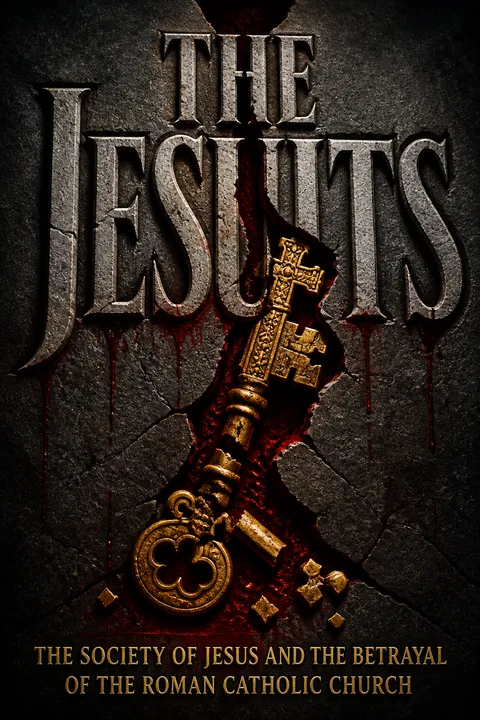
A state of war exists between the papacy and the Religious Order of the Jesuits—the Society of Jesus, to give the Order its official name.
The central conflict. A profound and lethal war has erupted between the Roman papacy and the Society of Jesus, representing the most radical clerical shift in a thousand years. This conflict is fought over two fundamental issues: who holds supreme authority over the worldwide Catholic Church, and what is the ultimate purpose of the Church in this world. While the papacy maintains an exclusively otherworldly, spiritual mission of eternal salvation, the modern Jesuit Order has substituted a here-and-now struggle for sociopolitical liberation.
Global geopolitical impact. This is no mere dusty theological squabble; the outcome of this collision directly influences major geopolitical rivalries and the destinies of millions. The tides of this war bear directly on the Cold War face-off, the moral consensus of the American people, and the rise of revolutionary movements across the globe.
- The geopolitical rivalry between the United States and the Soviet Union
- The sociopolitical fate of 350 million people in Latin America
- The moral and cultural consensus of the American public
The silent coup. The transformation was achieved through a quiet coup d'état within the Order's leadership during the 1960s. By placing like-minded progressives in key positions of power and communication, the Superiors effectively silenced the traditionalist rank-and-file. The fabled Jesuit obedience, once the Pope's greatest weapon, was turned inward to force compliance with these radical new policies.
2. The Ignatian mold demanded absolute, unquestioning obedience to the Pope
In addition to that ordinary bond of the three vows, we are to be obliged by a special vow to carry out whatever the present and future Roman Pontiffs may order which pertains to the progress of souls and the propagation of the faith...
The original design. Founded in 1540 by the Basque soldier Iñigo de Loyola, the Society of Jesus was engineered as a highly disciplined, elite spiritual militia. Ignatius designed his "Company" to be at the absolute and exclusive disposal of the Roman Pope, serving as the frontline defense against the Protestant Reformation. Their original mandate was strictly supernatural: to propagate Catholic doctrine and defend the unique prerogatives of the papacy.
The Fourth Vow. The core of the Ignatian mold was the solemn Fourth Vow of absolute obedience to the Pope. To maximize their mobility and effectiveness, Ignatius freed his men from traditional monastic obligations like wearing distinctive habits or chanting the Divine Office in choir.
- Absolute, unquestioning obedience "perinde ac cadaver" (as a corpse)
- Total mobility to deploy anywhere in the world at a moment's notice
- Direct, unmediated subordination to the Roman Pontiff as Christ's Vicar
A legendary legacy. This rigid, centralized structure produced a unique phenomenon in human history, yielding thousands of highly educated scholars, explorers, and martyrs. For over four centuries, to be a Jesuit was synonymous with being a fierce "papist," defending the Pope's infallible authority even unto disgrace, suppression, and death.
3. The Jesuit mission shifted from otherworldly salvation to this-worldly liberation
In place of the otherworldly purpose of the traditional Church, the Society of Jesus has substituted the here-and-now struggle for the liberation of one class of men and women in our society today: those millions who suffer from social, economic, and political injustice.
The great turnabout. Following the Second Vatican Council in 1965, the Jesuit leadership systematically abandoned the traditional Ignatian focus on saving individual souls for eternity. Under the banner of "renewal," the corporate mission of the Society was redirected toward the material, political, and economic liberation of the poor and oppressed. This marked a complete transition from a supernatural, vertical relationship with God to a horizontal, secularized focus on the structures of human society.
The Marxist alliance. This new mission placed many Jesuits in willing, active alliances with Marxist movements, particularly in the developing world. They adopted the Marxist analysis of class struggle, viewing Western democratic capitalism as an inherently sinful structure that must be dismantled.
- Reinterpreting the Gospels as a social and economic manifesto
- Viewing "sin" as institutionalized social structures rather than personal moral failings
- Partnering with Marxist revolutionaries to achieve a redistribution of wealth
The preferential option. The phrase "preferential option for the poor" was co-opted from its original Catholic context and turned into an exclusive mandate for political activism. By redefining the salvific mission of Christ in purely economic terms, the new Jesuitism laid aside centuries of authentic Catholic biblical interpretation.
4. Nicaragua became the violent testing ground for Liberation Theology
Though the movement has been global since its inception, it was above all in Latin America that the strange alliance between Jesuits and Marxists gathered its first practical momentum.
The revolutionary laboratory. Nicaragua, under the brutal Somoza dictatorship, became the primary testing ground where the alliance between Jesuits and Marxists was forged into active "praxis." Inspired by the newly formulated Liberation Theology, Jesuits worked hand-in-hand with the Sandinista National Liberation Front to overthrow the government and establish a Marxist-Leninist state.
Priests in power. The revolution produced the unprecedented spectacle of Catholic priests, most notably the Jesuit Fernando Cardenal, holding high-level cabinet positions in a Marxist government. These priest-politicians utilized their religious authority to legitimize the revolution and build a parallel "People's Church" (iglesia popular) that bypassed the traditional hierarchy.
- Fernando Cardenal serving as Sandinista Minister of Education
- Utilizing "Base Communities" (comunidades de base) to subvert episcopal authority
- Funding revolutionary programs through international religious and secular grants
The tragic cost. This political praxis resulted in a brutal civil war, the systematic persecution of orthodox Catholics, and the silencing of dissenting voices. Despite direct, repeated commands from Pope Paul VI and John Paul II to resign their government posts, the Jesuit politicians refused, protected by their own sympathetic Superiors.
5. Intellectual leaders systematically dismantled traditional Catholic dogmas
They have been imitated and joined by myriad groups, both Catholic and non-Catholic, with most diverse reasons for championing this new church, the 'people of God,' over the Roman Catholic hierarchic Church.
The theological assault. The structural and political rebellion of the Jesuits was made possible by a systematic, intellectual assault on traditional Catholic dogmas led by the Order's most celebrated theologians. Giants like Karl Rahner and Pierre Teilhard de Chardin spent their lifetimes dismantling the traditional concepts of faith, authority, and the supernatural order.
Teilhard's cosmic evolution. Pierre Teilhard de Chardin formulated a highly influential, evolutionary theology that replaced the traditional doctrine of creation and Original Sin with a pantheistic convergence toward a "cosmic Christ." His writings, though condemned by Rome, became the darling of Jesuit intellectuals who sought to reconcile faith with modern science.
- Redefining Christ as the "Omega Point" of physical and biological evolution
- Rejecting the supernatural order as a "monstrous" and artificial concept
- Viewing scientific research and human progress as the highest form of prayer
Rahner's open rebellion. Karl Rahner trained the heavy artillery of his logic on the sacrosanct authority of the papacy, proposing that defined dogmas like papal infallibility be made optional to achieve ecumenical unity. He taught generations of priests and professors to consume their own faith with skepticism, logic, and systematic disobedience.
6. Pope John Paul II faced open defiance and public humiliation in Managua
"The Pope's speech," Cardenal commented, "was a declaration of war."
The Polish Pope's strategy. Elected in 1978, Pope John Paul II brought a hard-headed, "muscle" approach to global politics, shaped by his firsthand experience with Communism in Poland. His strategy required the absolute reassertion of papal authority and the rejection of Marxist-aligned Liberation Theology, putting him on an immediate collision course with the Jesuits.
The Managua desecration. The conflict reached a dramatic climax on March 4, 1983, during John Paul II's visit to Nicaragua, where the Sandinista government orchestrated a public humiliation of the Pontiff. During an outdoor Mass in Managua, the Pope's voice was drowned out by organized Sandinista mobs chanting revolutionary slogans.
- Sandinista mobs shouting down the Pope's homily with political chants
- The removal of the crucifix from the altar, replaced by revolutionary murals
- The Pope publicly admonishing Ernesto Cardenal on the tarmac of the airport
The limits of coercion. Despite the public outrage, the Jesuit priest-politicians, led by Fernando Cardenal, refused to obey the Pope's demands to resign from the government. The confrontation exposed the deep rot of disobedience within the Order, as Jesuit Superiors in Rome and Nicaragua quietly worked to protect their rebellious members from papal discipline.
7. General Congregations democratized the Order and dismantled its monarchic structure
The rapid and complete turnabout of the Society in its mission and in its reason for being was no accident or happenstance.
The legislative coup. During General Congregations 31 and 32, the progressive majority of the Society utilized the "spirit of Vatican II" to carry out a structural revolution within the Order. They systematically dismantled the absolute, monarchic authority of the Father General and the Pope, replacing it with democratic structures.
Dismantling the grades. The Delegates successfully attacked the traditional Ignatian system of "grades," which had historically reserved the government of the Society to the elite, papally-vowed Professed Fathers.
- Diluting the special Fourth Vow of obedience to the Pope
- Introducing democratic "consultation" in place of strict, "corpselike" obedience
- Allowing non-Professed members and Lay Brothers to govern Provincial Congregations
The relaxation of discipline. The traditional Ignatian rules of poverty and community life were relaxed, allowing young Jesuits in training to manage personal budgets, live in scattered urban apartments, and experiment with modern, secular lifestyles.
8. Arrupism permanently transformed the Jesuits into political agents of social change
His job as Father General was to ensure that Jesuits not be distracted by papal groans from carrying out their mission among men.
The legacy of Pedro Arrupe. As the twenty-seventh Father General, Pedro Arrupe presided over the complete secularization of the Society of Jesus from 1965 to 1981. Under his charismatic but permissive leadership, the Order permanently shifted its focus from the supernatural to the sociopolitical.
The "Men-for-Others" philosophy. Arrupe's new Jesuitism, codified in the Decrees of GC32, redefined the Jesuit identity around humanism, social justice, and active participation in the political struggles of the world.
- Shifting the focus of Jesuit universities from Catholic orthodoxy to academic freedom
- Embracing "inculturation" to the point of paganizing Catholic rituals in places like India
- Prioritizing the "radical transformation of the world" over the salvation of individual souls
The permanent shift. Even after John Paul II's direct intervention in 1981 and the subsequent election of Piet-Hans Kolvenbach in 1983, the Society remained firmly committed to Arrupism. The new Jesuitism had successfully woven a "new fabric" for the Order, cementing its role as an autonomous, political force in the modern world.
Download PDF
Download EPUB
.epub digital book format is ideal for reading ebooks on phones, tablets, and e-readers.








































