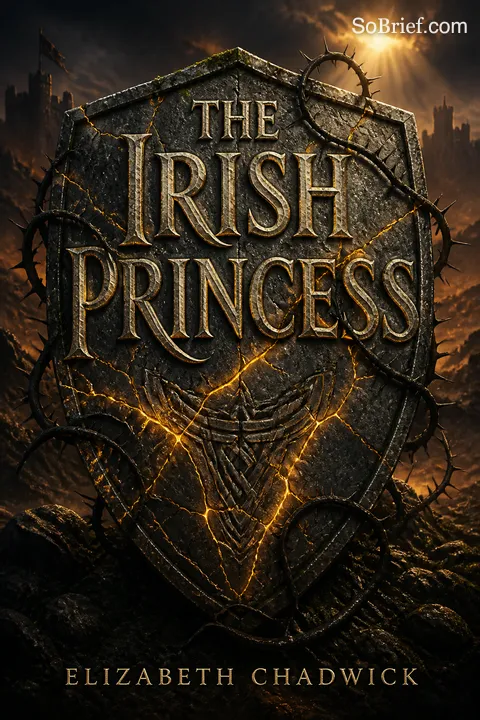
Plot Summary
Birth of a Princess
In the dawn light of 1152, Diarmait MacMurchada, King of Leinster, receives news of his daughter's birth. Though he had hoped for a son, the moment he holds Aoife, he is struck by her radiance and names her for beauty and hope. Aoife grows up in a world of shifting alliances and violence, learning early the importance of loyalty and cunning. Her father's love is fierce but pragmatic, and she is raised with the knowledge that her fate will be a tool for power. The Irish court is a place of both warmth and danger, and Aoife's childhood is shaped by the ever-present threat of betrayal and the lessons of survival her father imparts. Her destiny is set from her first breath: to be both a daughter and a weapon in the games of kings.
Exile and Alliances
When Diarmait is overthrown by his rivals, the family is forced into exile, fleeing their burning home and seeking sanctuary across the sea. Aoife, now a young woman, experiences the terror and exhilaration of displacement, learning to mask her fear with resolve. In Bristol, they find an ally in the merchant Robert FitzHarding, who guides Diarmait toward the English king, Henry II. The journey is fraught with uncertainty, but Aoife's intelligence and adaptability shine as she navigates foreign courts and customs. The family's survival depends on forging new alliances, and Aoife becomes increasingly aware that her value lies not just in her lineage, but in her ability to influence and observe. The seeds of her future are sown in exile, as she learns the art of negotiation and the necessity of sacrifice.
A Bargain Sealed
Diarmait's plea for help brings him to the court of Henry II, who, wary of direct involvement, grants permission for Diarmait to recruit mercenaries among his vassals. The pivotal meeting with Richard de Clare, Earl of Striguil, is orchestrated through FitzHarding's network. Richard, himself out of royal favor and hungry for opportunity, is captivated by the prospect of land and legacy—and by Aoife's beauty and spirit. The negotiations are tense, each side wary of being outmaneuvered. Aoife is both observer and participant, her future bartered as part of the bargain. The agreement is struck: Richard will aid Diarmait's return to power, and in exchange, he will wed Aoife and claim a stake in Ireland. The fates of nations and families are bound in this calculated pact.
Marriage of Power
The marriage of Aoife and Richard is both a personal and political event, celebrated amid the blood and ashes of conquest. Aoife, torn between fear and duty, enters the union with trepidation but soon discovers unexpected tenderness in Richard. Their wedding in Waterford is a spectacle of alliance, witnessed by both Irish and Norman factions. The consummation of their marriage is a private negotiation of vulnerability and trust, setting the tone for their partnership. Aoife's intelligence and resilience complement Richard's steadiness, and together they navigate the complexities of their dual heritage. Their union is a fulcrum upon which the future of Leinster—and the fate of their children—will pivot.
Storming the Shores
With Richard's arrival, the Norman mercenaries storm the Irish shores, capturing Wexford, Waterford, and eventually Dublin. The campaign is brutal, marked by sieges, betrayals, and shifting alliances. Aoife witnesses firsthand the violence and the cost of ambition, her role evolving from pawn to partner in governance. The victories are hard-won, and the spoils are divided among the conquerors, but the shadow of King Henry looms. The Irish landscape is transformed by foreign rule, and Aoife must reconcile her love for her homeland with her new responsibilities. The triumphs are tempered by the knowledge that peace is fragile and that every gain comes at a price.
Triumph and Betrayal
The successes of Richard and Diarmait draw the attention—and suspicion—of Henry II, who fears the rise of a rival kingdom. Henry arrives in Ireland with overwhelming force, demanding homage and seizing the coastal cities. Richard is forced to yield his conquests, and the delicate balance of power is upended. Aoife, now a mother, must navigate the treacherous waters of royal politics, using her wit and charm to secure her family's future. The alliances forged in war are tested by ambition and jealousy, and the threat of betrayal is ever-present. The cost of victory is revealed in the loss of autonomy and the tightening grip of the English crown.
The Price of Ambition
As the dust of conquest settles, the true cost of ambition becomes clear. Diarmait's relentless pursuit of power leads to the blinding and death of his sons, and Aoife is left to mourn the destruction of her family. Richard, too, is haunted by the consequences of his choices, struggling to maintain control amid rebellion and intrigue. The marriage between Aoife and Richard is tested by grief, guilt, and the demands of leadership. The couple must find strength in each other as they face the erosion of their power and the encroachment of new enemies. The legacy they hoped to build is threatened by the very forces they unleashed.
Blood and Vengeance
The cycle of bloodshed continues as old feuds reignite and new alliances are forged in vengeance. Diarmait's death leaves a vacuum, and Aoife and Richard must defend their claim against rivals both Irish and Norman. The violence is personal as well as political, with betrayals within the household and the ever-present danger of assassination. Aoife's resilience is tested as she becomes both protector and avenger, determined to secure her children's inheritance. The cost of vengeance is high, and the line between justice and cruelty blurs. The land is soaked in blood, and the future is uncertain.
The Lion's Shadow
With Diarmait gone and Richard weakened, Henry II asserts his dominance, appointing his own men to govern Ireland and curbing the ambitions of his vassals. Aoife must use all her cunning to protect her children's rights, appealing to Henry's self-interest and leveraging her unique position as both Irish princess and Norman countess. The struggle for autonomy is waged not just on the battlefield, but in the halls of power, where words and alliances are as deadly as swords. Aoife's relationship with Henry is complex, marked by mutual respect, rivalry, and unspoken attraction. The shadow of the lion king falls over all, shaping the destiny of Ireland.
Women of the Hall
Within the walls of the great halls, the women wield their own power. Aoife, Basilia, and the other ladies of the household navigate a world where their influence is both vital and precarious. Rivalries simmer, particularly between Aoife and Basilia, whose ambitions and loyalties often clash. The bonds of sisterhood are tested by jealousy, love, and the demands of survival. The women's roles as mothers, wives, and advisors are central to the maintenance of the dynasty, and their choices have far-reaching consequences. In a world dominated by men, it is often the women who hold the keys to the future.
The King's Game
As the political landscape shifts, Aoife becomes a master of the king's game, using diplomacy, charm, and strategic alliances to secure her family's position. She negotiates with Henry, fends off the ambitions of Raymond le Gros and Basilia, and manages the complex web of loyalties that bind the Irish and Norman factions. The game is dangerous, with the stakes nothing less than survival. Aoife's intelligence and adaptability are her greatest weapons, and she learns to play the long game, sacrificing short-term gains for lasting security. The lessons of her father and husband guide her as she navigates the treacherous waters of power.
Love and Legacy
Amid the turmoil, Aoife and Richard's marriage deepens into a partnership of love and respect. Their children, Isabelle and Gilbert, become the focus of their hopes and fears. The legacy they build is both personal and political, as they strive to secure their children's inheritance and ensure the survival of their line. The joys of motherhood are tempered by the ever-present threat of loss, and Aoife must balance her roles as wife, mother, and ruler. The bonds of family are both a source of strength and a vulnerability, and the future depends on the choices they make together.
The Last Oath
Richard's unexpected injury and decline bring the realities of mortality and succession to the fore. As he lies dying, he entrusts Aoife with the care of their children and the preservation of their legacy. The household is thrown into turmoil, with Basilia and Raymond maneuvering for control. Aoife must summon all her strength to protect her children and assert her rights as widow and countess. The final oaths exchanged between husband and wife are both a farewell and a charge to endure. Richard's death marks the end of an era, but also the beginning of a new struggle for survival.
Widow's Gambit
In the aftermath of Richard's death, Aoife faces the greatest challenge of her life. Beset by rivals and abandoned by many former allies, she must use every resource at her disposal to secure her children's inheritance. She appeals to Henry, navigates the treachery of Basilia and Raymond, and leverages her own intelligence and reputation to outmaneuver her enemies. The struggle is both public and private, as Aoife contends with grief, isolation, and the burden of leadership. Her resilience and cunning are tested to the limit, but she refuses to yield. The widow's gambit is a testament to her indomitable spirit.
The Children's Inheritance
Aoife's efforts are rewarded as she secures the protection of Henry and the guardianship of her children's lands. She returns to England, determined to preserve the memory of Richard and the rights of Isabelle and Gilbert. The journey is both an ending and a beginning, as Aoife reflects on the cost of survival and the meaning of legacy. The lessons of her father and husband guide her as she prepares her children for the challenges ahead. The inheritance she secures is not just land and title, but the wisdom and strength to endure. The story closes with Aoife looking to the future, her children at her side, and the hope that their line will flourish in the land for which so much was sacrificed.
Analysis
Elizabeth Chadwick's The Irish Princess is a sweeping historical novel that reimagines the twelfth-century Norman invasion of Ireland through the eyes of Aoife MacMurchada, a woman whose life is shaped by the collision of cultures, the ambitions of men, and her own fierce will to survive. The novel interrogates the nature of power, legacy, and identity, using Aoife's dual heritage as both a narrative engine and a lens for exploring the complexities of belonging and transformation. Chadwick's adaptation foregrounds the agency of women, revealing how their influence—often hidden or underestimated—can shape the destinies of nations. The cycles of violence and betrayal that define the era are depicted not as mere background, but as forces that scar and forge the characters, demanding resilience and cunning. The lessons of the novel are both timeless and timely: that survival requires adaptability, that legacy is built on both sacrifice and love, and that the struggle for autonomy is never-ending. In a world where power is always contested and security is fleeting, Aoife's story is a testament to the enduring strength of those who refuse to be defined by circumstance, and who fight—against all odds—to secure a future for those they love.
Review Summary
Reviews of The Irish Princess are largely positive, averaging 4.14/5 across 2,822 ratings. Readers praise Elizabeth Chadwick's meticulous research, vivid historical atmosphere, and immersive storytelling set in 12th-century Ireland and England. Many admire the strong, cunning protagonist Aoife MacMurchada and her relationship with Richard de Clare. Critics note occasional pacing issues, repetitive plot elements, and some feeling the characters lacked depth compared to Chadwick's other works. The audiobook narration received particular praise. Most readers appreciated discovering unfamiliar Irish medieval history through an engaging, character-driven narrative.
People Also Read
Characters
Aoife MacMurchada
Aoife is the daughter of Diarmait MacMurchada, raised in a world of violence, shifting alliances, and political intrigue. From childhood, she learns to mask fear with resolve and to use her intelligence as a weapon. Her marriage to Richard de Clare is both a sacrifice and an opportunity, and she grows from pawn to partner, wielding influence in both Irish and Norman courts. Aoife's psychological complexity is rooted in her dual identity: fiercely loyal to her family and homeland, yet pragmatic in embracing the power that comes with her new role. As wife, mother, and eventually widow, she is defined by resilience, adaptability, and a relentless drive to secure her children's future. Her relationships—with her father, husband, Henry II, and rivals like Basilia—are marked by both tenderness and calculation. Aoife's arc is one of survival, transformation, and the forging of legacy from the ashes of loss.
Richard de Clare (Strongbow)
Richard is a Norman earl out of royal favor, driven by the need to restore his family's fortunes and secure a legacy. Pragmatic, disciplined, and emotionally reserved, he is both a skilled warrior and a shrewd negotiator. His marriage to Aoife is initially a political calculation, but it evolves into a partnership of mutual respect and affection. Richard's psychological landscape is shaped by the burdens of leadership, the scars of past failures, and the constant threat of betrayal. He is haunted by the consequences of ambition—both his own and others'—and struggles to balance duty with personal desire. As husband and father, he is protective and tender, but never loses sight of the larger game. His decline and death are marked by a final act of trust: entrusting Aoife with the future of their children and the legacy they built together.
Diarmait MacMurchada
Diarmait is the embodiment of Irish kingship: fierce, cunning, and unyielding. His love for Aoife is genuine but pragmatic, and he raises her to be both a daughter and a tool of power. Diarmait's psychological makeup is defined by trauma—witnessing his own father's murder and burial with a dog—and by an insatiable drive for vengeance and survival. His alliances are transactional, and his willingness to sacrifice even his children for power is both his strength and his downfall. Diarmait's arc is one of rise, exile, and return, culminating in a legacy that is both glorious and tragic. His death leaves a vacuum that his daughter must struggle to fill.
Henry II
Henry is a force of nature: brilliant, restless, and perpetually hungry for power. His relationship with Aoife is complex, marked by mutual respect, rivalry, and unspoken attraction. As king, he is both benefactor and threat, granting favors only to tighten his own grip on Ireland. Henry's psychological depth lies in his ability to read people, to use both charm and intimidation, and to play the long game. He is haunted by betrayal—by his sons, wife, and vassals—and seeks control at all costs. His interactions with Aoife and Richard are a dance of dominance and negotiation, and his shadow looms over every decision they make.
Basilia de Clare
Basilia is Richard's sister, a woman of intelligence and capability who is often relegated to the background. Her role as chatelaine is vital, but her ambitions and desires are frequently overlooked. Basilia's psychological complexity is revealed in her rivalry with Aoife, her fraught relationship with Raymond le Gros, and her eventual assertion of power after Richard's death. She is both a victim and a perpetrator of the household's internal politics, and her actions are driven by a mix of resentment, longing, and pragmatism. Basilia's arc is one of transformation from dutiful sister to a player in her own right, willing to seize opportunity when it arises.
Raymond le Gros
Raymond is a formidable knight, valued for his military prowess but distrusted for his ambition and volatility. His relationship with Basilia is charged with unfulfilled desire and mutual dependence. Raymond's psychological profile is marked by a sense of exclusion and a hunger for recognition, leading him to overreach and challenge Richard's authority. After Richard's death, he becomes both protector and threat to Aoife and her children, embodying the dangers of unchecked ambition. Raymond's arc is one of rise, fall, and uneasy accommodation within the new order.
Hervey de Montmorency
Hervey is Richard's uncle, a calming presence and a voice of reason amid the household's turbulence. He is a skilled negotiator, valued for his wisdom and ability to see multiple sides of a conflict. Hervey's psychological strength lies in his empathy and his commitment to the family's well-being, even when it means stepping aside for others. He is a stabilizing force, often mediating between Richard, Aoife, and their rivals. Hervey's arc is one of quiet service, culminating in his retreat to monastic life after Richard's death.
Maurice Regan
Maurice is Diarmait's bard and interpreter, a man of words who navigates the boundaries between cultures. His fluency in languages and his role as chronicler make him both observer and participant in the unfolding drama. Maurice's psychological insight is rooted in his ability to see the patterns beneath events, to spin stories that shape perception, and to serve as a bridge between Irish and Norman worlds. He is loyal to Aoife and her family, using his skills to protect their interests and preserve their legacy.
Isabelle de Clare
Isabelle is the daughter of Aoife and Richard, born into a world of uncertainty and ambition. As a child, she is cherished and protected, but her future is the focus of intense political maneuvering. Isabelle's psychological significance lies in her role as the embodiment of her parents' hopes and the continuation of their line. Her inheritance is both a blessing and a burden, and her fate will be shaped by the choices and sacrifices of those who came before her.
Gilbert de Clare
Gilbert is the long-awaited son of Aoife and Richard, the focus of their hopes for the future. His birth secures the family's legacy, but his youth and vulnerability make him a target for rivals. Gilbert's psychological role is as a symbol of continuity and the precariousness of inheritance in a world where power is always contested.
Plot Devices
Dual Heritage and Identity
The novel's structure is built around the tension between Irish and Norman worlds, embodied in Aoife's character. Her ability to navigate both cultures is both her greatest strength and her deepest source of conflict. This duality is mirrored in the shifting alliances, betrayals, and negotiations that drive the plot. The narrative uses Aoife's perspective to explore questions of belonging, loyalty, and transformation, making her both a participant and a lens through which the reader experiences the story.
Marriage as Political Tool
The central plot device is the use of marriage as a means of forging alliances, securing power, and legitimizing claims. Aoife's marriage to Richard is the fulcrum upon which the fate of Leinster turns, and the negotiations surrounding it are fraught with tension and calculation. The marriages of other characters—Basilia, Matilda, Aline—are similarly transactional, revealing the ways in which women are both pawns and players in the game of power. The consummation of these unions is both a personal and political act, with far-reaching consequences.
Cycles of Violence and Retribution
The plot is driven by cycles of violence, betrayal, and vengeance, with each act of brutality begetting further bloodshed. The blinding and death of Diarmait's sons, the storming of cities, and the betrayals within the household all serve to reinforce the theme that power is won and lost through violence. The narrative structure uses foreshadowing and repetition to underscore the inescapability of these cycles, while also exploring the possibility of breaking them through resilience and cunning.
Female Agency and Rivalry
The novel foregrounds the agency of women—Aoife, Basilia, Môr, and others—who wield influence behind the scenes, shaping events through counsel, negotiation, and manipulation. The rivalry between Aoife and Basilia is a recurring motif, serving as both a source of tension and a commentary on the limited but vital power available to women. The narrative uses scenes of domestic life, childbirth, and female solidarity to explore the ways in which women assert themselves in a patriarchal world.
The King's Game
The plot is structured around a series of negotiations, bargains, and shifting alliances, with Henry II as the ultimate arbiter of fate. The use of letters, oaths, and gifts as tokens of loyalty and leverage is a recurring device, highlighting the importance of words and symbols in the exercise of power. The narrative employs foreshadowing and dramatic irony, as characters' plans are often undone by the unpredictable moves of the king and the ever-changing political landscape.
Legacy and Inheritance
The overarching narrative is driven by the quest to secure legacy and inheritance for the next generation. The births of Isabelle and Gilbert, the marriages of Matilda and Aline, and the final struggles over guardianship and land are all framed as battles for the future. The plot uses the motif of oaths and promises—both kept and broken—to explore the meaning of legacy and the sacrifices required to preserve it.
Download PDF
Download EPUB
.epub digital book format is ideal for reading ebooks on phones, tablets, and e-readers.








































