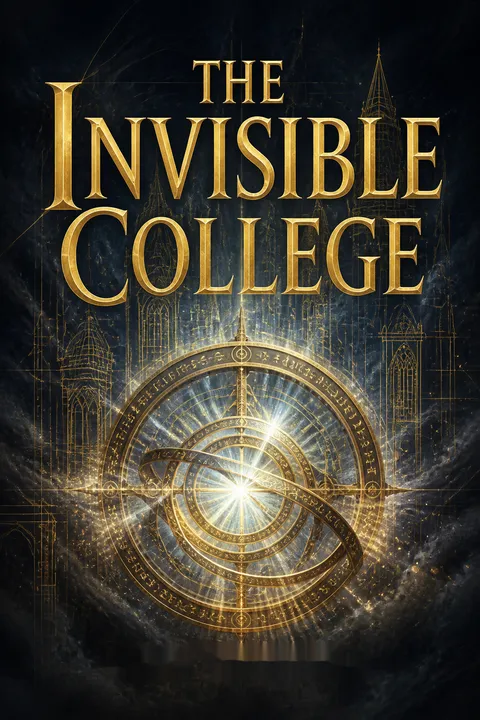

Plot Summary
Awakening in the Ice
In the frozen trenches of the north, Joseph Crossthwait investigates a massacre: an Aesir, a near-mythical being of ice and justice, has slaughtered dozens before being killed. The Aesir, once teachers of magic, now awaken only to destroy humanity, whom they see as a threat. Joseph's grim discovery—an Aesir corpse and a human survivor who is not what he seems—signals the start of a new Awakening. The chilling truth: the Aesir can create Semblances, imposters who wear human faces, infiltrating society. As Joseph executes the survivor, he realizes the world stands on the brink of another devastating war, and the enemy may already be among them.
A City of Magic
Robinson Dickemore Hawksley, a frail but brilliant young sorcerer, arrives in the bustling city of Auvinen with his family, seeking a new life after illness and loss. The city dazzles with magical inventions—iron horses, floating stones, and enchanted factories. Robinson's skills in elocution and music, inherited from his father, quickly earn him a place at the university and an invitation to the secretive Invisible College. Yet, beneath the city's wonders, tensions simmer: the threat of the Aesir looms, and the lines between magic, technology, and power blur, setting the stage for both opportunity and danger.
The Deaf Girl's Dream
Eighteen-year-old McKenna, deaf since childhood due to an Aesir-induced fever, navigates a society that shuns her. Despite her family's love and privilege, she faces exclusion from Society and the magical world. Her intellect and determination shine—she masters languages and dreams of joining the Invisible College, defying the belief that the deaf cannot wield magic. When her parents arrange lessons with Robinson, McKenna's hope is rekindled. She longs not just for acceptance, but for the power to shape her own destiny, even as the world's prejudices and the shadow of war threaten to close in.
Lessons in Voice and Power
Robinson's unconventional methods—rooted in the physiology of speech and the vibrations of sound—offer McKenna a path to clearer speech and, perhaps, a way into Society. Their lessons are intimate, challenging, and transformative, breaking barriers of communication and prejudice. As McKenna's confidence grows, so does her ambition: she wants to learn magic, to prove the impossible possible. Robinson, moved by her determination, agrees to try, even as he doubts the world's readiness to accept a deaf sorcerer. Their partnership becomes a beacon of hope, but also a target for scrutiny and misunderstanding.
Shadows in Society
As McKenna's speech improves, she faces new obstacles: jealousy from her sisters, skepticism from her formidable Aunt Margaret, and the ever-present stigma of her deafness. Robinson, meanwhile, struggles with poverty and overwork, sacrificing his own well-being for his students and his alchemical experiments. Their growing friendship—and the possibility of something more—draws both admiration and suspicion. In the background, the Invisible College's rituals and hierarchies reveal a world where knowledge is power, but also tightly guarded, and where the threat of infiltration by Semblances grows ever more real.
The Alchemy of Friendship
Weekly dinners at the Foster home become a sanctuary for Robinson, who finds warmth, food, and acceptance. McKenna, too, flourishes in this environment, her bond with Robinson strengthening through shared struggles and small victories. Yet, both are haunted by the knowledge that their happiness is fragile: war approaches, and the city's defenses are stretched thin. Robinson's invention—a mysterious device inherited from his family—becomes a symbol of hope and mystery, its purpose elusive but tantalizing. As friendships solidify, so do the lines between trust and betrayal.
War on the Horizon
The Aesir's Awakening brings devastation: sky ships rain magical fire on Auvinen, and the city's magical shields are tested to their limits. Joseph Crossthwait, now a hunter of Semblances, is tasked with rooting out infiltrators as panic spreads. The war is not just at the front—it is in the heart of society, where anyone could be the enemy. Amidst the chaos, Robinson and McKenna cling to their lessons and each other, even as the world they know begins to unravel. The cost of vigilance is high, and the line between hero and victim blurs.
The Stormbreaker's Arrival
The appearance of the stormbreaker—a massive, magical Aesir ship—over Auvinen marks a turning point. The city is bombarded with burning hail and fear, forcing mass evacuations and revealing the inadequacy of human defenses. Joseph is ordered to hunt a suspected Semblance in Auvinen, with Robinson among the suspects. The city's magical industry, once a source of pride, becomes a battleground. As the stormbreaker's shadow falls, alliances are tested, and the true nature of the enemy—both without and within—becomes terrifyingly clear.
Suffering and Sacrifice
The Aesir unleash a new plague, inspiratory stridor, targeting the city's most vulnerable: the deaf children at Mrs. Fiske's school. Robinson, risking his own life, tends to the sick and dying, embodying compassion and courage. McKenna, exiled to safety, is wracked with guilt and helplessness. The cost of war is measured not just in battles, but in the quiet suffering of innocents. As Robinson recovers from illness, he is forced to confront his own mortality and the depth of his feelings for McKenna, leading to a fateful confession.
The Secret Invention
Robinson's relentless experimentation with his mysterious family heirloom yields a breakthrough: a ring of white gold that, when worn, allows the wearer to sense Aesir magic and communicate thoughts directly. With the help of Wickins and McKenna, he develops a system of magical lamps that can detect Aesir presence, offering hope for early warning and defense. The invention's implications are vast—military, social, and personal. Yet, its power also attracts danger, as secrets cannot be kept for long in a world rife with spies and Semblances.
Love and Misgivings
Robinson and McKenna's relationship deepens, moving from teacher and student to partners and, eventually, fiancés. Their love is tested by societal expectations, family pressures, and their own insecurities. McKenna's near-drowning marks a turning point, leaving her changed in ways she cannot explain—haunted by dreams, prone to strange emotions, and increasingly sensitive to magic. As they plan their future, both are forced to confront the shadows of the past and the uncertainties of what they are becoming, together and apart.
The Drowning and the Change
After nearly drowning in the sea, McKenna is plagued by memory lapses, nightmares, and a growing sense of otherness. She feels colder, more attuned to magic, and sometimes overwhelmed by emotions not her own. Her family and Robinson notice the changes, but explanations elude them. The incident becomes a catalyst, unlocking latent abilities and fears. As McKenna and Robinson draw closer, the question arises: what did she bring back from the brink, and what does it mean for their future?
The Semblance Among Us
Joseph's hunt for Semblances intensifies, leading to tragic mistakes and the death of McKenna's aunt. The revelation that Semblances may not even know they are imposters shakes the Invisible College to its core. Robinson himself becomes a target, suspected of being a Semblance due to his miraculous recovery from illness and his uncanny magical abilities. The line between self and other, human and Aesir, blurs dangerously. Trust becomes a rare and precious commodity, and the cost of error is measured in lives.
Betrayal and Revelation
A confrontation in Robinson's alchemy turns deadly: Wickins is shot, and Robinson is taken at gunpoint by Joseph, who believes him to be a Semblance. McKenna, driven by fear and love, tries to intervene. The truth emerges in a tense standoff: the real Semblance is not Robinson, but Joseph's own comrade, manipulated by Aesir magic. The cycle of suspicion and violence reveals the insidious power of the enemy—not just to kill, but to corrupt and confuse. In the aftermath, the survivors are left to pick up the pieces and question what it means to be truly human.
The Ring of Thought
Robinson's invention, now fully understood, allows for direct thought communication and the detection of Aesir magic. The ring's power is both a gift and a burden, offering hope for peace but also exposing the wearer to pain and danger. McKenna's attempt to use the ring triggers a primal fear, hinting at deeper mysteries within herself. The device's true origin—a creation of a mortal sorcerer, not the Aesir—underscores the potential for human ingenuity to match, and perhaps surpass, that of their ancient foes. The future of magic, and of the world, hangs in the balance.
The Final Confrontation
In a climactic showdown, Robinson faces his would-be executioner, using the ring's power to reveal the true Semblance. The confrontation exposes the tragic irony: those who hunt monsters may become them, and the greatest threat may come from within. McKenna's courage and Robinson's ingenuity save the day, but not without cost. The experience leaves them both changed—wiser, more wary, and more determined to forge their own path in a world where identity and loyalty are never certain.
Justice Claimeth Its Own
The authorities, eager to contain the truth about Semblances, offer apologies and hush money, but the scars remain. Robinson and McKenna, now engaged, navigate the aftermath with resilience and hope. The invention is patented, promising a new era of magical defense. Yet, the specter of the Aesir and the knowledge of how easily trust can be broken linger. The lesson is clear: justice is not just a matter of law, but of conscience, and the price of peace is eternal vigilance.
A New Beginning
Robinson and McKenna marry in a joyful, if hasty, ceremony, surrounded by family and friends. Their partnership—equal, loving, and defiant of convention—signals a new chapter for themselves and for the world. As they depart for their honeymoon, the mysterious device changes, hinting at further secrets and challenges ahead. McKenna's lingering sense of otherness, her dreams, and the unresolved questions of identity and magic suggest that their story is far from over. Together, they face the future—uncertain, dangerous, and full of possibility.
Analysis
Jeff Wheeler's The Invisible College is a richly layered fantasy that explores the intersections of magic, technology, and social justice in a world on the brink of transformation. At its heart, the novel is about outsiders—those marked by difference, whether by disability, class, or secret knowledge—struggling to find belonging and agency in a society defined by exclusion and fear. Through the intertwined journeys of Robinson and McKenna, Wheeler interrogates the nature of power: who wields it, who is denied it, and how it can be reclaimed or subverted. The plot's central devices—the secret society, the threat of infiltration, the mysterious invention—serve as metaphors for the challenges of trust, innovation, and identity in any era. The story's treatment of disability, particularly through McKenna's perspective, is both a critique of historical prejudice and a celebration of resilience and adaptation. The ever-present threat of the Aesir and their Semblances externalizes the anxieties of a world where the enemy is both without and within, forcing characters to confront the limits of certainty and the costs of justice. Ultimately, the novel argues for the transformative power of empathy, partnership, and the courage to challenge the boundaries of the possible. Its lessons resonate in our own world: that true progress requires both the humility to question received wisdom and the audacity to imagine new ways of being together.
Review Summary
People Also Read


Characters
Robinson Dickemore Hawksley
Robinson is a young sorcerer marked by physical weakness but intellectual and magical brilliance. Scarred by illness and loss, he is driven by curiosity, empathy, and a relentless desire to help others—especially the marginalized. His expertise in elocution and music makes him both a teacher and an inventor, and his mysterious family heirloom becomes the key to a new era of magic. Robinson's relationship with McKenna is transformative, challenging his insecurities and deepening his sense of purpose. Psychologically, he is haunted by self-doubt and a fear of not belonging, but his courage and integrity shine through, especially when faced with suspicion and mortal danger. His journey is one of self-discovery, love, and the forging of a new kind of magic.
McKenna Aurora Foster
Deaf since childhood, McKenna is both vulnerable and fiercely independent. Her exclusion from Society and the magical world fuels her drive to prove herself, mastering languages and seeking entry into the Invisible College. Her relationship with Robinson is both a source of empowerment and a crucible for her deepest fears—of rejection, of being a burden, of never truly belonging. After her near-drowning, she is changed: more attuned to magic, haunted by dreams, and sometimes overwhelmed by emotions not her own. Psychologically, McKenna embodies resilience, curiosity, and a longing for connection. Her arc is one of transformation—from pariah to pioneer, from student to equal, and from isolation to love.
Joseph Crossthwait
As a high-ranking member of the Invisible College and the Brotherhood of Shadows, Joseph is tasked with rooting out Semblances—Aesir imposters—at any cost. His sense of duty is absolute, but it comes at the price of compassion and certainty. Joseph is both executioner and investigator, operating in moral gray zones where mistakes are fatal. His psychological landscape is marked by guilt, suspicion, and a growing awareness of the limits of justice. His encounters with Robinson and the tragic consequences of his actions force him to question the very nature of identity and loyalty.
John Kelly Wickins
Wickins is Robinson's roommate and confidant, a young officer with a passion for ancient languages and a strong sense of duty. His easy camaraderie and willingness to help ground Robinson, while his own experiences with loss and war add depth to his character. Wickins's involvement in Robinson's experiments and his ultimate wounding in the line of duty highlight the costs of friendship and the dangers of a world at war. Psychologically, he is both pragmatic and idealistic, serving as a bridge between the military and magical worlds.
Sarah Fuller Fiske
As headmistress of the school for the deaf and a high-ranking member of the Invisible College, Mrs. Fiske embodies empathy, wisdom, and quiet strength. She champions the marginalized, supports innovation, and provides crucial guidance to both Robinson and McKenna. Her illness and recovery mirror the broader suffering of the city, and her steadfastness in the face of adversity makes her a moral anchor in the story.
Laurel Aurora Foster
McKenna's mother balances love, social ambition, and realism. She supports her daughter's education and unconventional romance, but is also attuned to the dangers and prejudices of Society. Her relationship with Robinson is marked by cautious approval, and her role as mediator in family and social conflicts is central. Psychologically, she is both nurturing and shrewd, navigating the shifting tides of fortune and reputation.
Margaret Aurora Blatchford (Aunt Margaret)
Aunt Margaret represents the old order: strict, proud, and deeply invested in propriety. Her skepticism of Robinson and her attempts to protect McKenna from scandal are rooted in both love and fear. Her untimely death—possibly at the hands of those hunting Semblances—serves as a turning point, exposing the costs of secrecy and the vulnerability of even the powerful. Psychologically, she is both a barrier and a catalyst for change.
Isaac Berrow (in absentia)
Though long dead, Berrow's writings frame the narrative, offering philosophical reflections on magic, justice, and the human condition. His voice serves as a guide and a warning, connecting past and present, and challenging characters and readers alike to question the nature of truth and power.
The Aesir
The Aesir are both the source of magic and the existential threat to humanity. Their justice is cold, their motives inscrutable, and their powers vast. As both teachers and destroyers, they embody the dangers of knowledge without empathy. Their ability to create Semblances and unleash plagues makes them a pervasive, psychological presence—an ever-present reminder of the fragility of human achievement.
The Semblances
Semblances are Aesir-created imposters, often unaware of their true nature. Their existence sows paranoia, undermines trust, and blurs the line between self and other. Psychologically, they represent the fear of the unknown within, the possibility that anyone—even oneself—could be the enemy. Their presence forces characters to confront the limits of certainty and the costs of justice.
Plot Devices
The Invisible College
The Invisible College serves as both a literal and metaphorical structure: a hidden network of sorcerers, a repository of ancient wisdom, and a gatekeeper of magical advancement. Its rituals, hierarchies, and tests of character drive much of the plot, shaping the destinies of Robinson, McKenna, and others. The College's secrecy both protects and endangers, fostering innovation while enabling paranoia and exclusion. Its narrative structure—interwoven with Berrow's philosophical interludes—frames the story as a quest for truth amid uncertainty.
Semblances and Infiltration
The device of Semblances—Aesir-created imposters—introduces a pervasive sense of mistrust and suspense. Early foreshadowing of their abilities and the revelation that even they may not know their true nature heightens the stakes, blurring the boundaries between friend and foe. This plot device drives both external conflict (the hunt for infiltrators) and internal conflict (characters' doubts about themselves and others), culminating in a series of confrontations that test the limits of justice and empathy.
The Magical Device and the Ring
Robinson's family heirloom—a device that is part puzzle, part magical artifact—serves as a central plot engine. Its gradual unlocking mirrors the characters' journey toward self-knowledge and societal change. The ring's power to detect Aesir magic and enable thought communication is both a literal and symbolic bridge between worlds, offering hope for defense and understanding, but also exposing the wearer to pain and risk. The device's secrets are revealed through a combination of intuition, experimentation, and collaboration, embodying the story's themes of innovation and partnership.
Narrative Structure and Interludes
The novel alternates between the viewpoints of Robinson, McKenna, Joseph, and others, allowing for a rich exploration of psychological and social dynamics. Interludes from Isaac Berrow's writings provide philosophical context, foreshadowing, and thematic resonance, inviting readers to reflect on the nature of magic, justice, and the human condition. The structure balances action, romance, and introspection, maintaining suspense while deepening emotional engagement.
About the Author



Download PDF
Download EPUB
.epub digital book format is ideal for reading ebooks on phones, tablets, and e-readers.








































