
Plot Summary
Wretcheds in Hiding
Eilean, a wretched with mysterious magical gifts, and her loyal friend Celyn live in disguise in the town of Isen, haunted by their past at Muirwood Abbey. They seek Aldermaston Utheros, a supposed heretic, hoping he can help them use the powerful tome entrusted to Eilean by the immortal druid Mordaunt. Every day is a careful dance of secrecy, as they fear discovery by Captain Hoel, the relentless Apocrisarius hunter. Their mission is urgent, but the world is closing in: the maston order is corrupt, and the High Seer's inquisitors are everywhere. Eilean's magic is both a blessing and a curse, draining her with each use. The tension of being hunted, the uncertainty of their quest, and the hope for change in a broken world weigh heavily on their hearts.
The Relentless Hunter
Captain Hoel, the High Seer's best hunter, has tracked Eilean and her friends with unyielding patience. His pursuit is personal—Eilean once saved his life, but now he must bring her to justice. Hoel's methods are ruthless but not cruel; he captures Eilean, binding and gagging her, and plans to send her to Avinion for trial. The darkness of the chest she's imprisoned in triggers her deepest fears, but her resourcefulness and the subtle guidance of the Medium help her escape. The psychological cat-and-mouse between Eilean and Hoel is fraught with guilt, regret, and a strange, unspoken connection. Both are driven by duty, but their convictions are on a collision course, setting the stage for a larger conflict between obedience and conscience.
Flight of the Púca
After a harrowing escape from Hoel, Eilean is aided by Stright, a druid, and a mischievous púca—a magical, shape-shifting spirit. The púca offers Eilean a wild, terrifying flight to the castle where Utheros is hidden. The journey is both exhilarating and humbling, as Eilean is forced to trust in forces she barely understands. The castle, perched atop a forbidding hill, is a fortress of secrets and political intrigue. The púca's unpredictable nature mirrors the uncertainty of Eilean's quest, but it also becomes a symbol of hope and the possibility of unexpected allies. The boundaries between the magical and the mundane blur, and Eilean's courage is tested as she steps into the heart of the maston order's power.
The Heretic's Tome
Eilean finally meets Aldermaston Utheros, who is both wary and intrigued by her and the tome she carries. The tome, written in an ancient, lost language, is believed to be the Sefer Yetzirah—the Book of Creation. Utheros, himself a victim of the order's corruption, becomes an unexpected mentor. Together, they realize the tome's secrets could reshape the world, but translating it is a daunting task. The castle becomes a temporary sanctuary, but danger is ever-present. Eilean's identity as a wretched and her mastery of forbidden magic challenge the rigid hierarchies of the maston order. The emotional stakes rise as Eilean's hope for change is kindled, even as the threat of betrayal and violence looms.
Wintertide Sanctuary
As winter deepens, Eilean, Celyn, Stright, and Utheros find a precarious refuge in the prince's castle. The season brings moments of warmth, learning, and camaraderie, but also underscores their isolation. The castle's walls cannot keep out the world's troubles: the emperor's armies gather, and the order's schism grows. Eilean studies with Utheros, growing in knowledge and power, while Stright and Celyn's bond deepens. Yet, the sense of being hunted never fades. The traditions of wintertide, with their rituals and feasts, offer fleeting comfort, but the specter of war and the corruption of the order cast long shadows. The emotional respite is bittersweet, as everyone knows the peace cannot last.
Poison and Betrayal
The fragile sanctuary is shattered when a kishion—an ancient, magically enhanced assassin—strikes during the winter festival. Poisoned vassail sickens many, and Eilean must use her magic to save lives and defend the prince from a deadly attack. The kishion's presence reveals a deeper conspiracy: the order's enemies are not just external, but within. Eilean's use of forbidden words of power marks her as both a savior and a threat. The prince's offer of alliance, and even marriage, is gently refused, but his respect for Eilean grows. The attack exposes the vulnerability of even the most fortified places and the lengths to which the order's enemies will go to maintain control.
The Assassin's Arrow
The kishion's attempt on Prince Derik's life is a turning point. Eilean, compelled by the Medium, uses deadly magic to stop the assassin, but the act leaves her shaken. The prince and Utheros recognize the gravity of the threat: the kishion are tools of the old empresses, and their return signals a new darkness. The poisoned vassail, the failed assassination, and the prince's political maneuvering all point to a world on the brink of chaos. Eilean's growing power and her willingness to use it set her apart, but also isolate her. The emotional cost of violence, the burden of leadership, and the uncertainty of whom to trust weigh heavily on her and her allies.
Oaths and Schisms
As spring approaches, the political and spiritual schism within the maston order deepens. Eilean must decide whether to travel to Cruix Abbey to translate the tome, leaving behind Stright and Celyn. The bonds of friendship and love are strained by duty and destiny. Stright's loyalty to Celyn and Eilean is tested, as is Celyn's resolve to follow the Medium's will. The order's traditions—oaths, symbols, and tests—are revealed as both sources of strength and instruments of control. The emotional heart of the story is the pain of necessary partings and the courage to pursue a higher calling, even at great personal cost.
Through the Watzholt
Eilean, Celyn, and their escort brave the treacherous Watzholt mountains, guided by the taciturn hunter Gropf. The journey is physically exhausting and emotionally taxing, as memories of past loves and losses surface. The ever-present threat of pursuit by Hoel and the Apocrisarius adds tension. The púca's watchful presence is both comfort and warning. The mountains become a crucible, testing resolve and revealing the characters' vulnerabilities. The beauty and danger of the natural world mirror the internal struggles of the travelers, and the journey becomes a rite of passage toward greater self-knowledge and purpose.
The Disguised Enemy
In the town of Fenton, Eilean and her companions are ambushed by Hoel, who uses disguise and deception to get close. The confrontation is a battle of wits and wills, with Eilean narrowly escaping capture through magic and quick thinking. The episode exposes the depth of Hoel's obsession and the lengths he will go to fulfill his duty. The emotional complexity of their relationship—admiration, anger, regret—comes to the fore. The sense of being hunted intensifies, and the realization that enemies can wear familiar faces deepens the story's psychological tension.
Lightning and Sanctuary
Reaching Cruix Abbey, Eilean meets Aldermaston Kalbraeth, a wise and ailing leader who recognizes her potential. She undergoes the maston test, a spiritual and psychological ordeal that forces her to confront her mortality, her fears, and her sense of self-worth. Passing the test, she claims the right of sanctuary, thwarting Hoel's attempt to arrest her. The emotional climax is one of acceptance and transformation: Eilean is no longer just a wretched, but a maston, empowered and protected. The abbey becomes a place of both refuge and new danger, as the order's internal conflicts escalate.
The Maston Test
The maston test is a profound, mystical experience. Eilean faces darkness, the Myriad Ones, and the weight of her own insignificance. Through visions and the guidance of the Medium, she emerges with a new sense of purpose and belonging. The test is both a personal and cosmic rite, connecting her to the ancient order, the druids, and the web of worlds. The emotional arc is one of fear, surrender, revelation, and joy. Eilean's transformation is not just magical, but existential—she is now a bridge between worlds, a chosen instrument of change.
The Knowing
With her new status, Eilean begins to translate the tome with Kalbraeth. They discover the existence of mirror gates—portals between worlds—and the intertwined destinies of mastons and druids. The Knowing, a deeper understanding of the Medium, unites disparate traditions and reveals the true nature of power: it is not domination, but connection, humility, and service. The emotional resonance is one of awe and responsibility. Eilean's journey is now not just about survival, but about healing a fractured world and restoring balance.
The Hetaera's Brand
Hoel, tormented by visions and duty, accuses Eilean of being a hetaera—a servant of the ancient evil. The accusation is a test of trust and love, and Eilean's vindication exposes the manipulation and lies at the heart of the order's corruption. The arrival of the High Seer and her Apocrisarius brings the conflict to a head. Sanctuary is threatened, and the lines between friend and foe blur. The emotional stakes are heightened by betrayal, misunderstanding, and the ever-present danger of violence.
The High Seer Arrives
The High Seer's arrival at Cruix Abbey is a storm of pride, anger, and political maneuvering. Eilean stands her ground, using the power of the Medium to protect herself and her allies. The confrontation exposes the High Seer's hypocrisy and the depth of the order's crisis. A conclave is called to judge her, but the threat of violence and the machinations of the Apocrisarius loom. The emotional core is the courage to speak truth to power, the cost of integrity, and the hope for renewal in the face of institutional decay.
The Tome Stolen
In the chaos following the High Seer's departure, Eilean discovers that the precious tome has been stolen by Kariss, a hidden Apocrisarius agent. The loss is devastating, a blow to hope and purpose. Celyn is wracked with guilt, and Eilean must choose between despair and resolve. The theft is a masterstroke of the enemy, exploiting trust and vulnerability. The emotional aftermath is one of grief, anger, and renewed determination. Eilean's journey now becomes a quest to recover what was lost and to confront the true source of evil.
Prisoners and Poisoners
Eilean and Hoel are captured and imprisoned in Dochte Abbey, where Kariss and the kishion reveal their true allegiance to the ancient evil, Ereshkigal. Hoel is forced to wear a kystrel, losing his free will, and Eilean is nearly broken by violence and betrayal. The emotional crucible is intense: love, guilt, and the struggle for agency collide. Through courage, magic, and the power of their bond, Eilean and Hoel break free, but not without cost. The ordeal exposes the depth of the enemy's power and the necessity of unity and sacrifice.
Mirror Gate
With the Cruciger orb and the knowledge of the mirror gate, Eilean and Hoel escape Dochte Abbey and set out to recover the tome in another world. Their journey is both literal and symbolic—a passage from fear to hope, from division to unity. The mirror gate is a threshold, a promise of new challenges and possibilities. The emotional resolution is one of love, partnership, and the willingness to face the unknown together. The story ends on the cusp of a new adventure, with the fate of worlds hanging in the balance.
Analysis
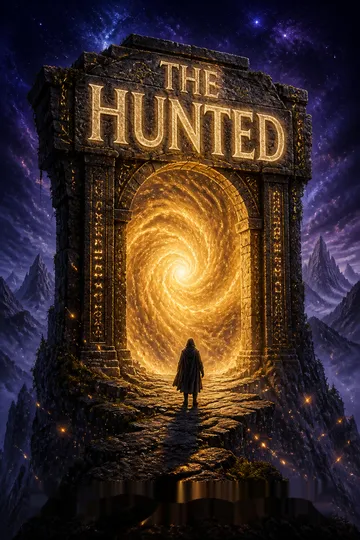
Jeff Wheeler's The Hunted is a masterful exploration of the tension between tradition and transformation, obedience and conscience, power and humility. Through the intertwined journeys of Eilean and Hoel, the novel interrogates the costs of loyalty, the dangers of pride, and the redemptive power of love and self-knowledge. The story's rich magical system—rooted in language, ritual, and the act of translation—serves as both a metaphor for personal growth and a critique of institutional rigidity. The recurring motif of sanctuary, and its repeated violation, reflects the precariousness of safety in a world beset by corruption and violence. The use of foreshadowing, visions, and parallel worlds expands the narrative's scope, inviting readers to consider the multiplicity of possible futures and the necessity of choice. Ultimately, The Hunted is a call to listen—to the whispers of conscience, the voices of the marginalized, and the wisdom of the past. It is a story about the courage to challenge authority, the humility to admit error, and the hope that, even in the darkest times, renewal is possible. The novel's lessons resonate in our own era of division and upheaval: true leadership is not domination, but service; true power is not control, but connection; and true change begins with the willingness to listen and to love.
Review Summary
People Also Read
Characters
Eilean (Gwenllian Siar)
Eilean is the heart of the story—a wretched orphan with mysterious magical gifts, haunted by her unknown origins and the trauma of being hunted. Her journey is one of transformation: from fugitive to maston, from servant to leader, from self-doubt to Knowing. Eilean's relationships—with Celyn, Stright, Utheros, and especially Hoel—are marked by loyalty, empathy, and a fierce sense of justice. Psychologically, she is driven by a longing for belonging and purpose, but also by a deep compassion for the suffering of others. Her development is a gradual awakening to her own power and responsibility, as she learns that true strength lies in humility, connection, and the courage to challenge corrupt authority.
Captain Hoel Evnissyen
Hoel is both antagonist and love interest—a brilliant, disciplined Apocrisarius whose loyalty to the order is absolute, yet whose conscience is troubled by the order's corruption. His pursuit of Eilean is as much about duty as it is about unresolved feelings of admiration and love. Hoel's rare Gift of Seering (visions of the future) is both a blessing and a curse, fueling his obsession and his fear of being wrong. His psychological arc is one of pride, guilt, and eventual surrender to the truth. The tension between his oaths and his heart is the emotional engine of the story, and his eventual partnership with Eilean is hard-won and deeply moving.
Celyn (Holly)
Celyn is Eilean's anchor—a friend who has shared her hardships, her secrets, and her dreams. Her resurrection by Mordaunt's magic has made her sensitive to the Medium, and her loyalty is unwavering. Celyn's relationship with Stright is a gentle counterpoint to the story's violence, offering hope and the promise of healing. Psychologically, Celyn is both nurturing and brave, willing to sacrifice her own happiness for the greater good. Her journey is one of learning to let go, to trust the Medium, and to accept that love sometimes means parting.
Stright
Stright is a druid in hiding, able to commune with spirit creatures and wield elemental magic. His presence challenges the maston order's dogma and offers a different perspective on power and tradition. Stright's love for Celyn and his friendship with Eilean are sources of strength, but also of vulnerability. Psychologically, he is open-minded, curious, and willing to question authority. His development is a journey from isolation to belonging, from suspicion to trust, and from secrecy to open alliance.
Aldermaston Utheros
Utheros is a wise, compassionate leader condemned by the order for his integrity. He becomes Eilean's mentor, teaching her not just magic, but the deeper truths of humility, justice, and service. Utheros's willingness to challenge authority, even at great personal cost, is a model for Eilean and others. Psychologically, he is both wounded and resilient, carrying the burden of exile but refusing to abandon hope. His development is a testament to the power of conscience and the necessity of reform.
Aldermaston Kalbraeth
Kalbraeth is the ailing leader of Cruix Abbey, a man of deep wisdom and humility. His acceptance of Eilean, his willingness to teach her, and his resistance to the High Seer's tyranny make him a pivotal figure. As Hoel's father, he embodies the conflict between tradition and change, authority and compassion. Psychologically, he is marked by pain, regret, and a longing for reconciliation. His death is both a personal and symbolic loss, underscoring the cost of standing for truth.
The High Seer (Lady Tatyana Dagenais)
The High Seer is the antagonist—a powerful, charismatic woman whose ambition and pride have corrupted the maston order. Her refusal to listen, her manipulation of the Apocrisarius, and her willingness to use violence and betrayal make her a formidable foe. Psychologically, she is driven by fear of losing power, a need for control, and a deep-seated insecurity masked by arrogance. Her downfall is both inevitable and tragic, a warning about the dangers of unchecked authority.
Kariss
Kariss is a master of disguise and manipulation, an Apocrisarius agent and poisoner who infiltrates Eilean's circle. Her theft of the tome and her role in poisoning Kalbraeth reveal her as a key agent of the ancient evil, Ereshkigal. Psychologically, she is cunning, ruthless, and utterly loyal to her mistress. Her development is a study in the banality of evil—the capacity for cruelty hidden behind a mask of charm.
Mordaunt (Maderos, Myrddin)
Mordaunt is the enigmatic druid who sets the story in motion, entrusting Eilean with the tome and guiding her through visions and memories. As one of the original Twelve, his knowledge and power are vast, but he is also marked by sorrow, exile, and a longing for redemption. Psychologically, he is patient, wise, and burdened by the consequences of his choices. His development is a meditation on immortality, responsibility, and the hope for renewal.
The Púca
The púca is a shape-shifting spirit creature who aids Eilean and her friends at crucial moments. Its unpredictable nature, loyalty, and magical abilities make it both a source of comic relief and a symbol of the world's deeper mysteries. Psychologically, the púca represents the wild, untamable aspects of magic and fate, reminding the characters (and readers) that not everything can be controlled or understood.
Plot Devices
Duality of Duty and Conscience
The narrative is structured around the tension between duty to authority (the maston order, the High Seer) and the demands of conscience (the Medium, personal integrity). Characters are repeatedly forced to choose between loyalty to tradition and the courage to challenge corruption. This duality is embodied in the relationship between Eilean and Hoel, whose opposing convictions drive the plot and emotional arc. The device is reinforced through oaths, tests, and symbols (chaen, kystrel), and is mirrored in the schism within the order.
Magical Realism and Words of Power
The story's magic system is built on words of power—ancient languages that shape reality. The act of translation, learning, and speaking is both literal and metaphorical: knowledge is power, but it comes with cost and responsibility. The use of magic is always fraught with risk, draining the user and exposing them to temptation. The interplay between spoken and unspoken truths, visible and invisible forces, is a recurring motif, deepening the psychological and thematic complexity.
Foreshadowing and Visions
Hoel's Gift of Seering provides glimpses of possible futures, creating suspense and ambiguity. These visions are not always reliable, and their misinterpretation drives much of the conflict and misunderstanding. The device allows the narrative to explore themes of fate, free will, and the multiplicity of possible outcomes. The reader, like the characters, is kept in a state of uncertainty, heightening emotional engagement.
Mirror Gates and Parallel Worlds
The discovery of mirror gates—portals between worlds—expands the story's scope and stakes. The device serves as both a literal means of escape and a metaphor for crossing boundaries: between past and future, self and other, tradition and change. The rules governing the gates (covenants, time limits, consequences) reinforce the story's emphasis on responsibility and the cost of power.
Sanctuary and Schism
The right of sanctuary, and its repeated violation, is a central plot device. Abbeys, castles, and magical protections offer temporary refuge, but are always under threat from betrayal, pride, and violence. The schism within the maston order is both a political and spiritual crisis, mirroring the characters' internal struggles. The device underscores the fragility of safety and the necessity of courage in the face of overwhelming odds.
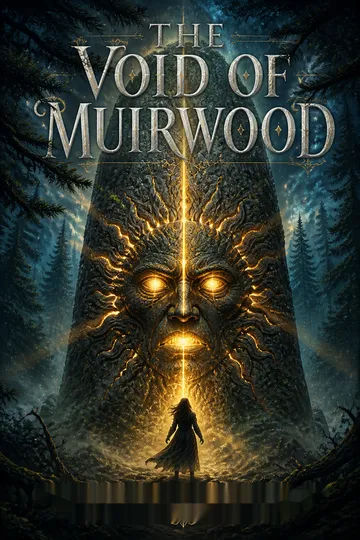
The Dawning of Muirwood Series Series
About the Author
Download PDF
Download EPUB
.epub digital book format is ideal for reading ebooks on phones, tablets, and e-readers.








































