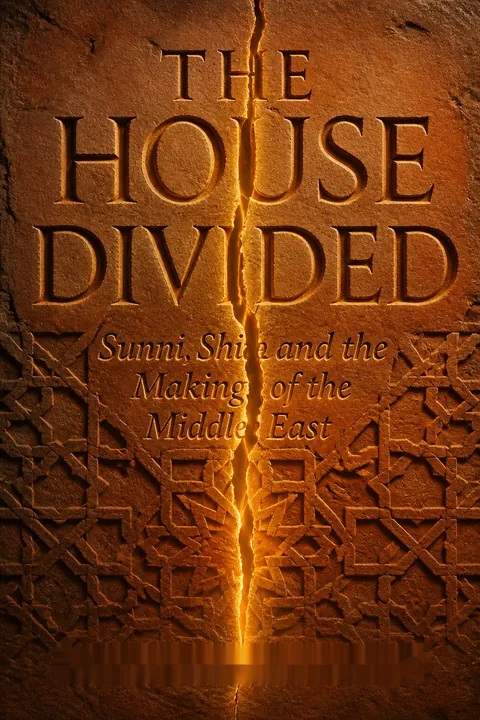

Key Takeaways
1. The Enduring Schism: Origins and Narratives
It is very hard for those of us who have been brought up in the West to conceive of the passionate engagement of the past with the present in the Islamic world.
Foundational Divide. The core of the Sunni-Shia schism lies in the dispute over the rightful succession to Prophet Muhammad after his death in 632 CE. While all Muslims share the same Koran, revere the Prophet, and practice similar rituals, their differing interpretations of this pivotal moment created distinct historical narratives and aspirations that continue to fuel modern conflicts. The Shia believe Ali, Muhammad's cousin and son-in-law, was divinely appointed as his heir, while the Sunni accepted the leadership of Abu Bakr, the first of the "Rightly Guided Caliphs."
Living History. For Muslims, the events and figures of early Islamic history are not distant legends but vividly alive in their collective imagination. Stories of the Prophet's household in Medina, the bravery of Ali, the rivalry between Aisha and Fatima, and the martyrdom of Husayn at Kerbala are heard from birth and provide heroes and villains around which Muslims navigate their lives. This deep engagement with the past means that historical grievances and perceived injustices resonate powerfully in contemporary political and social dynamics.
Kerbala's Legacy. The martyrdom of Husayn, the Prophet's grandson, at Kerbala in 680 CE, is a central tragedy for Shia Muslims, commemorated annually with intense mourning during Ashura. This event solidified a tragic sense of suffering for the righteous and an ardent yearning for true spiritual leadership from a dynasty of martyrs. While Sunnis also condemn the events of Kerbala, the Shia's passionate remembrance underscores their belief that the Muslim community lost its divinely anointed leadership early on, leading to a continuous struggle against unjust rulers.
2. Power vs. Piety: The Sultan and the Sheikh
Political leadership within Islamic history has often tried to wrap itself up in the cloak of Sunni or Shia spiritual authority but seldom succeeds for long.
Secular Authority vs. Spiritual Guidance. A recurring tension throughout Islamic history is the struggle between political rulers, often termed "sultans" (those who possess authority), and spiritual scholars, known as "sheikhs" or "imams." While sultans wield temporal power, true and enduring respect in Islamic society often goes to the gentle scholars and venerable elders who suffer for their faith, embodying modesty and principled teaching. This dynamic is evident in both Sunni and Shia traditions.
The Prophet's Example. Prophet Muhammad's leadership in Medina (622-632 CE) serves as the ideal role model for Muslim leaders, characterized by accessibility, compassion, humanity, and honesty, living a life of holy poverty. He was an arbitrator and judge, not a king, and was uninterested in temporal power, focusing instead on teaching ethical behavior and embracing a wider community. This sets an exacting standard against which all subsequent Muslim leaders are judged.
A Continuous Dialogue. The gap between this prophetic ideal and the reality of political leadership has been a continuous tragedy. From the Abbasid caliphs patronizing scholars to the principled resistance of figures like Ibn Hanbal against state-imposed theology, the dialogue between sultan and sheikh is at the heart of every dynamic Islamic community. This quest for a perfect past, when the "House was undivided," continues to shape aspirations for the future, even as rulers often prioritize military conquest and wealth over spiritual rigor.
3. Beyond Faith: Ethnic and National Identities
Although the Sunni and Shia divisions within the Middle East are important, they are matched, and maybe exceeded, by equally strong and enduring divisions based on ethnicity and language – on the three rival identities of Arab, Turk and Iranian.
Triple Identity. The Middle East is shaped not only by the Sunni-Shia divide but also by the deep-seated rivalries of three dominant ethnic and linguistic identities: Arab, Turk, and Iranian. Each possesses an "adamantine sense of its own identity," rooted in ancient languages, races, and thousands of years of history. These ethnic divisions often coincide with, and sometimes override, religious affiliations, creating complex geopolitical fault lines.
Geopolitical Fault Lines. These three ethnicities are often perceived to mirror Sunni-Shia divides and modern nation-state frontiers:
- Iran: Persian-speaking and predominantly Shiite.
- Turkey: Turkic-speaking and predominantly Sunni.
- Saudi Arabia: Arab-speaking and ultra-Sunni (Wahhabi).
However, deeper examination reveals fascinating contradictions, such as the large Turkic Azeri minority in Iran or the Alevi Shia in Turkey, complicating neat categorizations.
Existential Struggles. The rivalry between these three powers is existential, often driven by internal fragmentation fears rather than just external ambition. For example:
- Turkey fears Kurdish independence movements.
- Saudi Arabia is wary of its Shiite minority in oil-rich Al-Hasa.
- Iran guards against the separation of its Arabic-speaking, oil-rich Khuzestan province.
These internal vulnerabilities mean that diplomacy is not just about winning, but about preserving national integrity, making conflicts deeply rooted and resistant to simple solutions.
4. Medieval Empires: Power, Faith, and Turkic Might
For most of the Abbasid dynasty, it was power, rather than rightful succession, that mattered.
Umayyad Expansion and Abbasid Golden Age. The Umayyad dynasty (661–750 CE), though loathed by Shia as usurpers, forged an extraordinary Arab empire stretching from Spain to Central Asia, leaving behind architectural marvels like the Dome of the Rock. Their successors, the Abbasids (750–1258 CE), presided over a cultural golden age from Baghdad, fostering scholarship, translation, and the codification of Islamic law, but often struggled with the question of spiritual legitimacy. This era saw the rise of the four canonical Sunni law schools (Maliki, Hanafi, Shafi’i, Hanbali) and the quiet work of Shia scholars like Imam Jafar al-Sadiq.
Shiite Triumphs. As Abbasid power waned, the 10th century witnessed a surprising resurgence of Shiite influence across three distinct regions:
- Fatimids (909–1107): Established a tolerant, internationalist caliphate in North Africa and Egypt, founding Al Azhar University in Cairo.
- Qarmatians (899–1077): Created an egalitarian Bedouin republic in eastern Arabia, though notorious for sacking Mecca.
- Buyids (934–1062): Persian emirs who ruled Greater Iran and Iraq as regents for the hidden Twelfth Imam, promoting Ashura commemorations and shrine building.
These empires demonstrated the diverse political forms Shiism could take, leaving enduring legacies in their respective regions.
Turkic Invasions and Cultural Fusion. The medieval period was repeatedly reshaped by highly mobile Turkic tribes from Central Asia, who established three great empires:
- Seljuks (1037–1194): Re-established Sunni traditions, conquered Anatolia (marking the beginning of Turkey), and built madrasas as centers of Sunni learning.
- Mongols (1206–1368): Destroyed Baghdad in 1258, but within generations converted to Islam, creating the exquisite Ilkhanid artistic period, a fusion of Turkic-Persian and Chinese influences.
- Timurids (1370–1507): Led by Timur, whose brutal conquests devastated cities but also fostered a golden age of art and architecture, and patronized scholars like Ibn Khaldoun.
These invasions, while destructive, profoundly influenced the ethnic and cultural landscape of the Middle East, laying the groundwork for future empires.
5. Colonial Night: European Domination and Reshaping the Region
The collapse of the Islamic world was due to a stark fact: the military technology of the colonial powers, with their tanks and aerial warfare backed by the resources of the industrial revolution.
European Hegemony. From the 18th to the early 20th centuries, European colonial powers—France, Britain, and Russia—carved out vast empires from the Muslim world, replacing older Islamic rivalries with a new external threat. This period, termed "colonial night," saw unprecedented brutality and the imposition of Western "civilization," undermining existing Islamic civilizations. By the dawn of the 20th century, only the Ottoman Empire, Persia, and central Arabia retained genuine independence.
Post-WWI Dismemberment. The First World War proved catastrophic for the Ottoman Empire, leading to its dismemberment by Britain and France. The 1920 Treaty of Sèvres planned to divide Anatolia among Turkish enemies and establish French control over Syria and British control over Iraq and Palestine. This era saw:
- The Sykes-Picot Agreement secretly dividing Arab lands.
- The Balfour Declaration promising a Jewish homeland in Palestine.
- The suppression of nascent Arab self-determination movements.
This colonial intervention created artificial borders and sowed seeds of future conflict, particularly in Palestine and Syria.
Nationalism and Modernization. In response to colonial threats, new leaders like Ataturk in Turkey, Reza Shah in Iran, and Ibn Saud in Saudi Arabia emerged, determined to forge independent nation-states. They pursued:
- Rapid modernization: Building infrastructure, promoting education, and adopting Western technologies.
- National identity: Purging foreign words from languages, creating national histories, and disciplining diverse populations.
- Secularism (Turkey/Iran): Deliberately diminishing the role of religion in state affairs to foster national unity and progress.
These leaders, though autocratic, aimed to shed Western dominance, inadvertently creating new internal tensions between secular modernizers and traditional religious elements.
6. 1979: A Year of Revolutions and Resurgent Islamism
In the Middle East, 1979 was that time, when three events transformed the region’s power-politics.
A Pivotal Year. 1979 marked a dramatic turning point in the Middle East, fundamentally reshaping its geopolitical landscape and ushering in an era of resurgent Islamism. Three key events occurred:
- Iranian Revolution (January): The Shah's secular autocracy was overthrown by an Islamic Republic led by Ayatollah Khomeini, establishing a Shiite Islamist state.
- Mecca Insurrection (November): An Islamist uprising seized the Grand Mosque in Mecca, challenging the Saudi monarchy's legitimacy and forcing a return to strict Wahhabism.
- Soviet Invasion of Afghanistan (December): Russia intervened in Afghanistan, igniting a nationwide jihad that drew in global powers and fostered a new generation of Islamist fighters.
These events collectively signaled a powerful shift away from Western-backed secular nationalism towards religiously inspired political movements.
Khomeini's Vision. Ayatollah Khomeini, a charismatic Shiite intellectual, returned from exile to lead the Iranian Revolution, establishing a unique constitutional system overseen by the "guardianship of the jurist" (velayat-e faqih). His regime, forged in the crucible of the Iran-Iraq War, became deeply committed to a Shiite identity and an "Axis of Resistance" against perceived Western and Israeli hegemony. Khomeini's fatwa against Salman Rushdie also demonstrated his ambition to lead radical Islam globally.
Saudi Arabia's Conservative Turn. The Mecca insurrection, led by Juhayman al-Otaybi, exposed deep internal discontent within Saudi Arabia against the royal family's modernization efforts. Although militarily suppressed, the uprising politically triumphed, forcing the Saudi monarchy to abandon its liberalizing agenda and embrace a stricter, more xenophobic Wahhabism. This conservative shift, coupled with the Soviet invasion of Afghanistan, led Saudi Arabia to actively fund global Wahhabi theology and support Islamist movements abroad, often in alliance with the US and Pakistan.
7. Iran's Shiite Republic: Resilience and Regional Influence
Iran is the only Islamic state that is prepared to give military support to the oppressed Palestinians.
Revolutionary Identity. The Islamic Republic of Iran, born from the 1979 revolution, is a unique Shiite power defined by its constitutionally embedded clergy and the militant commitment of its Revolutionary Guard. Forged in the crucible of the devastating Iran-Iraq War (1980-88), Iran developed a deep sense of self-reliance and a belief that it stood alone against a hostile world, fostering a resilient and determined national identity.
"Axis of Resistance." Despite its initial isolation, Iran has skillfully built a regional alliance system, often termed the "Axis of Resistance," which includes:
- Iraq: The US invasion of 2003 inadvertently installed a Shiite-majority government sympathetic to Iran.
- Syria: The Assad regime, though Ba'athist, became a steadfast ally during the Iran-Iraq War and later in the Syrian Civil War.
- Hezbollah (Lebanon): A powerful Shiite militia trained and funded by Iran, emerging as a dominant force in southern Lebanon.
- Houthi (Yemen): A Zaydi Shiite movement in North Yemen, receiving Iranian support in its conflict with Saudi Arabia.
This network allows Iran to project influence across the Middle East, challenging the traditional Sunni-dominated order.
Complex Diplomacy. Iran's foreign policy is often pragmatic, engaging in complex, sometimes contradictory, alliances. While vociferously anti-American and anti-Israeli, Iran has:
- Traded arms with Israel during the Iran-Iraq War.
- Cooperated with the US against the Taliban in Afghanistan post-9/11.
- Maintained strong ties with Russia and China, offsetting Western opposition.
Despite international sanctions and rhetorical condemnation, Iran remains a significant regional power, leveraging its unique Shiite identity and strategic alliances to assert its independence and support causes like the Palestinian struggle.
8. Saudi Arabia's Wahhabi Turn: Internal Contradictions and External Power
The Saudi monarchy decided it was prudent to keep the National Guard up to strength.
Wahhabism's Foundation. The Kingdom of Saudi Arabia was forged in 1744 through a tactical alliance between the Saud clan and Muhammad ibn Abd al-Wahhab, a zealous religious reformer. Wahhabism, with its strict monotheism and abhorrence of saint veneration, became the state's official ideology, advocating for jihad against "faithless apostates" (takfir), including many other Muslims. This militant creed, initially used to unite Bedouin tribes, led to the notorious sack of Kerbala (1802) and the destruction of holy sites in Mecca and Medina (1805, 1925).
The 1979 Mecca Insurrection. The 1979 uprising in the Grand Mosque, led by Juhayman al-Otaybi, a veteran of the Wahhabi-inspired Ikhwan movement, profoundly shook the Saudi monarchy. The rebels demanded a return to pure Islam and an end to royal corruption and Western influence. Although brutally suppressed, the insurrection forced the regime to:
- Reverse modernization: Closing cinemas, removing women from public media, and increasing the authority of the Mutawa (religious police).
- Embrace Islamism: Funding mosques and Wahhabi theology globally, and encouraging young Saudis to join the Afghan jihad.
This conservative pivot solidified the Kingdom's Wahhabi identity for decades, balancing internal religious demands with external alliances.
MBS and the New Era. Crown Prince Muhammad bin Salman (MBS), rising to power in 2015, initiated a dramatic shift, aiming to transform Saudi Arabia from an Islamist theocracy into a modern Arab nation-state. His reforms included:
- Social liberalization: Allowing women to drive, attend sports events, and weakening male guardianship laws.
- Economic restructuring: Diversifying away from oil, creating new economic zones, and launching an anti-corruption drive.
- Curbing religious authority: Bringing the Mutawa and Wahhabi ulema under state control.
MBS's assertive foreign policy, including intervention in Yemen and the Qatar blockade, is partly driven by a desire to lead a "United States of Arabia" and counter Iranian influence, often framing regional conflicts along Sunni-Shia lines to consolidate power and appeal to a nationalist base.
9. Turkey's Nationalist-Islamist Balancing Act
The Republic of Ataturk was defined by its Turkic ethnic identity, which meant that it could never hope to appeal to Kurds, Arabs or Iranians.
Ataturk's Secular Republic. After the collapse of the Ottoman Empire, Mustafa Kemal Ataturk forged the Turkish Republic (1923) through a ruthless series of reforms aimed at Westernization and secular nationalism. This involved:
- Ethnic cleansing: Expelling Greek Orthodox minorities.
- Cultural transformation: Replacing Arabic script with Latin, closing Islamic institutions, and curtailing Arabic/Persian studies.
- Legal overhaul: Adopting Swiss civil and Italian criminal law, granting women equal rights.
This created a strong, unified Turkish identity but alienated non-Turkic minorities like the Kurds and suppressed traditional Islamic practices, leading to a deep-seated tension between secular and religious forces.
The Rise of Political Islam. Despite military coups aimed at preserving Ataturk's secular legacy, a slow-burning provincial resistance, inspired by scholars like Said Nursi, fostered the emergence of moderate Islamist political parties. The AKP (Justice and Development Party), led by Recep Tayyip Erdogan, capitalized on:
- Economic liberalism: Implementing fiscal reforms and attracting foreign investment.
- Islamic populism: Appealing to the pious lower-middle class and rural populations alienated by secular elites.
- Efficient governance: Delivering infrastructure projects and expanding public services.
Erdogan's success demonstrated that an elected Islamist regime could thrive within a democratic framework, challenging the military's traditional role as guardian of secularism.
Neo-Ottoman Ambitions and Kurdish Conflict. Erdogan's vision, initially aligned with Fethullah Gulen's pan-ethnic Islamist unity, shifted towards a more assertive Turkish nationalism. This led to:
- Suppression of Gulenists: After the 2016 coup attempt, Erdogan purged Gulen's followers from state institutions.
- Confrontation with Kurds: Prioritizing national frontiers and frustrating Kurdish self-determination in Turkey, Syria, and Iraq, viewing Kurdish movements as a threat to Turkish integrity.
Turkey's foreign policy now balances its NATO membership with a desire to reclaim regional leadership, often clashing with Saudi Arabia and its allies, and maintaining a complex relationship with Iran, while its internal stability remains tied to managing the Kurdish question.
10. Modern Battlegrounds: Syria, Iraq, and Yemen's Complex Conflicts
Syria, Iraq and the Yemen are crucibles of humanity and have been fought over for five thousand years.
Iraq: A Geopolitical Nexus. Iraq, "the land between rivers," sits at the heart of the Middle East, rich in oil, water, and history. Its elemental geography, with the Tigris and Euphrates rivers, has made it a perennial crossroads and battlefield. Modern Iraq's divisions—Sunni, Shia, and Kurd—reflect ancient rivalries. Saddam Hussein's rule, though Ba'athist, pursued Mesopotamian goals, seeking to expand Iraq's limited access to the Persian Gulf by annexing Kuwait and parts of Iran, leading to devastating wars.
Syria: Fractured Crossroads. "Greater Syria," encompassing modern Lebanon, Jordan, and Israel, has a long history of conflict and diverse communities (Christians, Druze, Alawites, Sunni, Shia). After centuries of Ottoman rule, French colonialism (1920-1946) deliberately fragmented the region along ethnic and religious lines, sowing seeds of future conflict. The Ba'ath Party's rise, led by Alawite figures like Hafiz al-Assad, centralized power but alienated the Sunni majority, setting the stage for the brutal civil war that erupted in 2011.
Yemen: Ancient Home, Modern Battlefield. Yemen, the "ultimate home of all that is valued in Arab culture," is a land of astonishing beauty and centuries of violent conflict. Its current civil war (since 2014) is a proxy war between a Saudi-led Sunni coalition and the Houthi movement, a Zaydi Shiite group. This conflict, rooted in internal corruption and tribal dynamics, is framed by Saudi Arabia as a fight against Iranian influence, creating a significant modern Sunni-Shia fault line. Yemen's history is marked by:
- Zaydi Imams: A unique Shiite tradition emphasizing justice and scholarly leadership, often in defiance of external powers.
- British Colonialism: The creation of South Yemen (Aden Protectorate) and its later socialist transformation.
- Persistent Instability: A long history of coups, assassinations, and civil wars, making tribal and clan affiliations more enduring than political ones.
11. Global Powers and Regional Alliances: The New Great Game
The USA’s three most recent tactical victories imposed on the Middle East – the liberation of Kuwait (1991), the invasion of Afghanistan (2001) and the invasion of Iraq (2003) – now mark the high water of American military reach, and they were undermined on each occasion by its failure to listen to the mood and the opinion of the street.
America's Shifting Role. The US, initially a benign presence in the Middle East, became the dominant foreign power after the Suez Crisis (1956), driven by Cold War rivalry and oil interests. Its unwavering support for Israel and alliances with oil-rich monarchies often clashed with Arab nationalist and Islamist aspirations, leading to a perception of hypocrisy. US military interventions in Kuwait, Afghanistan, and Iraq, while demonstrating overwhelming power, often backfired, inadvertently strengthening enemies and shifting regional power balances, notably empowering Iran in Iraq.
China's Ascendance. China, increasingly dependent on Middle Eastern oil and gas, is emerging as a major player, seeking to establish a "non-aligned third way" as a superpower without enemies. Its "New Silk Road" initiative, investing heavily in infrastructure across Asia, aims to secure trade routes and reduce reliance on US-controlled sea lanes. China's diplomacy, exemplified by brokering a deal between Iran and Saudi Arabia in 2023, focuses on trade and stability, avoiding the ideological entanglements that have plagued Western powers, though its human rights record with the Uighurs remains a potential wedge.
Russia's Resurgence. Post-Soviet Russia has reasserted its influence, particularly through its strong alliance with Syria, providing military support that proved decisive in the Syrian Civil War. This has enhanced its standing with Turkey, Saudi Arabia, and Iran, allowing it to navigate complex regional rivalries. Russia's actions are partly driven by its own concerns about Islamist movements in the Caucasus, linking its domestic security to its Middle East foreign policy.
Israel's Strategic Calculus. Israel's security remains paramount for the US. While historically benefiting from Arab disunity, Israel has recently sought alliances with Sunni Arab states (like Saudi Arabia) against Shiite Iran, framing Iran's nuclear ambitions as an existential threat. However, the October 2023 Gaza War has complicated these emerging alliances, drawing the wider Middle East into emotional sympathy with Palestinians and increasing hostility towards Israel and its American backers, potentially resetting regional dynamics once again.
Review Summary
The House Divided receives generally positive reviews (4.01/5), praised as an accessible introduction to Sunni-Shia divisions and Middle Eastern history. Readers appreciate Rogerson's balanced, engaging writing and comprehensive historical scope from Muhammad to contemporary geopolitics. However, many critics note the book lacks theological depth, focuses excessively on post-1979 events, and feels rushed in later sections. Numerous reviewers mention spelling errors ("toyalist" for "royalist"). While the early chapters on Islam's origins are strongest, the second half becomes disjointed, covering individual countries rather than maintaining a cohesive narrative about the actual schism between sects.
People Also Read





Download PDF
Download EPUB
.epub digital book format is ideal for reading ebooks on phones, tablets, and e-readers.








































