
Plot Summary
Thief in the Market Shadows
Nine, a resourceful orphan known only by her number, survives by her wits and nimble fingers in a bustling, grimy city. She's part of a gang run by the cruel Pockets, who demands tribute from his "thieflings." Nine's life is a constant cycle of hunger, danger, and longing for something more. Her only solace is the city library, where she borrows books under the nose of the kindly Mr Downes. When a theft goes awry, Nine's quick thinking and daring help her escape, but she's left empty-handed and desperate to prove her worth to Pockets. The world is harsh, and Nine's heart aches for a home, a place where she belongs, and a life that offers more than mere survival.
The House That Grew
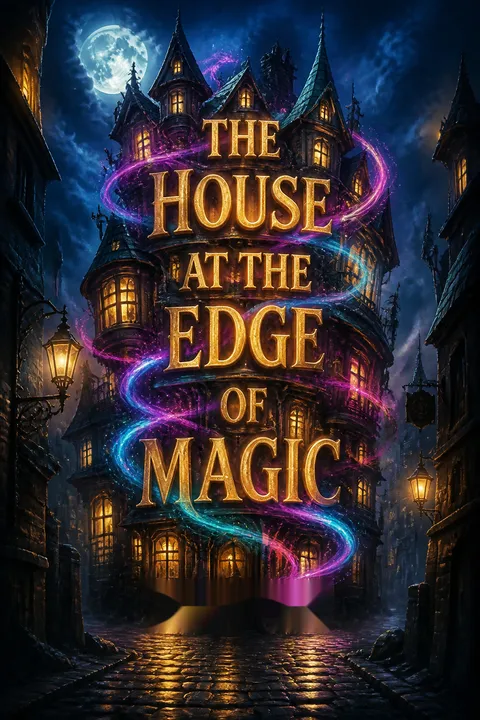
After a failed theft, Nine snatches a strange miniature house from a lady's bag. In a lonely alley, she examines her prize, only for it to grow—impossibly—into a towering, crooked house that fills the alley. Before she can flee, a massive, tusked troll named Eric drags her inside. The house is a place of oddities: portraits with flared nostrils, a clock with too many hands, and rooms that defy logic. Nine is introduced to Flabberghast, a flamboyant, ancient-seeming wizard, and Dr Spoon, a kilt-wearing, sword-wielding wooden spoon. The house is alive with magic and mischief, and Nine's disbelief is quickly replaced by the urgent need to escape.
Unlikely Housemates
Nine learns the house is under a powerful curse: its inhabitants—Flabberghast, Eric, and Dr Spoon—cannot leave, and chaos reigns within. The curse can only be broken by "the one who knocks," and Nine, by chance, is that person. The housemates are desperate for her help, offering her riches if she succeeds. Nine, skeptical and stubborn, tries to leave but is drawn back by the promise of a magical jewel that could change her life. The house's magic is unpredictable, and its residents are both comical and tragic, each trapped by their own quirks and losses.
The Curse and the Clock
A letter from the witch who cursed the house arrives, launching a deadly game: the curse can only be broken by speaking the true magic words before the house shrinks out of existence. The clock in the hallway begins to count down, its hands spinning backward. The witch's letter is a riddle, and the magic words are hidden. Flabberghast's magic is gone, and the house's enchantments are both a help and a hindrance. Nine, now entangled in the house's fate, must solve the riddle before time runs out, or all within will vanish forever.
No Place Called Home
Nine returns to Pockets' Nest, a squalid cellar where orphans sleep among stolen trinkets. Her only treasure, a music box from her forgotten past, is held hostage by Pockets. The Nest is a place of cruelty and survival, and Nine's longing for freedom is sharpened by her powerlessness. She realizes that the house's curse—and the promise of the jewel—may be her only escape from a life of misery. The music box, a symbol of lost love and hope, becomes the price she must pay for a chance at something better.
The Jewel's Temptation
Back at the house, Nine is shown the floating red orb containing a priceless jewel. Flabberghast promises her unimaginable wealth if she breaks the curse. The jewel represents not just riches, but the possibility of a new life—freedom from Pockets, hunger, and fear. Nine's resolve hardens: she will do whatever it takes to claim the jewel, even if it means facing the house's dangers and the witch's wrath. The housemates' desperation mirrors her own, and a fragile alliance forms.
A Library of Mayhem
Nine's search for the magic words leads her to the house's library, a place of living, hostile books and shifting shelves. The library is a battleground, and Nine must outwit the enchanted tomes to find a book on revealing secrets. Her love of reading, once an escape, becomes a weapon. She also visits the city library, where a mysterious red-eyed presence warns her of consequences. The boundaries between the magical and mundane blur, and Nine realizes she is being watched by the witch, who offers a chilling warning: involvement comes with a price.
The Witch's Warning
Nine is pulled through a wall by the witch, who appears as a beautiful, mocking woman with red hair. The witch taunts Nine, warning her to walk away before it's too late. The encounter is unsettling, and Nine senses the witch's power and malice. Despite the fear, Nine chooses to continue, driven by the hope of freedom and the need to prove herself. The witch's words linger: "There will be consequences." Nine steels herself for the trials ahead, knowing she cannot turn back.
Sacrifices and Secrets
The book reveals that to break the curse, each participant must sacrifice something of deep personal value. For Eric, it's his feather duster; for Dr Spoon, his family kilt; for Flabberghast, his hopscotch trophy. For Nine, it must be her beloved music box. The act of sacrifice is wrenching, forcing each to confront what they hold most dear. The ritual is prepared, and deadly nightshade must be gathered by moonlight. The housemates' vulnerabilities are laid bare, and Nine's determination is tested as she faces the loss of her last connection to her past.
The Graveyard's Peril
Nine braves the house's graveyard to gather nightshade, dodging monstrous bats and carnivorous vines. The garden is a place of shifting threats, and the moon itself is marked by the cursed clock. As the void of nothingness threatens to consume her, Nine's courage and quick thinking save her. She returns, battered but triumphant, with the nightshade needed for the ritual. The ordeal cements her bond with the housemates, and the urgency of their quest intensifies as the clock ticks down.
The Witch's Game
The ritual reveals the magic words, but the witch intervenes, seizing the parchment and retreating to the crypt beneath the house. Nine, Flabberghast, Eric, and Spoon descend into the darkness, where the witch awaits, surrounded by the animated stone ancestors of Flabberghast's family. The witch, revealed as Flabberghast's vengeful sister, forces them into a deadly game. The crypt becomes a battleground of riddles, magic, and family grievances, with the housemates' lives hanging in the balance.
The True Magic Words
The witch's riddle is finally unraveled: the magic words are not "Song Win War," but "I was wrong." Only by admitting his mistake and showing humility can Flabberghast break the curse. Nine, facing petrification, realizes the answer and urges Flabberghast to speak the truth. The moment is tense and emotional, as pride and fear clash with the need for honesty. When Flabberghast finally admits he was wrong, the curse shatters, the witch is defeated, and the house is freed.
Breaking the Curse
With the curse broken, magic returns to the house. The sacrifices—music box, duster, kilt, trophy—are restored, and the housemates are freed from their magical prison. The witch, her vengeance spent, departs in a flash of dragon-shaped magic, leaving behind the jewel for Nine. The house's enchantments settle into a new, unpredictable normal, and the housemates celebrate with long-awaited tea. Nine, holding the jewel, faces a choice: claim her freedom or give back to those who helped her.
The Price of Freedom
Nine, now in possession of the jewel, is poised to sell it and escape her old life. But the memory of the library, her only sanctuary, tugs at her heart. Instead of selling the jewel for herself, she gives it to Mr Downes to save the library, ensuring a place of magic and hope for others like her. The act is both selfless and redemptive, marking Nine's growth from a desperate survivor to someone capable of kindness and vision.
Tea, Strawberries, and Goodbyes
Nine returns to the house for a final tea with her companions. The house is still chaotic, but now it feels like home. The tea is strawberry-flavored—a symbol of hope and sweetness in a once-bitter life. Nine's laughter and camaraderie with Flabberghast, Eric, and Spoon reveal a newfound sense of belonging. She prepares to leave, but the bonds she's formed are undeniable. The house, once a place of danger, is now a place of possibility.
A Gift Returned
Before leaving, Nine ensures that all sacrifices are returned: the music box, the duster, the kilt, the trophy. She writes a note for Pockets, along with a tin of magical tea, signaling the end of her dependence on him. The act is both closure and a gesture of forgiveness. Nine's journey has transformed her, and she is no longer the powerless thiefling she once was. She steps into the world with agency and hope.
The Note at the Alley's End
Nine leaves a note at the alley's end, inviting the next lost soul to find magic where they least expect it. Her story becomes a beacon for others, a testament to the possibility of change and the nearness of wonder. The note, like the house, is an invitation to believe in magic, to risk hope, and to seek out the extraordinary in the ordinary.
Sometimes, Life Brings Magic
Nine's journey ends not with riches, but with a sense of belonging, purpose, and magic. She has found her strawberries—her moments of sweetness and joy—by daring to believe in more than survival. The house, the friends, and the magic are all part of a new life she has chosen. The story closes with the promise that sometimes, life does bring you strawberries, and magic is never as far away as it seems.
Analysis
Amy Sparkes' The House at the Edge of Magic is a vibrant, emotionally resonant tale that weaves together themes of belonging, transformation, and the redemptive power of humility. At its heart, the story is about a girl who has been denied love and security, and who must risk everything—her pride, her only treasure, her very sense of self—to find a place where she belongs. The magical house, with its chaos and unpredictability, serves as both a mirror and a crucible for Nine's journey. The narrative's humor and whimsy are balanced by moments of genuine peril and heartbreak, making the story accessible yet profound. The requirement of personal sacrifice to break the curse is a powerful metaphor for the costs of growth and the necessity of letting go. The ultimate revelation—that the true magic words are an admission of being wrong—offers a lesson in vulnerability and the courage to change. In a world that often feels harsh and unyielding, Sparkes' novel reminds us that magic is never far away, that kindness and courage can transform even the bleakest circumstances, and that sometimes, life does bring you strawberries.
Characters
Nine
Nine is a streetwise, fiercely independent orphan whose life has been shaped by abandonment and hardship. Her name, a mere number, reflects her lack of identity and the dehumanizing world she inhabits. She is clever, quick, and guarded, using sarcasm and bravado to mask her vulnerability. Nine's deepest longing is for a home and a sense of worth, symbolized by her treasured music box. Throughout the story, she evolves from a self-serving survivor to a compassionate, courageous leader. Her journey is one of self-discovery, learning to trust, to sacrifice, and ultimately to choose generosity over self-preservation. Her relationships with the housemates and her final act of giving the jewel to the library reveal her capacity for love and hope.
Flabberghast
Flabberghast is a flamboyant, ancient-yet-childlike wizard whose magical prowess is matched only by his ego and eccentricity. He is both comic and tragic, trapped by a curse of his own making and a rivalry with his sister, the witch. Flabberghast's need for control and recognition masks deep insecurities and a longing for connection. His journey is one of humility: only by admitting he was wrong can he break the curse and restore balance. His relationship with Nine is fraught with bickering and mutual exasperation, but ultimately, he becomes a mentor and friend. Flabberghast's arc is a lesson in the power of vulnerability and the necessity of letting go of pride.
Eric
Eric, the house's troll housekeeper, is a figure of comic innocence and quiet strength. Despite his intimidating appearance, he is gentle, loyal, and deeply attached to his feather duster—a symbol of his desire for purpose and belonging. Eric's simple speech and emotional openness contrast with Nine's guardedness, and his acts of kindness (offering sweets, risking himself for others) reveal a big heart. His transformation into stone during the climax is a moment of profound loss, and his restoration is a testament to the power of friendship. Eric's journey is about finding family and being valued for who he is.
Dr Spoon
Dr Spoon is a sentient, kilt-wearing wooden spoon with a penchant for swordplay and sarcasm. He is both comic relief and a symbol of the house's whimsical magic. Spoon's backstory—searching for his partner, Professor Dish—adds depth to his character, revealing loyalty and longing beneath the bravado. His willingness to sacrifice his kilt for the ritual shows his commitment to the group. Spoon's interactions with Nine and the others are marked by banter, but he is a steadfast ally in moments of crisis.
The Witch (Flabberghast's Sister)
The witch is a formidable, enigmatic figure whose motivations are rooted in sibling rivalry and a sense of betrayal. Her magic is powerful, her games cruel, and her presence unsettling. Yet, beneath the malice is a wounded sibling seeking acknowledgment. Her curse is both punishment and a twisted form of engagement with her brother. The witch's interactions with Nine are laced with warnings and challenges, testing Nine's resolve. Ultimately, her defeat is not through violence, but through humility and truth. She embodies the dangers of pride and the complexity of family bonds.
Pockets
Pockets is the cruel leader of the thieflings, a man hardened by his own disappointments. He exploits the children in his care, using fear and deprivation to maintain control. Yet, there are glimpses of vulnerability and regret, especially in his attachment to Nine's music box. Pockets represents the cycle of hurt and survival, and his relationship with Nine is fraught with resentment, dependency, and a twisted form of care. He is both a villain and a victim of circumstance.
Mr Downes
Mr Downes is the city librarian who, despite rules and regulations, allows Nine to borrow books and find solace in stories. He is a figure of quiet rebellion and compassion, offering Nine a glimpse of trust and stability. His acceptance of the jewel to save the library is a moment of mutual recognition and gratitude. Mr Downes represents the power of small kindnesses and the importance of safe havens.
The House
The house itself is a character—alive, unpredictable, and full of secrets. Its shifting rooms, enchanted objects, and sentient features reflect the inner lives of its inhabitants. The house is both a prison and a sanctuary, a place of danger and wonder. It responds to the needs and growth of those within, offering both challenges and rewards. The house's magic is a metaphor for the unpredictability of life and the possibility of transformation.
The Music Box
Nine's music box is more than a trinket; it is a symbol of her lost past, her longing for love, and her hope for a better future. Its sacrifice is the story's emotional fulcrum, and its restoration marks Nine's healing. The music box's song is a thread connecting Nine to her humanity and to the possibility of joy.
The Library
The city library, though not sentient, is a place of refuge and transformation for Nine. It represents the power of stories to offer hope, wisdom, and escape from hardship. The library's survival, ensured by Nine's gift, is a testament to the enduring value of imagination and learning.
Plot Devices
The Cursed House
The house's curse is the central plot device, trapping its inhabitants and setting the stakes for the story. The curse's rules—no one can leave, magic is suppressed, chaos reigns—create both obstacles and opportunities for character growth. The countdown clock adds urgency, while the need for personal sacrifice forces each character to confront their deepest attachments. The house's shifting magic mirrors the unpredictability of life and the necessity of adaptation.
The Riddle and the Magic Words
The witch's riddle—hidden magic words—drives the narrative and tests the characters' intelligence and emotional maturity. The misdirection of "Song Win War" and the true answer, "I was wrong," highlight the theme that true magic lies in humility, honesty, and the willingness to admit mistakes. The riddle structure allows for foreshadowing, suspense, and a satisfying resolution rooted in character development.
Sacrifice and Restoration
The requirement that each character sacrifice something precious is a powerful plot device, symbolizing the cost of change and the value of what we hold dear. The restoration of these items after the curse is broken reinforces the idea that true loss is not always permanent, and that growth often requires letting go. The motif of sacrifice is woven through the narrative, deepening the emotional stakes.
Magical Realism and Whimsy
The story's tone is shaped by its blend of humor, danger, and wonder. Living books, talking spoons, and unpredictable enchantments create a world where anything is possible. This magical realism invites readers to question the boundaries of reality and to embrace the unexpected. The house's magic is both a source of peril and a wellspring of hope.
Found Family
The formation of a makeshift family among Nine, Flabberghast, Eric, and Spoon is a key narrative device. Their shared trials, sacrifices, and victories forge bonds that transcend blood or circumstance. The theme of found family challenges the notion that belonging is determined by birth, suggesting instead that it is created through choice, trust, and shared experience.
The House at the Edge of Magic Series
Download PDF
Download EPUB
.epub digital book format is ideal for reading ebooks on phones, tablets, and e-readers.








































