


Plot Summary
Dual Powers Unleashed
Three weeks after the eclipse ritual, Lore1 descends into the catacombs with Bastian2 and a Presque Mort named Jerault to lay an undead army to rest. When a corpse's hand clamps around Jerault's throat, Lore1 acts without thinking: she channels Mortem into the dead woman while simultaneously pulling threads of Spiritum from Jerault's fading life and feeding them back into him.
Bastian2 amplifies the golden light. The dual channeling leaves Lore1's body a mess of contradictions — cold blood, too-fast heart, tingling limbs — but Jerault survives.
In the dark tunnel afterward, Lore1 glimpses a silhouette: her mother, the Night Priestess,9 watching before dissolving into shadow. A voice, not her own,5 whispers for the first time in her mind, urging her toward the catacombs.
This moment establishes the central tension: Lore is becoming something unprecedented, a vessel capable of holding opposing divine forces. The dual channeling signals that the boundaries between life and death, Apollius and Nyxara, are dissolving within her body. Her exhilaration at the fusion hints at an uncomfortable truth: she may be more compatible with godhood than she wants to admit. Her mother's silent witness from the shadows foreshadows the unresolved maternal wound that will haunt her choices throughout the book. The alien voice in her mind, which she tries to dismiss as imagination, introduces the core horror of the narrative—the self is no longer singular.
A Mother's Midnight Warning
Lore1 wanders the Citadel grounds and finds her mother, Lilia,9 waiting by the well in the Presque Mort's stone garden. The Night Priestess9 is haggard and afraid. She tells Lore1 the powers are sharpening, that Lore1's continued presence is awakening something catastrophic, and that she must run.
Lore1 fires back with years of accumulated abandonment and fury: Lilia9 sent her away as a child, left her to survive alone, and only weeks ago wanted her dead for a prophecy. Lilia9 does not defend herself but offers a method to signal for help: drop a rose into the well. Gabe3's voice interrupts before more can be said. Lilia9 vanishes down the well stairs, and Lore1 lies to Gabe3 about who she was speaking with.
This encounter crystallizes the book's central question about agency versus fate. Lilia's warning carries the weight of a mother who tried to control her daughter's destiny through abandonment, only to find that destiny outgrew her manipulations. The rose-in-the-well mechanism becomes a symbol of unresolved maternal connection: Lore will eventually use it, but only after she has already made the choices Lilia feared. The lie to Gabe deepens the pattern of secrecy that isolates all three central characters from each other. Lilia's genuine fear suggests she understands the stakes better than anyone.
Fields Reborn, Enemies Arrive
Bastian2 takes Lore1 beyond Dellaire's borders for the first time to heal the farmlands turned to stone by a Mortem leak. Standing together before gathered farmers, they channel Mortem and Spiritum in tandem, restoring the dead fields to lush green. As the miracle completes, a dust cloud on the road resolves into fifty Kirythean riders led by a man named Maxon.
Bastian2 greets him calmly: he secretly invited the Empire's delegation to witness Auverraine's power. Back at the Citadel, his council erupts. Alie,6 Gabe,3 Malcolm,7 and Lore1 demand to know why they were not consulted. Bastian2 defends his unilateral decision as a necessary show of strength to prevent war, but the betrayal of trust fractures something between them all.
The farmlands healing is both genuine miracle and calculated theater. Bastian's secret invitation of the Kirytheans reveals his slide from collaborative rule toward autocratic impulse—a pattern that mirrors Apollius's own possessive leadership style. The fact that Bastian channels best with Lore physically close suggests their power, like the gods', is relational and codependent. The council's anger is not just about being excluded from a decision; it is the first collective recognition that their King is becoming something they cannot predict or control. A god's hand is beginning to show through the puppet.
Crowned and Claimed
At his coronation in the South Sanctuary, Bastian2 has Gabe3 read a stricken Tract declaring life and death as inseparable equals. As the sun breaks through clouds in a dramatic beam, Bastian2 receives the sun-rayed crown. That evening at the coronation ball, he kneels before Lore1 and produces a diamond ring supposedly mined from the Golden Mount itself.
He asks her to marry him. Lore1 says yes, but her eyes find Gabe3 across the room. Gabe3's face goes blank, then he turns and leaves. Later, in the moonlit solar, Bastian2 admits he orchestrated Gabe3's presence so Lore1 could see them both when she chose. He wanted certainty. She gave it to him, though the answer did not bring the relief he expected.
The proposal is triangulated cruelty disguised as romantic honesty. Bastian's admission that he wanted Gabe there reveals a possessive streak that mirrors Apollius's divine jealousy—the god who could never bear to share his wife. Lore's 'yes' is not purely her own desire; it is also capitulation to a man whose gravity has always pulled her in, and a public role she cannot refuse. The stricken Tract about inseparable opposites foreshadows the book's ultimate revelation: that the gods cannot be separated from their vessels without death. Gabe's silent exit becomes his default response—leaving rather than fighting for what he wants.
The Priest in Bloom
Lore1's dreams continue: she stands in a forest, her hands unscarred, speaking to figures whose faces she cannot see. She confides in Gabe3 during one of their sessions in the confessional. In response, he leads her to a greenhouse in the stone garden. There, Anton8 hangs crucified by living roses and ivy, thorns piercing his flesh, a bloom growing through the socket where his eye used to be.
Bastian2 did this to him on the night of the ritual. Anton8 raves about Apollius,4 a sacred grove, and a Fount — fragments of mythology older than the Compendium. He spits prophecies between gasps of pain. Gabe3 admits he has been keeping Anton8 alive, unable to let his mentor die despite everything.
Anton's living torture is the book's most visceral image of divine punishment. He was not simply killed; he was transformed into a grotesque altar where life and death coexist in perpetual agony. Gabe's inability to euthanize Anton reveals his fatal flaw: he cannot fully abandon those he has loved, even when they have become monstrous. The mythology Anton spouts in his madness functions as fragmented prophecy, seeding revelations about the Fount that will later reshape everyone's understanding of divinity itself. The greenhouse becomes a secret confessional where the old order refuses to die.
The Harbor's Impossible Rescue
During the christening of a new warship, three vessels explode without warning. In the shattered moment between life and death, Lore1 steps outside time itself. She grasps the threads of Spiritum leaking from dying bodies and channels them back, then alchemizes escaping Mortem into renewed life. Every person on the docks survives — limbs are reattached, hearts restart, lungs fill again.
But the effort draws up all Mortem from deep beneath the city in a massive surge that floods into Lore1's body. When she wakes, her palms are marked with gray starbursts that spread toward her fingers. The Presque Mort discover the well is empty. There is no more Mortem anywhere. It all lives within her now.
This is the book's theological pivot: Lore becomes what Anton feared, a living repository of divine death magic. The harbor rescue demonstrates that her power transcends mere channeling—she can reverse the alchemy of death itself. But the absorption of all Mortem raises an unsettling question: is she containing Nyxara's power, or becoming Nyxara? The empty well symbolizes a transfer of divine presence from institutional control, the Church, into a single uncontrolled human body. The Presque Mort's lost purpose mirrors Gabe's own crisis of faith. Lore saved everyone, and in doing so, may have doomed herself.
Gods in Disguise
Searching the Church library for answers about the Mortem's disappearance, Malcolm7 notices a pothos vine has grown riotously in his presence — he can now channel earth magic. Gabe3 admits he has felt fire responding to him for weeks, flames flaring when his emotions run hot. Alie,6 during a tense moment, crooks her finger and calls a gust of wind. None of them wanted this.
Gabe3 explains that he hears Hestraon not as a voice but as impulses, alien desires to burn. Malcolm7 refuses to accept Braxtos's presence, insisting he will simply stop using the power. Lore1 sees the pattern: the elemental gods are choosing vessels among those closest to her, echoing the relationships Nyxara5 had with them eons ago on the Golden Mount.
The awakening of elemental powers in Lore's friends transforms her personal crisis into a communal one. Each character's response to unwanted divinity mirrors their core personality: Malcolm's denial, Gabe's grim acceptance, Alie's strategic silence. The gods are not just returning; they are forcing intimacy, binding Lore's friends to her through shared divine trauma. This is possession as unwanted gift, power as contamination. The fact that the elemental gods are 'diminished,' unable to speak clearly, suggests that Apollius's original hoarding of power has weakened all divinity except his own. They are echoes, not voices.
Bloodline of Secrets
At Courdigne, Bastian2 (increasingly controlled by Apollius4) confronts Bellegarde12 at dawn. The old lord argues that killing Lore1 would slow Apollius4's takeover. In response, Apollius4 snaps Bellegarde12's neck and leaves the body to rot. Meanwhile, Alie6 searches the estate's hidden study and finds documents proving she is August's illegitimate daughter — making her Bastian2's half-sister, an Arceneaux by blood.
The records show August coerced her mother into an affair, then paid Bellegarde12 to raise Alie6 as his own. Alie6 trembles with decades of suppressed fury. She vows to destroy whatever remains of Bellegarde12's legacy, unaware he is already dead on the floor below.
This turning point exposes the rot beneath Auverraine's divine monarchy. August's sexual predation was not a personal failing but a systemic feature of Arceneaux rule, sanctified by Apollius's own model of possessive love. Alie's discovery reshapes her identity: she is not the daughter of a scheming noble but of a rapist king, her lineage both curse and potential weapon. Apollius's casual murder of Bellegarde demonstrates that the god views human life as entirely instrumental. The parallel between Bellegarde's death and Alie's revelation suggests that uncovering truth and destroying the old order are the same violent act.
The Fount's Broken Promise
In a sealed chamber beneath the Church, the group reads Anton's prophecy under glass. The first portion confirms what has already occurred: the unfaithful King dethroned, the daughter of dark brought to the chosen. But a coded section at the bottom, written in an ancient script, requires Nyxara5 to take over Lore1's body to translate it.
The hidden text reveals Lore1 is the catalyst, the seed. Should all gods rise, the one who desires immortality must kill the others again. Power is made and unmade through the same means. A choice must be made among the three who care most. Help will come from the place that was fled. The goddess5 recedes, leaving Lore1 gasping on the stone floor.
The prophecy reveals the theological architecture of the series: godhood is a zero-sum game. Apollius's desire for immortality requires him to eliminate all other divine vessels, transforming him from creator-god into predator. The phrase 'power made and unmade through the same means' offers the key Lore will later attempt to use—that death itself can sever divine bonds. The 'three who care most' triangulates the narrative's central relationship around Lore, Bastian, and Gabe. That help will come from 'the place that was fled' points toward the catacombs, the Mount, or perhaps the Burnt Isles—places of origin and abandonment.
The Sea Goddess Drowns
Amelia Demonde11's mutilated body is discovered in Bastian2's solar at dawn. Her throat is slashed open to the esophagus, one eye stabbed out, and her chest shows signs of a heart forced to beat itself to death. During a gruesome autopsy performed in the same room, the physician finds water in her lungs that smells of salt — a dry drowning.
Apollius4 watches with barely concealed satisfaction, sipping coffee. Lore1 realizes Amelia11 was Caeliar's avatar, the sea goddess having chosen her as vessel. Apollius4 killed her to take that power for Himself. When Lore1 later raises Amelia11's corpse to question her, the dead woman confirms she went to the apartments intending to kill Lore,1 but Apollius4 murdered her instead.
Amelia's murder exposes the fundamental paradox of Apollius's desire: He wants to be the only god but cannot bear to be alone. He kills Caeliar's vessel but keeps Nyxara's. Amelia is a dark mirror of Lore—both women shaped by religious expectation, both vessels of goddesses, both drawn into Apollius's orbit. Her death foreshadows the fate awaiting all the elemental god vessels unless they can escape Apollius's reach. The autopsy, performed publicly like a ritual sacrifice, demonstrates that Apollius treats death not as sacred passage but as theater, and that He wants Lore to witness exactly what He is capable of doing.
The Goddess Remembers
Drawn irresistibly to the catacombs, Lore1 enters Nyxara's obsidian tomb while Gabe3 waits outside. The goddess5's perfectly preserved body lies on a black stone plinth, clutching white lilies. When Lore1 touches her brow, Nyxara5's memories pour into her: six friends on a deserted island, Apollius4 finding the Fount of all power, all of them drinking from it and becoming gods against their full understanding.
Apollius4 trapping them on the island. Nyxara5 helping the others escape. Apollius4's rage. Nyxara5 clawing into his chest and ripping out his heart — his first death. The memory cuts off as the tomb begins to collapse. Nyxara5's body crumbles to dust. Gabe3 forces the door open and hauls Lore1 out as the cavern shakes apart.
The memory vision reframes the series' entire mythology from divine truth to human tragedy. The gods were never transcendent beings; they were desperate young people who drank from a power source they did not understand, then spent eternity coping with the consequences. Nyxara's first death—her body's decay—strengthens her presence in Lore's mind while paradoxically freeing her from her physical prison. The vision's interruption at the crucial moment of the Godsfall keeps key information hidden, mirroring how trauma fragments memory and how the stories we inherit are always incomplete. What happened after she clawed out his heart remains unknown.
Fleeing the Holy King
After one night with Bastian2 in which she finally takes what she wants, Lore1 chloroforms him and flees to her adoptive mothers13 'warehouse. Gabe,3 Malcolm,7 and Alie6 join her, planning to sail for Caldien and seek military help. But at dawn, bloodcoats ambush them at the docks.
Lore1 is shot in the stomach, heals herself with Spiritum, then uses Mortem to blast the cobblestones apart, forcing Gabe3 and Malcolm7 onto the departing ship while she and Alie6 are captured. In the throne room, Apollius4 announces Alie6 is an Arceneaux and betroths her to Jax,10 Emperor of Kirythea — revealed to be Caius,10 the diplomat who was never truly imprisoned but collaborating with Apollius4 all along.
The failed escape is the book's cruelest irony: Lore's attempt to save her friends by leaving only succeeds in scattering them and delivering Alie into a political marriage. The revelation that Caius is Jax reframes every earlier interaction, exposing the Citadel as a stage where Apollius has been directing all players from the beginning. Lore's choice to sacrifice her own escape for Alie mirrors Nyxara's choice to help the elemental gods flee the island—love requiring surrender. The scattering of the found family into three directions (Caldien, the Citadel, the Burnt Isles) completes the geopolitical fracture that will define the next book.
Queen in Irons
Still wearing the gown stiff with her own dried blood from the gunshot, wrists raw from manacles, Lore1 is forced to stand before the court as Apollius4 declares her innocent of Amelia11's murder. He spins a new story: Amelia11 was the harbor bomber, and Lore1 executed rightful justice. As reward, she will become Queen today.
Alexis, a reluctant Presque Mort, reads the vows from the Compendium while Lore1 stares at the solarium window above the throne. When Apollius4 kisses her to seal the marriage, she closes her eyes and does not respond. The court applauds. Her engagement ring is still on her finger, a symbol of the choice she never truly got to make, now made permanent.
The forced wedding crystallizes the book's core horror: divine love as ownership. Apollius frames Lore's captivity as reward, her bloodstains as evidence of heroism, spinning atrocity into sacred narrative. The contrast between the public performance (joyous wedding) and the private reality (coerced prisoner) mirrors how religious institutions have historically sanctified violence against women's autonomy. Lore's closed eyes during the kiss is the only rebellion left to her—a refusal to participate in the fiction even as her body is legally claimed. The ring, once a symbol of Bastian's genuine love, becomes a collar.
The God's Ultimatum
Apollius4 takes Lore1 to the North Sanctuary, decorated like a bridal suite with rose petals and wine. He gives her a stark choice: surrender Nyxara5's power and live as his immortal Queen, or die so he can take the power anyway. Jax10 stands guard at the door with a spear.
When Apollius4 threatens her physically, Bastian2 suddenly breaks through the god's control — his eyes become his own, dark and desperate. His voice is raw: he tells Lore1 she has to do it, meaning kill him. Then Apollius4 shoves him back down. The god's hand rears back to strike, but Bastian2's residual resistance snaps his aim sideways, cracking Apollius4's fist against a pew instead of Lore1's face.
This scene externalizes the internal war that has been raging all book. Bastian's brief breakthrough proves that love can momentarily overpower even divine possession, but also that such resistance is unsustainable—a drowning man gasping air before sinking again. His plea for death is the ultimate act of care: he would rather die than remain Apollius's puppet. The sanctuary setting is bitterly ironic; a holy space becomes a stage for divine coercion. Jax's presence as enforcer demonstrates that Apollius's power relies on human collaborators whose faith has curdled into complicity with tyranny.
The Church Falls
Lore1 pretends to surrender. Nyxara5's power pools in her mouth as crystalline water, and deathly stone creeps up her arms. But instead of giving the swallow to Apollius,4 Lore1 gulps it back down. She yanks every thread of Mortem in the Church's ancient stones, and the entire North Sanctuary collapses around them.
Stepping outside time, she watches both her life-light and Bastian2's gutter toward darkness. She waits until their bodies are dead, hoping the gods will be banished, then grasps the last threads of Spiritum and channels them back into both forms. But she pulled back too soon — she never let death fully complete. Nyxara5's voice remains in her head. The gods are not gone. Apollius4 still lives in Bastian.2
The climax is both triumph and failure. Lore successfully kills them both—the act of ultimate agency and sacrifice—but her inability to commit to true death, to let go completely, mirrors Nyxara's own failed attempt to kill Apollius on the Mount. The book argues that half measures against divinity are futile; you cannot kill a god while preserving the vessel. The collapsing Church is symbolically perfect: the institutional structure of organized religion crumbles under the weight of its own god's tyranny. But the rubble buries truth as well as lies. Lore's love for Bastian, the thing that makes her human, is also what makes her unable to finish what she started.
Epilogue
In four brief sections, the survivors scatter across the map. Gabe3 wakes on the ship to Caldien, watching land appear on the horizon, vowing to bring war to Apollius4 with Malcolm,7 Val, Mari,13 and Michal14 at his side. Lore1 regains consciousness on a prison vessel, chained among criminals, headed for the Burnt Isles — Apollius4 or Bastian2 signed the order sending her away.
Her engagement ring is gone. Nyxara5's voice still murmurs in her mind. Bastian,2 trapped in the golden ocean of his own body, drowns again as Apollius4's control tightens. And far below, in the catacombs, Lilia9 finds the withered rose her daughter1 threw down the well. She begins to plan.
The fragmented epilogue refuses closure, scattering the central relationship across four geographies and states of consciousness. Gabe's vow of war transforms grief into purpose but also into potential catastrophe. Lore's exile to the Burnt Isles—the site of the Fount itself—suggests her story is not ending but looping back to origins. Bastian's drowning imagery makes explicit what has been metaphor all along: possession as suffocation. Lilia's emergence as an active agent, finally answering her daughter's call, offers the slimmest thread of hope. The epilogue argues that endings are provisional; in a world governed by cycles of divine death and rebirth, the only constant is that something will rise from what has been buried.
Analysis
The Hemlock Queen uses divine possession as a vehicle for exploring the horror of losing bodily autonomy to an intimate partner. Apollius4's takeover of Bastian2 mirrors domestic abuse with theological precision: the god isolates his vessel from friends, speaks through his mouth, dictates his actions, and punishes resistance with agony. The fact that Bastian2's own love for Lore1 becomes another weapon Apollius4 wields — claiming the god wants her too — makes the violation complete. Nyxara5's gentler, more negotiated possession of Lore1 complicates this metaphor. She asks rather than forces, expresses weariness rather than rage, but the fundamental asymmetry of their relationship means Lore1 cannot truly refuse. The book asks whether any form of divine inhabitation can be consensual when the power differential is infinite.
The novel also dismantles the fantasy of benevolent monarchy by exposing the Arceneaux dynasty's founding sins. August's sexual predation, revealed through Alie6's discovery of her parentage, retroactively taints the entire royal line. Apollius4 chose this family as His vessels not because they were virtuous but because they were useful. The revelation that Emperor Jax10 has been collaborating with Apollius4 all along reframes the geopolitical conflict as a religious war disguised as imperialism. Both empires serve the same master. The Kirythean threat was never truly external; it was always part of Apollius4's design.
At its core, the book argues that the stories we inherit determine the choices we believe possible. Lore,1 Bastian,2 and Gabe3 are all trapped in narratives written centuries before their births: prophecies, Tracts, divine marriage vows that bind Nyxara5 to Apollius4 even in death. Lore1's climactic attempt to rewrite the ending by killing both herself and Bastian2 fails because she cannot fully commit to the story's brutal logic. She wants resurrection without sacrifice, freedom without loss. The epilogue's fragmentation across four perspectives suggests that the old narrative structure has shattered, but what will replace it remains unwritten. The gods are not dead. The cycles continue. The only hope lies in the relationships that refuse to break.
Review Summary
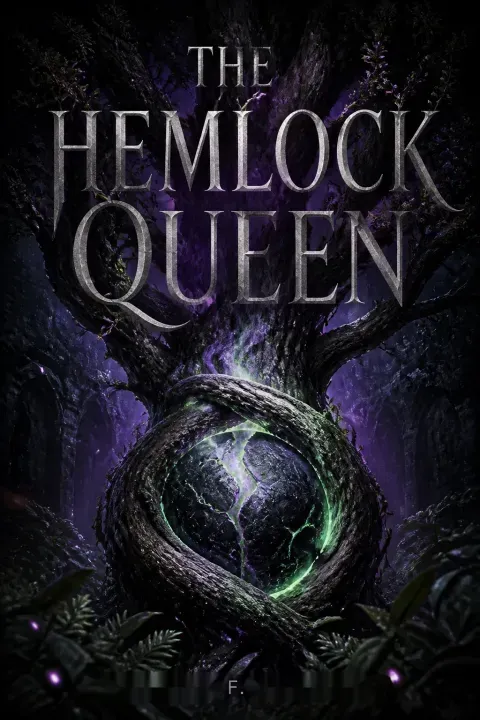
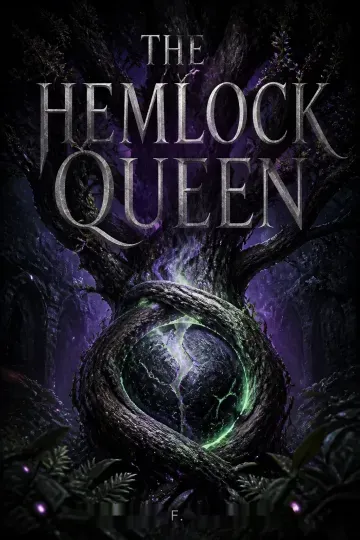
The Hemlock Queen receives mixed reviews, with an overall 3.83 rating. Readers praise the atmospheric gothic setting, complex magic system, and compelling love triangle that hints at a potential throuple ending. Many enjoyed the expanded worldbuilding and character development, particularly regarding Bastian. However, common criticisms include slow pacing in the first half, middle book syndrome with minimal plot progression, and a passive protagonist. Some felt the romance overshadowed the plot, while others appreciated the tension and angst. The cliffhanger ending left readers eager for book three despite pacing issues.
People Also Read
Characters
Lore
Deathwitch, Nyxara's vesselA twenty-four-year-old poison runner turned royal deathwitch, Lore has channeled Mortem (death magic) since birth—a unique ability tied to her origins in the catacombs beneath the Citadel. Abandoned at thirteen by her mother, the Night Priestess9, she was raised by poison runners Val and Mari13 in Dellaire's underworld. Fiercely self-reliant and emotionally guarded, Lore's instinct is always to run from intimacy and claim autonomy at any cost. She loves both Bastian2 and Gabe3 with a completeness that terrifies her, and her determination to live on her own terms has inadvertently become the catalyst for the gods' return. Under her hardened exterior, she craves safety and belonging she has never learned to trust.
Bastian Arceneaux
Sainted King, Apollius's vesselThe newly crowned Sainted King of Auverraine, Bastian inherited Spiritum (life magic) after the eclipse ritual and now shares his body with Apollius4. Before his possession, he was known for reckless charm, underground boxing, and a performative indifference that masked deep loneliness. The unwanted son of a cruel king and a fading mother, Bastian never expected to wear the crown. He loves Lore1 and Gabe3 with an intensity that mirrors Apollius4's divine jealousy, making it difficult to separate his authentic feelings from the god's influence. As Apollius4 tightens control, Bastian fights desperately to surface, but each battle costs more of himself. He is increasingly a ghost in his own body.
Gabriel Remaut
Priest Exalted, Hestraon's vesselThe Priest Exalted of the Auverrani Church, Gabe is a Presque Mort monk who survived a near-death experience to gain his powers. As a child, he lost his eye to Kirythean soldiers who killed his father, leaving him with a lifelong hatred of the Empire and a fierce devotion to Apollius4 that the god has never reciprocated. His faith is the core of his identity, and watching it crumble as Apollius4 proves monstrous has destabilized him completely. He loves both Lore1 and Bastian2 but cannot reconcile desire with his vows or his guilt. When Hestraon's fire magic awakens within him, he experiences it as contamination rather than gift—another way the divine has betrayed him.
Apollius
God of life, possessing BastianOnce a mortal man obsessed with discovering what happens after death, Apollius found the Fount of all power and forced his friends to drink from it with him, transforming them all into gods. He trapped them on the Golden Mount, unable to bear being alone with his divinity. His possessive love for Nyxara5 curdled into tyranny, and when she helped the other gods escape, he spent eons planning his return. Now inhabiting Bastian2, he seeks to reclaim Nyxara5's power, eliminate the other reborn gods, and achieve true immortality. He is charming, cruel, and utterly convinced of his own righteousness. His love is indistinguishable from ownership, his worship from subjugation.
Nyxara
Buried Goddess, in Lore's mindThe goddess of death and night, Nyxara was once a young woman who loved Apollius4 and followed him into godhood. She drank twice from the Fount alongside him, binding them together eternally. When Apollius4's possessiveness became unbearable, she helped the other elemental gods escape the island, then clawed out his heart—his first death. Imprisoned in an obsidian tomb beneath Dellaire for five centuries, her power leaking as Mortem, she has waited for a vessel strong enough to hold her. She speaks to Lore1 with weary empathy, insisting she does not want to take over Lore1's body as Apollius4 has taken Bastian2's. But her bonds to Apollius4, spoken as vows when they drank from the Fount, prevent her from revealing the full truth about him.
Alienor Bellegarde
Diplomat, Arceneaux heirBastian2's most trusted adviser and Lore1's closest friend at court, Alie is a masterful diplomat with a core of steel. She discovers mid-book that she is August's illegitimate daughter, making her Bastian2's half-sister and an Arceneaux by blood—a truth that reshapes her entire identity. Her legal father, Severin Bellegarde12, was paid to raise her after August coerced her mother into an affair. Alie becomes the vessel for Lereal, god of air, though she hides her emerging powers carefully. She is strategic, composed, and quietly furious at the systems that have used everyone she loves. Her betrothal to Emperor Jax10 places her at the center of Apollius4's plan for global theocracy.
Malcolm
Presque Mort, Braxtos's vesselA scholarly Presque Mort and Gabe3's closest ally in the Church, Malcolm becomes the unexpected vessel for Braxtos, god of earth. He responds to his emerging powers with denial and panic, insisting he can simply refuse to use them—a strategy that proves futile. Malcolm provides crucial research support, uncovering the mythology texts and prophecies that explain what is happening to the group. His dry humor and anxious energy provide moments of levity amid the escalating horror. Unlike Gabe3, whose faith has been shattered, Malcolm approaches the theological crisis with intellectual curiosity, treating the gods' return as a problem to be solved rather than a spiritual catastrophe.
Anton Arceneaux
Former Priest Exalted, living oracleBastian2's uncle and the former Priest Exalted who orchestrated the eclipse ritual, Anton is now rooted in a greenhouse by roses and ivy growing through his flesh. Bastian2 (or Apollius4 through him) inflicted this punishment rather than killing him outright. Though mad with pain, Anton still speaks prophecies and fragments of divine history that prove crucial to understanding the gods' return. He represents the old religious order that tried to control divinity through ritual and murder, only to be consumed by the very power it sought to direct. His existence is Gabe3's guilty secret, a living monument to the cost of faith.
Lilia
Night Priestess, Lore's motherThe leader of the Buried Watch, a secret order of women who guarded Nyxara's tomb for centuries. Lilia abandoned thirteen-year-old Lore1 in the catacombs, telling her to run, then spent eleven years believing her daughter would have to die to fulfill prophecy. When the eclipse ritual failed and Lore1 survived, Lilia's certainty shattered. She now moves through the shadows of Dellaire, trying to warn Lore1 and offer help while carrying the guilt of a mother who chose faith over her child. The rose Lore1 eventually throws down the well reaches her, and she begins to plan—a mother finally choosing her daughter over her god.
Jax Aronicus
Emperor of KirytheaThe Emperor of Kirythea, who entered the Citadel disguised as a diplomat named Caius. Jax killed his own father to take the throne and has been collaborating with Apollius4 from the beginning, believing the god's return will establish a holy kingdom spanning the entire continent. He is the man who tore out Gabe3's eye when they were children, making his presence in the Citadel a constant, hidden threat. Unlike Apollius4, Jax seems to genuinely believe he serves a righteous purpose. He is betrothed to Alie6 as part of Apollius4's plan to merge the royal bloodlines, and he claims he would never hurt his wife—a distinction that separates him from his god, if only slightly.
Amelia Demonde
Caeliar's vessel, religious rivalThe beautiful, pious eldest daughter of the disgraced Devereaux family, married hastily to elderly Lord Demonde to escape the Burnt Isles. Amelia was raised to believe she would be Apollius4's chosen Queen, and Lore1's survival of the ritual shattered that destiny. She becomes the vessel for Caeliar, goddess of the sea, and attempts to kill Lore1 to take Nyxara5's power for herself. Apollius4 murders her instead, taking Caeliar's power and framing her as the harbor bomber. Her death represents the fate awaiting all the elemental vessels who cannot escape the god's reach.
Severin Bellegarde
House-arrested traitor, Alie's legal fatherAlie6's legal father, a nobleman who conspired with Anton8 to place Bastian2 on the throne as Apollius4's vessel. August paid him to raise Alie6 as his own after coercing her mother into an affair. Confined to his estate at Courdigne for treason, Bellegarde remains an unrepentant religious zealot. When he advises Apollius4 to kill Lore1 to slow the god's takeover, Apollius4 snaps his neck and leaves his body to decay. His death is a minor footnote in the larger catastrophe, his life a testament to how easily faith becomes justification for cruelty.
Val and Mari
Lore's adoptive mothers, poison runnersThe women who raised Lore1 after Lilia9 abandoned her in the catacombs. Val is gruff, protective, and handles security for their poison-running operation. Mari is gentler, handling business and paperwork, her braids tipped with sea glass. They gave Lore1 the only unconditional love she has ever known, and when she shows up at their warehouse desperate to flee the country, they ask few questions and offer immediate help. They escape Auverraine with Gabe3 and Malcolm7 aboard a small galley, heading toward Caldien and an uncertain future.
Michal
Lore's former lover, ship captainA member of Val and Mari13's crew and Lore1's ex-lover, Michal once unwittingly exposed her deathwitch powers by challenging Bastian2 to a boxing match on the docks. Despite their romantic history, there is no lingering tension between them; he has moved on. Michal knows how to sail and volunteers to captain the galley that takes Gabe3, Malcolm7, Val and Mari13 to Caldien after Lore1's capture. He provides dry humor and a grounded, unimpressed perspective on the apocalyptic events unfolding around him.
Plot Devices
The Fount of the Golden Mount
Source of all divine powerAn ancient fountain on the Golden Mount, a deserted island in what became the Burnt Isles. The Fount contained the concentrated essence of the world—the soul of the earth, scholars theorize. When Apollius4 discovered It, he forced it open and drank from It along with his five companions, granting them divine power. Each person who drank took a specific aspect: life, death, earth, fire, air, water. The Fount cracked when Apollius4 and Nyxara5 drank twice, taking a larger share. The broken pieces correspond to the gods' powers. In the present, the Fount still functions as a reservoir for divine energy—when gods die, their power eventually trickles back to It. The Burnt Isles, where Lore1 is sent at the book's end, house this origin point of all divinity.
Mortem and Spiritum
Death and life magic systemMortem is the magic of death, entropy, and decay, originally channeled from Nyxara5's buried body. Spiritum is the magic of life, healing, and vitality, granted to Bastian2 during the eclipse ritual. These powers operate according to the Law of Opposites: proximity strengthens them, and they can cancel each other out. Lore1's unique ability to channel both simultaneously signals her transformation into something beyond a normal deathwitch. When she absorbs all remaining Mortem from the catacombs, she becomes a living repository of death magic. The distinctions between the two powers blur throughout the book, reflecting the gods' original union and suggesting that life and death are not truly separate forces but different faces of the same source.
Nyxara's Obsidian Tomb
Goddess's prison and memory vaultA black stone tomb deep in the catacombs beneath the Citadel, where Nyxara5's living body has been imprisoned for five centuries. The tomb was designed by Apollius4 to prevent her from dying her second death while also keeping her contained. For centuries, the Buried Watch sent marked individuals into the tomb during eclipses, hoping to find a vessel strong enough to hold her power; all emerged diminished. When Lore1 enters the tomb, the door seals behind her. She touches Nyxara5's body and receives the goddess's memories—the entire origin story of the pantheon. The tomb collapses after Nyxara5's body finally decays (her first death), but the goddess's consciousness survives, now more firmly anchored in Lore1's mind than ever.
Anton's Coded Prophecy
Hidden rules for the gods' returnA prophecy recorded by Anton8 during a vision, stored in a ritualistically sealed chamber beneath the Church. The first portion, written in standard script, outlines the conditions for Apollius4's return: the unfaithful King dethroned, the daughter of dark brought to the chosen. But the bottom section, written in an ancient script from the gods' era, can only be read when Nyxara5 takes over Lore1's body. This coded portion reveals that Lore1 is the catalyst for all the gods' return; that the one seeking immortality must kill the others; that power is made and unmade through the same means; and that help will come from the place Lore1 fled. This prophecy provides the strategic framework Lore1 attempts to use in the climax.
The Mount-Mined Engagement Ring
Symbol of Apollius's possessive claimA golden diamond ring supposedly mined from the Golden Mount itself, given by Apollius4 to Gerard Arceneaux centuries ago and hidden in Church storage. Bastian2 retrieves it to propose to Lore1 at his coronation ball. The ring's origins make it both a priceless artifact and a symbol of Apollius4's eternal claim on Nyxara5's vessel. The diamond's unique structure, matching no other gemstone on earth, confirms its otherworldly provenance. After Lore1's failed escape and forced marriage to Apollius4, the ring disappears from her finger—taken back by the god when he sends her to the Burnt Isles. The ring represents how love, power, and ownership have been entangled since the moment the Fount was first opened.
The Nightshade Crown Series
Download PDF
Download EPUB
.epub digital book format is ideal for reading ebooks on phones, tablets, and e-readers.








































