
Plot Summary
Pricked by Autumn Thorns
Jungmin, a thirty-year-old former broadcast writer, is pricked by a chestnut burr in her new neighborhood, Chestnut Burr Village. The pain is more than physical—it marks the start of her withdrawal from the world. She quits her job in a fit of rage, loses her sense of purpose, and becomes a recluse, her days blending into one another. The once-promising apartment on the hill, with its European charm and vibrant community, becomes a prison. Jungmin's life, once full of ambition, is now defined by inertia and self-loathing, her world shrinking to the confines of her small flat and the memories of a single, fateful autumn.
The Apartment on the Hill
Jungmin's move to Chestnut Burr Village is initially filled with hope. She falls in love with her new apartment, imagining a fresh start. But as the seasons change, so does her outlook. The vibrant colors of the building fade, and her connection to neighbors and the outside world withers. After quitting her job, she loses touch with the rhythms of life, unable to distinguish weekdays from weekends. The apartment, once a symbol of freedom, becomes a place of isolation. Jungmin's prediction that life here would be easy proves false, as she finds herself trapped by her own expectations and disappointments.
Soyo Workshop's Invitation
One sweltering summer day, Jungmin stumbles into Soyo Workshop, mistaking it for a café. Inside, she's enveloped by the scent of clay and the warmth of strangers—Johee, the owner, and Jihye, a member. They offer her coffee in handmade cups, and the conversation turns to pottery's magic: how the vessel changes the flavor, how clay "breathes." Despite her reluctance, Jungmin is drawn in by their kindness and the tactile comfort of the ceramics. She agrees to try a pottery class, sensing, for the first time in months, a flicker of curiosity and the possibility of change.
Sixty Percent Perfection
Jungmin begins her pottery lessons, surrounded by a motley group: children, students, and adults seeking solace. Johee teaches her to aim for "sixty percent"—not perfection, but progress. The clay is forgiving, mistakes can be smoothed away, and each attempt is a lesson in letting go. The workshop's atmosphere is communal yet solitary, filled with the hum of wheels, laughter, and music. For Jungmin, the act of creating something tangible, however flawed, is a revelation. The silence she once guarded is broken by the gentle noise of shared effort, and she starts to feel the knots of her isolation loosen.
Clay, Coffee, and Community
As Jungmin continues at Soyo, she becomes part of its rhythms: coffee breaks, shared meals, and the slow, patient work of shaping clay. She learns the stories of her fellow members—Gisik, the gentle giant with dreams of his own workshop; Jihye, the job-seeker who finds solace in making soju cups; and Johee, whose quiet strength anchors the group. The workshop becomes a haven, a place where everyone's burdens are lightened by small acts of care. Through the tactile, sensory world of pottery, Jungmin reconnects with her body, her appetite, and the simple pleasures of daily life.
The Plate That Survived
Jungmin's first plate, uneven and imperfect, survives the kiln. The process of glazing and firing becomes a metaphor for endurance—only by withstanding intense heat does clay become something lasting. The plate, once just a lump of earth, now holds food and meaning. Jungmin begins to cook for herself, savoring the act of eating from her own creation. The plate is both a symbol of her tentative steps toward self-care and a vessel for new memories. Each meal becomes an act of healing, a way to reclaim agency and presence in her own life.
Old Wounds, New Faces
The workshop's community expands, and Jungmin is forced to face old wounds when she runs into Juran, a childhood friend whose life was upended by Jungmin's father's actions. Their shared history of violence, guilt, and estrangement resurfaces, challenging Jungmin's fragile sense of self. Through awkward reunions and halting conversations, Jungmin grapples with the weight of her family's legacy and the possibility of forgiveness. The workshop, once a refuge, becomes a space where the past and present collide, and where healing requires both honesty and vulnerability.
The Cat Named Hoya
During a late monsoon, Jungmin becomes the temporary guardian of Hoya, a stray cat beloved by a precocious workshop child, Yeri. Caring for Hoya brings new routines and responsibilities, forcing Jungmin out of her inertia. The cat's presence is both a comfort and a challenge, stirring memories of guilt and superstition from her past. Through Hoya, Jungmin learns to accept affection, to forgive herself for old regrets, and to find joy in the small, everyday acts of nurturing another living being. The boundaries between solitude and connection blur, and Jungmin's world grows a little larger.
Healing Through Small Acts
The act of cooking—first for herself, then for others—becomes a central ritual in Jungmin's recovery. Guided by Jihye and inspired by the workshop's ethos, she discovers the power of shared meals and the warmth of community. Each dish, each plate, is a testament to effort and care. The workshop's members support one another through setbacks and celebrations, their bonds deepening with each season. Jungmin's sense of self-worth, once eroded by shame and failure, is rebuilt through these small, consistent acts of kindness and creativity.
The One-Day Class Revival
As Soyo Workshop revives its one-day classes, Jungmin witnesses the transformative power of new beginnings. The influx of fresh faces and the return of old members infuse the space with energy and hope. Jungmin herself is encouraged to try the pottery wheel, confronting her fear of failure and her longing for mastery. The process is humbling, but also exhilarating—a dance of hands and clay, of losing and finding balance. Through teaching, learning, and sharing, the workshop becomes a microcosm of resilience, where everyone is allowed to start over, again and again.
Centering and Losing Balance
Learning to center clay on the wheel becomes a metaphor for Jungmin's internal journey. She wrestles with impatience, self-doubt, and the desire for transformation. Gisik's gentle advice—to make for others, not just herself—helps her shift perspective. The act of giving, of creating with someone else in mind, brings new meaning to her work. As she practices, fails, and tries again, Jungmin discovers that centering is less about control and more about acceptance—of imperfection, of process, and of the unpredictable outcomes of both pottery and life.
Gifts, Guilt, and Forgiveness
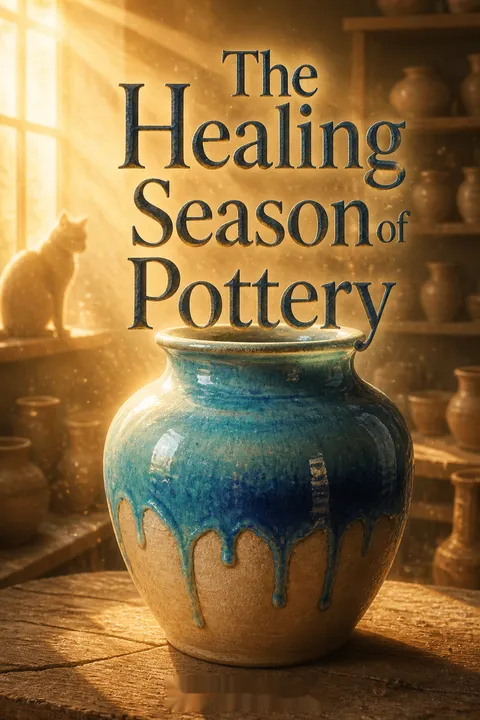
Jungmin's journey comes full circle as she creates gifts for those she loves and those she's wronged. A cobalt blue vase for her mother, a plate for Juran, and countless small tokens for friends and workshop members. Each gift is an act of reconciliation—with her family, her past, and herself. Through these exchanges, Jungmin learns that forgiveness is not a single moment, but a series of choices: to remember, to apologize, to accept, and to move forward. The act of giving becomes a way to release guilt and to honor the connections that sustain her.
Potter Wife, Florist Husband
The story of Johee and her late husband, Hosu, is woven into the fabric of Soyo Workshop. Their partnership—potter and florist, clay and flowers—embodies the beauty and fragility of life. After Hosu's death in a drunk driving accident, Johee retreats into grief, closing the workshop. It is only through the persistent care of friends and the slow return to her craft that she emerges. The workshop's revival is a testament to the power of community, memory, and the willingness to begin again, even after devastating loss.
Breaking and Beginning Again
At the end of the year, the workshop's members gather to break their failed pieces—a ritual of letting go. The sound of shattering pottery is both cathartic and sobering, a reminder that creation and destruction are intertwined. For Jungmin and Gisik, this act becomes a turning point, allowing them to release old disappointments and make space for new possibilities. The cycle of making, breaking, and remaking mirrors the cycles of healing and growth that define their lives. In the fragments of the past, they find the seeds of the future.
Christmas, Everyone's Birthday
The Christmas flea market brings the workshop's story to a joyful crescendo. Members sell their creations, share food and laughter, and mark the season with rituals old and new. Jun, the youngest member, finds his own path; Jihye departs for a new adventure; and Jungmin receives an offer to publish her writing. Amidst the festivities, Gisik invites Jungmin to join him in Goseong, where he is opening a new workshop by the sea. The chapter is a celebration of change, of the courage to choose, and of the enduring bonds that make life meaningful.
Choices and Departures
As winter deepens, the workshop's members prepare for transitions: Johee decides to focus on her own art, Soyo's future is uncertain, and Jungmin must choose between comfort and the unknown. The prospect of leaving Chestnut Burr Village, of starting over in Goseong, is both daunting and exhilarating. Through conversations with friends old and new, Jungmin learns that happiness is not a destination, but a series of choices—sometimes bold, sometimes hesitant, always shaped by the willingness to risk, to care, and to change.
Emerging from the Cave
Jungmin's journey out of isolation is mirrored by the stories of those around her. Through pottery, friendship, and the slow work of healing, she learns to embrace her own story—not as a tale of failure, but as a legend of endurance and transformation. The cave, once a place of hiding, becomes a space of reflection and growth. As she helps others, receives help in turn, and finally forgives herself, Jungmin emerges into a world that is imperfect, unpredictable, and full of possibility.
Toward the Emerald Green Sea
In the final movement, Jungmin travels to Goseong, where Gisik's new workshop, Daum, awaits. The sea is not the emerald green she imagined, but its beauty lies in its complexity—blue, green, ever-changing. Together, they begin to build a new life, blending their crafts, their stories, and their hopes. The journey is not an escape, but a continuation—a testament to the healing power of art, community, and love. As spring approaches, Jungmin stands on the threshold of a future shaped by her own hands, ready to fire her life slowly, and with great passion.
Analysis
A modern fable of healing, community, and the art of imperfectionThe Healing Season of Pottery is a quietly profound meditation on the slow, often painful work of mending a fractured self. Through the lens of pottery, Yeon Somin explores how trauma, guilt, and isolation can be transformed—not erased—by the patient, communal acts of making, sharing, and forgiving. The novel rejects the myth of sudden, dramatic change, instead celebrating the incremental, cyclical nature of growth. Its characters are deeply human—flawed, wounded, and searching—yet their journeys are marked by moments of grace, humor, and unexpected connection. In a world obsessed with speed, perfection, and individual achievement, the story offers a counter-narrative: that true healing is found in the acceptance of imperfection, the embrace of community, and the willingness to begin again, no matter how many times we break. The lessons are clear: take your time, cherish the ordinary, and let yourself be remade by the fires of experience. In the end, the novel is a love letter to the "soyo"s of the world—places and people who teach us to fire our lives slowly, and with great passion.
People Also Read






Characters
Jungmin
Jungmin is a thirty-year-old former broadcast writer whose life unravels after a moment of rage and resignation. Isolated by guilt, family trauma, and professional burnout, she retreats into herself, convinced she is unlovable and broken. Her journey is one of gradual reawakening, catalyzed by the tactile, forgiving world of pottery and the unexpected kindness of strangers. Through her relationships—with Johee, Jihye, Gisik, and others—she learns to accept imperfection, to care for herself and others, and to forgive both her family and herself. Her psychological arc is one of moving from inertia and self-punishment to agency, connection, and hope.
Johee
Johee is the owner and teacher at Soyo Workshop, a woman marked by both loss and quiet strength. After the death of her husband, she withdraws from the world, but is gradually drawn back by the needs and warmth of her community. Johee's teaching style is gentle yet firm, emphasizing process over perfection and the importance of small, consistent acts of care. She becomes a mentor and surrogate family to Jungmin and the other members, modeling resilience, vulnerability, and the courage to begin again. Her own journey is one of mourning, adaptation, and the rediscovery of purpose through art and teaching.
Gisik
Gisik is a large, soft-spoken man who finds solace and identity in pottery. Dissatisfied with his corporate job, he dreams of opening his own workshop by the sea. His relationship with Jungmin is marked by mutual respect, unspoken affection, and a shared sense of being outsiders. Gisik's psychological depth lies in his struggle with family expectations, the fear of loss (symbolized by his grandfather's blindness), and the desire to create a life that feels authentically his own. Through his patience, generosity, and willingness to start over, he becomes both a catalyst and a companion in Jungmin's healing.
Jihye
Jihye is a younger member of the workshop, perpetually job-hunting and battling feelings of inadequacy. Her outward cheer masks deep insecurities and a history of disappointment. Through pottery, she finds a space where effort is valued over results, and where community offers solace from the pressures of achievement. Jihye's journey includes a bold decision to volunteer abroad, reflecting her growing sense of agency and self-worth. Her friendship with Jungmin is characterized by warmth, humor, and the mutual recognition of vulnerability.
Yeri
Yeri is a primary school student who oscillates between bravado and fragility. Her attachment to the stray cat Hoya and her prickly interactions with adults mask a deep loneliness and a difficult home life. Through her relationship with Jungmin, she learns to express her needs and to accept care, while also offering wisdom beyond her years. Yeri's presence in the story highlights the intergenerational nature of healing and the importance of small, everyday acts of kindness.
Juran
Juran is Jungmin's childhood friend, their relationship fractured by a family tragedy involving Jungmin's father. Juran's life is shaped by loss, longing for a complete family, and the struggle to forgive. Her reappearance in Jungmin's life forces both women to confront old wounds, misunderstandings, and the limits of apology. Juran's arc is one of gradual reconciliation, as she and Jungmin learn to accept the complexity of their shared history and to move forward with honesty and compassion.
Hoya
Hoya, the stray cat, becomes a catalyst for Jungmin's transformation. Initially a source of anxiety and guilt, Hoya's presence teaches Jungmin about responsibility, affection, and the possibility of change. The cat's gradual acceptance of Jungmin mirrors her own journey toward self-acceptance and connection. Hoya's story is intertwined with those of Yeri and the workshop community, embodying the themes of care, forgiveness, and the healing power of small, persistent acts.
Jun
Jun is a high school student pressured by his parents to pursue pottery, despite his own passion for painting. His quiet, sometimes abrasive demeanor masks a deep sensitivity and a longing for autonomy. Through his interactions with Jungmin, Jihye, and Johee, Jun learns to articulate his desires and to make choices for himself. His eventual decision to pursue his own path, despite familial expectations, reflects the novel's broader themes of self-discovery and the courage to disappoint others in order to be true to oneself.
Souta
Souta is Johee's old friend from graduate school, a Japanese designer who brings an outsider's perspective to the workshop. His presence is a reminder of the broader world beyond Chestnut Burr Village, and his support helps Johee and the others reconnect with their ambitions and memories. Souta's role is that of a gentle observer and encourager, facilitating connections and offering practical help without imposing his own agenda.
Johee's Late Husband, Hosu
Though deceased, Hosu's influence pervades the workshop. As a florist, his partnership with Johee—pottery and flowers—symbolizes the interplay of permanence and transience, creation and decay. His death in a drunk driving accident is a source of shared grief and a catalyst for Johee's withdrawal and eventual return. Hosu's memory is honored through the rituals, objects, and stories that sustain the community, reminding the characters of the enduring power of love and the necessity of moving forward.
Plot Devices
Pottery as Metaphor
The central plot device is the process of making pottery—shaping, firing, breaking, and remaking—as a metaphor for personal growth, resilience, and the acceptance of imperfection. The tactile, sensory experience of working with clay grounds the characters in the present, offering both a literal and symbolic means of processing trauma, guilt, and longing. The unpredictability of the kiln, the necessity of patience, and the inevitability of breakage all serve as reminders that life, like pottery, is shaped by both intention and accident.
Community and Found Family
The workshop functions as a microcosm of community, where individuals with disparate backgrounds and wounds come together to create, share, and support one another. The rituals of coffee, meals, and collaborative work provide structure and meaning, allowing characters to rebuild trust and self-worth. The narrative structure weaves together multiple character arcs, using the workshop as a hub for intersecting stories and emotional growth.
Food and Sensory Detail
Food—both its preparation and consumption—is a recurring motif, symbolizing care, connection, and the reclaiming of pleasure. The act of eating from handmade dishes, sharing meals, and experimenting with new recipes becomes a way for characters to ground themselves, nurture one another, and mark the passage of time. Sensory details—smell, taste, texture—anchor the narrative in the body, countering the dissociation of trauma and depression.
Narrative Fragments and Interwoven Stories
The novel employs a non-linear, episodic structure, moving between past and present, memory and action. Flashbacks, anecdotes, and character backstories are interwoven with the main narrative, creating a tapestry of interconnected lives. This structure mirrors the process of pottery—layering, shaping, and assembling fragments into a coherent whole.
Symbolic Objects and Rituals
Plates, vases, seals, and other handmade objects serve as repositories for emotion, memory, and intention. The act of gifting, breaking, and using these objects becomes a ritual of healing and connection. The recurring motif of the chestnut burr, the cat Hoya, and the workshop's sign all function as symbols of pain, resilience, and the possibility of renewal.
Foreshadowing and Cyclical Change
The passage of time is marked by the changing seasons, the cycles of creation and destruction in the workshop, and the recurring festivals and rituals. Foreshadowing is used to hint at future transformations—both joyful and painful—while the cyclical structure reinforces the themes of endurance, adaptation, and the inevitability of change.
Download PDF
Download EPUB
.epub digital book format is ideal for reading ebooks on phones, tablets, and e-readers.








































