
Plot Summary
Patterns and Possibilities
Ted Spark, a twelve-year-old with a mind attuned to patterns and logic, introduces himself and his family. He reflects on his previous adventure solving the London Eye Mystery, where his cousin Salim vanished and was found through Ted's methodical thinking. Ted's fascination with weather, patterns, and the interconnectedness of events shapes his worldview. He is both comforted and unsettled by the predictability and unpredictability of life. As the family prepares for a trip to New York to visit Aunt Gloria and Salim, Ted's anxieties about change and the unknown surface, but his curiosity about the Guggenheim Museum's unique architecture and the promise of new patterns to explore begins to outweigh his fears.
Family Storms Gather
The Spark family is in turmoil. Kat, Ted's older sister, is rebelling against parental expectations, wanting to pursue art and design rather than the practical subjects her parents demand. Arguments erupt, emotions run high, and Ted observes these conflicts through the lens of weather metaphors—cold fronts, storms, and pressure systems. Aunt Gloria, now living in New York, is described as a "hurricane," leaving emotional chaos in her wake. Ted feels caught between these swirling family dynamics, uncertain of his place. The family's impending journey to New York is both a literal and metaphorical crossing into new territory, promising both adventure and further upheaval.
Across the Atlantic Divide
The journey from London to New York is fraught with anxiety for Ted. He struggles with the unfamiliarity of air travel, the sensory overload of airports, and the fear of getting lost in a vast, unknown city. The family's arrival in New York is overwhelming—noises, smells, and sights all jostle for Ted's attention. Yet, amidst the chaos, there are moments of connection: Salim greets Ted warmly, and the family is reunited. Ted's initial discomfort is tempered by the excitement of new experiences and the anticipation of visiting the Guggenheim Museum, a place as unusual and pattern-filled as Ted himself.
New York, New Patterns
Settling into Aunt Gloria's small New York apartment, Ted is confronted by the differences between his familiar London life and the bustling, unpredictable rhythms of New York. The city's grid, the towering buildings, and the constant motion unsettle him, but he begins to find comfort in the underlying patterns—street numbers, subway lines, and the spiraling architecture of the Guggenheim. Ted observes the shifting dynamics between Kat and Salim, who have grown closer, leaving him feeling isolated. Yet, he resolves to find his own place in this new environment, determined to adapt and contribute.
The Guggenheim Unveiled
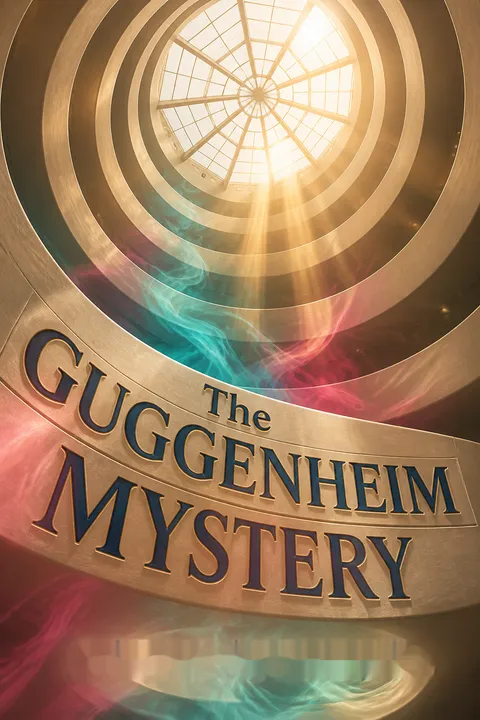
Aunt Gloria takes the family on a private tour of the Guggenheim Museum, where she works as a curator. Ted is captivated by the building's spiraling ramp, circular galleries, and the interplay of light and space. The museum is in the midst of preparing for a new exhibition, with maintenance crews bustling about and artworks being moved. Ted's keen eye notices the patterns in the museum's design and the people working within it. The visit is both exhilarating and disorienting, as the familiar logic of patterns collides with the unpredictability of human behavior and the chaos of last-minute preparations.
Smoke and Shadows
During their visit, a sudden alarm and billowing smoke throw the museum into chaos. The family and staff evacuate, and the fire department arrives, only to discover that the smoke was caused by smoke bombs, not an actual fire. Amidst the confusion, Ted's analytical mind races to make sense of the events. The incident is unsettling, but it also serves as a catalyst, drawing attention to the vulnerabilities in the museum's security and foreshadowing the greater mystery to come. Ted's sense of unease grows, as does his determination to uncover the truth behind the disruption.
The Vanishing Painting
In the aftermath of the smoke incident, it is discovered that a valuable painting—Kandinsky's "In the Black Square"—has been stolen from the Guggenheim. The theft is meticulously timed, exploiting the confusion caused by the smoke bombs and the temporary disabling of security systems. Aunt Gloria, as the senior curator present, becomes the prime suspect, especially when evidence surfaces that her credit card was used to hire the removal van involved in the heist. The family is thrown into turmoil, with Aunt Gloria facing arrest and Salim desperate to clear his mother's name. Ted, Kat, and Salim resolve to investigate the crime themselves.
Suspects and Secrets
Ted, Kat, and Salim compile a list of suspects among the museum staff and maintenance crew, analyzing alibis, motives, and opportunities. They interview workers, uncovering hidden relationships, personal struggles, and small deceptions. Each suspect is scrutinized: Helen and Lana, the maintenance duo; Lionel, the friendly security guard; Ty, the clever electrician; Ben and Rafael, the janitors; and Gabriel, the builder. The trio's investigation is methodical, but complicated by red herrings, conflicting testimonies, and the emotional stakes of proving Aunt Gloria's innocence. Ted's logical approach is balanced by Kat's intuition and Salim's insider knowledge.
The Art of Deception
As the investigation deepens, the children uncover layers of misdirection. The removal van, initially believed to have transported the painting, is revealed to be a decoy. Tools and supplies are found hidden behind false walls, suggesting thefts unrelated to the painting. The suspects' motives range from financial desperation to personal grievances. Ted realizes that the painting's disappearance is not just a matter of physical logistics, but also of psychological manipulation—someone has exploited the museum's routines, the staff's trust, and the chaos of the smoke incident to execute a nearly perfect crime.
Circles Within Circles
Ted's obsession with patterns leads him to reconsider the physical and metaphorical architecture of the Guggenheim. He notes the museum's circular design, the overlapping roles of staff, and the recurring theme of things hidden in plain sight. The investigation circles back to the gift shop, where prints of the stolen painting are sold. Ted hypothesizes that the real painting could be concealed among its replicas, exploiting the assumption that value lies in uniqueness. The team tests this theory, searching the gift shop and other overlooked spaces, but the painting remains elusive, deepening the mystery.
The Gift Shop Riddle
A chance observation in the gift shop provides the crucial clue. Ted notices an empty poster tube among the prints, and recalls the possibility of the painting being rolled up and hidden in plain sight. The realization that the painting could be disguised as a replica, awaiting collection by the thief, reframes the entire investigation. The children confront Sandra, the assistant curator, and Ty, the electrician, piecing together the evidence of their collusion. The painting is recovered just as Sandra attempts to retrieve it, and the true method of the theft is revealed—a blend of technical skill, insider knowledge, and psychological cunning.
Truths Uncovered
With the painting recovered and the culprits exposed, the police take over. Sandra confesses, revealing her financial motives and her manipulation of Ty, who was drawn in by the promise of money and the thrill of the challenge. Aunt Gloria is exonerated, and the family is reunited. The aftermath is bittersweet: justice is served, but the emotional toll of betrayal and the complexities of human motivation linger. Ted reflects on the nature of truth, the limits of logic, and the importance of empathy in understanding others.
The Mystery Solved
The case is closed, but its impact endures. Ted, Kat, and Salim are celebrated for their ingenuity, but each is changed by the experience. Ted gains confidence in his abilities and a deeper appreciation for the messiness of life. Kat's ambition to pursue art is validated, and Salim finds a sense of belonging in his new city. The family's bonds are strengthened by adversity, and Ted realizes that patterns exist not just in weather and architecture, but in relationships and personal growth. The adventure has expanded his world, teaching him that change, though unsettling, can lead to new understanding.
Aftermath and Understanding
In the days following the resolution, the family explores New York, savoring the city's energy and diversity. Aunt Gloria and Salim prepare to continue their lives in America, while Kat negotiates with her parents for the freedom to pursue her dreams. Ted reflects on the lessons learned: the value of persistence, the necessity of adapting to change, and the importance of seeing beyond surface appearances. The experience has deepened his empathy and broadened his perspective, leaving him better equipped to face future mysteries—both in the world and within himself.
Analysis
A modern mystery about difference, belonging, and the search for truth"The Guggenheim Mystery" is more than a whodunit; it is a nuanced exploration of what it means to be different in a world that prizes conformity. Through Ted's eyes, readers are invited to see the beauty and utility of neurodiversity, the power of logic tempered by empathy, and the importance of questioning assumptions. The story challenges the notion that value lies solely in uniqueness or material worth, suggesting instead that meaning is found in connection, understanding, and growth. The interplay of art, architecture, and human relationships serves as a metaphor for the complexity of life—messy, unpredictable, but ultimately navigable through patience, curiosity, and compassion. The book's lesson is clear: everyone has a role to play in the patterns of the world, and even the most unlikely detective can uncover the truth.
Review Summary
The Guggenheim Mystery receives mostly positive reviews (4.07/5) for Robin Stevens' continuation of Siobhan Dowd's Ted Sparks series. Readers praise Stevens for honoring Ted's authentic voice as a neurodivergent protagonist who sees the world differently. The mystery follows Ted, sister Kat, and cousin Salim investigating a stolen Kandinsky painting to clear Aunt Gloria's name at the Guggenheim Museum in New York. Reviewers appreciate the detailed New York setting, character development, and representation of autism, though some note the mystery was easy to solve and felt formulaic at times.
Characters
Ted Spark
Ted is a twelve-year-old boy whose mind operates differently from those around him, likely on the autism spectrum. He is deeply logical, obsessed with patterns, and often struggles with social cues and emotional nuance. Ted's unique perspective allows him to notice details others miss, making him an exceptional detective. His relationships with his family are complex—he feels both isolated and fiercely loyal. Over the course of the story, Ted grows in confidence, learning to balance logic with empathy and to accept change as a part of life. His journey is one of self-acceptance and the realization that his differences are strengths.
Kat Spark
Kat is Ted's older sister, navigating the turbulence of adolescence and the pressure of parental expectations. She is passionate about art and fashion, determined to forge her own path despite resistance from her parents. Kat's relationship with Ted is marked by both frustration and deep affection—she often teases him, but also defends and supports him. Her intuition and emotional intelligence complement Ted's logic in their investigations. Through the story, Kat matures, learning to articulate her ambitions and to appreciate her brother's unique gifts.
Salim Choudhury
Salim, Ted and Kat's cousin, is a teenager caught between cultures and continents. Having recently moved to New York with his mother, Aunt Gloria, Salim is eager to fit in and find his place. He is sociable, quick-witted, and passionate about photography and acting. Salim's relationship with Ted is warm but sometimes strained by the shifting dynamics with Kat. His involvement in the investigation is driven by a desire to clear his mother's name and to assert his own agency. Salim's journey is one of self-discovery and adaptation to new environments.
Aunt Gloria (Gloria McCloud)
Aunt Gloria is Ted and Kat's aunt, Salim's mother, and a curator at the Guggenheim. She is described as a "hurricane," leaving emotional upheaval in her wake. Gloria is ambitious, dedicated to her work, and often at odds with her family's expectations. Her arrest for the theft is a turning point, exposing her vulnerabilities and the prejudices she faces as an outsider. Gloria's relationship with Salim is protective to the point of suffocation, and her dynamic with her sister, Ted's mother, is fraught but loving. She emerges from the ordeal with a renewed sense of purpose and connection.
Sandra Cook
Sandra is Aunt Gloria's assistant curator at the Guggenheim. Outwardly supportive, she harbors resentment over her subordinate position and financial struggles. Sandra orchestrates the theft of the painting, exploiting her insider knowledge and manipulating Ty into assisting her. Her actions are driven by a mix of envy, desperation, and a desire for recognition. Sandra's eventual confession reveals the complexity of her motives and the consequences of unchecked ambition.
Ty Green
Ty is a young, talented electrician on the museum's maintenance crew. He is drawn into Sandra's scheme by the promise of money and the intellectual challenge of the heist. Ty's playful nature and affinity for wordplay mask deeper insecurities and a longing for validation. His involvement in the crime is both a betrayal and a cry for help. Ty's remorse and apology to Salim highlight his capacity for growth and the importance of second chances.
Lionel
Lionel is the Guggenheim's security guard, known for his warmth and approachability. Beneath his genial exterior, Lionel is grappling with financial hardship as a single parent. He supplements his income by stealing food from the museum's cafe, a minor crime that complicates his role in the investigation. Lionel's actions blur the line between right and wrong, illustrating the pressures faced by those on the margins.
Helen Wu
Helen is the head of the maintenance crew, known for her competence and no-nonsense attitude. She is fiercely loyal to her colleague Lana, and the two are suspected of colluding in the theft. Helen's motivations are rooted in personal loyalty and a desire to protect her friend, but she is ultimately exonerated. Her character highlights the complexities of workplace relationships and the ease with which suspicion can fall on the innocent.
Lana Juster
Lana is a member of the maintenance crew, struggling with the demands of caring for an ailing parent. Her evasiveness during questioning raises suspicions, but her actions are ultimately motivated by personal hardship rather than criminal intent. Lana's story underscores the hidden struggles faced by many and the dangers of jumping to conclusions.
Ben Katz
Ben is another member of the maintenance crew, balancing his work with the responsibilities of caring for a sick wife. His brother Hank is a firefighter, and their close relationship is a source of strength. Ben's alibi and honesty help clear him of suspicion, and his character serves as a reminder of the quiet heroism found in everyday life.
Plot Devices
Pattern Recognition and Logical Deduction
The story is structured around Ted's ability to see patterns where others see chaos. His logical, step-by-step approach to problem-solving is both a narrative engine and a thematic core. The investigation unfolds as a series of hypotheses tested against empirical evidence, with Ted's perspective providing both clarity and occasional blind spots. The use of lists, timelines, and deductive reasoning mirrors classic detective fiction, while also highlighting the strengths and limitations of a neurodivergent worldview.
Misdirection and Red Herrings
The narrative employs classic mystery devices—smoke bombs, decoy removal vans, hidden motives—to keep both characters and readers guessing. Suspects are introduced with plausible motives and opportunities, only to be exonerated through careful investigation. The layering of minor crimes (theft of tools, food) alongside the central heist adds complexity and realism, illustrating how surface appearances can be deceiving.
Thematic Use of Space and Architecture
The museum's spiraling ramp, interconnected galleries, and hidden spaces serve as both setting and metaphor. The physical structure of the Guggenheim reflects the narrative's circular logic, the overlapping relationships among characters, and the idea that truth can be hidden in plain sight. The interplay between inside and outside, surface and depth, is echoed in the unfolding of the mystery and the characters' personal journeys.
Foreshadowing and Symbolism
Ted's fascination with weather patterns, the recurring motif of storms and pressure systems, and the symbolism of art and light all serve to foreshadow key developments and underscore thematic concerns. The stolen painting, "In the Black Square," becomes a symbol of uniqueness, value, and the tension between appearance and reality. The use of figures of speech, both literal and metaphorical, highlights the challenges of communication and understanding.
Emotional and Psychological Realism
The mystery is not just a puzzle to be solved, but a crucible for personal growth. Characters are tested by adversity, forced to confront their fears, ambitions, and relationships. The resolution of the case brings not just justice, but also reconciliation, forgiveness, and a deeper understanding of self and others. The narrative structure allows for moments of introspection, humor, and vulnerability, grounding the story in emotional truth.
London Eye Mystery Series Series
Download PDF
Download EPUB
.epub digital book format is ideal for reading ebooks on phones, tablets, and e-readers.








































