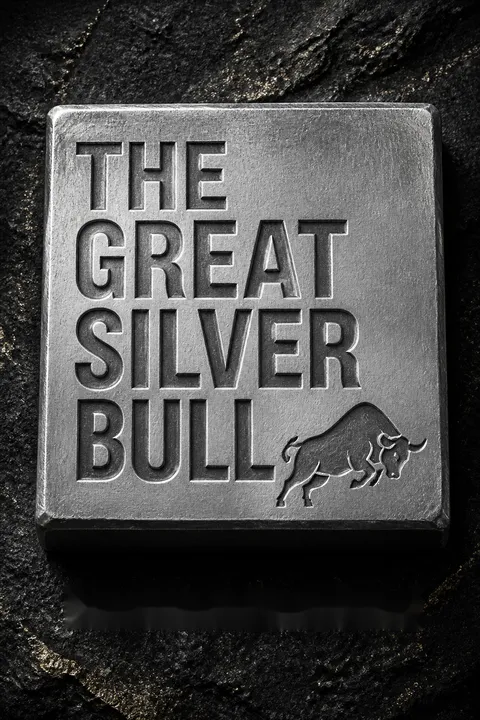

Key Takeaways
1. Silver's Enduring Monetary History & Government Debasement
Silver has been used by every major empire, starting with ancient Greeks up to 20th century America.
Ancient money. For over 5,000 years, silver has served as a reliable form of money, facilitating trade and outlasting empires. Its inherent properties—durability, divisibility, convenience, consistency, and intrinsic value—made it an ideal currency, even inspiring the name of countries like Argentina. The Athenian drachma, a silver coin, was the world's first international currency, maintaining its value for 300 years.
Debasement's downfall. History repeatedly shows that debasing currency or relying on unbacked paper money leads to economic collapse. Ancient Rome's denarius, for example, lost 9% of its silver content in 250 years, but then rapidly declined as emperors replaced silver with cheaper metals to fund expansion, contributing to the empire's fall. This pattern of monetary mismanagement leading to societal upheaval is a recurring theme.
Modern abandonment. In the 20th century, governments systematically removed silver from coinage and currency backing. The U.S. eliminated silver from most coins by 1965 and, in 1934, President Roosevelt even nationalized privately owned silver bullion to increase coinage supply, effectively devaluing the dollar. This shift away from precious metals allows governments to print endless amounts of currency, setting the stage for inflation.
2. Modern Monetary Theory & Fiat Currency Collapse
The problem is this spiraling debt bomb is unsustainable. It will never be repaid, at least not in a currency that maintains some semblance of its purchasing power.
Unprecedented money printing. The world's money supply has exploded fivefold in the last two decades, with 25% of all U.S. dollars in circulation created in just 18 months following the COVID-19 pandemic. This massive expansion, driven by Modern Monetary Theory (MMT), treats national debts and deficits as inconsequential unless they cause inflation, which is now rampant.
MMT's destructive allure. MMT, gaining traction among economists and politicians, posits that governments issuing their own fiat currency can spend limitlessly, printing money to cover any shortfalls. This seductive "spend-to-no-end" approach ignores historical lessons where such policies led to hyperinflation and currency collapse, as seen in:
- Weimar Germany
- Zimbabwe
- Argentina
- Venezuela
The U.S. dollar, as the global reserve currency, faces an even more alarming demise if MMT continues unchecked.
Unsustainable debt spiral. Global debt has soared to $296 trillion, over 360% of global GDP, making repayment impossible without crippling tax increases or outright default. Governments' most likely path is to inflate the money supply, repaying debt with dramatically depreciated currency. This accelerates the devaluation of the dollar and erodes citizens' savings, making silver an essential hedge against this inevitable financial reset.
3. Negative Real Rates: The Secret Key to Silver's Surge
When real rates are falling and/or below zero, silver and gold thrive.
The predictive power of real rates. Real interest rates, calculated by subtracting inflation from nominal interest rates, are the single best indicator for predicting precious metals prices. When real rates are negative (meaning inflation is higher than interest earned), the opportunity cost of holding non-interest-bearing assets like silver and gold disappears, making them highly attractive.
Historical lows and inflationary pressures. Interest rates are at their lowest levels in 5,000 years, while inflation is hitting 40-year highs. This combination creates deeply negative real rates, currently around -5% for a 10-year U.S. Treasury bond. This environment is a perfect storm for silver, as it historically performs exceedingly well when real rates are falling or negative.
Fed's hidden agenda. The Federal Reserve's "average-inflation targeting" policy aims to let inflation run above its 2% target for some time, effectively ensuring persistently low real rates. This deliberate policy, coupled with massive government debt that prevents significant rate hikes, guarantees a prolonged period where silver and gold will outperform traditional investments.
4. Silver's Unique Dual Role & Inelastic Supply
Silver’s not only exceptional because it’s prized as money and it’s irreplaceable in industry. It’s also unique for how it’s typically found in nature.
Dual nature, irreplaceable utility. Silver stands apart from gold due to its dual role as both a monetary and an indispensable industrial metal. While 90% of gold demand is for investment, about 50% of silver demand comes from industrial applications, where its unmatched thermal and electrical conductivity, reflectivity, and malleability make it crucial for:
- Solar panels (10% of annual supply)
- Electric vehicles
- Electronics (smartphones, 5G infrastructure)
- Medicine (antibacterial properties)
- Jewelry and silverware
Quirky, inelastic supply. Unlike most commodities, silver's supply is highly inelastic to price changes. Only 26.7% of mined silver comes from primary silver mines; the vast majority (73.3%) is a byproduct of mining other metals like lead, zinc, copper, and gold. This means that even if silver prices soar, miners of these primary metals have little incentive to increase silver production, leading to persistent supply deficits.
Declining inventories & peak silver. Global silver inventories have been falling for decades, with identifiable bullion inventories now around 1.7 billion ounces, compared to 2.5 billion ounces of gold bullion. The world has been consuming more silver than it mines for years, and supply deficits are forecast to deepen. Mine production likely peaked in 2016, suggesting a looming silver shortage that will set a rising floor under prices.
5. Silver's Market Dynamics Point to Explosive Gains
Silver is a perfect target for FOMO – the “Fear of Missing Out.”
Small market, big impact. The silver market is roughly one-tenth the size of the gold market in terms of annual supply value ($27 billion vs. $270 billion). This smaller size means it takes significantly less buying pressure to send silver prices soaring, leading to greater volatility and outsized gains compared to gold in bull markets.
FOMO and the "steroids" effect. Silver consistently outperforms gold in bull markets, often referred to as "gold on steroids." As a gold bull market matures, investors, seeing gold's high price, turn to cheaper silver for more "bang for their buck." This "Fear of Missing Out" (FOMO) drives rapid bidding, causing silver's gains to outpace gold's, especially as new, younger investors are drawn in by social media campaigns like the 2021 "Silver Squeeze 2.0."
Historically cheap & sticky money. Despite its industrial demand and monetary history, silver remains exceptionally cheap. It's still 50% below its 1980 nominal high and 85% below its inflation-adjusted peak. Furthermore, silver is "sticky money"—investors, particularly in physical silver and ETFs, tend to hold onto it even during price drops, creating a solid, rising floor under prices and intensifying future supply shocks.
6. $300 Silver: A Conservative Target Based on Multiple Indicators
My gold-peak prediction of $5,000 per ounce is just 2.5 times the August 2020 high near $2,000. Assuming $5,000 gold and an ultimate bottom in the gold/silver ratio of 15 ($5,000/15), we end up with silver trading at $333 an ounce.
Gold's inevitable ascent. Gold is projected to reach $5,000 to $10,000 per ounce, driven by record sovereign debt, low interest rates, and unparalleled money printing. This forecast is supported by:
- Historical bull market performance (24x gain in the 1970s implies $6,240 from 2001 low)
- M2 money supply expansion models
- Expert analysis from figures like James Rickards and Scott Minerd
The gold/silver ratio's powerful signal. The gold/silver ratio, which measures how many ounces of silver it takes to buy one ounce of gold, is a key predictor. It bottomed at 15 in 1980 and 30 in 2011. If gold reaches $5,000 and the ratio returns to 15, silver would hit $333/ounce. Even a $10,000 gold price with a ratio of 30 yields $333/ounce for silver.
Multiple confirmations for $300. Other indicators also point to $300 silver:
- Inflation-adjusted 1980 peak: Using realistic inflation (ShadowStats), the 1980 peak of $50 translates to $240-$360 today.
- Dow/Silver Ratio: The 1980 low of 24.5 (Dow/silver) with a 35,000 Dow implies $1,429 silver, or $715 if the Dow halves.
- Silver/Gold Mining Ratio: With 7 ounces of silver mined for every ounce of gold, a $1,900 gold price implies $271 silver.
- Silver/Home Price Ratio: The 1980 low of 1,464 silver ounces to buy an average U.S. home, with a $450,000 home, implies $300 silver.
These converging estimates make $300 silver a highly achievable, if not conservative, target.
7. Strategic Silver Investing: Diversify, Leverage, Manage Risk, & Take Profits
If you follow my simple, straightforward Silver M.A.P. System, you’ll have your own “treasure map” to help you make the most of this massive silver bull market.
The Silver M.A.P. System. This easy-to-remember framework guides investors:
- Silver: Own physical silver for wealth protection.
- Miners: Invest in mining stocks for leverage.
- Allocate: Diversify holdings across various company types.
- Profit: Actively manage gains and take profits.
This system helps maximize returns while mitigating risk in a volatile market.
Ideal portfolio blueprint. A diversified silver portfolio balances risk and reward across different investment types. A suggested allocation is:
- 10% Physical Silver: For foundational financial insurance and capital protection.
- 50% ETFs, Royalty/Streaming & Large Producers: For stable exposure, diversification, and consistent returns.
- 20% Growing Producers & Developers: For higher growth potential and leverage.
- 20% Junior Explorers: For "moonshot" returns, spread across multiple companies to manage high risk.
This structure allows investors to benefit from silver's overall bull market while capitalizing on the amplified gains of mining stocks.
Risk management essentials. Five key techniques protect capital and maximize gains:
- Position-Sizing: Limit exposure to any single holding (e.g., max 4% for junior explorers).
- Buying in Tranches: Layer purchases to mitigate overpaying and average down costs.
- Playing with the House's Money: Sell half an investment when it doubles to recoup initial capital.
- Trailing Stops: Protect gains by automatically selling if a stock falls a predetermined percentage from its peak.
- Rebalancing: Periodically reallocate capital from winning stocks to weaker ones or new opportunities.
These strategies empower investors to navigate volatility and secure profits.
8. The Mining Life Cycle & Stock Leverage
One main reason investors look to silver stocks is that they provide leverage to the silver price.
Leverage: The double-edged sword. Silver stocks offer significant leverage to the underlying silver price, meaning they tend to rise faster when silver goes up, but also fall faster when silver declines. In a secular bull market, this leverage can be immense, with diversified baskets of silver stocks often doubling silver's returns, and individual stocks seeing 5x to 100x gains.
Stages of mining investment. Understanding the mining life cycle—exploration, development, construction, production, and closure—is crucial for assessing risk and reward:
- Exploration: Highest risk/reward, with potential for "bonanza grades" and rapid stock surges.
- Development/Design: Requires significant funding for studies, often a "valley of despair" for investors.
- Construction: High success rate as companies near production, attracting larger investors.
- Production: Generates cash flow and profits, but still subject to price fluctuations and operational risks.
- Closure/Reclamation: Focus on responsible environmental and social practices (ESG).
Each stage presents unique investment opportunities and challenges.
ESG and green mining. Modern mining increasingly emphasizes Environment, Social, and Governance (ESG) principles. Responsible miners engage with local communities, prioritize safety, and adopt green technologies to minimize their carbon footprint. This commitment to sustainable practices is vital for long-term success and investor confidence, especially as silver is crucial for the global green economy transition.
9. New Investment Trends Fueling Demand
I believe precious metals will have a major role to play in any true reset of the financial system.
Silver-backed cryptocurrencies. The rise of digital currencies and central bank digital currencies (CBDCs) is a significant trend. While CBDCs represent centralized control, there's a growing interest in silver-backed cryptocurrencies that combine the intrinsic value of precious metals with the convenience of digital transactions. This could create a burgeoning new source of demand for physical silver, solving issues of storage and transferability.
Regaining monetary status. A movement is underway in the U.S. to repeal taxes on gold and silver sales, with 42 states already having done so. Some states, like Utah, Wyoming, and Oklahoma, even recognize gold and silver bullion as legal tender. This push to restore silver's monetary status reflects a growing distrust in fiat currencies and could lead to broader acceptance and demand.
Corporate and institutional adoption. Corporations, pension funds, and even governments are beginning to view precious metals as essential reserve assets to protect against inflation. Companies like MicroStrategy and Tesla have invested in Bitcoin, and the Ohio Police & Fire Pension Fund allocated 5% to gold. This trend, driven by the need to preserve purchasing power, could lead to significant institutional demand for silver, transforming it into a mainstream corporate reserve asset.
10. Exit Strategy: Recognize Peak Sentiment & Market Signals
You will want out when everyone else wants in. It’s like the old adage: “Buy when others are fearful and sell when they are greedy.”
Don't chase the top. While it's unrealistic to sell at the exact market peak, astute investors can get close by recognizing key signals. The ultimate goal is not just to generate gains but to lock in profits to secure financial futures. When silver becomes a mainstream topic, discussed by casual observers and financial media talking heads, it's a strong indicator of peak sentiment and time to consider exiting.
Four silver peak clues. Several indicators, when screaming in unison, suggest an imminent peak:
- FOMO (Fear of Missing Out): When everyone, including non-experts, is excitedly discussing silver's rapid gains, it signals rampant greed and a market top.
- Gold/Silver Ratio: A final low in the ratio, likely below 30 and potentially near 15 (as in 1980), indicates silver has dramatically outpaced gold and is nearing its peak.
- Dow/Silver Ratio: A historical low in this ratio (e.g., 24.5 in 1980) suggests silver is extremely overvalued relative to the broader stock market.
- Silver/Real Estate Ratio: A low in this ratio (e.g., 1,464 ounces to buy an average U.S. home in 1980) indicates silver's value has surged against real estate.
These combined signals provide a comprehensive framework for identifying when to sell most silver investments.
The long game. The current environment of escalating uncertainty, deficits, debt, money printing, and low interest rates creates a perfect scenario for silver. While bull markets eventually end, this one is expected to be generational. By understanding these signals and maintaining a disciplined approach, investors can ride the wave of the Great Silver Bull and secure substantial wealth.
People Also Read









Download PDF
Download EPUB
.epub digital book format is ideal for reading ebooks on phones, tablets, and e-readers.








































