
Key Takeaways
1. Liberal Hegemony: An Impossible Dream for Global Order
This enthusiasm notwithstanding, liberal hegemony will not achieve its goals, and its failure will inevitably come with huge costs.
Ambitious strategy. Liberal hegemony is a foreign policy where a powerful state aims to transform as many countries as possible into liberal democracies, foster an open international economy, and build formidable international institutions. Proponents believe this strategy will make the world more peaceful, reduce human rights violations, and secure liberal democracies against internal threats. The United States, as the sole superpower after the Cold War, embraced this strategy with optimism.
Destined to fail. This ambitious approach is fundamentally flawed because it clashes with the enduring forces of nationalism and realism, which exert far greater influence on international politics than liberalism. Liberal hegemony leads to policies that are at odds with how states actually behave, resulting in repeated failures and significant costs. The American experience since 1989, particularly in the greater Middle East and with Russia, exemplifies these failures.
High costs. The pursuit of liberal hegemony leads to endless wars, increasing global conflict rather than reducing it, and exacerbating problems like nuclear proliferation and terrorism. Moreover, this militaristic behavior often threatens the liberal state's own values at home, leading to illiberalism. American policymakers would be wise to abandon this strategy for a more restrained foreign policy rooted in realism and a proper understanding of nationalism.
2. Human Nature: Social Beings with Limited Universal Reason
My view is that we are profoundly social beings from the start to the finish of our lives and that individualism is of secondary importance, which is not to say that it is unimportant.
Limits of reason. Humans possess impressive critical faculties, but these are significantly limited when it comes to agreeing on what constitutes the good life or universal moral consensus. Beyond the shared goal of survival, individuals and groups often have intractable disagreements on ethical, moral, and political first principles. This inherent inability to reach universal truth means that reason alone cannot dictate how societies should be organized or how their members should behave.
Profoundly social. Humans are fundamentally social beings, born into groups that shape their identities long before individualism asserts itself. These social groups are primarily "survival vehicles," where cooperation among members maximizes individual and collective survival. This social nature means humans are also inherently political, as groups require institutions to govern behavior, enforce rules, and protect against external threats.
Politics and power. Since universal agreement on first principles is elusive, politics becomes central to group life, determining who writes and enforces the rules. Power, based on resources, dictates which faction prevails in this competition. Among independent social groups, the absence of a higher authority means they compete for relative power to ensure their survival, leading to a world populated by diverse, self-interested groups.
3. Political Liberalism's Core: Individual Rights and State Activism
Political liberalism, in my lexicon, is an ideology that is individualistic at its core and assigns great importance to the concept of inalienable rights.
Individualism and rights. Political liberalism is founded on the idea of atomistic individuals endowed with inalienable rights, emphasizing freedom from government intrusion (negative rights). This universalist logic means these rights apply to everyone on the planet, creating a powerful incentive for liberal states to intervene globally to protect them. The state's primary role is to act as a "night watchman," protecting these rights and maintaining order.
Two variants. Liberalism exists in two forms: modus vivendi and progressive.
- Modus vivendi liberals prioritize negative rights, advocating minimal state intervention and skepticism towards social engineering. They are pessimistic about universal agreement on the good life.
- Progressive liberals embrace negative rights but also champion positive rights, such as equal opportunity, requiring active government involvement and social engineering. They have greater faith in the state's capacity to improve society.
Progressive triumph. Progressive liberalism has largely triumphed in practice, as modern states are compelled to be deeply engaged in social engineering due to the complexities of industrialization, nationalism, and warfare. This means contemporary political liberalism is effectively synonymous with progressive liberalism, favoring an activist state that promotes a broader range of rights, even while remaining wary of excessive state power.
4. Nationalism: The Unyielding Force in a World of Nation-States
Nationalism is an enormously powerful political ideology.
Nation's essence. A nation is a large community bound by a powerful sense of oneness, a distinct culture (shared practices and beliefs), and a deep emotional attachment to sacred territory. Members feel mutual responsibility and often a sense of superiority over other nations, reinforced by historical myths. This collective identity is usually an individual's highest loyalty, surpassing other affiliations.
Nation-states' rise. Nations desire their own states for self-determination and survival, as a state offers the best guarantee against external threats and cultural assimilation by larger groups. Conversely, states actively foster nationalism to enhance their economic and military power, and to make their populations more governable through cultural homogenization. This symbiotic relationship has made the nation-state the dominant political form globally.
Nationalism's dominance. Nationalism is a pervasive, bottom-up and top-down force that almost always trumps liberalism when they clash. Liberalism's radical individualism fails to provide the strong sense of community and loyalty that nationalism offers, which is crucial for social cohesion and individual psychological needs. While liberalism operates within nation-states, its universalist claims about rights often fall short against the particularist, self-interested nature of national identity.
5. International Anarchy Forces States to Act as Realists
As long as the international system is anarchic, liberalism is no different from realism in that realm.
Anarchy's dictates. In an international system without a world state or higher authority, states operate in anarchy, where survival is their primary goal. All states possess offensive military capabilities, and intentions are always uncertain. This environment compels states to fear each other and act in a "self-help" system, constantly seeking to maximize their power relative to rivals.
Liberalism's dilemma. Political liberalism, which requires a "night watchman" state to maintain order domestically, cannot function as advertised in the anarchic international system. Without a global enforcer, liberal states, despite their emphasis on rights and peaceful resolution, must revert to realist logic to ensure their survival. This means prioritizing power over liberal principles when dealing with other states.
Realism's timelessness. Realism is a timeless theory, applicable across history and to any context where violence is a threat and no higher authority exists. This inherent logic means that even if a liberal state is powerful enough to pursue liberal hegemony, it does so at its peril, as other states will continue to operate under realist assumptions, leading to inevitable clashes and failures for the liberal crusader.
6. Liberal Hegemony Inevitably Leads to Costly, Endless Wars
Once unleashed on the world stage, a liberal unipole soon becomes addicted to war.
Militaristic impulse. Liberal hegemony's core mission to protect universal human rights and spread liberal democracy worldwide inherently leads to militarism. Liberal policymakers, driven by missionary zeal and a belief in their right and ability to intervene, see war as a legitimate tool to achieve these goals, even dismissing diplomacy with "evil" authoritarian states. This mindset creates abundant opportunities for conflict.
Undermining diplomacy and sovereignty. The liberal state's deep-seated antipathy towards illiberal regimes makes diplomacy difficult, as it views compromise with "evil" as unacceptable. This increases the likelihood of war. Furthermore, liberal hegemony undermines the norm of state sovereignty, a cornerstone of international law designed to prevent interstate conflict. By asserting a right to intervene in other nations' internal affairs, liberal powers make it easier to launch wars.
Instability and failure. The pursuit of liberal hegemony increases global instability, leading to more wars rather than fewer. The American experience in the greater Middle East since 9/11—interventions in Afghanistan, Iraq, Libya, and Syria—demonstrates a consistent pattern of costly failures, widespread death and destruction, and the exacerbation of problems like terrorism and nuclear proliferation. These interventions rarely achieve their goals and often backfire, creating new, unforeseen disasters.
7. Liberal Foreign Policy Erodes Domestic Freedoms and Trust
States that pursue liberal hegemony invariably damage the fabric of liberalism inside their own borders.
National security state. A state committed to endless wars abroad to spread liberalism must build a powerful national security bureaucracy. This formidable apparatus, operating with secrecy and often outside public scrutiny, inevitably threatens liberal values and institutions at home. The Founding Fathers understood this, with James Madison noting, "No nation can preserve its freedom in the midst of continual warfare."
Secrecy and deception. The pursuit of liberal hegemony necessitates secrecy to protect strategies from adversaries and shield leaders from domestic criticism or accountability for policy failures. This leads to pervasive obfuscation, including lying, spinning, and concealing information from the public, Congress, and the courts. Such dishonesty poisons the political culture, undermines informed decision-making, and weakens the rule of law.
Erosion of civil liberties. In times of perceived national emergency, a militarized liberal state is prone to violating individual rights and due process. Examples from U.S. history, such as warrantless surveillance, indefinite detention at Guantanamo Bay, and targeted assassinations by drone, demonstrate how security concerns override civil liberties. This erosion of fundamental rights, often with public support, fundamentally damages the liberal fabric of the nation.
8. Liberal Theories of Peace Fail to Deliver on Their Promise
My bottom line is that none of these theories provides a formula for peace.
Democratic peace theory's flaws. This theory claims liberal democracies do not fight each other, but historical evidence shows exceptions (e.g., Germany vs. Britain/France in WWI). Its causal logics—public aversion to war, cumbersome democratic decision-making, or shared liberal norms—are unconvincing. Democracies do initiate wars against non-democracies, and their norms often yield to strategic interests or nationalism. The possibility of democratic backsliding also means states must always prepare for conflict.
Economic interdependence's limits. The theory posits that economic ties deter war due to prohibitive costs. However, wars can be quick and decisive, or states may continue trade during conflict. More importantly, political and security concerns, especially survival, often trump economic prosperity. Nationalism can also override economic interests, as seen in China's stance on Taiwan. Empirical evidence for economic interdependence causing peace is weak and contested.
Liberal institutionalism's weakness. This theory argues that international institutions foster cooperation by reducing cheating and transaction costs. However, institutions lack a higher authority to enforce rules, relying on voluntary adherence. States, especially great powers, will disregard rules when vital interests are at stake, as demonstrated by U.S. interventions without UN Security Council approval. Institutions are tools for cooperation when interests align, but they cannot prevent war or fundamentally challenge realist logic.
9. Restraint and Realism: The Prudent Path for Great Powers
It would make eminently good sense for the United States to abandon liberal hegemony, which has served it so poorly, and pursue a more restrained policy abroad.
Abandon liberal hegemony. Liberalism is a poor guide for foreign policy, leading powerful states into costly, endless wars and undermining domestic freedoms. The United States should abandon its grand ambitions of liberal hegemony, which has consistently failed and harmed both itself and other nations. Instead, it should adopt a foreign policy of restraint, grounded in realism and a clear understanding of nationalism.
Embrace realism. While realism acknowledges conflict, it is generally less warlike than liberalism. Realists advocate for war only in limited, strategically vital regions (e.g., a great power's neighborhood, areas with critical resources). They are cautious about using force due to the balancing behavior of other states and the unpredictable nature of war. This contrasts with liberalism's universalist impulse, which sees potential battlefields everywhere.
Understand nationalism's power. A restrained foreign policy also recognizes nationalism's profound influence. Great powers should avoid interfering in the domestic politics of minor powers, as nationalism drives self-determination and resistance to foreign intervention. The "domino theory" of the Cold War was flawed because it underestimated nationalism's power over universal ideologies like communism. A hands-off approach allows local nationalisms to check rival great powers, serving the restrained power's interests.
Review Summary
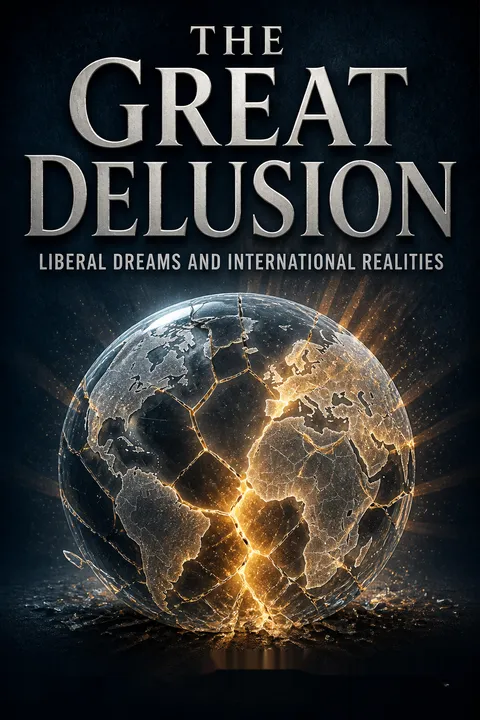
The Great Delusion critiques liberal interventionist foreign policy, arguing it leads to endless wars and undermines domestic liberalism. Mearsheimer contends that nationalism and realism trump liberalism in international affairs, and that attempting to spread democracy abroad through force consistently fails. Reviewers generally praise his clear arguments and thorough analysis, though some criticize his definitions, oversimplification of liberal theory, and perceived biases—particularly regarding Russia. Many find the book repetitive but valuable for understanding realist perspectives. Critics note he underestimates liberalism's successes and overattributes U.S. wars to ideological rather than strategic motivations.
People Also Read







About the Author

Download PDF
Download EPUB
.epub digital book format is ideal for reading ebooks on phones, tablets, and e-readers.








































