
Key Takeaways
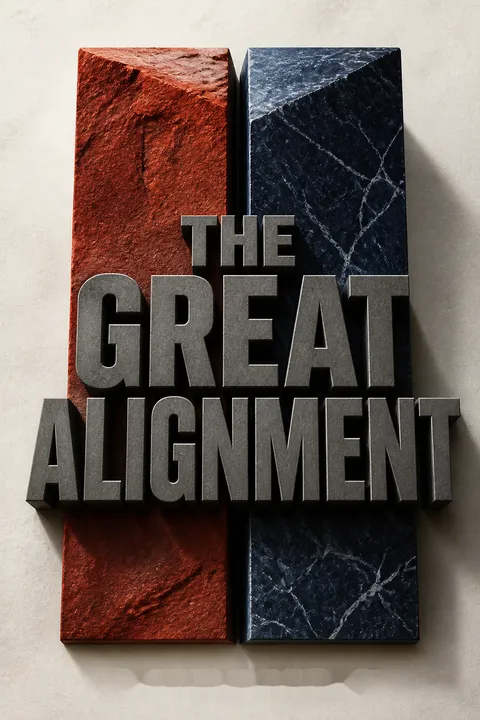
1. American Politics is Defined by a "Great Alignment" of Deep Societal Divides.
The central argument of this book is that the deep partisan divide that exists among the politically engaged segment of the American public as well as among political elites and activists is, fundamentally, a disagreement over the dramatic changes that have transformed American society and culture since the end of World War II, and that continue to have huge effects in the twenty-first century.
Societal Transformation. American politics is now characterized by a "great alignment," where partisan identities are deeply intertwined with profound societal and cultural shifts since World War II. This isn't merely an elite phenomenon; it reflects fundamental disagreements within the public over issues like technological change, globalization, immigration, and evolving social norms.
Diverging Responses. These transformations have created two distinct camps: those who embrace the new American society (racial minorities, LGBTQ+ community, educated citizens, religious moderates) and those who find these changes deeply unsettling (religious conservatives, less-educated whites in rural areas). These groups overwhelmingly vote for opposing parties, solidifying the partisan divide.
Negative Partisanship. A critical outcome of this alignment is the rise of "negative partisanship," where voters are increasingly motivated by hostility towards the opposing party rather than strong affection for their own. This mutual distrust has intensified party loyalty, straight-ticket voting, and the nationalization of elections, fundamentally altering the political landscape.
2. The New Deal Coalition Fractured as America Changed, Ushering in an Era of Dealignment.
The Democrats’ major problem during this era, and especially after 1965, was finding a candidate who could hold together the disparate elements of the coalition.
Roosevelt's Legacy. Franklin D. Roosevelt's New Deal coalition, built on white southerners, northern white ethnics, and the northern white working class, dominated American politics for decades. However, its inherent ideological diversity, uniting conservative whites with liberals and African-Americans, contained the seeds of its eventual decline.
Post-War Cracks. After World War II, rising affluence and the Civil Rights Movement began to fracture this coalition. Many beneficiaries of the New Deal started viewing themselves as taxpayers supporting programs for "others," often racially distinct groups. The 1964 election, where Lyndon Johnson championed civil rights, marked a turning point, with five Southern states voting Republican for the first time since Reconstruction.
Presidential Weakness. This era saw Democrats struggle in presidential elections, winning only two between 1948 and 1988 (excluding Johnson's 1964 landslide). Despite maintaining congressional majorities through ticket splitting, the inability to unite the coalition behind a single presidential candidate signaled a period of "dealignment," where party loyalty weakened and voters frequently crossed party lines.
3. Racial and Cultural Shifts Drove a Profound Ideological Realignment of Party Bases.
The country’s radical social transformation has reshaped the Democratic and Republican electoral coalitions.
Beyond Elites. The polarization observed today isn't just an elite phenomenon; it's rooted in radical social and cultural transformations since the 1960s. These include the civil rights revolution, large-scale immigration, changing gender roles, and evolving religious beliefs, which have fundamentally reshaped who aligns with each party.
Coalition Remaking. The Democratic Party now draws strength from groups welcoming these changes:
- Non-whites and immigrants
- Younger voters and single women
- LGBTQ+ individuals and secular, college-educated citizens
Conversely, the Republican Party's base consists overwhelmingly of whites, particularly older, evangelical Protestants and those without a college degree, who view these changes with apprehension.
Ideological Sorting. This demographic sorting has led to a profound ideological realignment. White conservatives have moved decisively to the Republican Party, while white liberals have increasingly embraced the Democratic Party. This has created a much clearer, reinforcing link between a voter's race, cultural values, and ideology, and their partisan identity.
4. "Negative Partisanship" Now Fuels Unprecedented Party Loyalty and Straight-Ticket Voting.
A growing number of Americans have been voting against the opposing party rather than for their own.
Hostility as Motivation. The rise of "negative partisanship" means that a significant and growing portion of the electorate is driven more by strong negative feelings towards the opposing party than by positive feelings for their own. This mutual hostility has become a powerful force in American elections.
Record Loyalty. This intense dislike translates directly into unprecedented levels of party loyalty and straight-ticket voting. In recent elections, over 90% of a party's supporters vote for their presidential candidate, and similar rates are seen in House and Senate races. This marks a dramatic reversal from the dealignment era of the 1970s and 80s, when ticket splitting was common.
Affective Polarization. Voters' "feeling thermometer" ratings for the opposing party have plummeted, indicating a deep emotional divide. This affective polarization is closely linked to ideological and issue polarization; as parties diverge on policy, voters' emotional responses to the "other side" intensify, reinforcing partisan behavior.
5. This Alignment Has Geographically Polarized the Nation, Nationalizing All Elections.
Today, all politics is national.
Vanishing Swing States. The ideological realignment has dramatically reshaped the political geography of the United States. States and congressional districts are now far more consistently "red" or "blue," with a significant decline in competitive swing areas. This makes election outcomes more predictable at the local level, even if national elections remain close.
Nationalized Contests. The era of "all politics is local" is over. Due to high party loyalty and straight-ticket voting, the outcomes of House, Senate, and even state legislative elections are increasingly tied to national presidential results. Individual candidate personalities and local issues matter far less than the partisan leanings of the district or state.
Republican Advantage. This nationalization has particularly benefited the Republican Party.
- Democratic voters are concentrated in large metropolitan areas, leading to an "inefficient" distribution across districts.
- Sparsely populated, often Republican-leaning states are overrepresented in the Senate.
This gives the GOP a structural advantage in congressional and state legislative control.
6. The Electorate is Polarized, Not Just Sorted, with Asymmetrical Shifts on Key Issues.
As Democrats and Republicans in the electorate and in Congress have sorted themselves across the ideological divide, they have simultaneously moved away from the center.
Beyond Sorting. The American electorate is not just "better sorted" along ideological lines; it is genuinely polarized. While party identification is now more aligned with ideology, the distribution of opinions has also shifted away from the center, with fewer moderates and more voters at the ideological extremes.
Asymmetrical Ideology. This polarization is often asymmetrical. On social welfare issues, Republicans have moved significantly further to the right than Democrats have moved to the left. The proportion of self-identified conservatives among white Republicans has surged, while the increase in strong liberals among white Democrats has been less pronounced.
Symmetrical Culture. However, on cultural issues like abortion and LGBTQ+ rights, polarization appears more symmetrical. Democratic voters are as far to the left as Republican voters are to the right. This reinforces the deep divide, as opinions on social welfare and cultural issues increasingly align, pushing voters further into consistent liberal or conservative camps.
7. Donald Trump's Rise Was a Direct Result of Deepening White Racial Resentment.
The key to Trump’s success in the 2016 Republican primaries was the dramatic increase in racial resentment among GOP voters between the 1980s and the 2010s that created a receptive audience for his racial appeals.
Beyond Economics. Trump's unexpected success in the 2016 Republican primaries cannot be solely attributed to economic discontent. While he appealed to white working-class voters, his core strategy involved explicit appeals to white racial fear and resentment, a trend that had been building within the GOP for decades.
Birtherism and Xenophobia. Trump's political ascent was marked by his promotion of "birtherism" against Barack Obama and his xenophobic rhetoric targeting Mexican and Muslim immigrants. These messages resonated powerfully with a significant segment of Republican primary voters, particularly those with high levels of racial resentment.
Politicized Resentment. Data shows a dramatic increase in racial resentment among white Republican voters since the 1980s, far outpacing any changes among white Democrats. This created a fertile ground for a candidate like Trump, whose direct and often inflammatory racial appeals were more explicit than those of previous GOP nominees.
8. Trump's 2016 Victory Highlighted the Power of Negative Partisanship and White Working-Class Racial Resentment.
More than any other presidential candidate in recent history, Trump effectively exploited the racial, cultural, and ideological divisions in the electorate by directly appealing to white racial hostility and by demonizing the opposing party’s nominee.
Exploiting Divisions. Trump's 2016 victory, despite his historically high unfavorable ratings, was a direct consequence of the "great alignment." He masterfully exploited existing racial, cultural, and ideological divisions, particularly appealing to white working-class voters' racial resentment and demonizing Hillary Clinton.
White Working-Class Shift. While white college graduates shifted towards Democrats, white voters without college degrees moved decisively towards Trump. This "revolt of the white working class" was crucial for his narrow victories in key Midwestern states like:
- Michigan
- Pennsylvania
- Wisconsin
These states have less diverse and less educated electorates.
Racial Resentment Over Economics. Analysis reveals that racial resentment, rather than purely economic anxiety, was the strongest predictor of support for Trump among white voters. Economic discontent among these voters was often intertwined with a belief that government policies favored minorities and immigrants at their expense, a narrative Trump explicitly amplified.
9. The Era of Deep Polarization and Partisan Hostility is Set to Intensify.
The Trump years are likely to witness the most intense partisan hostility in modern American history.
Deepening Divides. The forces driving polarization—increasing racial diversity, growing secularism, and the influence of partisan media—are far from spent. Trump's presidency, marked by divisive rhetoric and appointments, is likely to further entrench and deepen ideological conflict and partisan hostility.
Obstacles to Bipartisanship. The current political climate makes bipartisan cooperation exceedingly difficult. Candidates must appeal to ideologically extreme primary voters, making them unpalatable to the opposing party's general election base. This incentivizes energizing one's base over reaching across the aisle.
Gridlock and Confrontation. With deeply rooted partisanship and a close national balance, divided government almost inevitably leads to confrontation and gridlock. Democrats and Republicans, facing pressure from their respective bases, are likely to engage in intense opposition, shifting political battles to state governments and federal courts in the absence of legislative compromise.
People Also Read








Download PDF
Download EPUB
.epub digital book format is ideal for reading ebooks on phones, tablets, and e-readers.








































