
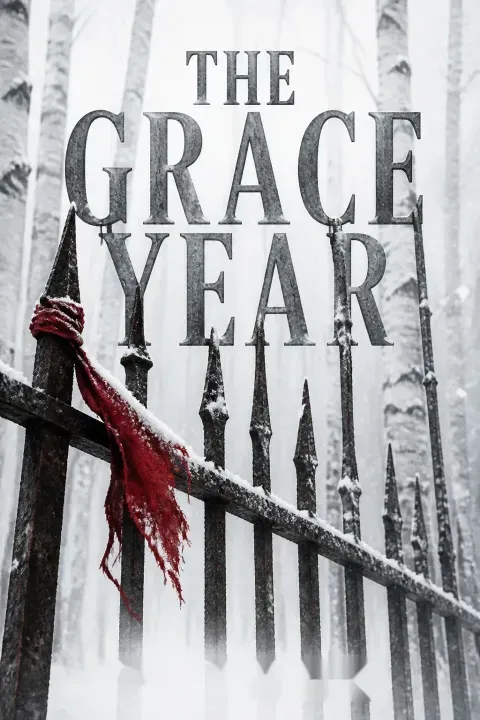


Plot Summary
Prologue
Tierney James1 follows a girl through the woods, a path she has seen countless times in sleep. The girl has dark hair shorn close to her scalp, a small strawberry mark under her right eye, and carries herself with a fierceness that belies her delicate features.
They reach a clearing where women from every walk of life have gathered, wives, laborers, outskirt women, all wearing a tiny red flower pinned above their hearts. The girl speaks of ending the grace year, of blood that has paved the path.
The women answer with a primal roar. Tierney1 feels a protective, pure love for this girl she somehow knows but cannot name. When she wakes, her sisters are glaring down at her. Dreaming is forbidden. If anyone learned what her dreams contained, it would mean the gallows.
The opening dream establishes the novel's central mystery and circular structure. The girl with the strawberry mark, whom Tierney instinctively loves, will be revealed as her unborn daughter Grace, meaning Tierney has been receiving guidance from a future that does not yet exist. The red flower appears here as a symbol of cross-class female solidarity, marking women who have organized in secret. The dream positions Tierney as both outsider and prophet, someone whose forbidden interior life contains the blueprint for resistance. That she must hide this vision under threat of death establishes the stakes of the world: even a woman's unconscious mind is not her own.
The Veil She Refused
On Veiling Day, Tierney James1 is laced into her sister's hand-me-down dress and marked with a red ribbon, the symbol of her approaching grace year. She has spent years making herself undesirable, openly ridiculing every eligible boy, determined to avoid marriage and work in the fields instead.
At the church, fathers file in to place veils on chosen daughters. When Tierney's own father10 enters holding a veil as if carrying a stillborn calf, she feels physically gutted.
She assumes the worst: Tommy Pearson, who tortures birds of prey, or Geezer Fallow, whose wife was hanged just hours earlier. As the gauze descends over her eyes, Tierney1 understands that every choice she thought she controlled was an illusion. Despite a lifetime of resistance, a boy's whisper has made her property.
Tierney's veiling crystallizes the novel's core horror: female autonomy is structurally impossible in Garner County. Her strategy of self-sabotage, making herself an unappealing bride, fails because the system does not require her consent. The veil is a literal blindfold, obscuring her vision while marking her as claimed. Her father's inability to meet her eyes suggests shame, but shame is not refusal. The moment forces a brutal question the novel will spend its entire length answering: can individual defiance survive when every social structure, every family bond, every ritual of community is engineered to crush it?
Michael Lifts the Gauze
At dawn, the boys march through the square to lift the veils of their chosen brides. Tierney1 braces for Tommy Pearson's ruddy face or the geriatric Mr. Fallow's thin lips. When the boots stop before her and the netting rises, she finds Michael Welk,2 her closest friend since childhood.
He tells her he could not let her be assigned to the field house, that he has loved her all along. Tierney1 feels not relief but betrayal. Michael2 knew she never wanted to be a wife. Kiersten,3 who expected Michael's2 veil, hisses past Tierney1 calling her a slut, traitor, and whore.
In a single stroke, Michael2 has transformed Tierney1 from an invisible tomboy into a marked target among the thirty-three girls about to depart for the grace year. His love, however sincere, has painted a target on her back.
Michael's 'rescue' illustrates how patriarchal protection operates as a softer form of violence. His love is genuine but structurally indistinguishable from ownership. He cannot conceive of Tierney's desire for autonomy as legitimate, so he overrides it, believing he knows what is best for her. This dynamic echoes real-world patterns where men's benevolent intentions toward women reproduce the very systems they claim to oppose. Tierney's fury is not ingratitude but clear-eyed recognition that his veil is a cage, not a gift. Their friendship, the one relationship she believed was equal, turns out to have been governed by the same asymmetries as every other bond in the county.
First Blood on the Path
The thirty-three girls march two days toward the encampment under armed guard. On the first night, Betsy Dillon,16 a large girl mocked by Kiersten3 for her size, runs into the woods to cry in private. The poachers' caws pierce the darkness, followed by bloodcurdling screams that continue for hours.
The guards do nothing. The next day, Laura Clayton,15 a quiet girl who has been secretly collecting stones in her cloak, silently tips herself over the side of a canoe and sinks beneath the lake. By the time they reach the island, two are already dead.
A towering wood gate greets them, nailed with hundreds of red ribbons from girls who never returned. Inside the encampment, they find the previous year's survivors burned all supplies and left a punishment tree adorned with severed fingers, ears, and braids.
These journey deaths establish the novel's unflinching stakes. Betsy dies for seeking a private moment to cry, punished for having emotions she could not safely express. Laura's suicide by stones, carefully gathered over days, represents a premeditated rejection of the system so absolute that death is preferable to what awaits. The previous girls' destruction of the camp demonstrates the cruelest mechanism of oppression: traumatized people perpetuating trauma, ensuring the next cohort suffers equally. The punishment tree, festooned with female body parts, literalizes what the county does to women: dismembers them, displays the pieces, and calls it God's will.
Kiersten Crowns Herself Queen
Kiersten3 quickly establishes dominance over the veiled girls, declaring that only those who have embraced their magic may remove their braids. She builds a calendar of thirteen wooden stakes, one for each full moon, positioned near the punishment tree.
Meanwhile, Tierney1 organizes the unveiled girls to chop firewood, build rain barrels, and construct a cooking shelter. The two factions sleep on opposite sides of the lodging house. When Kiersten3 claims the well water is traditional, Tierney1 secretly begins diverting fresh spring water.
At night, on her side of the room, Tierney1 confesses to Gertrude Fenton6 and a few others about her recurring dream: a girl with a shaved head and a strawberry mark leading women in a gathering. The confession bonds them but also creates vulnerability should anyone choose betrayal.
The camp split mirrors larger social dynamics: Kiersten replicates patriarchal structures by creating hierarchy among the oppressed, rewarding conformity with proximity to power. She becomes the enforcer the men do not need to send, internalizing and reproducing their logic. Tierney's approach, building systems of survival rather than competing for status, represents an alternative model of resistance. The dream-sharing scene establishes female intimacy as a counterforce to the divisiveness Kiersten sows. Both strategies, magical thinking and practical solidarity, will be tested to their limits as the year grinds on, and the novel refuses to romanticize either approach.
Poison in the Well
Strange symptoms ripple through the camp. Girls experience dizziness, double vision, phantom crawling sensations on their skin. Their pupils dilate until irises nearly vanish. All of them bleed simultaneously, synchronized like a wolf pack. Kiersten3 interprets these as magic rising.
She orchestrates rituals: Ravenna strains to hold an invisible ball, claiming she is lowering the sun; Meg14 holds her hand in fire until her skin bubbles, laughing through the pain. When Tierney1 suggests it might be illness, Kiersten3 calls her a heretic.
Gertrude6 privately reveals her own secret: the lithograph that got her publicly whipped for depravity was Kiersten's,3 stolen from her father's study. Gertrude6 took the blame hoping Kiersten3 would protect her. Instead, Kiersten3 branded her with the name that destroyed her future: Dirty Gertie.
The physical symptoms the girls experience are real, but their meaning is socially constructed. The hemlock silt poisoning operates as a metaphor for how ideology functions as a material force. The girls are literally ingesting a hallucinogen, but the visions it produces are shaped by the patriarchal narratives they have internalized. Kiersten's power depends on interpreting bodily distress as spiritual awakening, turning sickness into currency. Meg holding her hand in flames without flinching is not magical immunity but traumatic dissociation, a psychological defense mechanism reframed as transcendence. The system works because suffering is made to feel meaningful rather than arbitrary.
Howling Under the Full Moon
On the first full moon, Kiersten3 stages a mass ritual. She summons Dena Hurson to the fire, orders her to strip, and forces her onto all fours to connect with animal magic. Kiersten3 whips her with a red ribbon, demanding she howl into the dark.
Dena complies, returning glassy-eyed and claiming the magic is real. Then Kiersten3 turns to Helen Barrow,11 a gentle girl who keeps a dove as a pet, and convinces her she can become invisible. Helen,11 desperate to belong, agrees to prove it by leaving the encampment.
Kiersten3 places a borrowed veil on Helen's11 head and opens the gate. Tierney,1 unable to watch another girl die, runs out after her. A poacher charges. Tierney1 shoves Helen11 back through the gate and faces the blade herself. The poacher hesitates, whispers for her to kick him, and lets her escape.
This sequence fuses religious ecstasy with sexual humiliation and physical violence, exposing the sadistic core of Kiersten's rule. Dena on all fours, stripped and whipped, performs degradation reframed as empowerment. Helen's belief in her own invisibility literalizes the experience of girls who feel unseen except when they are targets. Tierney's rescue of Helen marks the first time she acts not from self-preservation but from moral refusal to be complicit. Her escape from the poacher introduces a mystery that will reshape everything: why would a hunter, conditioned to kill without hesitation, deliberately let prey go free?
Cast Out with the Axe
Tierney's1 rescue of Helen11 enrages Kiersten.3 She accuses Tierney1 of heresy. When Gertrude6 sneaks Tierney1 a potato, Kiersten3 discovers it and prepares to cut out Tierney's1 tongue with rusted calipers.
Gertrude6 confesses to the gift, and Kiersten's3 retaliation is swift: she seizes Gertrude's6 braid and hacks it off at the scalp with an axe. The bloody patch of skin gleams in the firelight. Then Kiersten3 turns on Tierney.1 The girls pelt her with stones, driving her into the dark woods.
Kiersten3 follows, swinging the axe again, and the blade sinks deep between Tierney's1 shoulder and chest. Bleeding heavily, Tierney1 fights through the forest until she reaches the fence. A blade shoots through a gap and nicks her chin. She collapses, unconscious, as winter closes in around her.
This is the novel's point of no return. Kiersten scalping Gertrude is a grotesque parody of the veiling and unveiling rituals: instead of claiming a bride, she unmakes a girl by severing the braid that marks her status. The axing literalizes the violence that has been psychological all along. Tierney's banishment into the winter woods transforms her from insider to exile, a status that will prove paradoxically liberating. The wound she carries is both a near-mortal injury and an initiation: her old life in the community of girls ends here, and whatever survives in the wilderness will be forged into something entirely new.
Bones on the High Ridge
Tierney1 survives alone for weeks, drinking from a hidden spring and eating river mussels. On the highest ridge, she discovers a human skeleton curled into a tight ball, a frayed red ribbon garroted around its neck vertebrae. The body is unaccounted for, meaning the dead girl's sisters back home were punished for her disappearance.
Tierney1 also finds seeds sewn into the layers of her traveling cloak by her sister June,9 who lined it four times, once for each season. She plants a desperate garden.
A devastating storm destroys it and drives her toward the camp, where she witnesses Kiersten3 throwing Tamara's13 still-twitching, lightning-struck body outside the gate for the poachers. Bleeding, hallucinating, and freezing, Tierney1 walks onto the frozen lake. A poacher follows. She heaves her axe into the ice instead of his skull, plunging into the frigid water.
Tierney's choice to break the ice rather than attack her pursuer is the novel's most radical act. She rejects the predator-prey binary entirely, choosing self-destruction over violence. But the ice also functions as a threshold: the encampment and the poacher's territory, the life she knew and whatever comes next. The skeleton on the ridge, a murdered girl whose family was punished because her body was never found, represents the fate Tierney is trying to avoid for her own sisters. June's seeds, hidden in the cloak all along, reveal that women have been passing survival knowledge in secret, a covert lineage of care that operates beneath the county's surveillance.
The Poacher's Mercy
Tierney1 awakens naked in a treehouse blind, wounded, feverish, but alive. The poacher, a young man named Ryker,4 has cauterized her axe wound, sewn her flesh, and nursed her through weeks of infection.
He reveals he made a pact with Tierney's father:10 in exchange for the doctor saving his friend Anders8 from smallpox, Ryker4 promised to spare Tierney1 if given the chance. Over months of recovery, the boundary between captor and captive dissolves. He sings old songs. She learns he was raised by a mother who takes in banished county girls as daughters.
He shows her his kill kit, the glass bottles waiting to hold rendered flesh sold back to the county as aphrodisiacs. The same people who send girls to die are the ones who consume them. She confronts the sketchbook mapping her skin into one hundred saleable parts. Yet tenderness grows between them.
The romance between Tierney and Ryker is the novel's most ethically complex element. He is structurally a predator; she is structurally prey. Yet the book insists on their shared humanity, their mutual victimization by a system that pits the desperate against each other. His map of her skin is horrific in its clinical detachment, but it is also the document of a choice not made. He possesses the knowledge and tools to kill her and does not. Their love is not redemption but recognition, two people seeing each other clearly across an abyss of structural violence. It is also a love that can never survive the world that made them.
Ghosts and Spring Water
Ryker's4 friend Anders8 discovers Tierney1 in the treehouse. Furious that Ryker4 has harbored prey, he threatens to kill them both if she does not leave. To save Ryker's4 life, Tierney1 crosses back through the fence gap. She finds the encampment in ruin: more girls dead, Gertrude6 near death from an infected scalp wound, Kiersten's3 power absolute.
Tierney1 realizes the well water contains hemlock silt, the same algae used by crones for scrying. The magic is poison. She begins a campaign of calculated deception, claiming the ghosts of dead girls speak to her.
She reveals accurate details of how Tamara13 and Meg14 died, terrifying the others into obedience. She brings fresh spring water, weaning them slowly off the hallucinogen. Each ghost story buys time to rebuild their bodies and minds, but Kiersten3 watches with growing, dangerous suspicion.
Tierney's ghost stories are a strategic deployment of the very irrational beliefs she fights against. She weaponizes superstition to save lives, becoming a benevolent version of Kiersten. This moral complexity complicates any simple reading of truth versus lies. Sometimes the oppressed must use the master's tools, must speak the master's language of magic and ghosts, to dismantle the master's house from within. But the performance carries risks. Spending too long pretending to be a prophet can blur the line between performance and belief, between the liberator and the manipulator. Tierney walks this razor edge throughout her return to the camp.
The Guard's Red Ribbon
Strange events plague the camp: Tierney1 wakes to find her hair elaborately braided while she slept, the skeleton on the ridge shifts position each night, and a persistent scratching sound follows her everywhere. At first, she blames Kiersten.3
Then Helen Barrow11 is found strangled with a red ribbon, her body posed with a nasturtium, the flower of betrayal. Tierney1 digs a spike-filled pit on the ridge and waits through the night. At dawn, a shrouded figure falls in. It is not a poacher or a ghost but Hans,7 the guard who befriended Tierney1 when she was seven years old.
He confesses he murdered Olga Vetrone years ago when she rejected him. He kept her ribbon, rubbing it obsessively for a decade. He has been stalking Tierney,1 convinced she wanted him as Olga had. She leaves him to drown in his own blood.
Hans represents the most insidious form of patriarchal violence: the 'nice guy' whose kindness was always transactional, whose protection was always possession. His castration as a guard did not remove his desires but twisted them into lethal obsession. The ribbon he rubs, a fetish object soaked in murder, is the dark mirror of the red flower the usurper's women wear. Both are symbols carried by women, but one signifies solidarity and the other violent male ownership, the difference between a network of care and a trophy of conquest. Tierney leaving him to die without mercy is her final rejection of the role of the grateful female recipient of male attention.
No Magic, Only Poison
With Hans7 dead and Kiersten's3 authority eroding, Tierney1 reveals the full truth: there is no magic, only hemlock silt poisoning from the well. The hallucinations, the violent impulses, the dizziness, all of it was a biological contaminant, not spiritual power.
The girls are not purified women returning to the county; they are survivors of poison and psychological warfare. When Kiersten,3 desperate to prove her magic, strides outside the gate to confront a poacher and is nearly killed, the last illusions shatter. The girls unite for the first time.
They take axes to the punishment tree, toppling it, burning its grotesque ornaments of fingers and braids. They clean the entire camp, leave fresh supplies, and scorch a warning into the well cover: POISON. For the first time, one cohort refuses to pass the trauma to the next.
The destruction of the punishment tree is the novel's most cathartic moment. This tree concentrated forty-seven years of accumulated female suffering, each severed finger and braid a testament to violence redirected inward. By hacking it down together, the girls perform a symbolic exorcism, breaking the intergenerational chain of trauma. That they leave the camp functional rather than destroyed, with a warning about the well, represents a radical ethic of care extending beyond their own survival to girls they will never meet. This is how cycles break: not through grand revolution from outside but through small, deliberate acts of solidarity from within the system itself.
Blood on the Shore
Tierney1 decides she cannot return to the county. She crosses back through the fence to find Ryker.4 They plan to escape east by canoe, beyond the known world, to a rumored settlement where men and women live as equals. At dawn, as they approach the shore carrying supplies, poachers ambush them.
Ryker4 fights ferociously, killing two men with his blades, but a third slashes his throat. He tells Tierney1 to run. She flees back toward the encampment gate, the surviving poacher pursuing her. She screams for the girls to open the gate.
After tense, terrible seconds, the gate groans open and pulls her through. Tierney1 collapses inside the encampment, covered in Ryker's4 blood, her escape dream destroyed, her lover dead, and carrying a secret that will either save her or condemn her: she is pregnant with his child.
Ryker's death is structurally necessary to the novel's argument but emotionally devastating. The love that offered Tierney an alternative future is destroyed by the very system it tried to escape. The poachers who kill Ryker are his own people, enforcing the boundaries he transgressed by loving prey, demonstrating how systems punish those who break ranks. His death and Tierney's survival leave her with a living legacy, a pregnancy that will force the county's contradictions into the open. The gate opening at the last moment, the girls' choice to save her despite everything that happened between them, affirms the solidarity the novel has been slow-building as a counterforce to cruelty.
The Lie That Saves Her
The surviving fifteen girls return to Garner County. Tierney's1 pregnancy is visible beneath her threadbare chemise. In the square, Michael's father18 calls for her execution as a whore. Then Michael2 steps forward and claims the child is his, conceived through shared dreams, a product of Tierney's1 magic.
One by one, the other grace year girls, including Kiersten,3 step forward to support the lie. The men, unable to deny the magic they themselves have insisted is real, are forced to accept the story. Later, Michael2 crushes a gardenia in his fist and leaves Tierney1 in their new home with a key and an axe.
Days later, following her mother5 through the woods, Tierney1 discovers the truth: her mother5 is the usurper the county has been hunting, the woman organizing secret gatherings of wives, laborers, and outskirt women, all marked by tiny red flowers pinned over their hearts.
The collective lie the girls tell is the novel's most subversive political act. They weaponize the patriarchy's own mythology of feminine magic against it, forcing the men to swallow an absurdity or admit their foundational beliefs are fraudulent. The men's choice reveals the system's fragility: it runs on performance and consent, not truth. Tierney's discovery that her mother is the usurper recontextualizes everything she thought she knew. The cold, critical mother was always protecting her, preparing her. The red flower present from the opening dream finds its source in an active, organized resistance of women hiding in plain sight, proving that rebellion does not require a single heroine but a network of ordinary women taking extraordinary risks.
The Girl from the Dream
On a snowy night, Tierney1 goes into labor. The baby is breech. Her mother5 and her sisters surround her, and for the first time, they pray for a daughter. When the child emerges, Tierney1 wipes the blood from the newborn's face and freezes: beneath the right eye is a small strawberry mark.
It is the face of the girl from her dreams, the rebel leader she has been chasing her entire life. She names her Grace Ryker4 Welk. Holding her daughter, Tierney1 experiences a final vision: she walks through sunlit woods and sees Ryker4 approaching, his dark shrouds billowing.
She stops, waiting, not knowing if he will embrace her or pass through her like a ghost. The vision ends suspended in beautiful uncertainty. Tierney1 is no longer afraid. The red flower, the dreams, the rebellion, all of it was preparing her for this: a daughter who will carry the fight forward.
The circular revelation that Tierney's prophetic dreams were of her own unborn daughter transforms the novel from a dystopian survival story into a meditation on generational change. Grace is simultaneously the symbol of rebellion Tierney sought and an actual human being who will carry that rebellion into the future. The unresolved vision of Ryker offers not closure but openness, a refusal of tidy endings that honors the real ambiguity of grief. Tierney has lost her lover but gained her daughter, lost her dream of escape but found her purpose. The grace year, the year of banishment and breaking, gives birth to Grace herself. The novel's final gesture is not triumph but continuity: the knowledge that women have always resisted, that the usurper is everywhere, and that the real magic is the refusal to be broken.
Analysis
The Grace Year operates as a meticulous dissection of how patriarchal control perpetuates itself not primarily through male violence but through the internalized compliance of women. The novel's most chilling insight is that the county does not need to send armed guards into the encampment. The girls police each other. Kiersten,3 the charismatic enforcer of magical dogma, is not a villain imported from outside the system but its purest product, a girl who has so thoroughly absorbed the logic of female dangerousness that she becomes its most zealous agent. This dynamic reflects real sociological patterns in which members of oppressed groups enforce the very norms that harm them, seeking what fragile status and safety the system offers to its compliant participants.
The hemlock silt functions as the novel's master metaphor. The girls' symptoms are real: they hallucinate, they grow paranoid, their pupils dilate. But the meaning assigned to those symptoms, that they are magic requiring violent purging, is a social construction. This is how ideology works. It takes material conditions and weaves them into narratives that serve power. The county needs the grace year not because girls possess dangerous magic but because breaking them is the only way to ensure they will accept subordinate roles as wives and laborers upon their return.
Tierney's1 arc from solitary skeptic to collective leader traces the difficult path from individual resistance to structural change. She begins believing she can outsmart the system through personal cleverness, making herself an undesirable bride, hiding her dreams, keeping her distance from other girls. The novel systematically dismantles this illusion. Individual defiance, no matter how cunning, cannot survive a system designed to crush it. Only collective action, the difficult and often reluctant solidarity that forms among the girls as they learn the truth about the well, offers any genuine hope.
The circular revelation that Tierney's1 lifelong prophetic dreams were of her own unborn daughter Grace transforms the novel's temporal structure into a statement about generational change. The future does not arrive through revolution from outside but through the slow, dangerous work of mothers passing resistance to daughters. Tierney's1 mother, revealed as the usurper,5 has been organizing women in secret for years. The red flower, present from the opening dream, has always been a marker of an active, functioning network. Change is not coming. It is already here, hidden in plain sight, waiting for enough women to open their eyes.
Review Summary
The Grace Year has received mostly positive reviews, with many praising its gripping plot and feminist themes. Readers compare it to The Handmaid's Tale, Lord of the Flies, and The Hunger Games. The dystopian setting and exploration of female relationships resonated with many. Some found the pacing uneven and character development lacking, while others felt the romance subplot was unnecessary. Despite mixed opinions on certain aspects, most readers found it a compelling and thought-provoking read that addresses important issues of misogyny and female empowerment.
People Also Read









Characters
Tierney James
Defiant survivor and reluctant leaderThe middle daughter of five, raised by a doctor father10 who secretly taught her wilderness skills, knife handling, and fishing. Tierney is fiercely observant, stubborn, and unwilling to perform the demure femininity expected of Garner County girls. She harbors forbidden dreams of a mysterious girl leading a women's rebellion, dreams she knows could get her hanged. Her grace year forces her to confront what she has always suspected: the magic the county fears is a lie designed to control women. Resourceful and pragmatic, she builds rather than destroys, organizes rather than dominates. Her journey from solitary skeptic to collective leader reveals a capacity for both deep love and righteous fury. She carries her father's10 skills, her mother's5 secret rebellion, and her own unbreakable will into a world designed to destroy all three.
Michael Welk
Childhood friend turned conflicted husbandTierney's1 closest companion since childhood and the son of Garner County's head councilman18. He spent years roaming the woods with Tierney1, investigating clues about the grace year. Where Tierney1 is sharp and defiant, Michael is earnest and bound by duty. He genuinely loves Tierney1 but cannot imagine a life outside the structures that have shaped him. His decision to give her a veil, overriding her explicit wishes, embodies the tragedy of patriarchal love: the desire to protect becomes indistinguishable from the need to possess. Heir to the apothecary that sells the rendered remains of grace year girls, he is caught between the system he was born to lead and the woman he loves who despises everything it stands for.
Kiersten
Charismatic enforcer of magical dogmaBeautiful, wealthy, and accustomed to admiration, Kiersten wields her social power with calculated cruelty. As a child, she drowned a butterfly while playing with its wings. In the encampment, she rapidly establishes herself as the arbiter of magic, deciding which girls have embraced their power and which are heretics. Her authority depends on the belief that suffering is sacred, that the grace year must break them to purify them. She is not simply a villain but a product of a system that has taught her that female power is dangerous and must be violently expelled, even from within herself. Her manipulation of the girls mirrors the county's manipulation of all women.
Ryker
The poacher who chose mercyA young poacher stationed outside the grace year encampment, raised in the outskirts by a mother who takes in banished county girls as daughters. He wears the charcoal shroud of his trade but breaks every rule of his caste by saving Tierney's1 life, honoring a secret pact he made with her father10. Skilled with knives, herbal medicine, and bone carving, he moves with the quiet precision of someone who learned to survive by not being seen. He dreams of a life beyond the island, in a rumored settlement where men and women live as equals. His tenderness toward Tierney1 exists in impossible tension with his role as a hunter of her kind.
Tierney's Mother
Secret usurper hiding in plain sightA stern, emotionally distant woman who polices her daughters' behavior with exacting standards. She carries a missing fingertip, a relic of her own grace year, hidden beneath a silver thimble. Her relationship with Tierney1 is fraught with unspoken resentment and unexpected moments of tenderness. She warns Tierney1 to trust no one, not even herself. Beneath her cold exterior, she leads a double life that would mean the gallows if discovered, organizing women across the county's rigid class lines. Her harshness toward Tierney1 is revealed as a form of protection, hardening her daughter for the ordeal she knows is coming.
Gertrude Fenton
Loyal outcast marked by scandalKiersten's3 former closest friend, publicly whipped for a depravity charge after taking the blame for a forbidden lithograph that belonged to Kiersten3. The whipping scarred her knuckles to the bone and earned her the nickname 'Dirty Gertie.' Quiet, watchful, and deeply loyal, she becomes Tierney's1 most trusted ally in the encampment. Her survival depends on the ability to endure humiliation without breaking. She reveals herself to be far braver and more perceptive than anyone, including Tierney1, initially believed.
Hans
A guard with a deadly obsessionA guard who befriended Tierney1 when she was a child of seven. He chose castration and guard service to stay near a grace year girl he loved, Olga Vetrone, who never returned from the encampment. He practices braiding ribbons and rubs his chest obsessively, a nervous tic born of unprocessed grief and obsession. His kindness toward Tierney1 has always carried an intensity she did not fully recognize. Beneath his protective exterior lurks a possessive violence that will eventually surface with devastating consequences.
Anders
Ryker's scarred, vengeful friendA poacher and Ryker's4 closest companion, the sole survivor of a smallpox outbreak that killed his entire family including his younger brother William. He believes the disease was a curse inflicted by a grace year girl who bit him. His face is covered in scars. He views all grace year girls as dangerous prey whose extermination is righteous. His loyalty to Ryker4 is fierce and absolute, making Tierney1 a direct threat to the only familial bond he has left.
June
Tierney's gentle, subversive oldest sisterTierney's1 oldest sister, who returned from her own grace year with her kindness miraculously intact. She sewed hundreds of seeds into the lining of Tierney's1 traveling cloak, four layers for four seasons, a gift that will prove lifesaving. Married but childless, she endures the quiet cruelty of a society that measures women by their sons. Her small acts of defiance, like continuing to garden despite it being forbidden for wives, mark her as part of the hidden network of resistance her mother5 leads.
Tierney's Father
The doctor who quietly defiesThe county physician who secretly treats the women of the outskirts, a crime punishable by exile. He taught Tierney1 survival skills, knife handling, and medicine, defying every norm about what daughters should know. He made a secret deal with the poacher Ryker4, trading lifesaving medical care for Ryker's4 friend Anders8 in exchange for a promise to spare Tierney1. He appears weak and compromised but operates his own quiet resistance alongside his wife, the usurper5. His favorite phrase, about the small choices no one sees making a person who they are, becomes Tierney's1 guiding principle.
Helen Barrow
Gentle girl broken by the campA soft-hearted grace year girl who keeps an injured ringnecked dove named Dovey as a pet. She is easily manipulated, desperate for belonging, and becomes one of Kiersten's3 most pitiable victims when convinced she has the power of invisibility. Her mother scarred her feet for dreaming as a child.
Jenna
Kiersten's chief lieutenantKiersten's3 most loyal follower among the veiled girls. She executes Kiersten's3 orders without question, enforcing hierarchy and punishing dissent. Her eventual turn toward the truth demonstrates that even the most devoted enforcers of oppressive systems can awaken.
Tamara
Lightning-struck sacrificeOne of Kiersten's3 inner circle who claims the ability to hear the wind speaking to her. She is struck by lightning during a violent storm and, while still alive and twitching, thrown outside the gate by Kiersten3 to be butchered by poachers.
Meg Fisher
Fire-handler who chased too farA fierce, wolfish girl who claims imperviousness to fire after holding her hand in flames without flinching. She chases Tierney1 through the fence gap and is killed by a poacher's throwing knife to the neck.
Laura Clayton
The girl who chose the depthsA quiet, spindly girl who secretly collected stones in the hems of her skirts during the journey to the encampment. She used the weight to sink herself to the bottom of the lake mid-crossing, a premeditated suicide.
Betsy Dillon
The first to fallA large, gentle girl mocked for her size who only wanted to fly far away like a bird. On the first night of the journey, she ran into the woods to cry in private and was immediately hunted and poached.
Mrs. Fallow
Hanged wife with a secret flowerA wife executed on Veiling Day for alleged heresy after supposedly shouting obscenities in her sleep. As she stepped from the gallows, Tierney1 glimpsed a tiny red flower in her hand, the first visible clue of a hidden network of women.
Mr. Welk
Michael's father, the apothecary traderThe head of the council who runs the apothecary and secretly sells the rendered body parts of poached grace year girls on the black market as aphrodisiacs and youth serums. He caught Tierney1 witnessing this trade when she was younger and had her whipped. He despises her as a threat to his power, his business, and his son's2 political future.
Plot Devices
The Red Flower
Symbol of women's secret rebellionA tiny bloom with five scarlet petals, perfectly formed, that appears throughout the narrative. Its meaning is unknown to the men of Garner County, who have dismissed the language of flowers as feminine frivolity. In fact, it marks members of the usurper's network, women organizing across class lines, wives, laborers, and outskirt women, to resist patriarchal rule. The flower first appears in Tierney's1 prophetic dreams, then in a hanged woman's hand, threaded into an outskirt woman's hair, growing on the encampment path, and finally pinned over her mother's5 heart. It is the visual signature of a hidden resistance that has been operating for years, proving that women have always found ways to communicate, organize, and defy the systems that would break them.
Hemlock Silt in the Well
Poison mistaken for feminine magicA bright green algae growing in the encampment's only water source that causes hallucinations, dizziness, paranoia, violent impulses, and dilated pupils when ingested. The county's mythology interprets these symptoms as feminine magic rising to the surface, dangerous power that must be purged through suffering. Tierney1 eventually identifies the algae as the same substance used by crones in the outskirts for scrying work. The hemlock silt is the material foundation for the entire ideology of the grace year: a biological contaminant mistaken for spiritual power. Its effects create a self-fulfilling prophecy. Girls believe they are magical, act on that belief, and the resulting violence confirms the county's warnings about their dangerous nature.
The Punishment Tree
Repository of intergenerational female traumaA massive living tree inside the encampment used for forty-seven years as a display for severed body parts of grace year girls, fingers, toes, ears, and braids, all offered as punishments by their peers. It mirrors the iron punishment tree in the county square where women are publicly hanged. The tree concentrates decades of accumulated violence that women have inflicted on each other, redirected anger that should be aimed at the patriarchal system. When Tierney1 and the other girls finally destroy it with axes and burn its grisly ornaments, they perform a symbolic exorcism, breaking the chain of intergenerational trauma for the first time in the encampment's history.
The Shrouds
Fabric that enables dehumanizationCharcoal-gray gauzy fabric that poachers wrap around their entire bodies and faces while hunting. The shrouds supposedly protect them from the girls' magical powers, but their real function is to enable atrocity by obscuring identity. When a man's face is hidden, he can kill without recognizing his prey as human. Conversely, when Tierney1 wears a shroud to escape back through the fence, she becomes invisible as prey, indistinguishable from a hunter. The shroud is both a tool of violence and a costume that can be appropriated. Its dual function exposes the artificiality of the predator-prey distinction on which the entire system depends.
The Veils and Ribbons
Color-coded system of female ownershipA visual language marking the stages of a woman's life as property transitions. White ribbons signify innocent girls before their grace year. Red ribbons mark grace year girls in their dangerous, magical prime. Black ribbons designate purified wives. Veils are placed on chosen brides by their fathers in a church ceremony and lifted by their future husbands the following morning in the public square. Together, these fabric markers constitute a system of perpetual surveillance and ownership, tracking women from daughter to bride to wife without any interval of autonomy. Tierney's1 removal of her own ribbon and her mother's5 act of releasing her black ribbon at the novel's end both represent symbolic reclamations of self-ownership.
FAQ
Synopsis & Basic Details
What is The Grace Year about?
- Dystopian coming-of-age: In a society where young women are banished for their sixteenth year to rid themselves of their "magic," the story follows Tierney James as she navigates the dangers of the grace year and the oppressive rules of her community.
- Survival and self-discovery: The novel explores themes of survival, self-discovery, and resistance as Tierney questions the supposed magic and seeks to uncover the truth about the grace year.
- Power and manipulation: The narrative delves into the power dynamics within the community and the ways in which fear and superstition are used to control and manipulate women.
Why should I read The Grace Year?
- Compelling dystopian world: The novel presents a unique and thought-provoking dystopian world with a focus on the oppression of women and the power of societal control.
- Strong female protagonist: Tierney is a resilient and independent character who challenges the status quo and inspires readers to question the systems that seek to confine them.
- Exploration of complex themes: The story delves into complex themes of power, manipulation, identity, and the struggle for freedom, making it a compelling and thought-provoking read.
What is the background of The Grace Year?
- Dystopian society: The story is set in a fictional, isolated society called Garner County, where women are believed to possess a dangerous magic that must be purged during their sixteenth year.
- Oppressive rules: The society is governed by strict rules and traditions that oppress women, limiting their freedom and autonomy.
- Fear and superstition: The community is driven by fear and superstition, which are used to control and manipulate the population, particularly women.
What are the most memorable quotes in The Grace Year?
- "Maybe there is a beast … maybe it's only us.": This quote, taken from Lord of the Flies, foreshadows the internal conflicts and violence that the girls inflict upon each other during their grace year, highlighting the theme of human nature's capacity for cruelty.
- "There's no freedom in comfort. They're padded shackles, to be sure, but shackles nonetheless.": This quote reveals Tierney's rebellious spirit and her rejection of societal expectations, emphasizing her desire for autonomy and self-determination.
- "Trust no one. Not even yourself.": This quote, spoken by Tierney's mother, underscores the pervasive atmosphere of paranoia and distrust within the community, highlighting the dangers of manipulation and the importance of self-reliance.
What writing style, narrative choices, and literary techniques does Kim Liggett use?
- First-person perspective: The story is told from Tierney's point of view, allowing readers to intimately experience her thoughts, feelings, and observations, creating a strong connection with the protagonist.
- Foreshadowing and symbolism: Liggett uses subtle foreshadowing and recurring symbols, such as the red ribbon and the five-petaled flower, to create a sense of unease and to hint at future events and deeper meanings.
- Atmospheric and evocative language: The author employs vivid and descriptive language to create a haunting and immersive atmosphere, drawing readers into the dystopian world and its oppressive environment.
Hidden Details & Subtle Connections
What are some minor details that add significant meaning?
- The missing fingertip: Tierney's mother's missing fingertip, a memento from her grace year, serves as a constant reminder of the dangers and sacrifices associated with the ritual, highlighting the lasting impact of the grace year on women.
- The blackbird on the punishment tree: The blackbird landing on the steel punishment tree symbolizes the ever-present threat of punishment and the oppressive nature of the society, foreshadowing the violence and injustice that the girls will face.
- The red flower: The recurring image of the five-petaled red flower, seen in Tierney's dreams, in Mrs. Fallow's hand, and in the outskirts, represents a hidden network of resistance and a shared experience among women, hinting at a deeper connection beyond the confines of the county.
What are some subtle foreshadowing and callbacks?
- The girl in Tierney's dreams: The recurring dream of a girl with a strawberry mark foreshadows Tierney's connection to the women of the outskirts and the possibility of a different path, hinting at a hidden history and a potential for rebellion.
- The mention of Anna Berglund: The story of Anna Berglund, a girl snatched by a fur trapper, foreshadows the dangers that the grace year girls face and the vulnerability of women in their society, highlighting the ever-present threat of violence and exploitation.
- The description of the returning girls: The descriptions of the returning grace year girls as emaciated, weary, and broken foreshadows the physical and emotional toll that the grace year takes on the girls, highlighting the brutal reality of the ritual.
What are some unexpected character connections?
- Hans and Olga Vetrone: The revelation that Hans joined the guard to be close to Olga Vetrone, a grace year girl who didn't return, reveals a hidden depth to his character and highlights the personal sacrifices made by those who are marginalized in the society.
- Tierney and her mother: The subtle hints of Tierney's mother's past and her connection to the women of the outskirts reveal a hidden layer of resistance and rebellion within the seemingly compliant women of the county, challenging the reader's initial perception of her.
- Tierney and the poacher: The unexpected connection between Tierney and the poacher, Ryker, challenges the reader's understanding of good and evil, highlighting the complexities of human nature and the possibility of finding empathy in unexpected places.
Who are the most significant supporting characters?
- Gertrude Fenton: Gertrude's experience with ostracization and her eventual alliance with Tierney highlight the importance of empathy and the power of female solidarity, challenging the reader's understanding of strength and vulnerability.
- Hans: Hans's loyalty and protectiveness towards Tierney, despite his position as a guard, reveal the complexities of power dynamics and the possibility of finding genuine connection in unexpected places.
- Tierney's mother: Tierney's mother's hidden acts of rebellion and her connection to the women of the outskirts challenge the reader's perception of the seemingly compliant women of the county, highlighting the subtle ways in which women resist oppression.
Psychological, Emotional, & Relational Analysis
What are some unspoken motivations of the characters?
- Michael's desire for control: Michael's decision to veil Tierney, despite knowing her feelings, reveals an underlying desire for control and a need to conform to societal expectations, highlighting the limitations placed on men by their own society.
- Kiersten's fear of powerlessness: Kiersten's manipulative behavior and her obsession with magic stem from a deep-seated fear of powerlessness and a desire to control her own fate, revealing the psychological impact of the oppressive system on women.
- Tierney's need for truth: Tierney's relentless pursuit of the truth about the grace year is driven by a deep-seated need for autonomy and a desire to break free from the lies and manipulations that control her society, highlighting her rebellious spirit and her commitment to self-discovery.
What psychological complexities do the characters exhibit?
- Tierney's internal conflict: Tierney struggles with her desire for independence and her fear of being alone, highlighting the psychological toll of living in an oppressive society and the challenges of forging one's own path.
- Kiersten's descent into madness: Kiersten's descent into madness reveals the psychological impact of power and manipulation, highlighting the dangers of unchecked ambition and the fragility of the human psyche.
- Michael's internal struggle: Michael's internal struggle between his love for Tierney and his duty to his family and society reveals the complexities of navigating societal expectations and personal desires, highlighting the psychological toll of living in a rigid and oppressive system.
What are the major emotional turning points?
- Tierney's veiling: Tierney's unexpected veiling by Michael is a major emotional turning point, as it forces her to confront the reality of her limited choices and the societal expectations placed upon her, leading to a sense of betrayal and a desire for autonomy.
- Tierney's banishment: Tierney's banishment from the encampment is a major emotional turning point, as it forces her to confront her fears and the harsh realities of survival, leading to a deeper understanding of herself and her place in the world.
- Tierney's encounter with the poacher: Tierney's encounter with the poacher is a major emotional turning point, as it forces her to confront her own mortality and the true nature of the threats she faces, leading to a sense of vulnerability and a desire for connection.
How do relationship dynamics evolve?
- Tierney and Michael: The relationship between Tierney and Michael evolves from a childhood friendship to a complex mix of love, betrayal, and societal pressure, highlighting the challenges of navigating personal desires within an oppressive system.
- Tierney and Kiersten: The relationship between Tierney and Kiersten evolves from a rivalry to a complex power struggle, highlighting the dangers of manipulation and the destructive nature of unchecked ambition.
- Tierney and Ryker: The relationship between Tierney and Ryker evolves from a chance encounter to a deep connection based on mutual respect and understanding, highlighting the possibility of finding empathy and love in unexpected places.
Interpretation & Debate
Which parts of the story remain ambiguous or open-ended?
- The true nature of magic: The novel leaves the true nature of the "magic" ambiguous, allowing readers to interpret it as either a real force or a manifestation of societal control and manipulation, prompting a debate about the power of belief and the nature of reality.
- The fate of the other girls: The fate of many of the grace year girls remains ambiguous, leaving readers to wonder about the long-term impact of the grace year on their lives and the possibility of change within their society, highlighting the uncertainty and fragility of hope.
- The future of Garner County: The ending of the novel leaves the future of Garner County open-ended, prompting a debate about the possibility of lasting change and the challenges of dismantling oppressive systems, highlighting the complexities of social transformation.
What are some debatable, controversial scenes or moments in The Grace Year?
- The violence and cruelty: The graphic depictions of violence and cruelty, particularly towards women, are a source of debate, with some readers finding them necessary to highlight the horrors of the dystopian world, while others find them gratuitous and disturbing.
- Tierney's relationship with Ryker: Tierney's relationship with Ryker, a poacher, is a source of debate, with some readers finding it a symbol of hope and connection, while others find it problematic due to the power imbalance and the nature of his profession.
- The ending: The ending of the novel, with Tierney's pregnancy and her decision to return to the county, is a source of debate, with some readers finding it empowering and hopeful, while others find it a compromise that undermines the themes of resistance and freedom.
The Grace Year Ending Explained: How It Ends & What It Means
- Tierney's return and defiance: Tierney's return to the county, pregnant with Ryker's child, is a defiant act that challenges the societal norms and expectations placed on women, highlighting her refusal to be defined by the oppressive system.
- The revelation of the usurper: The revelation that Tierney's mother is the usurper, working to undermine the system from within, highlights the hidden acts of resistance and the power of female solidarity, challenging the reader's understanding of power and control.
- A new beginning: The ending of the novel, with Tierney's decision to raise her daughter in a world where women are no longer bound by fear and superstition, offers a glimmer of hope for a future where change is possible, highlighting the importance of challenging oppressive systems and embracing the possibility of a new beginning.
Download PDF
Download EPUB
.epub digital book format is ideal for reading ebooks on phones, tablets, and e-readers.








































