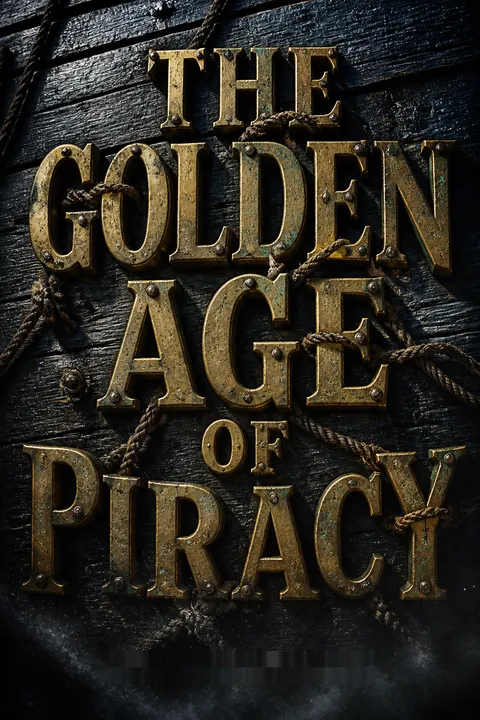

Key Takeaways
1. The iconic pirate image is largely a romanticized myth.
So what, then, does the pirate of the Golden Age, from 1655 to 1725, really look like?
Hollywood vs. Reality. The popular image of pirates with eye patches, peg legs, parrots, and saying "Arr!" is mostly a creation of fiction and film, not historical fact. Real pirates were seamen, often indistinguishable from other mariners of the era.
Appearance and Language. While some pirates might have had long hair tied back or worn hats like tricornes or knit caps, the skull and bones insignia on hats was absent. Eye patches were used for injury, not tactical vision. Peg legs were rare and impractical at sea. Parrots and monkeys were exotic pets, not standard pirate accessories. Their language was that of seamen, not the exaggerated "Arr!" or "Shiver me timbers!"
Origins of the Myth. The romanticized image evolved over centuries, influenced by literature and illustrations that imagined pirates rather than depicting them accurately. Figures like Robert Newton playing Long John Silver cemented the "Arr!" stereotype, while 19th-century illustrators popularized the eye patch and other visual tropes.
2. Pirate flags were symbols of terror and identity, not just decoration.
The flag meant they would give no quarter.
Red vs. Black. Pirates used flags strategically. The red flag, or "bloody flag," signaled "no quarter" – a warning that no mercy would be given if the target resisted. The black flag, often with a skull and crossbones, was typically flown first as a demand for surrender, implying that quarter might be given if the target yielded without a fight.
Evolution of Symbols. The skull and crossbones (death's head and marrow bones) was an ancient symbol of death, used on tombstones and in warfare ashore long before becoming associated with pirates. The first known instance of Golden Age pirates using it was on a red flag in 1688. The black flag with these symbols became synonymous with piracy later, around 1716, as pirates sought a unique identity distinct from national flags.
The Jolly Roger. The term "Jolly Roger" was not widely used and referred specifically to black flags featuring a full skeleton, not the skull and crossbones. Its origin is debated, possibly linked to "Old Roger" (the devil) or even a crude joke, but not the mythical "joli rouge." The association with the skull and crossbones came later, largely due to literature like Treasure Island.
3. Pirate violence was brutal and pragmatic, often relying on intimidation.
For the pirate’s victim, the image was terrifying.
Intimidation as a Weapon. Pirates preferred to capture ships without a fight, relying on their fearsome reputation and the sight of their flag and armed crew to induce surrender. This minimized risk to their lives and vessels.
Brutality and Torture. When intimidation failed or when pirates sought information or revenge, they employed brutal torture methods, many borrowed from common practices of the time or adapted from seafaring techniques. These included:
- Woolding (tightening a rope around the head)
- Strappado (hoisting by the wrists)
- Burning with slow match
- Staking out and torturing
- Mutilation and murder
Purpose of Cruelty. Such acts were not random madness but served pragmatic purposes: extracting information, punishing resistance, or terrorizing future victims into quick surrender. The violence against prisoners, often innocent, was a stark contrast to the courage sometimes shown in battle.
4. "Walking the plank" was not a common pirate practice.
However, in all of these journals, associated stories written at the time, and legal depositions of the pirates of the Golden Age, from 1655 to 1725, never is there even a hint that a plank “was run out over the gunwale, and lashed down,” as Rafael Sabatini described was done...
Lack of Historical Evidence. Despite its prevalence in popular culture, there is virtually no evidence that Golden Age pirates forced prisoners to walk the plank. This method of execution is absent from contemporary accounts, journals, and trial records.
Origins of the Myth. The idea likely stems from earlier practices of throwing prisoners overboard, sometimes tied up, but without a plank. The specific image of "walking the plank" appears to have gained traction in the early 19th century, notably mentioned in James Hackett's 1818 narrative and popularized by authors like Sir Walter Scott and Rafael Sabatini.
More Common Cruelties. Pirates had far more common and often more brutal ways of killing or disposing of prisoners, including:
- Shooting or stabbing them outright
- Tying them up and throwing them overboard
- Torturing them to death
- Abandoning them on desolate shores (marooning)
The dramatic visual of walking the plank, while compelling for storytelling, overshadows the grim reality of the diverse and often horrific violence pirates inflicted upon their captives.
5. Pirate ships varied greatly, and attacking galleons was rare.
Almost certainly, pirates never or almost never captured or sailed real galleons during the Golden Age, for the true galleon no longer existed as a type of ship construction after the 1640s...
Beyond the Galleon. The image of pirates sailing grand galleons or routinely attacking Spanish treasure galleons is largely inaccurate for the Golden Age (1655-1725). True galleons were becoming obsolete, and the heavily protected Spanish treasure fleets were rarely successfully targeted by pirates.
Common Pirate Vessels. Pirates used a variety of vessels, often smaller, faster, and more maneuverable than large warships or treasure ships. Common pirate craft included:
- Canoes and piraguas (for river raids)
- Barks and barcalongas
- Sloops (especially the swift Bermuda sloops)
- Captured merchant ships or small frigates (often refitted)
Targeting Prey. Pirates primarily preyed on less-defended merchant vessels. When they did target larger or armed ships, they often relied on speed, surprise, or specific tactics like boarding and fighting in "closed quarters" (below decks) rather than prolonged broadside cannon duels. The capture of a large, well-armed ship was a significant feat, not a routine occurrence.
6. Pirates were often skilled sea warriors, but not always the fiercest fighters.
At nearly even odds—and one account says the boarding pirates outnumbered their enemy—the defending naval seamen wiped out the pirate boarding party to a man, without a single loss of their own.
Image vs. Reality. While pirates cultivated a fearsome image and some, like Blackbeard, were known for their intimidating appearance, their actual fighting prowess in pitched battles could vary greatly. Their success often stemmed from intimidation and preying on weaker targets rather than consistently winning against determined, well-trained opponents.
Examples of Defeat. Accounts show instances where pirates, even notorious ones, were defeated by smaller or less numerous forces when those forces fought back fiercely.
- Blackbeard's final battle against Lieutenant Maynard's smaller force resulted in the pirate's death and the defeat of his boarding party.
- The buccaneers' costly attack on Arica showed their vulnerability against determined defenders, even when employing flanking tactics.
- Bartholomew Roberts's crew, despite their reputation, were decisively defeated by the HMS Swallow.
Naval Training. Opponents like English naval seamen were often better trained in close-quarters combat and ship-to-ship fighting than many pirates, who were often former merchant sailors or privateers less accustomed to sustained, brutal engagements against equals. While individual pirates could be formidable, their collective fighting skill was not always superior.
7. Pirates were democratic and egalitarian among themselves, but not necessarily rebels against all authority.
Pirates, after all, were rebels who stood against the tyranny of governments, or at least this is what we have been told in many tales and even by some scholars.
Internal Democracy. Golden Age pirate crews operated under democratic principles, electing their captains and officers (except in battle, where the captain had absolute authority) and voting on important decisions like where to cruise or whether to attack. Plunder was divided according to agreed-upon articles, with shares for officers and compensation for injuries.
Profit, Not Revolution. While some pirates expressed rebellious sentiments against cruel captains or unjust governments, their primary motivation was profit through plunder. They rarely sought to overthrow governments or aid political rebellions, unless it directly served their financial interests or provided protection.
The Myth of the Rebel Pirate. The idea of pirates as freedom-fighting rebels against tyranny is largely a romanticized notion, popularized by literature and film. While they lived outside the law, their "rebellion" was primarily criminal, focused on enriching themselves rather than enacting social or political change for others. The tale of Captain Blood, based on a real rebel's escape, significantly contributed to this myth.
8. The idea of pirates as anti-slavery is a modern myth; they actively participated in the slave trade.
For every slave whom Golden Age pirates freed and brought into their crews, they had surely sold at least ten, and perhaps even as many as a hundred.
Slavery as Plunder. Contrary to modern portrayals, Golden Age pirates were deeply involved in the slave trade. Captured humans, particularly Africans and Native Americans, were valuable commodities to be sold for profit.
Treatment of Slaves. While some pirates incorporated free men of color into their crews as equals, the majority of captured slaves were treated as property.
- They were sold to planters or slave traders.
- Slave ships were captured for their human cargo.
- Slaves were sometimes ransomed back to their owners.
- In extreme cases, slaves were killed or abandoned if they were inconvenient or unprofitable.
Limited Integration. While men of color, including former slaves, could achieve positions of rank within pirate crews, this did not signify a broader anti-slavery stance. The inclusion of men of color was often pragmatic, driven by the need for recruits, rather than ideological. The choice offered to captured men of color was often between joining the pirate crew (with the risk of hanging) or being sold into slavery.
9. Famous female pirates were rare, and the "she-captain" is mostly fiction.
However, the fact that we do not have much evidence for women pirates should not discourage us from looking for them.
Rarity of Female Pirates. While a few women did engage in piracy during the Golden Age, they were exceptionally rare. The vast majority of pirates were male, and seafaring was overwhelmingly a male profession.
Anne Bonny and Mary Read. The most famous female pirates, Anne Bonny and Mary Read, were notable exceptions. They sailed with Calico Jack Rackam, disguised as men at times, and fought alongside the crew. However, neither woman ever commanded a pirate vessel.
The Myth of the She-Captain. The image of a female pirate captain is largely a creation of fiction and film, appealing to modern sensibilities about female empowerment and adventure. While women like Grace O'Malley (16th century) and Cheng I Sao (19th century) were real female pirate leaders outside the Golden Age, there is no evidence of women commanding pirate ships in the Caribbean or Indian Ocean during the 1655-1725 period.
10. Pirate "utopias" were primarily pragmatic trading posts, not ideological havens.
Libertalia never existed. Nor did its two principal founders, Misson and Caraccioli. Pirate author Charles Johnson made up the entire story.
The Myth of Libertalia. The story of Libertalia, a supposed pirate utopia on Madagascar founded on principles of liberty and equality, is a fictional invention by pirate chronicler Charles Johnson. It was likely intended as an allegory or hoax, incorporating elements from travel literature and philosophical ideas of the time.
Real Pirate Settlements. While Libertalia was a myth, small pirate settlements did exist, particularly on Madagascar. These were primarily pragmatic bases for:
- Refitting and repairing ships
- Trading stolen goods for supplies and provisions
- Resting and recuperating
- Engaging in local politics and warfare for profit (e.g., slave trading)
Profit Motive. Figures like Adam Baldridge and John Plantain established themselves as "factors" or petty rulers, facilitating trade between pirates and merchants (often illicitly) and engaging in local conflicts for slaves and cattle. These settlements were driven by the pursuit of wealth and security, not by utopian ideals of freedom and equality for all.
11. Buried treasure is a pervasive myth; pirates sought sunken treasure or spent their loot quickly.
Of course, this is all arrant nonsense. With only a rare exception or two discussed next, pirates had no reason to hide—or necessarily bury—their plunder.
Spending, Not Burying. Pirates typically divided their plunder soon after capturing it and spent it quickly on revelry, gambling, and supplies. There was little reason to bury treasure, which risked loss, theft by crewmates, or being unable to retrieve it later.
Origin of the Myth. The myth of pirates burying treasure largely stems from the actions of Captain William Kidd. Facing arrest, Kidd hid some of his personal wealth on Gardiner's Island for safekeeping, not as a long-term burial of a crew's shared treasure. This incident, combined with rumors and later fictional accounts, fueled the legend.
Real Treasure Hunting. While pirates didn't bury treasure, they did seek it in other ways, most notably by salvaging sunken Spanish treasure ships. Wrecks like the Nuestra Señora de las Maravillas were targeted, and pirates sometimes kidnapped or hired divers to recover silver and gold from the seabed. This underwater salvage was the real "treasure hunting" of the Golden Age.
Review Summary
The Golden Age of Piracy is praised for its thorough research and debunking of pirate myths, offering insights into the realities of pirate life from 1655-1725. Readers appreciate the historical accuracy and depth of information. However, many criticize the writing style as disjointed, repetitive, and sometimes tedious. Some find the book's tone overly academic or bitter in its myth-busting approach. Despite these issues, most reviewers consider it a valuable resource for those interested in pirate history, albeit one that could benefit from tighter editing.
People Also Read








FAQ
What is The Golden Age of Piracy: The Truth Behind Pirate Myths by Benerson Little about?
- Comprehensive history and myth-busting: The book explores the realities of piracy during the Golden Age (1655–1725), separating fact from fiction about pirates’ lives, tactics, and culture.
- Focus on myths and truths: It addresses popular myths such as buried treasure, dueling for command, and egalitarian pirate societies, explaining their origins and historical accuracy.
- Detailed case studies: The author examines famous pirates, pirate havens, and the evolution of pirate society, using eyewitness accounts and historical documents for accuracy.
Why should I read The Golden Age of Piracy by Benerson Little?
- Myth-busting insights: The book challenges enduring pirate myths, providing evidence-based corrections to common misconceptions.
- Rich historical context: Readers gain a deep understanding of the social, political, and economic conditions that shaped piracy during the Golden Age.
- Engaging and credible narrative: Written by a maritime historian and former Navy SEAL, the book combines scholarly research with vivid storytelling, making it accessible and authoritative.
What are the key takeaways from The Golden Age of Piracy by Benerson Little?
- Pirate myths debunked: Many popular beliefs about pirates, such as walking the plank and buried treasure, are shown to be inventions of later literature and film.
- Pirate society was complex: Pirates practiced a form of democracy aboard ships, but their egalitarianism had limits, especially regarding race and gender.
- Pirate violence and tactics: Pirate violence was real but often exaggerated; intimidation was preferred over prolonged combat, and most attacks ended with surrender.
How does Benerson Little in The Golden Age of Piracy debunk the myth of pirates burying treasure?
- Rarely buried treasure: Pirates generally divided and spent plunder quickly; the idea of buried treasure is largely a literary invention.
- Origins of the myth: The myth stems from Captain Kidd’s alleged buried treasure, but this was an exception, not the rule.
- Sunken treasure was real: Pirates often sought treasure from shipwrecks, especially Spanish galleons, but elaborate treasure maps and secret islands are fictional.
What does The Golden Age of Piracy by Benerson Little reveal about pirate democracy and leadership?
- Elected leadership: Pirate captains and quartermasters were democratically elected by the crew, with captains having limited authority outside of battle.
- Checks and balances: Captains could be deposed by crew vote, preventing tyranny and maintaining order.
- Fair division of plunder: Pirate articles detailed the fair distribution of loot and compensation for injuries, fostering cooperation and loyalty.
How does Benerson Little describe the reality of pirate violence and combat in The Golden Age of Piracy?
- Violence as a tactic: Pirates used violence and intimidation to maximize profit and minimize risk, often preferring surrender over battle.
- Epic battles were rare: Most pirate captures occurred without prolonged fighting; grand naval battles are largely a Hollywood myth.
- Notable real battles: The book details fierce engagements, such as Blackbeard’s final fight, but emphasizes that these were exceptions.
What does The Golden Age of Piracy by Benerson Little say about the image of pirates in popular culture?
- Romanticized stereotypes: The familiar image of pirates with eye patches, peg legs, and parrots is a product of 19th- and 20th-century literature and film.
- Reality vs. myth: Real pirates were diverse in appearance and behavior, and many iconic traits are fictional or exaggerated.
- Purpose of the myth: These myths soften the brutal reality of piracy, turning violent criminals into folk heroes or caricatures.
What is the truth behind pirate flags and the Jolly Roger, according to The Golden Age of Piracy?
- Symbol of fear and death: The Jolly Roger, often a black flag with skull and crossbones, was used to intimidate and signal no quarter.
- Varied designs and origins: Pirate flags varied widely, with some using red for “no quarter” and others unique to captains or crews.
- Myths debunked: The “joli rouge” origin is false, and many famous flags are modern inventions; the real meaning was well understood by contemporaries.
How does Benerson Little address the role and reality of women pirates in The Golden Age of Piracy?
- Few documented women pirates: Only a handful, like Anne Bonny and Mary Read, are confirmed, and neither commanded a ship.
- Women disguised as men: Women who joined crews did so in male disguise, as women were generally prohibited aboard ships.
- Myth vs. reality: The “she-captain” trope is a literary creation; real women pirates were rare and usually lacked command roles.
What insights does The Golden Age of Piracy provide about race, slavery, and pirate society?
- Diverse but not egalitarian: Pirate crews sometimes included free blacks, mulattos, and Native Americans, but pirates also engaged in the slave trade.
- Myth of anti-slavery pirates: While some pirates freed slaves, most participated in slavery for profit, challenging the image of pirates as anti-slavery rebels.
- Spanish pirates more diverse: Spanish crews often had higher proportions of men of color, but racism and slavery remained integral to pirate practices.
What does Benerson Little reveal about pirate havens and utopias like Libertalia and Madagascar in The Golden Age of Piracy?
- Libertalia is a myth: The supposed pirate utopia in Madagascar was invented by Charles Johnson and has no historical basis.
- Real pirate settlements: Actual pirate bases were pragmatic centers of trade, piracy, and slavery, far from utopian ideals.
- Pirate “heaven” was harsh: Pirate havens offered rest and trade but were also sites of conflict, exploitation, and violence.
What are the best quotes from The Golden Age of Piracy by Benerson Little and what do they mean?
- “A pirate is an enemy of all mankind.” This phrase underscores the legal and social isolation of pirates, justifying their ruthless treatment by all nations.
- “A merry life and a short one.” Attributed to Bartholomew Roberts, this motto captures the pirate’s acceptance of a dangerous, adventurous life with an uncertain end.
- “The black Flag of defiance, death and destruction.” This phrase explains the symbolism of the black pirate flag as a sign of no surrender and deadly intent.
- “Deaths Head and Marrow Bones, is the only Flag in a Sable Field.” Illustrates the use of the skull and crossbones as a symbol of pirate identity and terror.
Download PDF
Download EPUB
.epub digital book format is ideal for reading ebooks on phones, tablets, and e-readers.








































