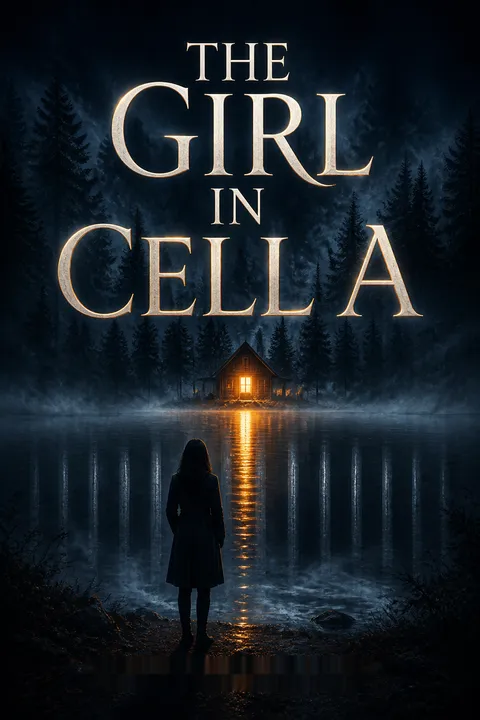

Plot Summary
Wolf's Head, Outlaw's Heart
The story opens with the myth of the wolf's head, a symbol of outlawry and pariah status, echoing through the Wyclerc family's history. Orianna Negi, once a child on the estate, is now infamous as The Girl in Cell A, convicted of killing her father, Gideon Wyclerc. Her memory of the crime is a void, her identity shaped by trauma and the town's hatred. The wolf's head, both literal and metaphorical, sets the tone: this is a story of outsiders, of those marked by violence and cast out by their own kin and community.
The Girl Returns Home
After eighteen years in prison, Orianna returns to Eden Falls, the small town that condemned her. The landscape is unchanged, but she is not. She is haunted by migraines, fragments of memory, and the knowledge that her mother died alone, shunned by the town. Her return is not for reconciliation but for reckoning: she is determined to prove her innocence, to confront the past and those who exiled her. The town's wounds are still raw, and Orianna's presence is a spark in dry tinder.
Shadows in the Woods
Orianna takes refuge in Elvira's old cottage, on the edge of the woods and the lake. The cottage is a sanctuary and a prison, filled with memories of her mother and the kindness of Elvira, now gone. The woods are alive with threat and memory—she senses she is being watched, and the past presses in. The arrival of Luke Wyclerc, her former lover and cousin, reopens old wounds. Their encounter is charged with regret, longing, and the impossibility of forgiveness.
Old Wounds, New Faces
Dr. Annie Ledet, a forensic psychotherapist, is tasked with evaluating Orianna for parole. Annie specializes in dissociative amnesia and is drawn to Orianna's case, both professionally and personally. Their sessions are tense, a battle of wills and trust. Annie probes Orianna's memories, her childhood, her relationship with the Wyclercs, and the day of the murder. Orianna resists, her trauma and anger surfacing in flashes. The therapy room becomes a crucible for truth, lies, and the possibility of healing.
Memory Wars Begin
Annie and Orianna's sessions delve into the nature of memory—how trauma can erase, distort, or invent the past. The town's narrative is clear: Orianna is guilty. But Orianna's own memories are fragmented, unreliable. Annie struggles to balance empathy with skepticism, aware that her own feelings may cloud her judgment. The case becomes a microcosm of the "memory wars" in psychology, with Orianna's fate hanging in the balance.
The Wyclerc Legacy
The Wyclerc family's history is one of ambition, violence, and buried scandals. From Nathaniel, the founder, to Amos, the patriarch, the family has ruled Eden Falls with iron and faith. The mines brought wealth and power, but also tragedy and corruption. Orianna's mother, Christine, was the housekeeper, her relationship with Gideon a secret that shaped Orianna's life. The family tree is tangled with resentment, rivalry, and unspoken pain, setting the stage for the events that destroyed them.
Pariahs and Princesses
Orianna and Grace Wyclerc, Gideon's legitimate daughter, grew up side by side but worlds apart. Grace was the town's princess, crowned at the Forest Festival, while Orianna was always the outsider. Their relationship is complicated—part friendship, part rivalry, shadowed by secrets and the town's prejudices. The festival, a symbol of the town's unity and hypocrisy, becomes the backdrop for the tragedy that follows.
The Town Turns Hostile
Orianna's return stirs up old animosities. She is harassed by townsfolk, threatened by the sheriff, and attacked by masked men. The town's collective memory is fossilized into hatred, and Orianna is the scapegoat for all its fears. Even those who once showed her kindness, like Gerty the librarian, warn her of the danger. The violence of the past is never far from the surface, and Orianna is forced to defend herself, both physically and psychologically.
Therapy and Truths
Annie pushes Orianna to confront the events of the day Gideon was killed. Through transcripts, word association, and memory exercises, they reconstruct the timeline: Orianna's discovery that Gideon is her father, her rage, her confrontation with him in the cabin. The forensic evidence is damning—her fingerprints, gunshot residue, the angle of the shot. Yet Orianna's memory is a blank, and Annie is left to wonder if trauma has hidden the truth or if Orianna is lying even to herself.
The Family's Dark Roots
As Orianna investigates, she uncovers the Wyclercs' darkest secrets: incest between Nathaniel's siblings, Gideon's sexual abuse of his cousin Hannah, and the possibility that he abused his own daughter, Grace. The family's violence is cyclical, each generation repeating the sins of the last. The revelation that Grace may have been in a secret, forbidden relationship—possibly with Samuel, the family's pastor—adds another layer of tragedy. The family's attempts to protect itself have only bred more suffering.
The Cabin's Secret
The investigation leads back to the hunting cabin, the site of Gideon's death. Orianna's fragmented memories, the scent of cologne, the presence of others—David and Susannah, Luke's parents—begin to coalesce. The truth emerges: Susannah, raped by Gideon, killed him in a moment of clarity and rage. David, desperate to protect his wife and family, knocked Orianna unconscious and staged the scene to frame her. Grace, witnessing the aftermath, was taken and hidden away, her fate a secret that destroyed the family.
The Festival's Last Day
The Forest Festival, meant to celebrate the town's unity, becomes the day of its greatest fracture. Grace is crowned princess and vanishes. Gideon is murdered. Orianna's life is shattered by the revelation of her parentage and the violence that follows. The town's rituals and myths are exposed as hollow, unable to contain the darkness at its heart.
Betrayal on the Stand
The trial is a spectacle, the town and nation transfixed by the scandal. Luke, under pressure from his family, testifies against Orianna, denying their relationship and her alibi. His betrayal is the final blow, confirming Orianna's status as pariah and sealing her fate. The courtroom becomes a theater of pain, with Orianna's mother, Christine, broken by the ordeal and the town's cruelty.
The Search for Grace
The mystery of Grace's disappearance haunts everyone. Private investigators, police, and conspiracy theorists all fail to find her. Theories abound: she ran away, was killed, or is being hidden by someone in the family. Orianna's own investigation, aided by Grace's journal and the testimony of others, points to a web of complicity and silence. The search for Grace becomes a search for meaning, for justice, and for the possibility of redemption.
The Wolves Close In
As Orianna gets closer to the truth, the threats intensify. She is attacked, hunted, and nearly killed. The town's hatred is matched by the family's desperation to keep its secrets. Amos, the dying patriarch, alternates between ally and adversary, his own guilt and regret surfacing as the end approaches. The wolves—real and metaphorical—are always at the door.
The Mine's Hidden Chamber
The climax comes in the abandoned mine, a labyrinth beneath the town. Orianna, pursued and wounded, discovers a hidden chamber where Grace has been kept alive, a prisoner of the family's shame. The mine is a metaphor for the buried trauma and secrets that have shaped everyone's lives. The confrontation with Susannah and David brings the truth into the open, but at a terrible cost—David's suicide, Susannah's arrest, and the final dissolution of the Wyclerc dynasty.
The Final Confession
In the aftermath, Orianna is left with answers but no peace. The town cannot forgive, the family is broken, and the truth is too terrible to bring closure. Annie's final report reveals the possibility that much of Orianna's narrative is a delusion, a coping mechanism for unbearable guilt and trauma. The line between reality and fantasy blurs, and Orianna's fate is left uncertain—trapped in her own mind, forever The Girl in Cell A.
Truth and Delusion
The story ends with ambiguity and sorrow. Orianna's quest for truth has brought only more pain, and the town's wounds remain unhealed. The legacy of violence, secrecy, and betrayal continues. The final image is of Orianna, alone by the lake, haunted by the ghost of Grace and the knowledge that some mysteries can never be solved, some wounds never closed. The wolf's head remains, a symbol of the outlaw, the pariah, and the survivor.
Analysis
A modern gothic of memory, trauma, and the search for belongingThe Girl in Cell A is a psychological thriller that interrogates the nature of truth, the reliability of memory, and the legacy of violence in families and communities. Vaseem Khan uses the conventions of crime fiction—the small-town setting, the dysfunctional dynasty, the missing girl—to explore deeper questions about identity, justice, and survival. The novel's structure, with its dual timelines and unreliable narration, mirrors the fragmentation of Orianna's mind and the impossibility of a single, authoritative account of the past. The therapy sessions serve as both a metaphor and a mechanism for the search for truth, highlighting the limits of both psychological and legal systems in the face of trauma. The novel's refusal to offer easy closure—its suggestion that Orianna's quest for justice may itself be a delusion—forces the reader to confront the ambiguity and pain at the heart of human experience. Ultimately, The Girl in Cell A is a story about the cost of survival, the burden of secrets, and the possibility that some wounds can never be healed, only endured.
Review Summary
The Girl In Cell A follows Orianna Negi, convicted at 17 for murdering Gideon Wyclerc while his daughter Grace disappeared. Claiming amnesia, Orianna maintains her innocence. Forensic psychologist Annie Ledet evaluates her for release. The story alternates between timelines, exploring secrets in the insular town of Eden Falls ruled by the Wyclerc dynasty. Reviews are mixed: many praise the clever twists and compelling mystery, comparing it to "The Girl with the Dragon Tattoo." However, critics cite excessive length (nearly 600 pages), too many characters, and pacing issues. The ending's twist polarizes readers—some find it brilliant, others disappointing.
People Also Read

Characters
Orianna Negi
Orianna is the novel's protagonist, a woman marked by trauma, injustice, and the burden of memory. The illegitimate daughter of Gideon Wyclerc and Christine, she grows up as an outsider on the Wyclerc estate, never fully accepted by the family or the town. Her relationship with Grace is fraught—part friendship, part rivalry, shadowed by class and race. Orianna's love for Luke is her one solace, but his betrayal at her trial cements her isolation. Her psychological profile is complex: she suffers from dissociative amnesia, possibly delusional psychosis, and a deep-seated rage born of abandonment and abuse. Her return to Eden Falls is both a quest for justice and a confrontation with her own capacity for violence. Orianna's journey is one of self-discovery, but also of self-destruction, as she is forced to face the possibility that her own mind is her greatest enemy.
Annie Ledet
Annie is a forensic psychotherapist specializing in trauma and memory disorders. Her sessions with Orianna are the novel's psychological core, a space where truth and delusion are interrogated. Annie is both compassionate and rigorous, aware of the dangers of countertransference and the ethical minefields of her profession. Her own life is marked by loss—a failed marriage, a distant son—and she is drawn to Orianna's case as much for personal reasons as professional ones. Annie's psychoanalytic approach is methodical, but she is not immune to doubt, and her empathy for Orianna sometimes clouds her judgment. She represents the possibility of healing, but also the limits of therapy in the face of overwhelming trauma.
Amos Wyclerc
Amos is the head of the Wyclerc family, a man shaped by power, regret, and the weight of history. He is both a villain and a victim, complicit in the family's crimes but also desperate for redemption. His relationship with Orianna is ambivalent—he is at once her enemy and her only remaining kin. As he faces death, Amos becomes more reflective, seeking to atone for his failures as a father and grandfather. His confession of past sins, including the cover-up of incest and violence, is both a reckoning and a final act of control. Amos embodies the novel's themes of legacy, guilt, and the impossibility of escaping one's past.
Luke Wyclerc
Luke is Orianna's cousin and first love, the boy with the "wolf's eyes." Their relationship is passionate but doomed, undone by family secrets and the pressures of loyalty. Luke's testimony against Orianna at her trial is the ultimate betrayal, motivated by fear, manipulation, and his own confusion. As an adult, he is torn between his duty to the family and his unresolved feelings for Orianna. Luke's psychological struggle is one of guilt and longing, and his inability to break free from the Wyclerc legacy mirrors Orianna's own entrapment.
Grace Wyclerc
Grace is Gideon's legitimate daughter, the town's princess, and Orianna's half-sister. Her disappearance is the novel's central mystery, a wound that never heals. Grace is both a real person and a projection of Orianna's desires and fears—a girl who seems to have everything but is deeply unhappy. Her secret relationship, possibly with Samuel, and her knowledge of the family's crimes make her a threat to the Wyclercs' façade. In some readings, Grace is also a manifestation of Orianna's dissociative identity, the "good daughter" Orianna could never be.
Susannah Wyclerc
Susannah is David's wife, Luke's mother, and ultimately Gideon's killer. Her rape by Gideon is the catalyst for the novel's central crime, and her decision to kill him is both an act of vengeance and a desperate attempt to protect her family. Susannah's complicity in framing Orianna and hiding Grace's fate is driven by fear, love, and the corrosive effects of secrecy. Her psychological profile is one of repression, denial, and the capacity for violence in the name of survival.
David Wyclerc
David is Amos's nephew, Luke's father, and Susannah's husband. He is a man of principle, but his loyalty to his wife leads him to participate in the cover-up of Gideon's murder and the disappearance of Grace. David's eventual suicide is the culmination of years of guilt and the collapse of the family's moral order. His relationship with Orianna is marked by kindness, but also by the limits of his courage.
Peter Wyclerc
Peter is Amos's eldest son, the heir to the Wyclerc fortune, and Gideon's rival. His resentment of Gideon and his own failures as a leader make him both a suspect and a victim of the family's dysfunction. Peter's hostility towards Orianna is rooted in fear of losing his inheritance and status. He is a man undone by his own inadequacy and the impossible expectations of his lineage.
Rebekah Wyclerc
Rebekah is Gideon's wife, Grace's mother, and a woman marked by betrayal and loss. Her affair with Tommy Quinn is both a rebellion against Gideon's infidelity and a search for love. Rebekah's grief over Grace's disappearance is genuine, but her complicity in the family's silence is damning. She is a figure of both strength and denial, unwilling to confront the full truth of her husband's crimes.
Gerty
Gerty is one of the few townspeople who shows Orianna kindness and support. As the town librarian, she is a keeper of stories and secrets, and her friendship with Orianna is a lifeline in a hostile world. Gerty's own history of loss and resilience makes her a mirror for Orianna's struggles. She represents the possibility of compassion and the importance of bearing witness to suffering.
Plot Devices
Dual Timelines and Unreliable Narration
The novel is structured around two interwoven timelines: Orianna's present-day investigation in Eden Falls and her therapy sessions with Annie Ledet, which gradually reconstruct the past. This dual structure allows for a slow reveal of key events, with each timeline informing and complicating the other. The use of unreliable narration—Orianna's dissociative amnesia, possible delusions, and the conflicting accounts of other characters—creates a sense of uncertainty and suspense. The reader is forced to question what is real, what is remembered, and what is invented, mirroring Orianna's own psychological journey.
Foreshadowing and Symbolism
The recurring image of the wolf's head symbolizes outlawry, exile, and the predatory nature of the Wyclerc family. The mine, with its labyrinthine tunnels and hidden chambers, is a metaphor for buried trauma and the darkness at the heart of the family. The Forest Festival, with its rituals and pageantry, represents the town's desire for order and innocence, even as it conceals violence and corruption. These symbols are woven throughout the narrative, foreshadowing key revelations and reinforcing the novel's themes.
Therapy as Investigation
Annie's sessions with Orianna are not just about healing—they are a form of investigation, a search for the truth hidden in memory. Techniques such as word association, drawing, and guided recall are used to unlock repressed memories and challenge delusions. The therapy room becomes a courtroom, with Annie as both advocate and interrogator. This device allows the novel to explore the limits of memory, the ethics of therapy, and the possibility of redemption.
Red Herrings and Multiple Suspects
The novel employs classic crime fiction devices: a closed community, a family with many secrets, and a cast of characters with plausible motives for murder. Suspects include Peter, Rebekah, Tommy Quinn, Samuel, and even Luke. Each is given a backstory and a possible reason for wanting Gideon or Grace dead. The proliferation of suspects and theories keeps the reader—and Orianna—guessing, while also illustrating the corrosive effects of suspicion and silence.
The Unsolvable Mystery
The novel resists the neat resolution of traditional mysteries. Even when the truth is revealed—Susannah's confession, the discovery of Grace—the cost is unbearable, and the wounds remain open. The final twist, suggesting that much of Orianna's narrative may be a delusion, leaves the reader in a state of uncertainty. The mystery is not just who killed Gideon and Grace, but whether the truth can ever bring peace or justice.
Download PDF
Download EPUB
.epub digital book format is ideal for reading ebooks on phones, tablets, and e-readers.








































