
Plot Summary
Inheritance and Imprisonment
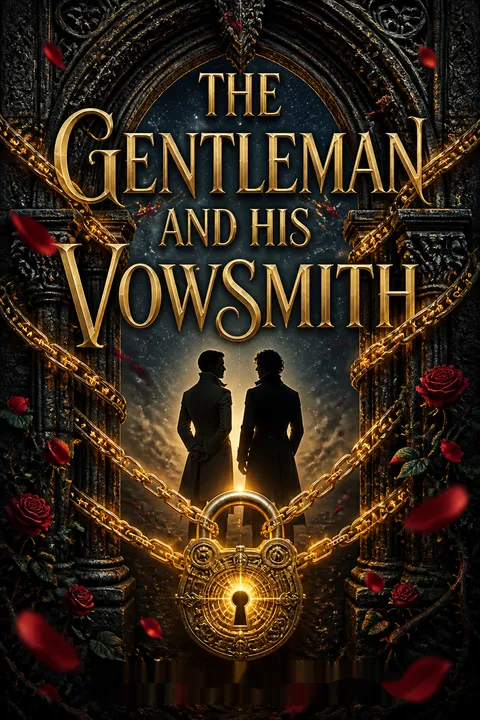
Nicholas "Nic" Monterris, heir to a crumbling ducal estate, is raised under the shadow of his father's cold, unyielding expectations. The Monterris name is both a privilege and a prison, with Nic's life dictated by the need to preserve the family's fading fortune and reputation. His father, the Duke of Vale, is obsessed with duty, power, and the Brilliance—the magical aptitude that defines social standing. Nic's mother, Georgiana, is a fragile presence, lost in her own world, while the house itself is a decaying labyrinth haunted by the past. Nic's only solace is in forbidden pleasures: conjuring, mechanical automata, and fleeting liaisons. Yet, the weight of inheritance and the impossibility of escape shape every aspect of his existence, setting the stage for a story of love, rebellion, and the search for freedom.
The Lock-In Begins
When the Duke announces Nic's arranged marriage to Lady Leaf Serral, the lock-in—a traditional, magically enforced negotiation—begins. The Serral family arrives, bringing with them their own secrets, ambitions, and a head vowsmith: Dashiell sa Vare, Nic's childhood friend and first love. The house is sealed, and the two families, along with their entourages, are trapped together for the duration of the contract negotiations. Tensions simmer beneath the surface: old rivalries, unspoken desires, and the pressure of the Monterris family's financial ruin. The lock-in is both a literal and metaphorical prison, forcing everyone to confront the truths they would rather avoid. As the days pass, the house's oppressive atmosphere grows, and the sense of impending disaster intensifies.
Unwanted Arrangements
Nic and Leaf, both unwilling participants in their arranged marriage, find unexpected camaraderie in their shared predicament. Leaf is sharp, unconventional, and uninterested in romance, while Nic is openly gay and resents being used as a pawn. Their friendship becomes a lifeline as they navigate the suffocating expectations of their families. Meanwhile, Dashiell's return stirs up old feelings and unresolved pain for Nic. The negotiations are fraught, with the Serrals demanding an audit of the Monterris estate and the Duke maneuvering to hide the family's dire financial state. The lock-in's rituals—dinners, games, and forced civility—become a stage for subtle rebellion, secret alliances, and the slow unraveling of the Monterris legacy.
Ghosts and Automata
Monterris Court is alive with secrets: ghost stories, family legends, and the eerie presence of broken automata—mechanical figures once used for entertainment, now scattered and silent. Nic and Leaf, in their explorations, encounter strange phenomena: a faceless figure, unexplained noises, and the sense that the house itself is watching. The automata, remnants of Nic's uncle Francis's obsession, become symbols of both wonder and danger. When Nic and Leaf are confronted by a moving automaton that seems to know Nic's name, fear and fascination intertwine. The boundaries between magic, machinery, and the supernatural blur, and the house's history begins to bleed into the present, foreshadowing the violence to come.
The Serral Arrival
The Serral family's presence brings old rivalries to the surface. Lord Ricard Serral, embittered by past slights, is determined to sabotage the contract, while Lord Charborough, Leaf's father, is motivated by guilt and a desire for reconciliation. The negotiations are tense, with every clause and demand a potential trigger for disaster. Dashiell, caught between professional duty and personal longing, becomes both a mediator and a source of further complication. As the lock-in progresses, alliances shift, and the true cost of the Monterris family's decline becomes apparent. The house, with its decaying grandeur and hidden dangers, becomes a crucible for ambition, resentment, and the desperate struggle to maintain control.
Shadows in the House
The lock-in turns deadly when Rowerre, Nic's loyal valet and surrogate father, is found dead at the bottom of the stairs. The official story is accident, but suspicion quickly spreads. Was it murder, and if so, who had motive? The house's oppressive atmosphere grows heavier, with every creak and shadow a potential threat. Nic is consumed by grief and guilt, while Leaf channels her energy into amateur sleuthing. The automata, the faceless figure, and the unexplained magic all seem connected, but the truth remains elusive. The first death is a catalyst, shattering the fragile peace and setting off a chain of violence, paranoia, and desperate investigation.
Death on the Stairs
Rowerre's death devastates Nic, stripping away his last source of comfort and stability. The investigation is stymied by the Duke's insistence on discretion and the Serrals' eagerness to move forward with the contract. Leaf, undeterred, begins to piece together clues: a torn page, a missing object, and the strange behavior of the house's inhabitants. The possibility of murder hangs over the lock-in, and everyone is a suspect. Nic, haunted by memories and the weight of responsibility, is forced to confront the reality that the Monterris legacy is built on secrets, lies, and sacrifice. The first death is only the beginning.
The First Suspicions
As the body count rises, suspicion infects every relationship. Gillingham, a vowsmith with a dubious past, is found dead—hanged in a manner that suggests both suicide and murder. The lock-in's magical barriers prevent escape, and the guests are forced to confront the possibility that a killer is among them. Leaf and Nic, now partners in both investigation and survival, dig deeper into the house's history and the motives of those around them. The automata's movements, the faceless figure, and the mounting evidence all point to a conspiracy that reaches to the heart of the Monterris family. The lock-in becomes a game of trust and betrayal, with every secret a potential weapon.
A Marriage of Convenience
Nic and Leaf's alliance deepens, their friendship a rare source of honesty and support. Both reject the roles assigned to them—Nic as dutiful heir, Leaf as sacrificial bride—and instead plot their own escape. Their conversations are laced with wit, vulnerability, and a shared refusal to be defined by others' expectations. Meanwhile, Nic's relationship with Dashiell rekindles, fraught with longing, regret, and the impossibility of open love. The marriage contract, once a symbol of imprisonment, becomes a potential tool for liberation—if only they can survive long enough to use it.
The Vowsmith Returns
Dashiell's presence is both a balm and a torment for Nic. Their history—childhood friendship, first love, and painful separation—colors every interaction. Dashiell is torn between his professional obligations and his feelings for Nic, while Nic is paralyzed by fear of loss and the weight of duty. Their stolen moments are charged with emotion, but the threat of exposure and the violence in the house make happiness seem impossible. As the contract negotiations near completion, the stakes rise: love, freedom, and survival are all on the line.
Secrets and Blackmail
The investigation uncovers a web of secrets: Lord Ricard's vendetta, Lord Francis's faked death and return, and the Duke's desperate attempts to hide the family's insolvency. Blackmail, hidden ledgers, and magical illusions are all tools in the struggle for power. The automata, once thought harmless, are revealed to be instruments of both wonder and murder. The past—affairs, betrayals, and broken promises—casts a long shadow over the present, and the true nature of the Monterris legacy is laid bare. Every revelation brings new danger, and the line between victim and perpetrator blurs.
The Faceless Man
The mysterious faceless figure is unmasked as Lord Francis, Nic's uncle and biological father, who has been living in secret within the house. His automata, magic, and knowledge of the family's history make him both a threat and a potential ally. The revelation forces Nic to confront the reality of his parentage, the lies that have shaped his life, and the possibility of escape. Lord Francis's motives are complex: guilt, self-preservation, and a twisted sense of duty. The house's ghosts are not just memories, but living actors in the drama of inheritance, love, and survival.
Poison and Panic
The violence escalates when Millie, Leaf's cousin, is poisoned during a tense evening. Panic spreads, and the fragile alliances among the guests begin to fracture. Accusations fly: is the duchess, lost in her own mind, responsible? Is it Lord Ricard, desperate to break the contract? Or is the true culprit someone else entirely? The lock-in becomes a crucible, burning away pretense and forcing everyone to confront their own capacity for violence. Nic, wounded and vulnerable, is nearly killed in a subsequent attack, and the sense of safety is lost forever.
The Grotto's Truth
Nic and Leaf, following the trail of clues, confront Lord Francis in the grotto—a hidden world of magic, automata, and secrets. The truth emerges: Lord Francis was blackmailed into sabotaging the contract, the Duke orchestrated murders to avoid an audit that would expose the family's ruin, and the entire lock-in has been a stage for desperation and betrayal. The revelation is both liberating and devastating, forcing Nic to choose between loyalty to his family and the possibility of freedom. The past cannot be undone, but the future is still unwritten.
The Duke's Illusions
The Duke's final gambit—using magical illusions to hide the estate's decay and orchestrating violence to avoid exposure—unravels. The audit clause, the contract's linchpin, becomes a weapon in the struggle for survival. The Duke's obsession with duty and reputation is revealed as both tragic and monstrous, and the Monterris legacy is exposed as a hollow shell. Nic, armed with the truth and the support of his friends, confronts his father in a final showdown. The house, once a symbol of power, is revealed as a prison built on lies.
The Audit Clause
The final negotiation is a battle of wills, with the Duke wielding violence and blackmail to force the contract's completion. Nic, Dashiell, and Leaf, united by love and friendship, resist. The contract is signed under duress, but Nic has a plan: a death certificate, forged with the help of Dashiell and Dr. Fanshaw, that will erase him from the Monterris legacy and break the chains of duty. The moment of truth arrives, and Nic chooses freedom over inheritance, love over duty, and the possibility of a new life over the prison of his name.
Love and Sacrifice
Nic and Dashiell, finally free to choose, declare their love and plan their escape. The cost is high: Nic must give up his name, his inheritance, and the only life he has ever known. Leaf, too, claims her freedom, using the chaos to secure her own sasinage. The Duke, exposed and broken, is left to face the consequences of his actions. The Monterris legacy, once a source of pride and power, is revealed as a curse. In the ashes of the old world, Nic and Dashiell build something new—fragile, uncertain, but truly their own.
The Death Certificate
With the help of Dashiell and Dr. Fanshaw, Nic's death is made official. The contract is voided, the lock-in broken, and the Monterris name left behind. The duchess, finally free, escapes with Silla, and Leaf secures her own independence. The house, once a prison, is now just a ruin. Nic, no longer a Monterris, is reborn as Nicholas sa Vare, free to love and be loved without fear. The cost is great, but the reward is greater: the chance to live, to choose, and to build a future on his own terms.
Breaking the Chains
The aftermath is both chaotic and cathartic. The Duke and Lord Ricard are left to face the consequences of their crimes, while Lord Francis disappears once more into the shadows. The Serral and Monterris families, once bound by duty and resentment, are finally free of each other. Nic and Dashiell, with Ambrose and the duchess, begin their journey into the unknown, leaving behind the ghosts of Monterris Court. The past cannot be changed, but the future is theirs to shape.
Freedom and New Beginnings
In London, Nic and Dashiell build a new life together—equal partners, free from the chains of inheritance and expectation. Leaf opens her school for magical young women, the duchess finds peace at last, and the wounds of the past begin to heal. The world is still imperfect, but for the first time, Nic is free to choose his own path. Love, once forbidden, is now the foundation of everything. The story ends not with a grand victory, but with the quiet, hard-won joy of two men waking together in the morning light, ready to face whatever comes next.
Analysis
A gothic Regency of inheritance, agency, and queer liberationThe Gentleman and His Vowsmith is a masterful blend of gothic suspense, murder mystery, and queer romance, set against the decaying grandeur of a magical Regency England. At its heart, the novel is a meditation on the violence of tradition: how systems of inheritance, duty, and magical law can imprison as much as they empower. The lock-in is both a literal and metaphorical cage, forcing characters to confront the cost of survival in a world that values names over people. Nic's journey—from passive heir to active agent of his own destiny—is a powerful exploration of self-ownership, the right to choose, and the courage to love in the face of impossible odds. The novel's use of vowsmithing and magical contracts is both a clever narrative device and a profound metaphor for the ways in which language, law, and expectation shape identity. The story's resolution—faking death to claim freedom—is both a subversion of the gothic tradition and a celebration of queer possibility: love, not duty, as the foundation of a new world. The Gentleman and His Vowsmith is ultimately a story about breaking chains, rewriting the rules, and daring to imagine a life beyond the limits of inheritance.
People Also Read

Characters
Nicholas "Nic" Monterris
Nic is the reluctant heir to the Monterris dukedom, a young man whose life is defined by duty, expectation, and the suffocating weight of his family's legacy. Sensitive, intelligent, and deeply creative, Nic finds solace in conjuring, mechanical automata, and forbidden love. His relationship with his father is fraught with resentment and longing for approval, while his bond with his mother is one of mutual fragility. Nic's sexuality is an open secret, and his refusal to conform makes him both a disappointment and a threat to the Monterris name. Over the course of the story, Nic evolves from a passive victim of circumstance to an active agent of his own destiny, willing to sacrifice everything for love and freedom. His journey is one of self-discovery, courage, and the reclamation of agency in a world determined to own him.
Dashiell sa Vare
Dashiell is a master vowsmith, renowned for his magical skill and professional integrity. Once Nic's childhood friend and first love, Dashiell returns to Monterris Court as the Serral family's head negotiator, bringing with him a storm of unresolved emotion. Dashiell is principled, loyal, and quietly passionate, torn between duty and desire. His relationship with Nic is the emotional heart of the story: a love marked by longing, regret, and the hope of redemption. Dashiell's own struggles—with class, self-worth, and the risks of forbidden love—mirror Nic's, and together they challenge the structures that imprison them. Dashiell's courage, intelligence, and capacity for sacrifice make him both a hero and a deeply human figure, whose choices drive the narrative toward its hard-won resolution.
Lady Leaf Serral
Leaf is the daughter of Lord Charborough, a sharp-witted, unconventional young woman who refuses to be defined by her family's ambitions. Uninterested in romance and skeptical of tradition, Leaf becomes Nic's closest ally and confidante. Her intelligence, humor, and determination make her a force to be reckoned with, and her friendship with Nic is a rare source of honesty and support. Leaf's own quest for autonomy—her desire to open a school for magical young women, her pursuit of sasinage—parallels Nic's, and together they model a new kind of relationship: one based on mutual respect, shared struggle, and the refusal to accept the roles assigned to them. Leaf's presence is a constant reminder that freedom is possible, even in the most constrained circumstances.
The Duke of Vale (Valentine Monterris)
The Duke is the embodiment of duty, pride, and the destructive power of tradition. Obsessed with preserving the Monterris name at any cost, he is both a victim and perpetrator of the system he upholds. His relationship with Nic is one of control, disappointment, and unspoken pain, while his marriage to Georgiana is a study in emotional neglect. The Duke's actions—blackmail, murder, and manipulation—are driven by desperation and the fear of failure. Yet, beneath the surface, he is a man haunted by loss, regret, and the impossibility of escape. His psychological complexity makes him both a villain and a tragic figure, whose downfall is as much a product of circumstance as of character.
Lord Francis Monterris
Presumed dead, Lord Francis is revealed to be alive, living in secret within Monterris Court. A brilliant conjuror and automata-maker, he is both a source of wonder and a catalyst for violence. His relationship to Nic—as both uncle and biological father—is a source of pain, confusion, and unresolved longing. Lord Francis is a survivor, motivated by guilt, self-preservation, and a twisted sense of duty. His actions—hauntings, sabotage, and reluctant complicity in murder—are shaped by the same forces that imprison Nic: the weight of inheritance, the impossibility of escape, and the corrosive power of secrets. His presence is a reminder that the past is never truly dead.
Georgiana Monterris (The Duchess)
Georgiana is a fragile, ethereal figure, lost in memories and haunted by the life she might have had. Her marriage to the Duke is a prison, and her only solace is in her son and her loyal maid, Silla. Georgiana's psychological decline is both a symptom and a symbol of the Monterris family's decay. Her moments of lucidity reveal a woman of intelligence, sensitivity, and deep pain. Accused of murder, she becomes a scapegoat for the family's failures, but her ultimate escape is a small victory in a life marked by loss. Georgiana's story is a meditation on the cost of duty, the violence of tradition, and the possibility of redemption.
Lord Ricard Serral
Lord Ricard is the Serral family's black sheep, consumed by old grudges and a desire for revenge. His vendetta against the Monterris family drives much of the story's violence: blackmail, sabotage, and attempted murder. Ricard is both a product and a victim of the system that values inheritance over happiness, and his actions are shaped by loss, jealousy, and the refusal to forgive. His relationship with his brother, Lord Charborough, is a study in rivalry and regret, while his interactions with Nic are marked by malice and a twisted sense of justice. Ricard's downfall is both inevitable and pitiable, a warning of what happens when resentment becomes destiny.
Lord Charborough (Charles Serral)
Lord Charborough is a man haunted by past mistakes: the loss of love, the failure to protect his family, and the consequences of his own ambition. His motivations are complex: guilt, a desire for reconciliation, and the hope of redemption. Charborough's relationship with the Duke is fraught with longing and regret, while his bond with Leaf is marked by both love and manipulation. His attempts to make amends—offering Leaf in marriage, paying off debts—are both noble and misguided. Charborough is a study in the limits of good intentions, and his journey is one of reckoning and reluctant acceptance.
Silla
Silla is the duchess's devoted maid, a figure of quiet strength and unwavering loyalty. She is both a witness to and a victim of the Monterris family's dysfunction, and her care for Georgiana is a rare source of stability. Silla's knowledge of the family's secrets makes her both powerful and vulnerable, and her actions—helping Nic, facilitating escape—are acts of quiet rebellion. Silla's presence is a reminder that survival often depends on those who are overlooked, and that true loyalty is measured by sacrifice, not obedience.
Ambrose
Ambrose, Nic's new valet after Rowerre's death, is eager, competent, and quietly ambitious. He becomes a trusted confidant and co-conspirator, helping Nic navigate the dangers of the lock-in and the complexities of escape. Ambrose's desire for a better life mirrors Nic's, and his willingness to risk everything for freedom is both inspiring and poignant. His presence is a testament to the power of chosen family, and his loyalty is ultimately rewarded with a place in Nic's new life.
Plot Devices
The Lock-In
The lock-in is the central plot device: a magically enforced period during which two families are sealed together to negotiate a marriage contract. It creates both physical and psychological confinement, forcing characters to confront their secrets, desires, and resentments. The lock-in's rules—no escape, magical surveillance, and the threat of voided contracts—heighten tension and drive the narrative. It is both a stage for social performance and a pressure cooker for violence, making every interaction fraught with danger. The lock-in's structure allows for the slow revelation of secrets, the escalation of conflict, and the ultimate breaking of chains.
Magical Contracts and Vowsmithing
Vowsmithing—the magical crafting of contracts—is both a literal and metaphorical device. Contracts define relationships, inheritance, and even identity, making the act of signing (or breaking) a contract an act of self-definition. The technical language, the audit clause, and the death certificate are all tools for both oppression and liberation. The presence of Dashiell as a vowsmith allows for the exploration of the limits and possibilities of magic: it can bind, but it can also set free. The manipulation of contracts becomes a form of rebellion, and the ultimate act of self-ownership.
Automata and Illusions
The automata—mechanical figures animated by magic—are both symbols of wonder and instruments of violence. They represent the legacy of the past, the dangers of unchecked ambition, and the thin line between creation and destruction. The illusions used to hide the house's decay are a metaphor for the lies that sustain the Monterris legacy: beautiful on the surface, rotten underneath. The automata's movements, the faceless figure, and the conjured darkness all serve as both plot devices and psychological symbols, blurring the boundaries between magic, technology, and the supernatural.
Murder Mystery Structure
The story borrows from the classic murder mystery: a closed setting, a series of deaths, a cast of suspects, and a pair of amateur sleuths. Clues are scattered throughout—torn pages, missing objects, strange behaviors—and the investigation is both a literal search for a killer and a metaphorical search for truth. The structure allows for red herrings, shifting alliances, and the slow unmasking of both the murderer and the deeper rot at the heart of the family. The mystery is not just who killed whom, but what is worth killing for.
The Death Certificate
The forged death certificate is the story's final, brilliant plot device: a legal and magical loophole that allows Nic to escape the prison of his name. It is both a literal and symbolic act of self-liberation, breaking the chains of inheritance, duty, and expectation. The act of "dying" is both a sacrifice and a rebirth, allowing for the possibility of love, freedom, and a new life. It is the ultimate act of vowsmithing: rewriting the contract of existence itself.
Download PDF
Download EPUB
.epub digital book format is ideal for reading ebooks on phones, tablets, and e-readers.








































