
Plot Summary
Arrival at Lackaday House
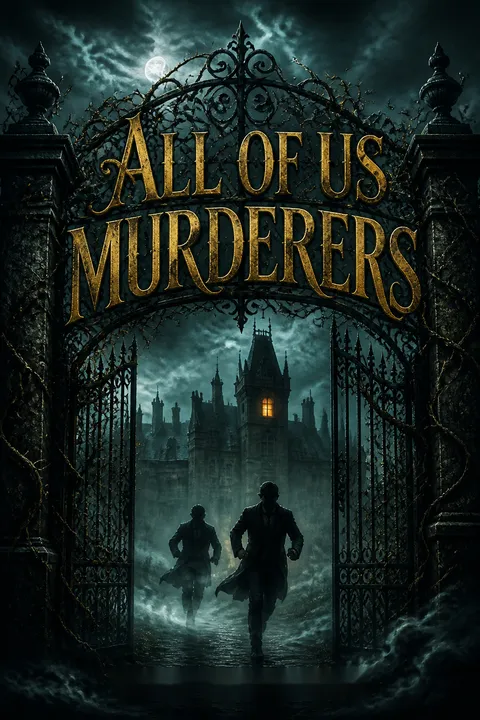
Zebedee "Zeb" Wyckham, a restless, fidgety man with a troubled past, is summoned to the remote, imposing Lackaday House by his wealthy cousin Wynn. The journey through Dartmoor's bleak moors and the forbidding twelve-foot walls sets the tone: this is a place of secrets and confinement. Zeb is greeted not by warmth but by coldness from the staff and a strange, beautiful young woman fleeing into the night. Inside, he is shocked to find not only his estranged brother Bram and sneering cousin Hawley, but also his bitter ex-lover, Gideon Grey, now Wynn's secretary. The house's Gothic architecture and the sense of being trapped foreshadow the psychological and literal dangers to come. Zeb's unease grows as he realizes he is not just a guest, but a pawn in a larger, sinister game.
Family Tensions Unveiled
The assembled Wyckham family is a powder keg of resentment and rivalry. Bram, the eldest, is rigid and judgmental, while Hawley is decadent and cruel. Elise, Bram's wife, is icy and manipulative. Zeb's presence is unwelcome, and his reunion with Gideon is fraught with unresolved pain. The family's interactions are laced with barbed comments, old betrayals, and simmering anger. Wynn, the host, seems genial but is oddly detached, observing the family's dysfunction with a disturbing calm. The house itself amplifies the tension, its dark corridors and oppressive atmosphere mirroring the emotional claustrophobia. Zeb, already on edge, senses that the gathering is not just a family reunion, but a stage set for conflict and revelation.
The Inheritance Ultimatum
At dinner, Wynn reveals his true purpose: he will leave his vast fortune and Lackaday House to whichever male relative marries his young ward, Jessamine. The announcement ignites a scramble for her hand, exposing the family's greed and desperation. Zeb is appalled by the idea of marrying a sheltered, barely-adult cousin for money, while Bram and Hawley see opportunity. Elise and Hawley's past affair adds another layer of venom. Jessamine, the supposed innocent, is both a prize and a mystery. Wynn's insistence on keeping the estate "in the family" and his disregard for Jessamine's autonomy reveal a chilling patriarchal control. The house becomes a gilded cage, and the family's true natures begin to emerge under pressure.
Ghosts and Gothic Shadows
As the days pass, the house's Gothic atmosphere intensifies. Strange noises, flickering gaslights, and sightings of a faceless, hooded monk unsettle the guests. Jessamine claims to have seen the ghost, and soon others—including Zeb—experience inexplicable phenomena. The legend of the Wyckham curse, said to doom all descendants before fifty, is whispered about. Wynn's obsession with family history and the supernatural deepens the sense of dread. The house's architecture, with its secret passages and locked gates, becomes a character in its own right—one that seems to conspire against its inhabitants. Fear and suspicion mount, blurring the line between psychological torment and real danger.
Old Lovers, New Wounds
Zeb and Gideon's past relationship is a source of pain and longing. Their breakup, caused by workplace scandal and Zeb's impulsiveness, left both wounded. Now forced into proximity, their interactions are tense, defensive, and charged with unresolved emotion. Gideon, desperate to keep his job, is wary of Zeb's presence, fearing further ruin. Zeb, wracked with guilt, tries to apologize and explain, but old patterns of miscommunication persist. As the house's dangers escalate, their need for each other resurfaces, offering both a chance at redemption and the risk of renewed heartbreak. Their love story becomes a fragile thread of hope amid the encroaching darkness.
Jessamine's Story
Jessamine, presented as Wynn's innocent ward, is both victim and enigma. Her lineage is tangled: the product of family scandal, raised in isolation, and now the object of a marital contest. She is alternately naïve and oddly knowing, her behavior sometimes childlike, sometimes calculating. As Zeb befriends her, he senses something off—her knowledge of the house's history, her fervor about ghosts, and her role in Wynn's plans. Rumors swirl about her parentage and age, and Elise suspects she is not who she claims. Jessamine's identity and agency become central to the unfolding drama, as she navigates the predatory intentions of the men around her and the manipulations of Wynn.
The Curse and the Will
Wynn confides in Zeb that he is dying, claiming the Wyckham curse will soon claim him as it did all his kin. He frames his inheritance scheme as an act of redemption for past family sins, especially the mistreatment of women and illegitimate children. Yet his actions are controlling and cruel, using Jessamine as a tool and pitting relatives against each other. The curse becomes both a literal and metaphorical force, driving Wynn's increasingly erratic behavior. Zeb, pressured to stay by Wynn's plea for a dying man's comfort, is drawn deeper into the house's web. The will, the curse, and the family's history of exploitation and violence intertwine, setting the stage for tragedy.
Schemes, Secrets, and Spiders
The family's rivalries escalate into open scheming. Hawley blackmails Zeb over his sexuality, threatening exposure if Zeb competes for the inheritance. Bram proposes an alliance, only to betray Zeb again. The staff, sullen and watchful, seem complicit in the house's oppressive atmosphere. Zeb's room is invaded by spiders—his deepest fear—accompanied by slanderous graffiti. The supernatural and the psychological merge, as the house's horrors become personal and targeted. Zeb and Gideon, forced together by circumstance and fear, begin to rebuild trust, even as the dangers mount. The sense of being watched, manipulated, and hunted grows unbearable.
The House Turns Hostile
As Dartmoor mists cut off escape, the house becomes a prison. The staff, once merely unfriendly, now actively enforce Wynn's will, preventing anyone from leaving. Colonel Dash, the only outsider, disappears under suspicious circumstances. The family's mental states deteriorate: Hawley succumbs to paranoia and hallucinations, Bram to guilt and rage. The ghostly monk appears with increasing frequency, and the house's secret passages are used for surveillance and terror. The tension breaks when Elise is found dead at the foot of the stairs—an apparent accident, but clearly murder. The house's true nature as a site of violence and retribution is revealed.
Murder in the Night
Elise's death shatters the fragile equilibrium. Suspicion falls on Bram and Hawley, both with motive and opportunity. Wynn manipulates events to maximize suspicion and conflict, urging Bram to violence and stoking Hawley's instability. The staff, revealed to have their own vendettas against the Wyckhams for past abuses, become active participants in the unfolding revenge. Zeb and Gideon, now fully reconciled and in love, realize they are in mortal danger. The house's history of abuse, exploitation, and cover-up comes to a head, as the living and the dead demand justice.
The Staff's Revenge
The staff's true motives are revealed: each has suffered or lost loved ones to the Wyckhams' cruelty. Wynn has recruited them with promises of vengeance and impunity, orchestrating a scenario where the family will destroy itself. Rachel, the housemaid, confides in Zeb and Gideon, torn between her desire for justice and her recognition of their innocence. The staff's actions—spiders, graffiti, ghostly apparitions—are part of a calculated campaign to drive the Wyckhams to madness and murder. The lines between victim and perpetrator blur, as the legacy of abuse perpetuates new cycles of violence.
The Truth in the Walls
Zeb discovers the hidden room where Laura's mother, the housemaid, was imprisoned for years to prevent her claiming her inheritance. The walls are covered in desperate pleas for freedom, a testament to generations of Wyckham cruelty. Wynn's obsession with the family curse and his calculations of stolen years are revealed: he believes sacrificing his kin will buy him more life, as Walter Wyckham supposedly did. The house's architecture—its secret passages, locked doors, and crypts—becomes a map of generational trauma. Zeb and Gideon, with Rachel's help, piece together the full horror of Wynn's plan and the staff's complicity.
The Final Confrontation
As Wynn's scheme reaches its climax, Zeb tries to save his brother Bram, only to find Bram complicit in Elise's death and too far gone to help. Wynn manipulates the remaining family members into confrontation, using the staff as enforcers. Hawley, armed and unstable, becomes a final threat. Zeb and Gideon, aided by Rachel, use the secret passages to evade capture. The house is now a battleground, with every corridor and room a potential trap. The legacy of violence claims more victims, and the line between justice and revenge blurs irreparably.
Escape from the Web
With the staff closing in and Wynn's plan nearly complete, Zeb and Gideon make a desperate bid for freedom. Rachel, moved by Zeb's kindness, helps them escape through the secret passages and out to the moor. Pursued by Wynn's minions, they race for the gate as the grocer's cart arrives, seizing their only chance to leave. The house, now a tomb for the Wyckham line, is left behind. Zeb and Gideon's love, tested by trauma and betrayal, becomes their salvation. The cycle of violence is broken, but not without cost.
Aftermath and Ashes
In the aftermath, the official story is one of tragic accidents and family madness. Wynn escapes legal consequence, but his victory is short-lived: Lackaday House burns to the ground, taking him and his secrets with it. The staff vanish, their revenge complete. Jessamine disappears, presumed dead but likely escaped with a fortune. The bodies of the missing are found, and the house's horrors are finally exposed. Zeb, now the last Wyckham, inherits the tainted legacy and chooses to use it for restitution rather than personal gain.
Love Beyond the Walls
Zeb and Gideon, scarred but alive, rebuild their lives together. Their love, forged in adversity, becomes a source of healing and hope. Zeb's writing career flourishes, and Gideon becomes his partner in life and work. Together, they reject the Wyckham legacy of exploitation and cruelty, choosing instead to make amends and build something new. The ghosts of the past are acknowledged but no longer rule them. Their relationship, once broken by fear and misunderstanding, is now a model of trust and mutual support.
The Legacy Reclaimed
Zeb uses the Wyckham fortune to establish a trust for the descendants of those exploited by his ancestors, particularly the victims of slavery. He and Gideon dedicate themselves to righting historical wrongs, refusing to profit from blood money. The act of restitution is both personal and political, a rejection of the family's values and a step toward healing. The story's final note is one of accountability and the possibility of change, even after generations of harm.
Haunted No More
With Lackaday House destroyed and the family curse broken, Zeb and Gideon are finally free. The ghosts—literal and metaphorical—are laid to rest. The story ends not with vengeance, but with the possibility of forgiveness, love, and a future unshackled from the sins of the past. The house, once a prison, is gone; what remains is the hard-won freedom to choose a different path.
Analysis
All of Us Murderers is a masterful reimagining of the classic Gothic country house mystery, blending psychological horror, social critique, and a deeply moving queer love story. At its heart, the novel interrogates the legacy of privilege, exploitation, and generational trauma: the Wyckham family's wealth is built on slavery, abuse, and the silencing of victims, and the house itself becomes a symbol of the inescapable past. The narrative's locked-room structure and supernatural elements serve not only to heighten suspense, but to dramatize the ways in which history haunts the present—literally, through ghosts and curses, and figuratively, through cycles of violence and denial. The staff's campaign of revenge, orchestrated by Wynn, exposes the limits of legal justice and the dangers of unchecked power, while also complicating easy binaries of victim and perpetrator. At the story's emotional core is the relationship between Zeb and Gideon: two men marked by loss, misunderstanding, and the struggle to trust, who ultimately find redemption in each other. Their love, forged in adversity, offers a vision of hope and healing that stands in stark contrast to the family's legacy of harm. The novel's final act—Zeb's decision to use the inheritance for restitution—serves as both a personal and political reckoning, suggesting that true freedom from the past requires not just escape, but accountability and the willingness to build something new. In a world still grappling with the legacies of exploitation and injustice, All of Us Murderers is both a gripping thriller and a powerful meditation on the costs and possibilities of redemption.
Review Summary
All of Us Murderers is a gothic mystery with a second-chance romance subplot. Readers praise the atmospheric setting, intriguing plot, and well-developed characters, particularly the ADHD representation of the protagonist, Zeb. The book blends elements of horror, romance, and historical fiction, set in Edwardian England. While some found the pacing slow initially, many enjoyed the tension and twists. The romance between Zeb and Gideon received mixed reactions, with some finding it underdeveloped. Overall, the book is well-received for its engaging storytelling and unique blend of genres.
Characters
Zebedee "Zeb" Wyckham
Zeb is the story's emotional core: a man marked by ADHD, familial rejection, and a history of failure. His fidgetiness and impulsivity mask deep wounds from a childhood of unmet expectations and betrayal by his brother Bram. Zeb's kindness, humor, and empathy set him apart from his toxic family, but also make him vulnerable to manipulation and self-doubt. His relationship with Gideon is both a source of pain and hope, as he struggles to atone for past mistakes and trust in love again. Zeb's journey is one of self-acceptance, moral courage, and the refusal to perpetuate the Wyckham legacy of harm. His ultimate act—using the family fortune for restitution—signals his break from the past and his embrace of a new, redemptive identity.
Gideon Grey
Gideon, once Zeb's lover and now Wynn's secretary, is a man shaped by repression, duty, and loss. His dismissal from Cubitt's, caused by his relationship with Zeb, has left him desperate and wary, clinging to the security of employment even as it means serving the Wyckhams. Gideon's reserve hides a passionate, loyal heart and a longing for connection. His journey is one of learning to trust, to forgive, and to accept love on new terms. The trauma of the house tests his limits, but also rekindles his bond with Zeb, allowing both men to heal. Gideon's practicality and emotional intelligence are crucial to their survival, and his willingness to start anew with Zeb is the story's emotional resolution.
Wynn Wyckham
Wynn is the spider at the center of the web: charming, erudite, and utterly ruthless. His obsession with the family curse, legacy, and the sins of the past drives him to orchestrate a deadly game, pitting his relatives against each other and recruiting the staff as instruments of revenge. Wynn's motivations are complex—a mix of guilt, fear, and a twisted sense of justice—but his actions are ultimately self-serving and destructive. He embodies the dangers of unchecked power, patriarchal control, and the refusal to reckon honestly with history. His downfall is both a personal tragedy and a necessary end to the Wyckham line.
Bram Wyckham
Bram, Zeb's elder brother, is a study in repression and self-delusion. Obsessed with propriety and inheritance, he betrays Zeb, abuses his wife, and ultimately succumbs to guilt and madness. Bram's inability to confront his own failings leads him to project blame onto others, especially women. His complicity in Elise's death and his role as both victim and perpetrator highlight the corrosive effects of patriarchy and unacknowledged trauma. Bram's tragic arc is a warning against the dangers of denial and the failure to break cycles of harm.
Hawley Wyckham
Hawley is the family's libertine: charming, talented, and utterly amoral. His history of seduction, exploitation, and cruelty makes him both a threat and a victim. Hawley's cynicism masks deep wounds, but his refusal to change or take responsibility for his actions seals his fate. He is both a product and a perpetuator of the Wyckham legacy, and his downfall is as much self-inflicted as it is engineered by others. Hawley's interactions with Jessamine, Elise, and the staff reveal the predatory dynamics at the heart of the family.
Elise Wyckham
Elise, Bram's wife and Hawley's former lover, is a woman trapped by circumstance and ambition. Her intelligence and poise are weapons in a world that offers her little agency, but they cannot protect her from the violence and betrayal of the men around her. Elise's death is both a personal tragedy and a symbol of the costs borne by women in patriarchal systems. Her brief connection with Zeb hints at the possibility of solidarity and understanding across lines of difference, but it comes too late.
Jessamine
Jessamine is the story's most ambiguous figure: presented as an innocent, revealed as an actress, and ultimately a survivor. Her shifting identity reflects the ways women are used, erased, and reinvented by those in power. Jessamine's complicity in Wynn's schemes is both a survival strategy and a form of agency, but it comes at a cost. Her disappearance at the end suggests both escape and exile, a refusal to be defined by the roles imposed on her.
Rachel (the housemaid)
Rachel represents the staff's collective trauma and desire for justice. Her story—of rape, dismissal, and betrayal—mirrors those of many others harmed by the Wyckhams. Rachel's decision to help Zeb and Gideon, despite her own pain, is an act of moral courage that complicates the narrative of revenge. She embodies the possibility of solidarity across lines of class and suffering, even as she remains committed to her own form of justice.
Colonel Dash
Dash, the military cousin, is initially presented as a voice of reason, but is ultimately revealed to have exploited his position to seduce a vulnerable girl. His disappearance and death are the staff's revenge for past wrongs, and his fate is a reminder that respectability often hides predation. Dash's arc exposes the limits of surface decency and the dangers of unchecked power.
The Staff (Fenton, Anna, Alfred, etc.)
The staff, each with their own history of suffering at the Wyckhams' hands, become a collective force for retribution. Their complicity in Wynn's scheme is driven by a desire for justice denied by the law. They are both victims and agents, their actions blurring the line between justice and vengeance. The staff's stories are a counter-narrative to the family's, exposing the hidden costs of privilege and the enduring wounds of exploitation.
Plot Devices
Locked-Room Gothic Mystery
The narrative is structured as a classic locked-room mystery, with the house's architecture—its walls, gates, and secret passages—serving both as literal barriers and metaphors for psychological and generational confinement. The isolation imposed by the Dartmoor mists and the locked gates heightens the sense of claustrophobia and inevitability. The house's design, filled with Gothic tropes (crypts, follies, hidden rooms), is both a stage for the unfolding drama and a character in its own right, shaping and reflecting the characters' fears and desires. The use of secret passages enables surveillance, manipulation, and escape, while also symbolizing the buried secrets and traumas that haunt the family.
Unreliable Narration and Foreshadowing
The story employs unreliable narration, with characters' perceptions shaped by fear, guilt, and manipulation. Supernatural elements—ghosts, curses, apparitions—are both literal and psychological, blurring the line between reality and delusion. Foreshadowing is used extensively: the opening scenes at the gate, the recurring references to Gothic novels, and the early hints of the staff's resentment all signal the dangers to come. The gradual revelation of the staff's motives, Wynn's true plan, and the family's history of abuse is paced to maximize suspense and emotional impact.
Intertextuality and Metafiction
The plot is deeply interwoven with references to Walter Wyckham's fictional Gothic novels, which serve as both inspiration and script for Wynn's scheme. The characters' awareness of these stories—and their roles within them—creates a metafictional layer, inviting readers to question the boundaries between fiction and reality, justice and revenge. The use of literary tropes (the haunted house, the family curse, the innocent heroine) is both homage and critique, exposing the ways stories shape and justify real-world violence.
Psychological Horror and Social Critique
The story's horror is as much psychological as physical, rooted in the characters' histories of abuse, betrayal, and guilt. The staff's campaign of terror is both a literal haunting and a metaphor for the return of the repressed: the past cannot be buried, and justice denied will find other outlets. The narrative interrogates the intersections of class, gender, and power, exposing the ways privilege is maintained through violence and silence. The ultimate act of restitution—Zeb's use of the inheritance for reparations—serves as both a personal and political resolution, challenging the reader to consider what true justice might require.
About the Author
Other books by K.J. Charles
Download PDF
Download EPUB
.epub digital book format is ideal for reading ebooks on phones, tablets, and e-readers.








































