
Key Takeaways
1. Revisiting England's Soul: A Modern Journey Through Priestley's Lens
‘This isn’t a very good start, is it?’
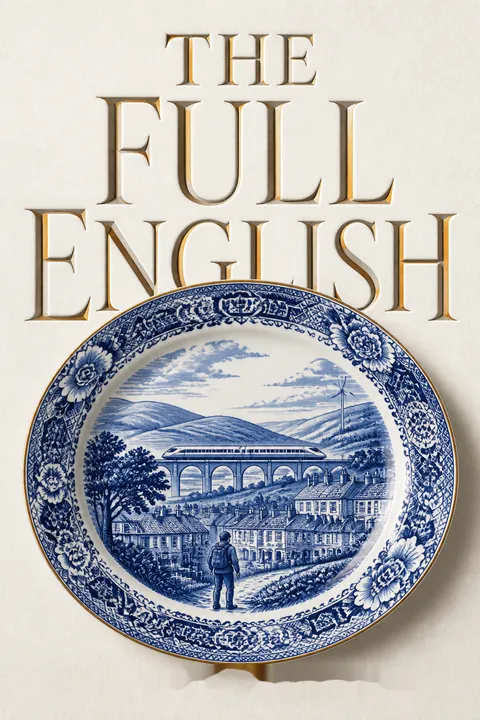
A modern pilgrimage. The author embarks on a journey across England, retracing the steps of J.B. Priestley's influential 1933 travelogue, English Journey. This contemporary expedition aims to compare England then and now, exploring how the nation has changed amidst new challenges like Brexit and Covid, while also seeking to understand the enduring relevance of Priestley's observations. The journey begins with a relatable, slightly chaotic Megabus trip, setting a tone of candid, often humorous, observation.
Priestley's enduring impact. Priestley's English Journey was an instant bestseller, offering a "rambling but truthful account" of 1930s England. It captured and catalyzed a national mood for change, influencing later works by George Orwell and the Mass Observation movement, and is even credited with contributing to the Labour Party's 1945 election victory. The author feels a renewed urgency to revisit this classic, believing that England in the 2020s, much like the 1930s, is a turbulent and complex nation grappling with profound shifts.
A personal and national reflection. The journey is not just a geographical one but a deep dive into England's social, cultural, and political landscape. The author uses Priestley's framework to explore themes of identity, class, industry, and community, offering a blend of personal anecdotes, historical context, and contemporary commentary. This re-interpretation seeks to provide readers with a concise yet comprehensive understanding of England's multifaceted character, both echoing and challenging Priestley's original insights.
2. J.B. Priestley: A Progressive Patriot, Often Misunderstood
Priestley is that cliché beloved of profile writers, the ‘bundle of contradictions’: misrepresented, caricatured and gloriously uncategorisable.
Beyond the caricature. J.B. Priestley, often dismissed as a bluff, sentimental "little Englander," was in fact a radical and experimental intellectual. He was a progressive patriot with socialist beliefs, an internationalist who turned down a knighthood and a life peerage, accepting only a Companion of Honour from the Queen he admired. His public image, shaped by his Yorkshire bulk and pipe, belied a deeply progressive spirit.
A champion of civil liberties. Priestley's activism extended far beyond his writing. He co-founded significant organizations, demonstrating his commitment to social justice and human rights.
- National Council for Civil Liberties
- Campaign for Nuclear Disarmament (CND)
- Albany Trust (gay rights lobbying group)
He was both enormously popular and daringly experimental, writing with equal verve about vaudeville and time travel, challenging the literary elite who often sneered at his commercial success.
Shaping the national mood. Through plays like An Inspector Calls and his wartime Postscripts broadcasts for the BBC, Priestley profoundly influenced England's governance and social consciousness. His candid, patriotic yet honest musings during the war galvanized millions, contributing to the post-war settlement and the advent of the welfare state. Tony Benn noted that Priestley "shaped the political thinking of a whole generation," proving his immense reach and impact as a public intellectual.
3. England's Enduring Divisions and Evolving Identity
Were we always like this, the English, I wonder? So joyless, so suspicious, so quick to judge, never happier than when carping and finding fault?
A nation of contrasts. The author frequently observes England's internal divisions, from the historical North/South divide to regional rivalries and class distinctions. These tensions are evident in everything from local accents and culinary preferences to political allegiances and urban planning. The journey highlights how different parts of England perceive themselves and each other, often with ingrained stereotypes and historical grievances.
The weight of history. Many places visited carry the heavy legacy of past events, shaping their present identity.
- Southampton: Haunted by the Titanic disaster, a memory Priestley surprisingly omitted.
- Bristol: Grapples with its wealth derived from the slave trade, leading to the toppling of the Colston statue.
- Lincoln: Divided between "uphill" and "downhill" snobbery, reflecting historical class structures.
These historical burdens often manifest in contemporary debates about heritage, identity, and social justice.
Modern anxieties and resilience. The author finds an England grappling with the aftermath of Brexit and Covid, leading to economic instability and a "crazed downward spiral" in some areas. Yet, alongside this, there's a palpable sense of resilience, community spirit, and a willingness to adapt. The journey reveals a nation that, despite its internal conflicts and external challenges, continues to evolve, often in unexpected and vibrant ways.
4. Deindustrialization and the Quest for Reinvention
Priestley was glad that Campden had been spared the changes that had made northern towns so cramped and smoky: ‘If there had been a few thick seams of coal between Gloucester Evesham and Cirencester, the Cotswolds would have been torn up and blackened and built over with brick horrors.’
The ghost of industry. Many towns visited, particularly in the North and Midlands, bear the scars of deindustrialization. Once thriving centers of coal, cotton, pottery, or shipbuilding, these areas experienced profound economic and social decline in the late 20th century. Priestley's observations from 1933 often foreshadowed this decline, noting silent mills and widespread unemployment, though he couldn't have imagined the scale of the eventual collapse.
Rebirth from the ashes. Some cities have embraced radical reinvention, transforming their industrial heritage into new cultural and economic hubs.
- Coventry: Rose from the ashes of the Blitz and deindustrialization to become UK City of Culture, with a vibrant modern architectural landscape and a focus on future technologies.
- Ouseburn (Newcastle): Transformed from a derelict industrial area into a thriving creative quarter with arts spaces, microbreweries, and trendy restaurants.
- Hull's Fruit Market: Revitalized from a defunct trading hub into a bohemian district of galleries, distilleries, and independent shops.
These transformations often involve a delicate balance between preserving history and embracing modernity.
Lingering challenges. Despite successful regeneration in some areas, many towns still struggle with the legacy of industrial decline. High streets are often "dying," replaced by charity shops and discount stores, and communities grapple with unemployment and a sense of being "left behind." The author notes the poignant sight of abandoned industrial sites and the ongoing search for new purpose, reflecting a national struggle to adapt to a post-industrial world.
5. Confronting Uncomfortable Truths: Class, Race, and History
‘It was an act of love,’ he answered boldly to an uproar of approval in the court.
Reckoning with the past. The journey repeatedly confronts England's uncomfortable historical truths, particularly regarding slavery and class exploitation. The toppling of the Edward Colston statue in Bristol serves as a powerful symbol of a society re-evaluating its heroes and acknowledging the bloody origins of some of its wealth. The author notes that while Priestley, a humanist, overlooked slavery in Bristol, modern England is increasingly forced to confront these legacies.
Enduring class divides. Priestley's English Journey was driven by a "cold, quiet anger" at the poverty and squalor endured by working-class communities. The author finds that while overt industrial misery has largely vanished, class divisions persist, manifesting in subtle snobberies (e.g., "uphill" vs. "downhill" Lincoln) and the stark realities of neglected areas. The contrast between affluent enclaves like the Cotswolds and struggling former industrial towns remains a central theme.
Racism and social justice. The author highlights contemporary struggles against racism, such as the Azeem Rafiq cricket scandal in Yorkshire and the widespread support for Marcus Rashford's mural in Manchester after racist defacement. These incidents reveal that while England has progressed, issues of racial prejudice and social inequality continue to demand attention. The author contrasts Priestley's sometimes problematic views on immigrants with modern efforts towards inclusivity and understanding.
6. The Vibrant Tapestry of Modern English Diversity
What is interesting about Narborough Road is that it’s not a Little Italy, it is not Chinatown, it is not Belgrave Road. It is the world in microcosm; all these people, from all these different places, different cultures, living cheek by jowl, working with each other and living in harmony.
A changing demographic. England's cities and towns are increasingly diverse, a stark contrast to Priestley's largely homogenous 1930s landscape. The author encounters vibrant multicultural communities across the country, from Leicester's Narborough Road, dubbed "the most diverse street in Britain," to Bradford's Manningham, now predominantly of South Asian heritage. These communities bring new languages, cuisines, and cultural practices, reshaping the fabric of English life.
Immigration's complex legacy. The influx of immigrants, often fleeing persecution or seeking economic opportunity, has profoundly impacted England.
- Liverpool: Europe's oldest Chinese community, with a history of both contribution and mistreatment.
- Boston: The most Eastern European town in England, grappling with the social and economic impacts of rapid demographic change.
Priestley, while sometimes sympathetic, struggled with the notion of identities "beyond these shores," a perspective challenged by the author's observations of thriving, integrated communities.
New cultural fusions. Diversity has led to a rich cultural tapestry, evident in the proliferation of international restaurants, shops, and community events. The author delights in the sensory experiences of these new cultural fusions, from Kashmiri breakfasts in Bradford to Lebanese tearooms in Newcastle. This vibrant mix, though sometimes accompanied by social friction, ultimately presents a more dynamic and outward-looking England than Priestley could have imagined.
7. Place and Pride: Shaping Identity Through Landscape and Culture
‘The culture of Yorkshire is stuck in the past,’ declared Roger Hutton, the outgoing chairman of Yorkshire. But he was wrong. It’s stuck in the present.’
Deep-rooted regionalism. Despite national narratives, local identity remains fiercely strong across England. Each region, and often each town, possesses a unique character shaped by its history, industry, and landscape. From the "doughty, busy, quite swanky" Ilkley to the "tough, vivacious little town" of North Shields, people express profound pride and loyalty to their home places, often with distinctive accents and traditions.
Culture as a defining force. Art, music, literature, and sport play a crucial role in defining regional identities and fostering community spirit.
- Birmingham: Simon Rattle's leadership transformed the CBSO and helped regenerate the city, with Symphony Hall becoming a cultural beacon.
- Huddersfield: Its world-famous Contemporary Music Festival thrives, attracting audiences to challenging music in an unexpected setting.
- Nottingham: Celebrated for its pubs, literary figures like D.H. Lawrence and Alan Sillitoe, and its passionate football rivalries.
These cultural expressions provide a sense of belonging and collective identity, often defying external stereotypes.
Challenging external perceptions. The author frequently encounters and challenges simplistic or negative stereotypes about various regions. He defends Hull's "assertive individuality" against its "lonely northern daughter" image and praises the "kindly, funny, roguish, tough but not nasty" people of the North East. This emphasis on local pride and the richness of regional cultures offers a counter-narrative to the often London-centric view of England.
8. A Personal Dialogue: Reconciling Past Narratives with Present Realities
I mean to ask them whether they’d be happy to see a statue of a goose-stepping Gestapo officer or a Maoist Red Guard down at the golf club just because he’d ‘done a lot of work for charidee.’ But I don’t, because the next comment stuns me into silence.
The author's evolving perspective. Throughout the journey, the author engages in a personal dialogue with Priestley's observations, often finding himself both agreeing and disagreeing with his predecessor. His own experiences, biases, and emotional responses shape his interpretation of England, leading to moments of empathy, frustration, and profound reflection. He acknowledges his own "unthinking prejudice" against certain subcultures while striving for a more nuanced understanding.
Confronting personal biases. The author is candid about his own reactions, such as his initial coldness towards Banksy's art or his "treacherous notion" of wanting to live in Ilkley despite his Lancastrian roots. He uses these personal moments to explore broader themes of identity and belonging, and how our backgrounds shape our perceptions. His internal monologues and humorous asides add a layer of self-awareness to the travelogue.
A call for competence and sanity. The journey culminates in a reflection on England's current state, marked by political charlatanry and a yearning for an imagined past. The author expresses a desire for a more competent, sane, and happy nation, rather than one obsessed with "greatness" built on exploitation. His observations, filtered through Priestley's lens and his own contemporary experiences, offer a poignant and often critical assessment of England's present challenges and future possibilities.
Review Summary
The Full English by Stuart Maconie retraces J.B. Priestley's 1933 English Journey through post-Brexit, post-Covid England. Reviews average 4.04/5 stars. Readers appreciate Maconie's wit, historical insights, and observations about England's identity crisis, though some find the book repetitive of his earlier works. Critics note his strong political views and limited deep engagement with locals. Praised elements include vivid descriptions of cities reinventing themselves and struggling towns. Some reviewers desired more original content beyond Priestley's route and felt the travelogue format was limiting.
People Also Read


Download PDF
Download EPUB
.epub digital book format is ideal for reading ebooks on phones, tablets, and e-readers.








































