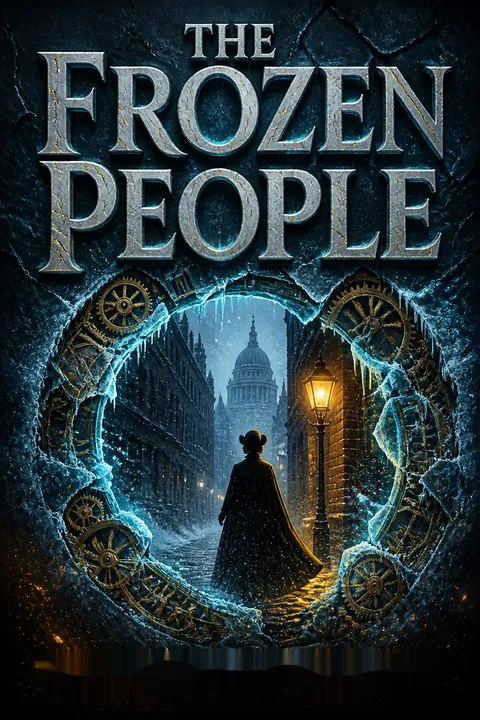

Plot Summary
Cold Cases, Frozen Time
Ali Dawson, a fifty-year-old detective sergeant in London's Cold Case Unit, is used to the monotony of unsolved crimes and the banter of her diverse, close-knit team. But her world shifts when her boss, Geoff, reveals the unit's true purpose: not just solving cold cases, but literally traveling through time to witness the past. The team's nickname, "the frozen people," becomes literal as Ali is tasked with investigating a Victorian-era murder to clear the name of a powerful politician's ancestor. The mundane and the extraordinary collide, setting the stage for a journey that will test Ali's courage, intellect, and sense of self.
The Gate to 1850
Ali is chosen for a unique assignment: to travel back to 1850 and investigate the murder of Ettie Moran, a young artist's model, in the home of Cain Templeton, ancestor of Justice Minister Isaac Templeton. The mission is personal—Isaac's family legacy is at stake, and Ali's own son, Finn, works for him. The team's physicist, Jones, prepares Ali for the journey, explaining the rules: observe, don't interact, and above all, stay safe. The process is risky, the science barely understood, and Ali must disguise herself as a Victorian widow to blend in. The gate is set, and Ali steps into the unknown, leaving behind her modern life and loved ones.
Isaac's Family Secret
Isaac Templeton's request is more than political—it's deeply personal. His great-great-grandfather, Cain, was rumored to be part of a secret society called The Collectors, accused of killing women for initiation. Isaac, writing a book to clear his family's name, needs proof of Cain's innocence. Ali's investigation is complicated by the tangled web of Victorian class, gender, and power. The past is not just history; it's alive with secrets, and the truth may be more dangerous than anyone expects. As Ali delves into the Templeton Collection and interviews those connected to the case, she uncovers disturbing patterns of exploitation and violence against women.
Preparing for the Past
Ali's preparation is both physical and psychological. She must shed her modern identity—dye her hair, remove her nose ring, and learn the customs, language, and skills of a Victorian woman. With help from her old university tutor and a costumer, she learns about the era's beliefs, superstitions, and daily hardships. The process is humbling and unsettling, forcing Ali to confront her own assumptions about history and her place in it. The team is anxious; the risks are real. Ali writes a farewell letter to Finn, just in case. The day arrives, and with a mixture of dread and excitement, she steps through the gate.
Through the Gate Alone
Ali materializes in 1850 London, immediately struck by the biting cold and the strangeness of her surroundings. She is visible, solid, and vulnerable. Navigating the snowy streets in cumbersome skirts, she finds the house at 44 Hawk Street, where Ettie was murdered. The house is a labyrinth of secrets, inhabited by artists, models, and servants, all with their own motives and fears. Ali's presence is both noticed and ignored—she is an outsider, a respectable widow with a mysterious past. The rules of time travel weigh heavily: she must not interfere, yet she is drawn into the lives and tragedies of those around her.
Victorian Shadows and Suspects
Inside 44 Hawk Street, Ali meets Cain Templeton, enigmatic and charming, but possibly dangerous. The other residents—artists Tremain and Arthur, the housekeeper Clara, and the struggling Rokeby family—are all touched by Ettie's death. The murder is quickly blamed on Thomas Creek, a volatile artist who has vanished. Ali's modern instincts clash with Victorian attitudes: evidence is ignored, women's lives are devalued, and the truth is buried under class and gender prejudice. As Ali investigates, she senses that the house itself is haunted by violence and that The Collectors' influence is more sinister than anyone admits.
The Collector's House
Cain Templeton invites Ali to his grand Kensington home, revealing his collection of macabre artifacts: a murderer's brain, looted antiquities, and relics rumored to be cursed. The Collectors, he claims, are merely enthusiasts, but rumors persist of darker rituals. Ali is both repelled and fascinated, sensing that Cain is testing her, perhaps even attracted to her. The boundaries between observer and participant blur as Ali becomes entangled in the house's mysteries. The past is not dead; it is alive in objects, stories, and the very walls of the Collector's house.
Lost in Time
Ali's attempts to return to her own time fail—her ingress point is blocked, and she is stranded in 1850. Days pass in a haze of fear, cold, and growing despair. She tries to maintain her cover, investigating Ettie's murder and the disappearance of Thomas Creek, but the house grows more claustrophobic and the dangers more real. Ali's modern knowledge is both a shield and a liability. She fears she will fade from existence, her son never born, her life erased. Yet she persists, driven by the need to bear witness and find justice, even as the rules of time and causality seem to break down.
Finn's Desperate Search
In 2023, Finn becomes alarmed when Ali disappears. His search leads him to the Cold Case Unit, where he learns the truth about time travel and his mother's mission. The revelation is shattering—his mother is lost in the past, and the government's secrets are deeper than he imagined. As Finn grapples with guilt and helplessness, a new crisis erupts: Isaac Templeton is murdered at his country estate, and Finn becomes the prime suspect. The machinery of justice turns against him, and only Ali's return can save him from a lifetime in prison.
The Murder at East Dean
Isaac Templeton is found shot dead in his Sussex mansion, the scene echoing with secrets and suspicion. The police focus on Finn, whose DNA is found at the scene, and who had argued with Isaac days before. The evidence is circumstantial, but the pressure for a quick resolution is immense. Ali, newly returned from 1850, is thrust into a race against time to prove her son's innocence. The investigation reveals a web of motives: political ambition, marital strife, and the lingering influence of The Collectors. The past and present collide, and the true killer remains hidden in plain sight.
Suspects and Shadows
Ali and her team—Dina, Bud, and the absent John—pursue every lead: Isaac's wife Miranda, his advisors Chibu and Piers, the enigmatic Jones, and the mysterious figure caught on CCTV, dubbed "The Vampire." The investigation is hampered by official secrecy and the threat of exposure. Ali suspects that someone from 1850—perhaps Thomas Creek—has crossed into the present, bringing violence with him. The boundaries between times blur, and Ali is haunted by visions and warnings. The cost of time travel becomes clear: no one is safe, and the truth is more dangerous than any lie.
The Vampire on CCTV
The police uncover footage of a man in Victorian dress near the scene of Isaac's murder. Ali recognizes him as Thomas Creek, the suspected killer from 1850. The evidence is dismissed as fantasy, but Ali knows the danger is real. Creek's presence in the present is a violation of the rules, a tear in the fabric of reality. As Ali races to find him, she realizes that the true threat may come from within her own team. The past is not just a place; it is a force, and it demands a reckoning.
The Truth in the Chair
The investigation leads Ali and Geoff to East Dean, where the secrets of The Collectors and the mechanics of time travel converge. In a climactic confrontation, Thomas Creek attacks Ali, only to vanish by sitting in a cursed chair—an object of power that bridges the centuries. The truth emerges: Geoff, desperate to protect the unit and its secrets, killed Isaac and framed Finn. The cost of obsession is revealed, and the line between justice and vengeance is blurred. Ali must choose between loyalty and truth, knowing that the consequences will echo through time.
Geoff's Deadly Confession
Geoff confesses to the murder, explaining his motives: fear of exposure, loyalty to Jones, and a desperate need to preserve the project that gave his life meaning. He apologizes to Ali and Finn, then takes his own life on the cliffs above East Dean. The confession clears Finn, but the damage is done. The team is shattered, and the future of the Cold Case Unit is uncertain. Ali is left to pick up the pieces, haunted by the knowledge that the greatest dangers come not from the past, but from those closest to us.
The Return and Reckoning
Finn is released, and Ali tries to rebuild her life and the team. The cost of time travel is measured in loss, guilt, and the knowledge that some wounds never heal. John returns from 1850, bringing stories of The Collectors and the dangers of meddling with history. Jones disappears, leaving behind questions and the promise of further adventures. Ali is changed—stronger, wiser, but marked by her journey. The past is never truly past, and the future is uncertain.
The Cost of Time Travel
The story ends with Ali and John reflecting on what they have gained and lost. The boundaries between times are fragile, and the temptation to change the past is ever-present. The team is smaller, but their resolve is stronger. Ali knows that the work is not done—there are more gates to open, more mysteries to solve, and more reckonings to come. The frozen people are thawed, but the world they return to is forever altered.
Analysis
A meditation on history, justice, and the dangers of obsessionThe Frozen People is more than a time-travel mystery; it is a profound exploration of how the past shapes the present, and how the desire to control history can lead to tragedy. Elly Griffiths uses the device of time travel to interrogate the ethics of observation and intervention, the persistence of violence against women, and the seductive power of legacy and reputation. The novel is deeply psychological, examining the ways in which trauma, guilt, and longing echo across generations. The characters are richly drawn, their relationships complex and fraught with ambiguity. The story warns against the dangers of unchecked ambition—whether scientific, political, or personal—and the temptation to rewrite the past rather than confront its lessons. Ultimately, the book is a call to bear witness, to accept the limits of our power, and to find meaning not in control, but in compassion, resilience, and the courage to face the truth, however painful. The frozen people are not just the victims of unsolved crimes, but all of us, trapped by history until we find the strength to move forward.
Review Summary
The Frozen People features DS Ali Dawson, a cold case detective who time-travels to 1850 Victorian London to investigate a possible murder involving an MP's ancestor. When she becomes stranded in the past, her son Finn faces murder charges in the present. Reviews are mixed: fans appreciate Griffiths' writing, the unique premise blending mystery with time travel, and strong character development. Critics cite sluggish pacing, underdeveloped plot elements, rushed endings, and wasted potential. Many compare it unfavorably to Jodi Taylor's Chronicles of St. Mary's series. Despite reservations, most readers plan to continue with future installments.
People Also Read

Characters
Ali Dawson
Ali is the heart of the story—a fifty-year-old detective, mother, and survivor of three marriages. Her relationship with her son Finn is central, marked by love, pride, and the ache of separation. Ali's journey through time is both literal and metaphorical: she confronts her own fears, prejudices, and regrets as she navigates the dangers of Victorian London. Her empathy and determination drive the investigation, but she is also vulnerable—haunted by the possibility of erasure, the loss of her son, and the betrayals of those she trusts. Ali's development is a testament to the power of resilience and the cost of bearing witness.
Finn Kennedy
Finn is Ali's only child, a political advisor whose loyalty to his mother is unwavering. His journey is one of fear, confusion, and growth as he learns the truth about time travel and becomes the prime suspect in Isaac's murder. Finn's psychological arc is marked by guilt, helplessness, and the struggle to assert his own identity. His relationships—with Ali, his father Declan, and his colleagues—are tested by crisis. Finn's innocence and decency are his strengths, but they also make him vulnerable to manipulation and betrayal.
Geoff Bastian
Geoff is the Cold Case Unit's boss, a figure of authority and stability. His devotion to the team and the project is genuine, but it masks deeper insecurities and obsessions. Geoff's grief over his late husband, Bobby, and his fear of losing the unit drive him to desperate measures. His betrayal—murdering Isaac and framing Finn—is both shocking and deeply human, born of love, fear, and the inability to let go. Geoff's suicide is a tragic coda, a reminder that the cost of obsession is often paid in blood.
Serafina "Jones" Pellegrini
Jones is the physicist who makes time travel possible—a visionary whose intellect is matched only by her secrecy. Her relationship with the team is complex: she is both mentor and manipulator, inspiring awe and fear. Jones's motivations are often inscrutable, and her loyalty is to the project above all. She is willing to bend rules, conceal truths, and risk lives for the sake of discovery. Her disappearance at the end leaves open the question of her ultimate allegiance and the dangers of unchecked ambition.
Isaac Templeton
Isaac is the catalyst for the story—a justice minister obsessed with clearing his family's name. His charm and ambition mask deeper insecurities, and his involvement with The Collectors ties him to a legacy of violence. Isaac's relationships—with Finn, his wife Miranda, and his colleagues—are fraught with tension and secrets. His murder is the fulcrum on which the plot turns, exposing the dangers of power, legacy, and the desire to control the narrative of history.
Cain Templeton
Cain is Isaac's ancestor, a Victorian gentleman whose house is a nexus of secrets and violence. His charm and intelligence are matched by a capacity for manipulation and cruelty. Cain's obsession with collecting—objects, people, experiences—mirrors the dangers of unchecked curiosity. His relationship with Ali is ambiguous, marked by attraction, suspicion, and the possibility of love across time. Cain embodies the darkness at the heart of the past, a reminder that history is written in blood.
Thomas Creek
Creek is the artist blamed for Ettie's murder, a volatile figure who vanishes from 1850 and reappears in the present. His presence is a violation of the rules, a living ghost whose violence transcends time. Creek's motivations are opaque—he is both victim and perpetrator, shaped by the brutality of his world. His actions force the team to confront the dangers of time travel and the impossibility of controlling the past.
Dina
Dina is Ali's closest colleague, a computer forensics expert whose wit and empathy ground the team. Her friendship with Ali is a source of strength, and her technical skills are essential to the investigation. Dina's own struggles—with relationships, family expectations, and the pressures of the job—add depth to her character. She is a voice of reason and compassion, helping Ali navigate the moral and emotional complexities of the case.
John Cole
John is the team's senior detective, a recovering alcoholic whose past failures haunt him. His loyalty to Ali and the unit is unwavering, and he volunteers to rescue her from 1850 at great personal risk. John's time in the past is marked by temptation, danger, and the struggle to maintain his identity. His return is a testament to the power of friendship and the possibility of redemption.
Miranda Templeton
Miranda is Isaac's wife, a lawyer whose composure masks deep pain. Her role in the story is both victim and survivor—she loses her husband, faces suspicion, and must protect her children. Miranda's interactions with Ali are marked by mutual respect and the recognition of shared loss. She is a reminder that the collateral damage of violence and ambition is often borne by those left behind.
Plot Devices
Time Travel as Investigation
The central device is the use of time travel not for adventure or conquest, but as a means to witness, understand, and possibly correct the injustices of the past. The "gate" is both literal and metaphorical—a passage to history and a test of character. The rules (observe, don't interact) are constantly tested, and the consequences of breaking them are dire. The narrative structure alternates between past and present, creating suspense and highlighting the interconnectedness of events across centuries.
The Collector Motif
The motif of collecting—objects, people, secrets—runs through the story. The Collectors' society is both a symbol of Victorian privilege and a metaphor for the dangers of unchecked curiosity. Objects (the cursed chair, the murderer's brain, the writing slope) are imbued with power, linking past and present. The act of collecting becomes a stand-in for the desire to control history, with tragic consequences.
Unreliable Narrators and Shifting Perspectives
The story is told through the eyes of Ali, Finn, John, and others, each with their own biases, fears, and blind spots. The use of letters, diaries, and confessions adds layers of ambiguity. The truth is always just out of reach, and the reader is forced to question the reliability of every account. This device heightens suspense and mirrors the uncertainties of both detective work and time travel.
Foreshadowing and Circularity
The narrative is rich with foreshadowing—objects, phrases, and events recur across centuries, creating a sense of inevitability and fate. The past is never truly past; it returns in new forms, demanding resolution. The story's structure is circular, with characters returning to the same places, facing the same dilemmas, and learning the same hard lessons. The cost of ignoring history is made painfully clear.
The Cost of Knowledge
The pursuit of truth comes at a price—lives are lost, relationships shattered, and innocence destroyed. The story interrogates the ethics of intervention: can we witness without changing? Should we? The dangers of obsession, secrecy, and the desire to "fix" the past are explored through the fates of Geoff, Jones, and others. The ultimate lesson is that knowledge is never free, and the past cannot be controlled without consequences.
Download PDF
Download EPUB
.epub digital book format is ideal for reading ebooks on phones, tablets, and e-readers.








































