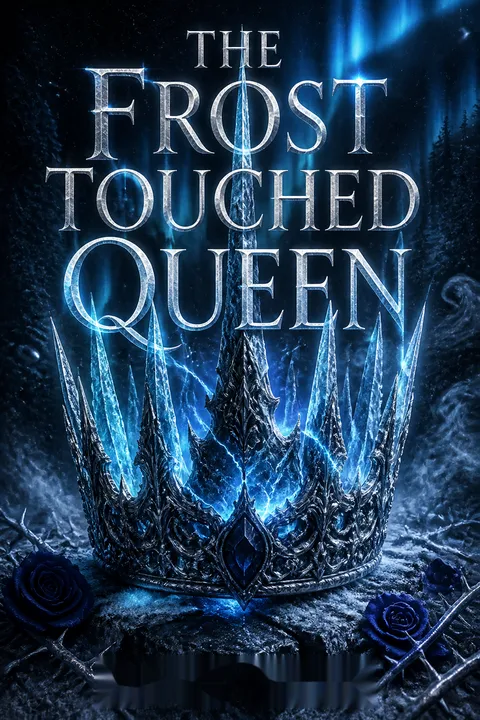

Plot Summary
Winter's Crown Shattered
Katrina, newly crowned Queen of the North, sits on a throne colder than the winter that defines her land. Her father's death has left her with a kingdom in turmoil, surrounded by lords who doubt her, and three rival kings—Levi, Teodoro, and Atlas—each circling for her crown. The weight of expectation and the sting of misogyny press in, as Katrina's every move is scrutinized. She is haunted by the memory of her father's iron rule and the knowledge that, as a woman, her claim is seen as fragile. The blue roses of her winter garden offer little comfort as she steels herself for the battles—political and personal—that lie ahead.
Three Kings, One Queen
Katrina's rule is threatened from all sides: King Levi of the East amasses an army at her border, King Teodoro of the South withholds vital food shipments, and Atlas of the West breaks trade contracts. Each king tests her resolve, seeking to exploit her perceived weakness. Katrina's council is divided, her resources dwindling, and whispers of rebellion grow louder. The memory of childhood friendships with these kings only sharpens the pain of their betrayal. Katrina realizes that to survive, she must outmaneuver not just her enemies, but the very men she once called friends.
Childhood Bonds, Adult Betrayals
Katrina recalls the innocence of her youth, when Levi, Teo, Atlas, and she were inseparable. Their laughter once filled the halls of her castle, but tragedy and time have turned those bonds to rivalry. The death of her mother and the isolation imposed by her father severed these ties, leaving only memories. Now, as adults, the games they play are deadly, and the stakes are nothing less than the fate of the kingdom. Katrina's heart aches for what was lost, but she knows nostalgia is a luxury she can no longer afford.
A Queen's Gambit
Desperate to avoid war and starvation, Katrina devises a bold plan: she will offer her hand in marriage to one of the three kings, turning their ambitions against each other. The marriage decree is both a trap and a test, designed to force her rivals into competition for her favor while buying her time and leverage. The court is shocked, the kingdom abuzz, and the kings themselves are thrown off balance. Katrina's gambit is risky, but it is her only chance to reclaim control and prove herself worthy of the crown she wears.
The East's Cold Embrace
Katrina travels east to Levi's kingdom, braving the harsh journey and the colder reception. Levi, once her protector, now greets her with suspicion and veiled hostility. Their reunion is fraught with tension, old wounds, and unspoken longing. Levi's honor and pain clash with Katrina's pride and vulnerability. The two circle each other, testing boundaries, recalling the past, and struggling to trust. The political game is mirrored by a personal one, as both try to maintain control while their true feelings threaten to surface.
Memories Beneath the Snow
As Katrina and Levi travel together, memories of their shared childhood and a harrowing incident in the northern woods come flooding back. Katrina recalls being attacked and nearly killed, only to be saved by Levi's fierce intervention. The trauma binds them, but also divides them, as the scars of betrayal and loss linger. Their journey is as much about navigating the treacherous landscape of their hearts as it is about crossing the kingdom. Each step forward is shadowed by the ghosts of what they once were—and what they might become.
Swords and Secrets
In the east, Katrina is drawn into Levi's world—a place of camaraderie, sacrifice, and simmering resentment. She witnesses the loyalty Levi commands, the pain he carries, and the secrets he keeps. Letters arrive from Atlas, hinting at deeper conspiracies and old wounds. Katrina's attempts to seduce information from Levi are met with equal parts resistance and desire. The line between enemy and lover blurs, as both struggle to reconcile duty with longing. The chessboard is set, but the pieces move with hearts as well as hands.
The Marriage Decree
Katrina's marriage proposal sets the three kings against each other, each vying for her hand and the power it represents. Levi and Teo, once brothers in arms, now see each other as rivals. Atlas remains a shadowy presence, his intentions unclear. The court is a stage for manipulation, jealousy, and ambition. Katrina must navigate the dangerous dance of suitors, each encounter a test of will and wit. The stakes are raised, and the cost of failure is nothing less than the loss of her kingdom—and perhaps her life.
Hearts on the Battlefield
As Katrina's journey continues, the boundaries between political alliance and personal desire collapse. Her relationships with Levi and Teo grow increasingly complex, charged with passion, resentment, and unresolved history. The battlefield is no longer just a place of swords and shields, but of hearts and bodies. Each king offers her something different: Levi, the promise of honor and shared pain; Teo, the thrill of freedom and forbidden pleasure. Katrina is torn between them, her heart a prize as coveted as her crown.
The King's Confession
Letters and confessions bring devastating truths to light. Levi reveals the horrors of his past—the murder of his parents, the betrayal by those he trusted, and the role Teo's family played in his suffering. Katrina is forced to confront the sins of her own father and the cost of power. The lines between victim and villain blur, as each character is revealed to be both. Forgiveness, vengeance, and love become tangled, and Katrina must decide what kind of queen—and woman—she will be.
The South's Burning Sun
In the south, Katrina is introduced to a world unlike any she has known. Nas Laed is a city of abundance, sensuality, and freedom, but also of hidden suffering and inequality. Teo, her childhood friend and now lover, teaches her the ways of pleasure and submission, helping her discover parts of herself she never knew existed. Yet beneath the surface, the scars of the past and the realities of the present threaten to consume them both. Katrina learns that liberation comes at a price, and that love can be both a balm and a blade.
Paradise and Punishment
Katrina's time in the south is a whirlwind of ecstasy and revelation. She finds joy in Teo's arms, but also confronts the harsh truths of his kingdom—the hunger, the sacrifice, the legacy of her father's cruelty. The pleasure house becomes a place of both healing and reckoning, as Katrina and Teo push each other to their limits. But happiness is fleeting, and the shadows of betrayal and guilt loom large. The paradise they create is always on the verge of being lost.
Chains of the Past
Letters from Levi and confrontations with Cleo force Katrina to face the full extent of the past's grip on the present. The truth about Teo's involvement in Levi's tragedy, the suffering of the south, and the complicity of all their families comes to light. Katrina is torn between love and justice, loyalty and truth. The chains of the past bind them all, and the only way forward is through pain, forgiveness, and the courage to change.
The Pleasure House Lesson
Katrina's journey through the pleasure house is a crucible of transformation. Guided by Teo, she learns the paradox of power in surrender, the freedom in submission, and the strength in vulnerability. The lessons of the flesh become lessons of the heart, as Katrina discovers who she truly is—and what she truly wants. The boundaries between pain and pleasure, love and loss, are redrawn, and Katrina emerges changed, ready to claim her destiny.
Love's Double-Edged Sword
Katrina's heart is torn between Levi and Teo, each man representing a different path, a different kind of love. The freedom of the south and the honor of the east pull her in opposite directions. The realization that she cannot have both—and may lose both—forces Katrina to confront the true cost of love. The sword that defends can also wound, and the heart that loves can also break. In the end, Katrina must choose not just a king, but the kind of queen she will be.
Letters and Lies
Letters from Levi bring both hope and heartbreak, as he confesses his love and his willingness to let Katrina go. The truth about Teo's past and the suffering of the south is revealed, shattering illusions and forcing Katrina to see the world—and herself—anew. Lies, omissions, and half-truths have shaped their lives, but now only honesty can set them free. The power of words is both a curse and a blessing, and Katrina must decide which truths to keep and which to let go.
The Truth of Blood
The full horror of the past is laid bare: the betrayals, the murders, the sacrifices made in the name of power. Katrina, Levi, and Teo are all victims and perpetrators, bound by blood and guilt. The legacy of their parents' choices haunts them, and the only way to break the cycle is through forgiveness and change. Katrina must confront the darkness within herself and those she loves, and find the strength to forge a new path for her kingdom.
The Last Goodbye
As Katrina prepares to leave the south and journey west, she is forced to say goodbye to those she loves. Anya stays behind with Cleo, Inessa remains her steadfast companion, and Teo lets her go with a broken heart. The pain of parting is matched only by the hope of reunion. Katrina's journey is not over, and the challenges of the west—and Atlas—await. But she leaves with a heart fuller and heavier than when she began, ready to face whatever comes next.
Analysis
A modern tale of power, trauma, and the cost of loveThe Frost Touched Queen is a sweeping, emotionally charged reimagining of the classic court intrigue romance, set in a world where the personal is always political and the past is never truly past. At its heart, the novel is a meditation on the paradoxes of power: the strength found in vulnerability, the freedom in surrender, and the necessity of forgiveness. Katrina's journey—from isolated, embattled queen to a woman who claims her own desires and destiny—is both a feminist coming-of-age and a reckoning with the sins of the fathers. The novel interrogates the ways in which trauma shapes identity, the dangers of inherited hatred, and the possibility of breaking cycles of violence through honesty and compassion. The love triangle (or quadrangle) is not just a romantic device, but a crucible for exploring the complexities of loyalty, justice, and self-knowledge. Ultimately, The Frost Touched Queen asks what it means to rule—not just a kingdom, but one's own heart—and whether true peace can ever be achieved without first confronting the darkness within.
Review Summary
The Frost Touched Queen is a reverse harem romance set in a medieval-inspired world. Readers praised the intriguing plot, complex characters, and steamy scenes. Many enjoyed the childhood friends-to-enemies-to-lovers trope and the political intrigue. Some criticized the lack of world-building and found the main character naive. The book focuses on Queen Katrina's relationships with two of three potential suitors, Kings Levi and Teo. While opinions varied, most readers were eager for the sequel to see how the story unfolds.
People Also Read

Characters
Katrina of Bratsk
Katrina is the only legitimate heir to the northern throne, raised in the shadow of her father's iron rule and her mother's tragic death. Intelligent, proud, and fiercely independent, she is both a product of her harsh environment and a rebel against it. Katrina's relationships with Levi, Teo, and Atlas are shaped by childhood bonds and adult betrayals, leaving her both vulnerable and guarded. Her journey is one of self-discovery, as she learns the paradox of power in vulnerability, the cost of love, and the necessity of forgiveness. Katrina's greatest strength is her refusal to be defined by others' expectations, even as she struggles with the weight of her own heart.
Levi of Theƶmaer
Levi is the stoic, honorable ruler of the east, shaped by the brutal murder of his parents and the betrayals of those he once called brothers. His loyalty is hard-won and fiercely guarded, and his love for Katrina is both a source of strength and pain. Levi's sense of duty often clashes with his desires, leaving him torn between vengeance and forgiveness. His relationship with Katrina is marked by longing, resentment, and a deep, unspoken understanding. Levi's journey is one of learning to let go—of the past, of hatred, and of the need for control—in order to find peace.
Teodoro of Derfir
Teo is the charismatic, passionate king of the south, defined by his pursuit of pleasure and his desperate need for love. Beneath his carefree exterior lies a man tormented by guilt and haunted by the consequences of his father's actions. Teo's relationship with Katrina is both liberating and destructive, offering her freedom even as it binds him to his own pain. His journey is one of atonement, as he seeks forgiveness for the sins of the past and the courage to love without fear. Teo is both a victim and a perpetrator, struggling to reconcile the two.
Atlas of Narberth
Atlas, ruler of the west, is the most enigmatic of the three kings. Once the sickly, sensitive boy of the group, he has grown into a man defined by loss and the need for vengeance. His loyalty to Levi is deep, but his own pain and ambition threaten to consume him. Atlas's relationship with Katrina is complicated by old wounds and new betrayals, and his role in the unfolding drama is both catalyst and threat. Atlas is a reminder that the past is never truly past, and that the desire for justice can become a hunger for destruction.
Inessa of Bjørn
Inessa is Katrina's most trusted companion, a woman of strength, intelligence, and unyielding loyalty. She is both confidante and critic, unafraid to speak hard truths and challenge Katrina's decisions. Inessa's own journey is one of learning to open her heart, as she navigates her feelings for Brick and her fears of vulnerability. She represents the power of friendship and the importance of grounding, even as the world shifts around her.
Anya
Anya is Katrina's other handmaiden, a woman of warmth, curiosity, and unguarded emotion. Her journey from innocence to experience mirrors Katrina's own, as she falls in love with Cleo and learns to claim her own happiness. Anya's optimism and courage are both a balm and a challenge to those around her, reminding them that joy is worth fighting for.
Cleo
Cleo is Teo's closest friend and Anya's lover, a woman who has survived poverty, loss, and exploitation to become a force of nature. She is both mentor and provocateur, teaching Katrina and Anya the lessons of freedom, pleasure, and self-acceptance. Cleo's loyalty to Teo is unwavering, but her love for Anya opens new possibilities. She is a symbol of resilience and the power of choosing one's own path.
Brick
Brick is Levi's general and confidant, a man of strength, humor, and deep loyalty. His relationship with Inessa is marked by mutual respect and unspoken desire, offering a quieter, steadier counterpoint to the drama of the main trio. Brick's role is to ground Levi, challenge him, and remind him of the importance of brotherhood.
Salome
Salome is Katrina's stepmother and the mother of her beloved half-brother, Elijah. She represents the power of maternal love, the pain of loss, and the courage to protect those who cannot protect themselves. Salome's wisdom and kindness are a touchstone for Katrina, reminding her of the importance of compassion.
Elijah
Elijah is Katrina's young half-brother, a symbol of hope and vulnerability in a world defined by violence and ambition. His presence reminds Katrina of what is at stake, and his safety is a driving force behind many of her decisions. Elijah represents the future—the possibility of a world not defined by the sins of the past.
Plot Devices
The Marriage Decree
Katrina's offer of marriage to her three rival kings is the central plot device, transforming the threat of war into a competition for her hand. This decree is both a shield and a sword, forcing her enemies to become suitors and buying her time to consolidate power. The marriage contest is a stage for political maneuvering, personal revelation, and the testing of loyalties. It also serves as a mirror for Katrina's own journey, as she must choose not just a husband, but the kind of queen—and woman—she will be.
Letters and Confessions
Letters, confessions, and secrets drive the narrative, revealing hidden truths, old betrayals, and the depths of love and pain. The exchange of letters between Katrina, Levi, and Teo is a means of both connection and destruction, allowing characters to say what cannot be spoken and to wound with words as surely as with swords. The power of confession—whether in writing or in person—is a recurring motif, underscoring the importance of honesty, vulnerability, and the courage to face the past.
Flashbacks and Memory
The use of flashbacks and memories is central to the novel's structure, allowing the reader to see the roots of present conflicts in childhood bonds and traumas. These glimpses into the past provide context for the characters' actions, deepen the emotional stakes, and reveal the ways in which history shapes destiny. The interplay between memory and reality is a source of both pain and healing, as characters struggle to break free from the chains of the past.
Pleasure and Pain
The exploration of pleasure, pain, and power—particularly through Katrina's experiences in the south—is both a plot device and a metaphor for her journey. The pleasure house is a crucible of self-discovery, where surrender becomes strength and vulnerability becomes power. The boundaries between pain and pleasure, love and loss, are blurred, forcing characters to confront their deepest fears and desires. This device is used to challenge assumptions, reveal hidden truths, and catalyze change.
The Chessboard of Power
The novel is structured as a game of chess, with Katrina and the three kings as the main players. Every move—political, personal, or romantic—is a calculated risk, and the stakes are nothing less than the fate of the kingdom. The chessboard is a metaphor for the complexities of power, the necessity of sacrifice, and the courage required to survive. The game is never just about winning, but about who is willing to pay the price.

Download PDF
Download EPUB
.epub digital book format is ideal for reading ebooks on phones, tablets, and e-readers.








































