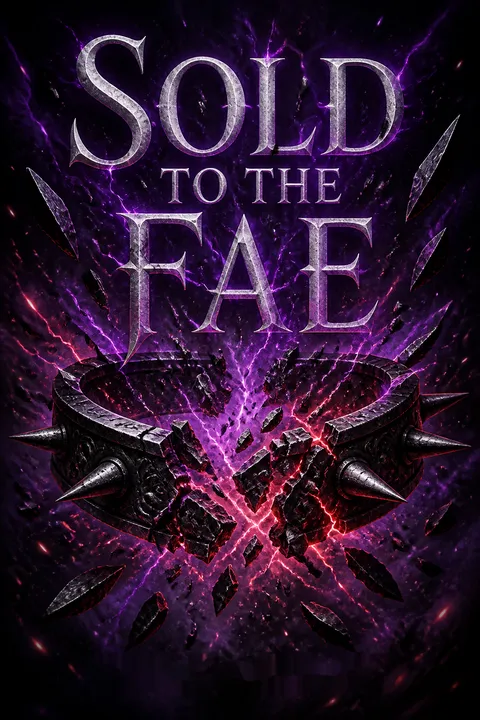

Plot Summary
Caged by Fae Cruelty
Thalia, a human girl, is trapped in a fae stronghold, enduring relentless bullying and humiliation from the fae elite. Her days are marked by pain, isolation, and the constant threat of violence. The fae treat her as a lesser being, a plaything to torment, and her only solace is the hope that her hidden power—mysteriously bound by her captors—will one day set her free. The cruelty she faces is both physical and psychological, leaving her with deep scars and a yearning for escape. Yet, beneath her suffering, a fierce will to survive and a spark of defiance remain, hinting at the strength that lies dormant within her.
The Power Unleashed
Thalia's captor, Varrik, finally tests her mysterious power at a fae gathering. Unbound for the first time, Thalia's magic erupts uncontrollably, killing scores of fae in an instant. The aftermath is both awe-inspiring and horrifying—she is a weapon, a harbinger of death, and her value to Varrik skyrockets. Instead of freedom, she is bound even tighter, her power suppressed and her autonomy stripped away. The trauma of what she's done haunts her, and she realizes she is both a savior and a monster in the eyes of those who control her. This moment cements her as a pawn in a much larger, darker game.
Seven Years in Hiding
Years later, Thalia has escaped Varrik's keep and lives in disguise as a troll servant in the city of Alcana. She hides her true identity and power, blending in among the city's outcasts and laborers. Her days are filled with menial work and the constant fear of discovery. The city is locked down, its magical gates sealed, trapping everyone inside. Thalia's existence is precarious, but she clings to her anonymity, determined never to use her power again. The wounds of her past fester, and she is haunted by guilt and the memory of those she killed.
Troll Disguise, Human Heart
Thalia's troll disguise is her shield, but it also isolates her. She endures unwanted attention from a troll suitor, Yeith, and keeps her distance from everyone, especially the fae. Her only interactions are transactional, and she lives in constant vigilance, knowing that any slip could reveal her humanity and doom her to slavery or worse. The city's social hierarchy is brutal, and Thalia's position is always precarious. Despite her efforts to remain invisible, she cannot escape the notice of those who sense something different about her.
The Fae Trio Return
Three fae men—Grey, Kallum, and Dane—arrive in Alcana, taking up positions of power within the city. Thalia recognizes them from her past, but they do not recognize her in her troll guise. Their presence unsettles her, and she is drawn to them despite herself. The trio are close-knit, dangerous, and carry their own scars from the past. As tensions rise in the city, their paths cross with Thalia's more frequently, and the risk of her exposure grows. The dynamic between them is fraught with suspicion, attraction, and unresolved history.
Blackmail and Blood
When Yeith attacks Thalia, she is forced to kill him in self-defense, breaking her vow never to kill again. Grey witnesses the act and, along with Kallum and Dane, uses it to blackmail her. They demand her help in exchange for their silence, drawing her into their schemes. Thalia is trapped once more, her freedom and safety dependent on the whims of those who hold her secret. The power dynamic shifts, and she is forced to navigate a new web of manipulation, violence, and reluctant alliances.
Unmasking and Betrayal
Thalia's disguise is destroyed, and her true identity as the Harbinger is exposed to the fae trio. Their reaction is a mix of shock, anger, and fascination. She is captured and bound by their magic, stripped of her autonomy and forced to confront the men who once knew her as a child. The betrayal cuts deep on both sides—old wounds are reopened, and the lines between captor and captive blur. Thalia's fate is now inextricably tied to the trio, and the balance of power is more precarious than ever.
Dungeon Shadows and Escape
Thrown into the city dungeon, Thalia endures brutal treatment at the hands of the guards and jailor. She forms a desperate alliance with another prisoner, orchestrating a small act of vengeance before being rescued by the fae trio. Her body and spirit are battered, but she survives through cunning and sheer will. The experience hardens her, and she emerges with a new understanding of her own resilience—and the depths of cruelty in the world around her.
Sold, Bound, and Bartered
The trio "buy" Thalia from the city's authorities, using bribes and lies to erase her past crimes. In the process, they discover that the laws of the Dark Realms have changed: human females are now rare, valuable, and protected by strict regulations. Thalia is forced to play the role of a compliant slave, subject to humiliating inspections and the threat of being sold to a stranger. The trio must prove their ability to care for her, and Thalia must navigate a new kind of captivity—one that is both dehumanizing and insidiously seductive.
The Road to Freedom
With the city's magical shield finally lifted, Thalia and the trio escape into the wilds, pursued by enemies and haunted by their own demons. The journey is perilous, filled with physical danger and emotional turmoil. Thalia's relationship with her captors evolves, moving from mutual distrust to a complex web of dependence, desire, and reluctant care. Each member of the group is forced to confront their own motivations and the possibility of redemption—or damnation.
Breach Sickness and New Laws
Frequent travel through the magical Breach leaves Thalia dangerously ill, revealing the vulnerability of humans in a world built for fae. The group is forced to seek help in a town where human slaves are regulated and "cared for" under new laws. Thalia is subjected to invasive medical treatment and must perform acts of submission to satisfy the authorities. The trio, in turn, must learn to navigate the rules of ownership, discipline, and pleasure, blurring the lines between necessity and desire.
Lessons in Submission
To secure their freedom, Thalia and the trio must prove their mastery of the new laws—demonstrating both discipline and "release" in public. Thalia is forced to submit to their touch, her body becoming a battleground for power, shame, and unexpected pleasure. The trio, each in their own way, struggle with their feelings for her and for each other, as old resentments and new desires come to the fore. The experience is transformative for all, breaking down barriers and forging new bonds.
Practice, Pain, and Pleasure
As the group prepares for the council's final test, Thalia and the trio explore the boundaries of pain and pleasure, dominance and submission. Thalia's guilt and need for punishment become entwined with her longing for connection, and the trio's cruelty gives way to tenderness and care. The lines between captor and captive, master and slave, blur further, and all are forced to confront the truth of what they want—and what they fear.
The Council's Test
In a final, humiliating display, Thalia is made to submit before the council, proving her "training" and the trio's competence as masters. The performance is both degrading and strangely intimate, cementing the new dynamic between them. With the council's approval, they are finally allowed to leave, but the cost is high—Thalia's sense of self is shattered, and the trio's loyalty to each other is tested as never before.
The Harbinger's Choice
Separated from the group, Thalia is captured by orcs and faces imminent violation and death. In a moment of desperation, she unleashes her power once more, killing her captors to save herself and Grey, who has been transformed into a beast. The act is both a betrayal of her vow and a reclamation of agency—she chooses to act, not for her own sake, but for another. The aftermath is bittersweet: she is free, but the cost is more blood on her hands and the knowledge that she can never truly escape what she is.
Reunion and Reckoning
The group is reunited, but the bonds between them are frayed by jealousy, guilt, and the looming specter of Varrik, who arrives to reclaim his "Harbinger." Thalia's fate is once again out of her hands, and the trio must decide where their loyalties truly lie. The story ends on the cusp of a new chapter—one where Thalia's power, agency, and heart will be tested as never before, and the line between freedom and captivity is more blurred than ever.
Analysis
Sold to the Fae is a dark, emotionally charged exploration of power, trauma, and the search for agency in a world where bodies and souls are commodities. Kyra Alessy crafts a narrative that is both brutal and tender, refusing to flinch from the realities of abuse, violence, and the corrosive effects of dehumanization. Yet, within this darkness, there is a persistent thread of hope—the possibility that even the most broken can find connection, that even the most monstrous can choose mercy. The novel interrogates the nature of consent, the meaning of freedom, and the ways in which systems of power perpetuate themselves through both cruelty and care. Thalia's journey is a testament to the resilience of the human spirit, but it is also a warning: true liberation cannot be granted by others, only seized for oneself. The story's refusal to offer easy redemption or simple villains makes it a compelling, thought-provoking read for a modern audience attuned to the complexities of trauma, identity, and the politics of desire.
Review Summary
Sold to the Fae receives polarizing reviews averaging 3.77/5 stars. Fans praise Kyra Alessy's world-building, emotional depth, and brutal cliffhanger, appreciating the dark fantasy reverse harem with alphaholes needing redemption. They love resilient FMC Thalia and anticipate groveling from MMCs Grey, Dane, and Kallum. Critics condemn the romanticization of abuse, superficial character development, and weak world-building. Many find the males' treatment of Thalia disturbing and unjustified. Common complaints include Stockholm syndrome dynamics, insufficient backstory, and excessive cruelty portrayed as romance. Despite controversy, devoted readers eagerly await book two.
People Also Read

Characters
Thalia (The Harbinger)
Thalia is a human woman forged in trauma, first as a child weaponized by Varrik and then as a fugitive hiding in plain sight. Her psyche is a battleground of guilt, shame, and a desperate longing for agency. She is fiercely intelligent and resourceful, but her self-worth is eroded by years of abuse and the knowledge of the destruction she has wrought. Thalia's relationships are fraught with mistrust—she expects betrayal and pain, yet yearns for connection. Her journey is one of reluctant empowerment: she is both victim and destroyer, seeking redemption but fearing she is irredeemable. Her development is marked by moments of vulnerability, defiance, and, ultimately, the reclamation of her own choices, even when those choices come at a terrible cost.
Grey
Grey is the most reserved of the fae trio, a man marked by loss and a deep sense of duty. His outward calm masks a storm of emotion and a powerful, newly awakened shifter magic. He is haunted by his past, particularly the trauma of his mother's death and his perceived cowardice. Grey's relationship with Thalia is complex—he is both her captor and her savior, drawn to her vulnerability and strength. His development is a slow thawing, as he learns to trust, to desire, and to accept the beast within himself. Grey's loyalty is fierce, but his sense of justice is often at odds with the cruelty of the world around him.
Kallum
Kallum is the most outwardly playful and seductive of the trio, but beneath his bravado lies a deep well of insecurity and longing. He is obsessed with Thalia, both as a symbol of power and as a woman who sees past his façade. Kallum's skill—mind-reading and invisibility—mirrors his own fear of being truly seen. He is both cruel and tender, capable of great violence and unexpected gentleness. His journey is one of self-discovery, as he grapples with his feelings for Thalia and his place within the trio. Kallum's need for control is matched only by his desire to be loved, and his actions are often driven by a fear of abandonment.
Dane
Dane is the most ruthless and pragmatic of the trio, a mage whose power has grown exponentially. He is driven by a desire for revenge and a longing to return home, but his feelings for Thalia complicate his goals. Dane's relationship with her is marked by both cruelty and care—he is fascinated by her power and terrified of what she represents. His development is a struggle between his loyalty to his friends, his ambition, and his growing empathy for Thalia. Dane is a master of manipulation, but he is not immune to the emotional currents that swirl around him.
Varrik
Varrik is the architect of Thalia's suffering, a fae lord who sees people as tools to be used and discarded. He is charming, intelligent, and utterly ruthless, capable of inspiring both devotion and terror. Varrik's relationship with Thalia is deeply twisted—he is both her "savior" and her tormentor, shaping her into a weapon for his own ends. His psychological hold over her is profound, and his return at the end of the story signals a new phase of conflict and control.
Grith
Grith is Varrik's right hand, a fae whose kindness is always laced with menace. He is physically powerful and deeply unsettling, using his position to exert control over Thalia and others. Grith's interest in Thalia is both sexual and possessive, and his presence is a constant reminder of the dangers she faces. He represents the casual cruelty of those in power and the ever-present threat of violence.
Fiana
Fiana is a fae elite who torments Thalia in her youth, embodying the prejudice and malice of the fae towards humans. Her bullying is both personal and systemic, reinforcing Thalia's sense of isolation and unworthiness. Fiana's relationship with the trio, particularly Dane, adds layers of jealousy and competition to the group's dynamics.
Healer Reyn
Reyn is a goblin healer who represents the new laws governing human slaves. He is both kind and patronizing, treating Thalia as a valuable commodity rather than a person. His interventions are well-intentioned but dehumanizing, forcing Thalia to submit to invasive treatments and humiliating rituals. Reyn's presence highlights the shifting power structures of the Dark Realms and the insidious nature of "benevolent" control.
Gwennie
Gwennie is a human slave owned by Reyn, serving as both a warning and a comfort to Thalia. She is docile, resigned to her role, and skilled in the arts of submission and pleasure. Gwennie's acceptance of her fate is both tragic and pragmatic, and her interactions with Thalia underscore the limited choices available to women in this world.
Yeith
Yeith is a troll who fixates on Thalia, his unwanted advances culminating in an attempted assault. His death at Thalia's hands is a turning point, forcing her to break her vow and setting off a chain of events that lead to her exposure and captivity. Yeith embodies the ever-present threat of sexual violence and the consequences of self-defense in a world stacked against the vulnerable.
Plot Devices
Duality of Power and Powerlessness
The narrative structure repeatedly places her in situations where she is both the most dangerous and the most vulnerable person in the room. This duality is mirrored in her relationships—with Varrik, the fae trio, and the world at large. The use of magical bindings, disguises, and shifting social hierarchies keeps the reader off-balance, constantly questioning who holds the real power. Foreshadowing is used to hint at Thalia's eventual reclamation of agency, but the path is fraught with setbacks and betrayals.
Masking and Identity
Thalia's troll disguise is both a literal and metaphorical mask, allowing her to survive but also cutting her off from connection. The unmasking scene is a pivotal moment, forcing all characters to confront the truth of who she is—and who they are in relation to her. The motif of masking recurs throughout, from magical glamours to emotional walls, and the gradual stripping away of these layers is central to the story's emotional arc.
Forced Proximity and Reluctant Intimacy
This device heightens tension, accelerates character development, and blurs the lines between captor and captive, enemy and lover. The journey through the Breach, the shared dangers, and the necessity of cooperation create opportunities for both conflict and connection. The gradual shift from cruelty to care is made believable by the relentless proximity and the characters' shared traumas.
The Law as Both Cage and Shield
These laws are both a source of oppression and a means of protection, forcing the characters to navigate a labyrinth of rules that are as dehumanizing as they are "civilized." The council's test is a set piece that crystallizes the story's themes: submission, performance, and the illusion of choice. The law is a character in its own right, shaping the fates of all involved.
Guilt, Punishment, and Redemption
Thalia's need for punishment, the trio's desire for revenge, and the possibility of forgiveness are woven into every interaction. The use of pain as both punishment and pleasure is a recurring motif, complicating the characters' relationships and their own self-understanding. The story refuses easy answers, instead exploring the messy, nonlinear path to healing and self-acceptance.
Download PDF
Download EPUB
.epub digital book format is ideal for reading ebooks on phones, tablets, and e-readers.








































