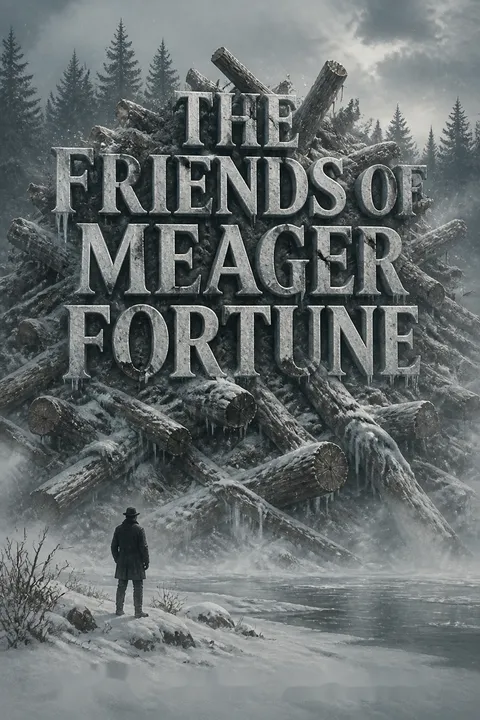

Plot Summary
Prophecy Beneath Snow
In the bleak Canadian winter, in a region defined by lumber, the Jameson dynasty's origins are colored by prophecy. Mary Jameson, plagued with anxiety, consults a Micmac seer who warns her that her two sons will inherit greatness, but doom will befall the second-born through rash action. This omen, passed over half-seriously through years and generations, becomes a quiet presence within their house, shaping choices and relationships. Out of familial loss and economic necessity, Will, the elder, is forced into early manhood, inheriting both the promise and weight of the family's lumber empire. The chapter sets an atmosphere heavy with foreboding, suggesting fate and isolation amidst harsh landscape, hinting that even the most powerful families cannot escape their personal legends.
Will's Rise and Rule
After his father's sudden death, Will, barely a teenager, becomes the indomitable center around whom the business and family orbit. Hardy, proud, his vision and muscle expand the family's influence, mapping vast tracts of wilderness into enterprise. Will's drive attracts both admiration and dangerous envy. He pushes aside his sensitive brother Owen, dismissing intellect for hard action—a philosophy that strains against the softer, bookish side of the family. Will's hands-on leadership, at times callous and uncompromising, wins him both success and hostility. The friction built in this era—between tradition and progress, strength and sensitivity, protection and dismissal—lays groundwork for later tragedy.
Dan Auger's Fate
The pivotal incident comes when Dan Auger, a respected but fiercely independent woodsman, is discharged from Will's camp over a technical dispute. Auger's tragic death on a frozen river is a direct consequence of Will's youthful pride and inflexibility—a decision that ripples through the community and scars Will's conscience. The accident exposes the cruel fragility beneath the veneer of power, estranging the Jamesons from their workers and neighbors. Will is haunted by responsibility, beginning a pattern of guilt and self-recrimination. The narrative paints a chilling portrait of unintended consequences born from pride, and the way a single snap decision can shakily tip the scales of fate.
Owen's Haunted Adolescence
Sensitive, imaginative Owen grows up in his brother's looming shadow, yearning for a sense of belonging. His love for Lula Brower and thirst for intellectual recognition are stifled by Will's scorn and the town's conformity. Rejected by both Lula's pragmatic family and the insular "Steadfast Few," Owen slips further into solitude. The family's world is one of unyielding men, hard horses, and frozen land—an environment that punishes difference. The emotional gulf between Will's practical world and Owen's inner life sharply widens, sculpting Owen into a reluctant outsider whose destiny seems shaped by the unresolved tensions of his childhood.
Death on the River
In an attempt to maintain the drive's momentum, Will disregards caution by personally intervening in a dangerous logjam, a task reserved for the most skilled timber men. His leadership—equal parts bravado and devotion—proves fatal. Will is crushed beneath the logs, his death a devastating pivot. The youthful Jameson matriarch is left broken, the dynasty's foundation abruptly shaken. Will's demise casts long shadows over Owen and the remaining family, infusing every subsequent act with the sense that their best days—and their best protector—have been carried under by the river. Guilt, duty, and the emptiness of their inheritance now define the survivors' existence.
Inheritance of Guilt
In the aftermath, the Jameson house is a fortress haunted by the absence of Will's certainty. Mary, caught between grief and pride, clings to the prophecy as both explanation and curse. Owen, suddenly expected to fill an unfillable role, must choose whether to continue the family's punishing trade or chart his own course. He is torn between filial loyalty and a sense of futility. Both family honor and personal redemption now hang on Owen's fragile shoulders. The story's chords deepen into melancholy as the family's tragedy is gradually transformed into gossip and schadenfreude for the once-admiring town.
War and Transformation
The looming world war offers Owen a crucible. Fleeing both local suffocation and his own uncertainty, he serves valiantly—his experience marked by injury, camaraderie, and the forging of brittle new identity. The horrors of war crack open Owen's reserve, reshaping him into a man who is resourceful but haunted, honorable but inwardly fractured. His heroics earn recognition, including the Victoria Cross, but the wounds—bodily and spiritual—never wholly close. On returning, the home he fled is unrecognizable, the family changed and the community's dynamics twisted by war and loss. Personal valor cannot wash away the ghosts of prophecy and accusation.
Broken Returns
Returning to his old town, Owen is swept up in unwanted adulation. The townspeople's nostalgia soon turns into suspicion and resentment, especially as rumors swirl regarding his relationship with Camellia—the enigmatic daughter of a notorious murderer and the wife of Reggie, Owen's old friend. The ever-present undercurrents of scandal, compounded by jealousies and economic desperation, make Owen a target for both hope and hatred. Meanwhile, his own family's fortunes teeter near collapse, their proud legacy at the mercy of bureaucratic oversight and rival ambitions. The past cannot be resurrected, nor can the world accommodate its returning, changed sons.
Reggie's Unraveling
Glidden's life, once admired, is chipped away by doubts and whispers about his wife and Owen. Social status, personal pride, and wounds from the war gnaw at his sense of self. Reggie's failures and the townspeople's mockery fuel a downward spiral, leading to self-abasement, violence, and despair. Eventually he vanishes, presumed dead—a body is found, fueling further gossip and cementing his and Camellia's roles as figures of scandal. His absence pushes the narrative toward its boiling point, as the town's hunger for scapegoats finds new objects: Owen and Camellia.
Rumors and Scandal
With Reggie gone and Camellia ostracized, the town's collective anxiety finds an outlet in rumor. Whispered accusations escalate into social and legal consequences, amplifying the community's hunger for spectacle and justice. The family tragedy becomes everyone's entertainment; truth and compassion are buried beneath the stampede. Owen, confused and furious, can neither control nor appease the mob. Innocent gestures and half-truths spiral into presumed guilt. The moral rot at the heart of the town is laid bare—the need to explain misfortune and maintain boundaries at any cost, no matter how many innocents are trampled in the process.
Love, Betrayal, Forgiveness
Amid persecution, Owen and Camellia's mutual need draws them together, but always blighted by circumstance, regret, and community judgment. Lula, steadfast in her own suffering, acts as witness and sometime savior, her own feelings complicated by loss and resentment. Mary, broken but unyielding, comes to see her own hubris and the unseen ways in which familial prophecy shaped their fates. The remaining survivors—especially Camellia—are forced to reckon with the ambiguity of love, the complexity of loyalty, and the myth of uncomplicated redemption. There are rare moments of reconciliation, but no total peace.
Good Friday Mountain
Seeking survival and dignity for the family business, Owen leads the last, desperate Jameson cut on the perilous slopes of Good Friday Mountain. The brutal conditions, punishing weather, and crewing of hardened outcasts turn the venture into a metaphor for endurance and sacrifice. Rival mills and shifting labor politics add pressure, while internal sabotage—spurred by desperation and betrayal—threatens more than profit. The toll is not just economic but human: the true cost of labor, pride, and the vanishing frontier is measured in broken bodies, dead horses, and haunted souls. A world is ending—its remnants ablaze under the "last drive."
Catastrophe and Reckoning
A catastrophic accident—caused by political intrigue, hunger for recognition, and the petty sabotage of Stretch Tomkins—claims the lives of the best teamsters and nearly destroys the harvest. Tragedy unspools over hours, with devastating pileups of men, animals, and hope. Only the acts of courage and elemental kindness (notably Meager Fortune's) prevent the collapse from becoming total. In the aftermath, the scale of grief and the futility of blame create a reckoning: guilt splits along unexpected lines, and the distinctions between hero and traitor, strength and weakness, become forever blurred.
The End of a World
The calamity marks the true end of the Jameson dynasty and the culture of hand-hewn wood. Survivors watch as the new era—mechanized, commercial, impersonal—consumes the forests and the way of life their ancestors had died building. Personal stories, heroics, and tragedies are subsumed into the anonymous progress of commerce; memorials spring up, but meaning leaks away into new scandals and faded memories. The town which once celebrated its loggers now shrinks from its history. Survivors scatter or become ghosts within their own stories, haunted by what cannot be retrieved or fully understood.
Consequence, Redemption, Survivor
Narration shifts to the voice of the child born of controversy—possibly Owen's, certainly Camellia's, and raised as Reggie's. This "meager fortune," once the emblem of fate and scandal, now inherits the stories, the wounds, and the solitary pride of all who have gone before. Ghosts populate his childhood—sadness, loyalty, broken ambitions, and the search for connection—and he comes to bear their memory long into a transformed world. His relationship with Lula, Camellia, and even Tomkins spans compassion, anger, and wisdom. The past cannot be erased, but even among ruins and forgotten roads, the human need for dignity, understanding, and love endures, fragile but undefeated.
Analysis
David Adams Richards' "The Friends of Meager Fortune" is a requiem for a world vanishing under the weight of progress, but its more piercing subject is the way suffering becomes currency in communities racked by economic desperation and moral famine. Richards presents tragedy not as an episodic event but as a process worsened by pride, gossip, and fear of the "other." Every character—be they patriarchs, rebels, unionists, or outcasts—wrestles with the inheritance of myth, the seduction of scapegoating, and the ultimate futility of seeking simple redemption. The lumber camps are more than settings; they are crucibles for testing integrity, kindness, and the corrosive effects of public judgment. The novel warns of how easily a community's solidarity can be twisted against its own, how the machinery of rumor and prophecy becomes self-perpetuating, and how the violence of erasure—of lives, names, traditions—leaves only the frail legacy of storytelling. Richards' story asks readers to reckon with the cost of progress, the pitfalls of nostalgia, and the enduring hunger for connection that persists, even after so much is cut away.
Review Summary
Reviews of The Friends of Meager Fortune are largely positive, with many praising Richards' vivid portrayal of New Brunswick's brutal logging industry and compelling character studies. Admirers compare the novel to Shakespearean and Greek tragedy, highlighting its exploration of gossip, community hypocrisy, and human frailty. Several readers note initial difficulty with the writing style, finding it demanding or repetitive, while others describe it as poetic and immersive. The character of Meager Fortune himself is introduced late but warmly received. The logging scenes set on Good Friday Mountain are frequently cited as breathtaking highlights.
Characters
Will Jameson
Will is the archetype of rugged, early 20th-century Canadian ambition: capable, physical, and intensely loyal to family and legacy. He takes over the Jameson business too young, his success welded from drive and an instinctive understanding of risk. However, his virtues—leadership, pride, indifference to "softness"—are inextricable from his flaws: inflexibility, contempt for weakness, and blind faith in the world he knows. His relationships, particularly with Owen, are a product of this contradiction—he loves, but cannot comprehend difference. Will's stubborn adherence to tradition and his need to prove himself culminate in both triumph and ruin, sealing the fate of his family and, symbolically, an era.
Owen Jameson
Owen is a product of both his family's strengths and its wounds. Sensitive, cerebral, and imaginative, he struggles for acceptance in a world that prizes toughness above empathy or intellect. In adolescence, he is the perennial outcast, denied love and respect by a fatherless, wary community. His war service and later heroism bring public acclaim but deeper scars, as the burden of prophecy and guilt manifests in lived misfortune. Owen's attempts to redeem the family business and his own worth are haunted by loss, loneliness, and the destructive machinery of gossip. In the end, his story is that of a good man made to "pay the price" for the ambitions, mistakes, and hungers of others.
Mary Jameson
Mary is the emotional linchpin of the Jameson family: pragmatic yet superstitious, nurturing yet fiercely proud. Her life is defined by cycles of sacrifice, loss, and stoic endurance. The prophecy delivered at her sons' birth is both burden and shield, allowing her to rationalize tragedy and gird herself against further blows. Her relationship to Owen is a tangle of love, fear, and the impossible task of keeping fate at bay. In later years, she becomes emblematic of the stoic pioneer, adapting where possible, but dogged by the sense that with every decision, she moves closer to living out her own curse.
Reggie Glidden
Reggie begins as Will's loyal companion and later becomes the would-be guardian of Owen. Generous, fun-loving, and brave, he earns the respect of both the woodsmen and townsfolk—until the war, the pressures of peacetime, and the poison of gossip unravel his sense of self. Reggie's downward spiral—made worse by suspicion about his wife and the shifting loyalties of others—reflects the community's eagerness to scapegoat. His inability to overcome both external and internalized shame leads to self-destruction, but not before acts of real friendship and, ultimately, the redemptive return at the novel's end. He symbolizes goodness crushed by circumstance and the need for public atonement.
Camellia Dupuis Glidden
Camellia emerges from stigma—daughter of a murderer, pitied ward, beautiful and hauntingly innocent. Her kindness, resilience, and childlike openness invite both pity and anger from a town eager to explain and punish difference. She acts as the novel's ultimate "outsider within," weathering waves of love, betrayal, and suspicion. Camellia's relationship to Owen and Reggie is never simple, always fraught with others' expectations and the world's hunger for scandal. Mother to the narrator, she is a quiet agent of redemption, steadfast even as the world projects its fears and envies onto her. Her fate is a testament to the unrecognized suffering and fundamental grace of the marginalized.
Lula Brower
Lula is the embodiment of "respectable" town values—aspirational, bright, but emotionally hamstrung by her family's pride and expectations. Her intermittent kindness is undermined by her role as social gatekeeper and participant in "The Steadfast Few." After her own tragedy—a debilitating stroke—she becomes both scapegoat and confessor, forced to witness the consequences of her own passivity and selfishness. Lula's relationship with Owen is fraught: a lost possibility, a mirror of the town's simultaneous attraction to and repulsion from the Jamesons. Bitter but not without insight, her later gestures are suffused with remorse, and she offers compassion where none is left to give.
Stretch (Tomcat) Tomkins
Tomkins is the perennial malcontent, his ambitions always one step ahead of his abilities or principles. Jealous, eager for favor, Tomkins is easily swayed by powerful men and ultimately co-opted into acts of sabotage that have tragic consequences for all. His tormenting of the vulnerable (especially Richardson and Meager) is a defense against his own insecurity; his eventual downfall is the product of opportunity, greed, and the hunger for validation. After catastrophe, he becomes a spectral observer, a reminder of how ordinary weakness can catalyze disaster in already strained communities.
Meager Fortune
Meager is the rare survivor who, though considered simple, holds the community together by acts of everyday decency. A laborer and sometime cook, he is known for his kindness and ability to endure. Meager's unspectacular heroism—practical care, small rescues, enduring loyalty—saves lives where grand gestures fail. His open-heartedness shields him from bitterness, even as he absorbs the brunt of scapegoating. Ultimately, Meager symbolizes the overlooked courage that persists outside the spotlight, a "meager fortune" whose value becomes precious when all else is lost.
Cora Auger
Daughter of the tragic Dan Auger, Cora is driven by a lifelong sense of having been cheated—by the Jamesons, by history, by fate. She channels her father's memory into activism for labor union recognition and is central to mobilizing discontent against the "masters." Her bitterness becomes a vector for both justice and unreasoning vengeance; she embodies the community's desire for scapegoats. Her personal suffering and activism provide a sharp lens on the economic and gendered powerlessness underlying public displays of unity or division.
Angus Brower
Prosecutor, father, and pillar of the town, Brower's life is defined by contradictory impulses—justice and pride, compassion and punishment. His rigid sense of propriety, compounded by personal wounds, warps his interactions with his daughter Lula and with Owen. As an agent of the law, he becomes a zealous opponent when scandal threatens his family, using the full force of rumor and presumption in court. In private, his dignity is gradually toppled by events, and in the novel's end, he is both witness and victim to the mob justice he helped incite.
Plot Devices
Prophecy and Foreshadowing
The narrative is anchored on the prophecy delivered to Mary at her sons' birth: two boys, greatness, destruction, "rash action." This becomes a classical, almost mythic foreshadowing—every twist, decision, or accident resonates with the possibility (and self-fulfillment) of doom. Characters both resist and act out the prophecy; major acts of fate (Will's death, Owen's entanglement, Reggie's disappearance) can all be read as inevitable. The reader is invited to question how much tragedy is preordained—by culture, by family, or by narrative form.
Cycles of Scandal and Gossip
Throughout the novel, private suffering becomes public scandal. The machinery of gossip is relentless: rumors fill narrative gaps, fuel triangles of blame, and ultimately bring about violence, exclusion, and social collapse. The "Steadfast Few," shopkeepers, and servants—everyone, even the court system—act as chorus, judging the protagonists' every move. The tension between private virtue and public perception is inescapable; the collective need for a scapegoat ensures everyone's eventual fall from grace.
Generational Inheritance
The novel is told, finally, in the words of the next generation—the child of Camellia (and possibly Owen or Reggie). This device turns individual tragedy into legacy: myths, wounds, and reputations are bequeathed like property or destiny. Characters hope to "break the cycle," but social and personal history grip them; economic collapse, lost love, and familial shame repeat because they are taught, remembered, and enacted anew.
Tragic Irony and Failed Redemption
Decisions motivated by pride, self-assertion, or fleeting emotion (Will firing Auger, Tomkins' betrayal, Reggie's shame, Owen stopping the train) have outsize, devastating outcomes. Even good intentions are undermined by the context—scapegoating reigns. Redemption, when it is glimpsed, comes in half-measures: a final confession, a rescue, a song. The structure amplifies tragic irony: justice comes too late, the "wrong" bodies are buried, loyalty yields only further pain.
Narrative Chorus and Multiple Perspectives
Key episodes—deaths, trials, disasters—are relayed not just by the main characters, but filtered and reframed by multiple witnesses: townsfolk, enemies, friends, even the unborn narrator. This chorus imputes motive, muddies truth, and comments knowingly on cycles of fame, scandal, and hunger. The result is a panoramic, shifting sense of history and truth—public narrative is always at odds with private experience.
Download PDF
Download EPUB
.epub digital book format is ideal for reading ebooks on phones, tablets, and e-readers.








































