Plot Summary
Rain, Birds, and Bad Luck
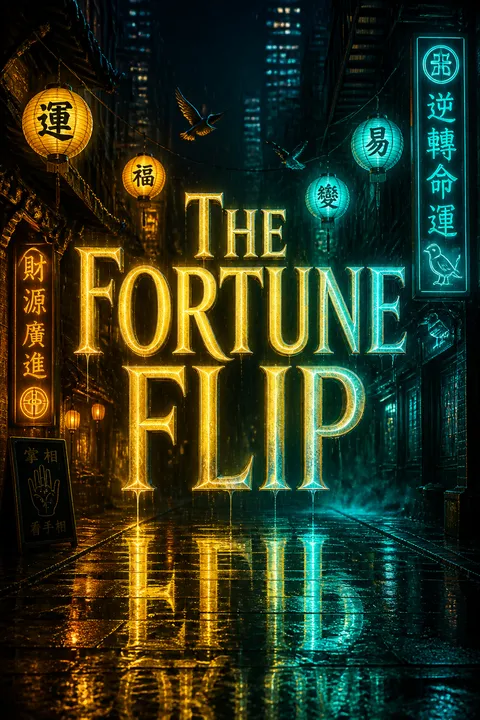
Hazel, a data analyst in New York, is laid off, finalizes her divorce, and loses her mother's charm bracelet. Seeking comfort, she stumbles into a Chinatown fortune teller's tent, where two sparrows, Doc and Marty, are to divine her future. The fortune reading is interrupted by Logan, a stranger whose cat, Toffee, causes chaos. The birds accidentally select six cards instead of three, entangling Hazel and Logan's fates. Hazel's fortunes are ominous: she's living in the past, will soon experience loss, and faces a painful event. The encounter leaves her shaken, but Logan's warmth and humor offer a glimmer of hope amid her unraveling life.
Six Fortunes, Two Strangers
With the fortunes muddled, Hazel and Logan are forced to share the reading. Logan's fortunes are bright—abundance and opportunity—while Hazel's are bleak. Despite the awkwardness, a connection sparks between them. They share stories, laughter, and vulnerability over bodega snacks and first aid. Logan's optimism contrasts Hazel's skepticism, but both are drawn to the possibility of change. When Logan impulsively buys a lottery ticket, promising to split any winnings, Hazel's luck seems to shift. Their playful banter and mutual support hint at something deeper, even as Hazel insists she's cursed and Logan is charmed.
Bandages, Laughter, and a Lottery
Hazel and Logan's chemistry grows as they patch up wounds—literal and emotional—on a city bench. Logan's kindness and Hazel's guardedness create a dynamic of healing and hope. They joke about luck, fate, and the absurdity of their situation. When the lottery numbers are drawn, they realize they've won millions. Hazel, overwhelmed, tries to refuse her share, but Logan insists. Their celebration culminates in a spontaneous, electric kiss—then Hazel, fearing more mistakes, flees into the night. Both are left wondering if their luck, and their connection, is real or just another twist of fate.
Aftermaths and New Beginnings
The next morning, Hazel grapples with disbelief over the lottery win and her impulsive kiss with Logan. She returns to her favorite candy shop, where small kindnesses and the recovery of her lost bracelet hint at luck's return. But family burdens resurface: her brother Jerry calls, claiming a costly accident, and her father's financial instability looms. Hazel's sense of responsibility clashes with her desire for freedom. The lottery ticket, with Logan's number on the back, becomes a symbolic object of possibility—and a reason to reach out to the man who, in one night, changed everything.
Luck Flips and Pizza Promises
Reunited over pizza, they debate whether their luck has truly flipped. Logan's work life spirals into chaos, while Hazel's fortunes seem to improve. They experiment with games of chance, discovering Hazel's sudden winning streak and Logan's string of mishaps. Their playful investigation deepens their bond, but also raises questions about fate, agency, and the meaning of luck. As they navigate their shifting fortunes, they agree to claim the lottery winnings together—disguised, to protect their privacy—and to help each other through whatever comes next.
Mooncakes and Mixed Fortunes
During the Moon Festival, Hazel and Logan search for the original fortune teller, hoping to reverse their luck. Instead, they consult a tea leaf reader, whose ambiguous predictions—racing against time, climbing ladders, impending travel—add to their uncertainty. Hazel's skepticism clashes with Logan's need for reassurance. They reflect on the limits of fortune-telling and the power of mindset. Despite the lack of clear answers, their partnership strengthens. They resolve to face the future together, embracing both the chaos and the comfort they find in each other.
Winning, Worry, and Disguises
Hazel and Logan discover they must share the jackpot with other winners, reducing their windfall but not their anxiety. They meet with lawyers and financial advisors, preparing for the public announcement. To protect their identities, they don elaborate disguises for the press conference, posing as an elderly married couple. The charade is both comic and poignant, highlighting their growing intimacy and shared vulnerability. As they navigate media attention and family pressures, Hazel's luck continues to improve, while Logan's challenges persist. They promise to help each other, no matter whose fortune is in play.
Operation Lucky Charms
Determined to restore Logan's luck before his Broadway show opens, Hazel launches "Operation Lucky Charms." Together, they collect horseshoes, search for four-leaf clovers, and adopt goldfish—embracing every superstition they can find. Their quest is both earnest and absurd, deepening their connection through shared effort and laughter. Along the way, they confront their fears, hopes, and the limits of control. Hazel's family troubles intensify, but Logan's unwavering support helps her cope. Their partnership becomes a source of strength, proving that luck is as much about love and effort as chance.
Family Debts and Old Wounds
As Hazel's brother and father reveal the extent of their financial dependence and deception, she is forced to confront painful truths. The lake house, a symbol of her childhood and her mother's memory, is at risk of foreclosure due to her father's gambling and her brother's lies. Hazel's sense of duty battles with her need for self-preservation. With Logan's encouragement, she begins to set boundaries, realizing she cannot save everyone. The emotional toll is heavy, but Hazel's resolve grows. She starts to envision a future where her own happiness matters.
Broken Ladders, Broken Hearts
Logan's bad luck culminates in a literal fall—breaking his wrist on a firehouse staircase, fulfilling the fortune teller's warning. Hazel cares for him, their roles reversing as she becomes his support. Both struggle with feelings of inadequacy and fear of failure. Their growing love is tested by external pressures and internal doubts. Through honest conversation and shared vulnerability, they begin to heal old wounds. Hazel learns to accept help, while Logan learns to express his pain. Together, they discover that true luck lies in connection, not circumstance.
Facing the Past, Finding Each Other
Hazel and Logan confront their pasts—family trauma, lost dreams, and the stories they've told themselves about luck and worth. With the help of friends and each other, they begin to rewrite those narratives. Hazel chooses to pursue work that brings her joy, not just security. Logan finds meaning in his craft and his relationships. Their love deepens as they share their burdens and celebrate their victories. They learn that making their own luck means making choices—sometimes impulsive, sometimes careful, always together.
Letting Go, Moving Forward
Hazel makes the difficult decision to let the lake house go, refusing to enable her family's destructive patterns any longer. She sets boundaries with her father and brother, prioritizing her own well-being and future. The act is both painful and liberating, marking a turning point in her journey toward self-trust. Logan stands by her side, offering unwavering support. Together, they embrace the uncertainty of the future, finding comfort in each other and the lives they are building—one choice, one day, one act of courage at a time.
Making Luck, Making Love
Hazel and Logan realize that luck is not something given, but something made—through persistence, openness, and the willingness to try again. They celebrate small victories, support each other's dreams, and find joy in the everyday. Their love becomes a source of resilience, helping them weather setbacks and savor successes. As Logan's show opens and Hazel finds fulfillment in her work, they acknowledge that happiness is not guaranteed, but created. Their story becomes one of agency, partnership, and the power of choosing each other—again and again.
New Dreams, New Beginnings
Hazel and Logan settle into a life built on mutual respect, shared dreams, and the freedom to be themselves. Hazel chooses a career that brings her joy, not just financial security. Logan finds purpose in mentoring others and creating beauty through his craft. Together, they travel, support friends, and nurture their relationship. The past no longer defines them; instead, they look to the future with hope and curiosity. Their love story is not about luck, but about the choices they make and the lives they touch.
Opening Nights and Second Chances
Logan's Broadway show, Windfall, faces setbacks and chaos, but ultimately succeeds through teamwork, creativity, and resilience. Hazel, surrounded by supportive friends, learns to trust herself and her instincts. Both realize that life's messiness is not a sign of failure, but of living fully. They celebrate each other's achievements, big and small, and find meaning in the journey rather than the outcome. Their story becomes a testament to the power of second chances, the beauty of imperfection, and the joy of building a life together.
The Power of Choice
Hazel and Logan reflect on the lessons learned: that luck is not destiny, that agency matters, and that love is a choice made daily. They support each other through challenges, celebrate each other's growth, and remain open to the unknown. Their relationship is a partnership of equals, rooted in honesty, compassion, and shared purpose. As they look to the future, they do so with confidence—not because they know what will happen, but because they trust themselves and each other to face whatever comes.
Epilogue: Luck, Love, and the Future
Hazel and Logan, now living together, have built a life filled with love, laughter, and new adventures. Their families are healing, their careers are fulfilling, and their bond is stronger than ever. They revisit the fortune teller, finding humor and closure in the journey that brought them together. The future remains uncertain, but they face it hand in hand, knowing that true fortune lies not in chance, but in the choices they make and the love they share. Their story ends not with a prophecy, but with the promise of possibility.
Analysis
Lauren Kung Jessen's The Fortune Flip is a contemporary romantic comedy that uses the language of luck, fate, and fortune-telling to interrogate deeper questions of agency, trauma, and self-worth. At its heart, the novel is a meditation on the tension between what we inherit—family patterns, cultural beliefs, random chance—and what we create through effort, vulnerability, and love. By entwining Hazel and Logan's lives through a botched fortune reading and a shared lottery win, Jessen explores how narratives of luck can both empower and imprison us. The story's structure—alternating between moments of magical realism and grounded emotional truth—invites readers to question the limits of prediction and the power of interpretation. Ultimately, the novel argues that true fortune is not found in chance or prophecy, but in the choices we make, the boundaries we set, and the relationships we nurture. Through humor, heartache, and hope, The Fortune Flip offers a modern lesson: happiness is not a matter of luck, but of courage, connection, and the willingness to try again.
Review Summary
The Fortune Flip receives an overall rating of 3.86/5, with most readers praising its charming black cat/golden retriever dynamic between Hazel and Logan, meaningful Chinese cultural representation, and thoughtful handling of heavier themes like gambling addiction and family dysfunction. Reviewers consistently highlight the low-angst romance, strong dual audiobook narration by Katharine Chin and Austin Rising, and the creative luck-swapping premise. Some critics noted tonal inconsistencies between slapstick moments and serious topics, and felt certain storylines, like Hazel's divorce, deserved deeper exploration.
Characters
Hazel Yen
Hazel is a Chinese American data analyst whose life is defined by duty—to her family, her work, and the memory of her late mother. Haunted by loss and burdened by her father's gambling and her brother's dependence, Hazel struggles to prioritize her own happiness. Her skepticism about luck masks a deep longing for control and security. Through her relationship with Logan, she learns to set boundaries, embrace vulnerability, and pursue joy for herself. Hazel's journey is one of self-discovery, as she transforms from caretaker to creator of her own destiny, finding love and agency along the way.
Logan Wells
Logan is a carpenter-turned-Broadway head carpenter whose life has been marked by both luck and hardship. After a youthful mistake nearly derails his future, he rebuilds his life through hard work, kindness, and a belief in second chances. Logan's charm and positivity are both a strength and a shield, masking his fear of failure and need for connection. Meeting Hazel challenges his worldview, forcing him to confront pain and embrace imperfection. Logan's development is rooted in learning to accept help, express vulnerability, and redefine success—not as luck, but as love and effort.
Toffee (the cat)
Toffee, the black-and-white cat, is the literal and symbolic agent of chaos who brings Hazel and Logan together. His antics disrupt the fortune reading, setting the plot in motion and intertwining the protagonists' fates. Toffee's presence recurs throughout the story, representing unpredictability, the limits of control, and the serendipity of connection. He is also a source of comfort and comic relief, embodying the idea that sometimes, the best things in life are unplanned.
Hazel's Father
Hazel's father is a compulsive gambler whose actions repeatedly destabilize the family. His inability to change, coupled with manipulative charm, forces Hazel into the role of caretaker and enabler. He represents the generational cycle of trauma and the difficulty of breaking free from familial obligations. Hazel's journey toward setting boundaries with him is central to her growth, illustrating the painful but necessary act of choosing self-preservation over self-sacrifice.
Jerry (Hazel's Brother)
Jerry is Hazel's older brother, a "van life" influencer whose dreams rarely materialize into stability. His repeated requests for money and fabricated crises test Hazel's loyalty and patience. Jerry's character highlights the complexities of sibling relationships, the burden of family, and the challenge of loving someone who cannot—or will not—change. His eventual distance from Hazel marks a turning point in her journey toward autonomy.
Emma
Emma is the owner of Sweet Escape, the candy shop where Hazel finds solace and, eventually, meaningful work. She embodies kindness, encouragement, and the value of community. Emma's willingness to take risks and support Hazel's ideas provides a model of healthy mentorship and friendship. Her presence in Hazel's life is a reminder that chosen family can be as important as blood ties.
Gloria
Gloria is Emma's friend and the unofficial "candy crew" member at Sweet Escape. Her humor, candor, and life experience offer Hazel both levity and perspective. Gloria's own impulsive choices and unapologetic self-acceptance inspire Hazel to embrace imperfection and take risks. She represents the possibility of reinvention at any age and the importance of friendship in healing.
Mrs. Walker
Mrs. Walker is Logan's landlord and a Broadway producer who gives him his first big break. Her tough love, wisdom, and belief in Logan's potential are instrumental in his growth. She models resilience, the value of hard work, and the importance of balancing ambition with personal fulfillment. Mrs. Walker's own journey through grief and reinvention parallels the protagonists', reinforcing the story's themes of second chances and chosen family.
Wendy (the fortune teller)
Wendy, with her sparrows Doc and Marty, is the fortune teller whose reading sets the entire plot in motion. She represents the allure and ambiguity of fate, the limits of prediction, and the human desire for answers. Wendy's presence recurs as a touchstone for the characters' evolving beliefs about luck, agency, and the future.
Maxwell (the luck consultant)
Maxwell is the "luck consultant" who helps Hazel and Logan reframe their understanding of fortune. His emphasis on mindset, openness, and action challenges the protagonists to take responsibility for their lives. Maxwell's role is to disrupt magical thinking and encourage practical change, serving as a bridge between superstition and self-determination.
Plot Devices
Dual Fortune Readings
The story's inciting incident—a fortune reading gone awry—serves as both a literal and metaphorical device. The mixed fortunes, caused by Toffee's disruption, bind Hazel and Logan's lives together, creating a narrative structure where their arcs mirror and invert each other. This device allows for exploration of fate versus agency, the randomness of life, and the power of interpretation. The fortunes themselves foreshadow key events (loss, pain, abundance, opportunity), providing both suspense and thematic resonance.
Flipped Luck and Role Reversal
The motif of "flipped luck" drives the plot and character development. As Hazel's fortunes improve and Logan's decline, both are forced to confront their beliefs about control, responsibility, and self-worth. This reversal enables deep psychological exploration: Hazel learns to accept help and pursue joy, while Logan learns to express vulnerability and accept imperfection. The device also allows for humor, tension, and the subversion of genre expectations.
Symbolic Objects and Rituals
Objects like the lottery ticket, charm bracelet, candy, and lucky charms serve as tangible representations of the characters' hopes, fears, and evolving beliefs. Rituals—fortune readings, superstitious quests, and acts of kindness—provide structure and meaning, highlighting the interplay between randomness and intention. These devices ground the story's magical realism in emotional truth, making abstract themes accessible and relatable.
Disguises and Public Identity
The use of disguises for the lottery press conference is both a comic set piece and a commentary on the tension between public and private selves. It allows the characters to explore identity, vulnerability, and the costs of visibility. The eventual unmasking—both literal and metaphorical—parallels their journey toward authenticity and self-acceptance.
Parallel Character Arcs
Hazel and Logan's stories are structured in parallel, with each facing family trauma, professional setbacks, and the challenge of redefining success. Their arcs are intertwined through shared experiences, mutual support, and the gradual dismantling of old narratives. This device reinforces the story's central message: that love, agency, and resilience are forged through connection and choice, not fate alone.
Download PDF
Download EPUB
.epub digital book format is ideal for reading ebooks on phones, tablets, and e-readers.








































