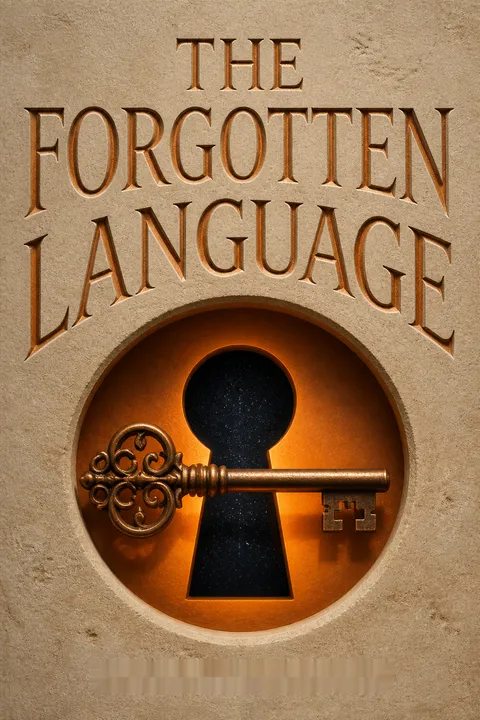

Key Takeaways
1. Symbolic Language is Humanity's Universal Tongue.
Symbolic language is a language in which inner experiences, feelings and thoughts are expressed as if they were sensory experiences, events in the outer world.
Expressing the ineffable. We often struggle to articulate complex inner experiences like tastes or moods using conventional language. Symbolic language, however, excels at this, translating internal states into vivid sensory pictures. For instance, a feeling of lostness might manifest as a dream of being in the deserted outskirts of a city.
Three types of symbols. Fromm distinguishes between three kinds of symbols:
- Conventional symbols: Arbitrary connections, like words ("table") or flags, learned through social agreement.
- Accidental symbols: Personal connections, where an object or place becomes symbolic due to an individual's unique experience (e.g., a city linked to a sad memory).
- Universal symbols: Intrinsic connections rooted in shared human experience, where the symbol's nature inherently reflects an inner state (e.g., fire for energy, water for calm).
Shared human experience. Universal symbols are not learned but arise from the common properties of our bodies, senses, and minds, making them understandable across all cultures and throughout history. Just as our bodies naturally express emotions (blushing for anger), physical phenomena can symbolize mental states. Understanding this language is essential for connecting with our deepest selves and the collective human wisdom embedded in myths and dreams.
2. Dreams are Meaningful Self-Communications.
A dream which is not understood is like a letter which is not opened.
Beyond senselessness. Historically, dreams were considered profound messages from divine powers or the disembodied soul. Modern thought, however, often dismisses them as meaningless. Fromm, following Freud, reasserts that dreams are always meaningful and significant, offering crucial insights into our inner lives.
A different logic. In our waking state, we operate under the laws of space, time, and linear logic, focused on mastering external reality. Dreams, however, inhabit a different realm where these constraints dissolve. We create narratives where the dead live, events from different times coexist, and identities fluidly merge, all governed by a logic of intensity and association rather than causality.
Unlocking self-knowledge. This unique dream logic allows us to access a vast store of experiences and memories typically hidden in our waking lives. Dreams are powerful communications from ourselves to ourselves, revealing aspects of our personality, fears, and desires that we might otherwise ignore or repress. To neglect them is to leave vital messages unread, hindering our journey toward self-understanding.
3. Sleep Unlocks Deeper, Often Wiser, Mental States.
In sleep the realm of necessity has given way to the realm of freedom in which “I am” is the only system to which thoughts and feelings refer.
Freedom from reality's demands. Waking life is dominated by the need to act, perceive, and master our environment for survival. Sleep, conversely, frees us from these external demands. It's a state of non-activity where our mental processes are no longer constrained by the practicalities of space and time, allowing us to turn inward and focus exclusively on self-experience.
Beyond cultural noise. While culture provides essential tools like language and knowledge, it also bombards us with "noise"—rationalizing lies, clichés, and superficial values that can stultify our intellectual and moral functions. In the solitude of sleep, detached from this external influence, we can access our truest and most valuable feelings and thoughts, unburdened by societal pressures or self-deception.
Ambiguous function. This detachment from external reality means sleep has an ambiguous function: it can bring forth both our worst, most primitive impulses and our best, most insightful capacities. The "unconscious" is not a mythical realm but simply the mental activity occurring in this state of non-action, offering a perspective often superior to our waking consciousness.
4. Dreams Reveal Both Our Irrational Desires and Profound Insights.
The state of sleep has an ambiguous function. In it the lack of contact with culture makes for the appearance both of our worst and of our best; therefore, if we dream, we may be less intelligent, less wise, and less decent, but we may also be better and wiser than in our waking life.
Beyond simple wish-fulfillment. While some dreams are indeed hallucinatory fulfillments of irrational wishes (e.g., a man dreaming of being a celebrated general to compensate for feelings of inadequacy), others offer profound insights. A dream might reveal a hidden ruthlessness in a respected figure, a clear ethical dilemma, or even the solution to a complex intellectual problem.
Insight and prediction. Dreams can provide a clearer, more accurate assessment of reality than our waking minds, which are often clouded by public opinion, rationalizations, or emotional biases. Joseph's dream of his sheaves bowing down, for instance, was not merely an expression of ambition but a prediction of his future leadership, rooted in an unconscious awareness of his extraordinary gifts. Similarly, a dream might expose a business partner's dishonesty before conscious evidence emerges.
Moral clarity. Dreams can also serve as a powerful moral compass. A writer torn between financial gain and integrity might dream of a catastrophic car crash on a dangerous mountain road, symbolizing the self-destructive path of compromising his values. Such dreams cut through waking rationalizations, presenting ethical choices with stark clarity and often leading to transformative decisions.
5. Freud's Contribution: Uncovering Repressed Wishes and Dream-Work Mechanisms.
Freud thus comes to the assumption that the essence of dreams is the hallucinatory fulfillment of irrational wishes; their function is the preserving of sleep.
The unconscious and the censor. Freud revolutionized dream interpretation by positing that dreams are expressions of unconscious strivings—wishes, feelings, and impulses repressed due to societal demands or fear of guilt. A powerful "censor" disguises these desires, preventing them from disturbing sleep and making them unrecognizable to our conscious minds.
Mechanisms of distortion. The "dream-work" transforms the "latent dream" (hidden desires) into the "manifest dream" (what we remember) through several mechanisms:
- Condensation: Combining multiple elements or fragments into a single dream image.
- Displacement: Shifting emotional intensity from an important latent element to a trivial manifest one.
- Secondary elaboration: Filling gaps and repairing inconsistencies to create a seemingly logical narrative.
- Opposites: Elements often represent their very opposite (e.g., nakedness for clothing, affection for hostility).
Infantile and sexual roots. Freud believed that these irrational desires are primarily rooted in childhood, particularly incestuous or perverse sexual impulses, which continue an underground existence. He saw most dream symbols as sexual in nature (e.g., sticks for male genitalia, caves for female genitalia), reflecting these repressed infantile drives.
6. Jung's Perspective: Dreams as Expressions of Transcendent Wisdom.
Psyche is transition, hence necessarily to be defined under two aspects. On the one hand, the psyche gives a picture of the remnants and traces of the entire past, and, on the other, but expressed in the same picture, the outlines of the future, inasmuch as the psyche creates its own future.
Beyond individual neurosis. While acknowledging Freud's insights, Jung diverged by emphasizing the "prospective" function of dreams, seeing them as oriented toward the future and indicative of the dreamer's goals. He believed the unconscious mind possesses an intelligence and purposiveness superior to conscious insight, offering revelations of wisdom.
A transcendent source. Jung viewed this wisdom as stemming from a source transcending the individual, a "collective unconscious" filled with archetypes and universal patterns. He argued that the voice in our dreams is not merely our own but comes from a deeper, more universal wellspring, providing guidance and insight that we haven't consciously "earned."
Critique and synthesis. Fromm agrees that dreams can be wiser than waking thought but challenges Jung's notion of a transcendent source. He argues that this wisdom originates from our own deeper self, freed from the stultifying influences of waking life and cultural "noise." Fromm seeks a synthesis, recognizing that dreams can express both the irrational and the rational, the lowest and the highest aspects of our minds.
7. Context and Associations are Crucial for Dream Interpretation.
The particular meaning of the symbol in any given place can only be determined from the whole context in which the symbol appears, and in terms of the predominant experiences of the person using the symbol.
Beyond fixed meanings. Unlike early non-psychological interpretations that assigned fixed meanings to symbols, psychological interpretation emphasizes the unique context of the dreamer. A symbol like "fire" can represent aliveness and joy in one dream, but terror and destruction in another, depending on the dreamer's personal associations and the overall emotional tone.
The power of association. Freud's method of "free association" is indispensable. By encouraging the dreamer to share whatever comes to mind in relation to each dream element, the analyst can uncover the hidden connections and personal significance of symbols. This process reveals the "latent dream" underlying the "manifest dream," often surprising the dreamer with insights into their own unconscious thoughts and feelings.
Connecting past and present. Dreams are rarely isolated phenomena; they are often reactions to significant events of the preceding day, even those consciously dismissed as trivial. These recent experiences can mobilize deep-seated infantile strivings or long-forgotten fantasies, weaving past and present into a complex tapestry. Understanding the dreamer's character, recent experiences, and emotional state before sleep is vital for accurate interpretation.
8. Myths and Fairy Tales Reflect Deep Societal Conflicts.
The Oedipus myth offers the outstanding illustration of Freud’s method of myth interpretation and at the same time an excellent opportunity for a different approach, one in which not sexual desires but one of the fundamental aspects of interpersonal relationships, the attitude toward authority, is held to be the central theme of the myth.
Symbolic narratives of humanity. Like dreams, myths and fairy tales are not merely naive stories but profound symbolic narratives expressing religious, philosophical, and psychological truths. They preserve cherished memories of humanity's past, often in veiled or distorted forms, reflecting deep-seated societal conflicts and transformations.
Reinterpreting Oedipus. Freud famously interpreted the Oedipus myth as the universal expression of unconscious incestuous desires and patricidal hate. Fromm, drawing on Bachofen's work, offers a compelling alternative: the myth symbolizes the rebellion of the son against patriarchal authority and the ancient struggle between matriarchal and patriarchal social systems. The marriage to Jocasta becomes a secondary symbol of the son's victory and assumption of paternal privileges.
Matriarchy vs. Patriarchy. Bachofen's theory posits an earlier matriarchal society characterized by:
- Emphasis on blood ties, equality, unconditional love, and respect for life.
- Mother-goddesses as supreme deities.
The victorious patriarchal system, in contrast, emphasized: - Man-made law, hierarchy, obedience, and male gods.
Myths like Oedipus and the Babylonian Creation myth (Marduk's "test" of creation by word) symbolically depict this historical shift and the underlying male-female antagonism.
9. Rituals Symbolize Profound Philosophical and Existential Truths.
The Sabbath is the anticipation of the Messianic time, just as the Messianic period is called the time of “continuous Sabbath.”
Actions as symbols. Beyond images and words, rituals are symbolic actions that express inner experiences. Simple gestures like bowing or shaking hands are everyday examples, but religious rituals, like the Sabbath, are complex symbolic systems requiring deep interpretation.
The Sabbath: Peace and freedom. The Biblical Sabbath, far from being a mere social-hygienic measure, symbolizes a profound philosophical concept. "Work" is defined as any human interference with the natural or social world, while "rest" signifies a state of complete peace and harmony between man and nature, and between man and man. Prohibitions against lighting fires or carrying objects between domains are symbolic acts of non-interference, anticipating a state of human freedom.
Victory over time. The Sabbath is an anticipation of the Messianic era, a time of ultimate freedom and harmony. God's "rest" after creation symbolizes that peace, not work, is the crowning achievement. This concept also represents man's victory over time (symbolized by Saturn), transforming a day of Babylonian mourning and self-castigation into a day of joy, dignity, and liberation from the chains of nature and time.
10. Symbolic Narratives Like Kafka's "The Trial" Illuminate Inner Struggles.
The novel, in order to be understood, must be read as if we listened to a dream—a long complicated dream in which external events happen in space and time, being representations of thoughts and feelings within the dreamer, in this case the novel’s hero, K.
A dream in prose. Kafka's "The Trial" is a masterful example of symbolic language in literature, presenting a series of realistic yet impossible events that mirror an internal psychological drama. Joseph K.'s "arrest" is not merely a legal detainment but a symbolic representation of his arrested growth and development as a human being.
The receptive orientation. K.'s character, revealed through seemingly trivial details like his breakfast not arriving, highlights his "receptive orientation"—a deep-seated dependence on others to provide for him, coupled with a fear of abandonment. He seeks external validation and help, failing to recognize that his problems stem from within.
Conscience and confusion. The novel symbolically portrays the conflict between two types of conscience:
- Authoritarian conscience: Represented by the corrupt, despotic "Court," demanding obedience to external laws.
- Humanistic conscience: Embodied by the "Inspector" and later the "Priest," urging K. to look within and take responsibility for himself.
K.'s tragedy lies in his inability to distinguish between these two voices, mistaking the humanistic call for self-awareness as another demand from the oppressive authoritarian system, ultimately leading to his downfall.
Review Summary
Reviews of The Forgotten Language are generally positive, averaging 3.8/5. Readers appreciate Fromm's accessible exploration of symbolic language in dreams, myths, and fairytales, as well as his balanced critique of Freudian and Jungian theories. Many find the analyses of classical myths, folklore like Little Red Riding Hood, and Kafka's The Trial particularly engaging. Some criticisms include the book feeling dated, overly focused on summarizing others' ideas rather than Fromm's own, and lacking depth in certain areas.
People Also Read

About the Author


Download PDF
Download EPUB
.epub digital book format is ideal for reading ebooks on phones, tablets, and e-readers.








































