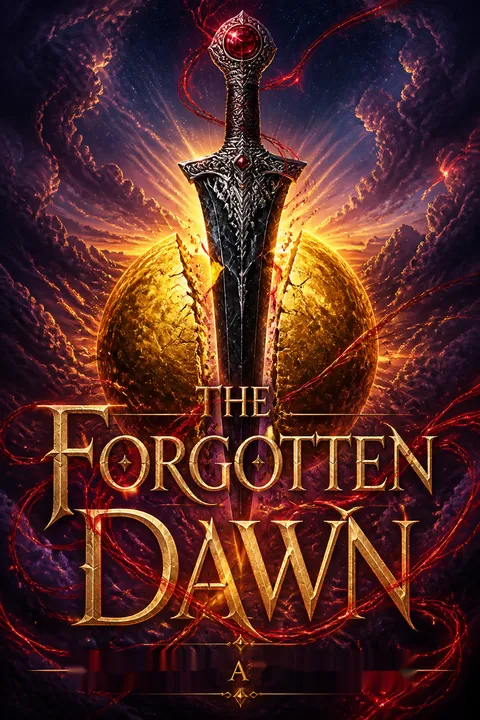

Plot Summary
Shadows Before the Dawn
Brida, an outsider in her remote town, juggles the care of her ailing father and the burden of her own difference marked by her striking, red-threaded hair. When news of the prestigious Courting—a trial for places in Azmeer's mythical courts—spreads, Brida clings to hope for her father's healing. A mysterious lack of invitation forces her to forge one, setting her on a dangerous path of deception. The world is both wondrous and perilous, ruled by legacies she fears and desires. Darkness brews behind every choice, yet Brida's desperation rides above shame, isolation, and the town's whispers.
Brida's Desperate Hope
Brida's lifelong friend Kadian, whose faith and excited companionhood anchor her, gets his invitation to the Courting. Stung by jealousy and the fear of failing her father, Brida forges her own, eager to escape obscurity and powerlessness. Through quiet research and stolen nights, Brida immerses herself in lore, herbs, and court customs, determined to succeed. As she prepares to leave her father in trusted hands, every memory of loss and familial love sharpens her purpose. The journey is one of hope stitched to guilt and gnawing uncertainty.
Forged Invitation
The day of departure is marked by sorrowful goodbyes and the unknowns of leaving home behind. Brida's journey with the forged invitation—her self-made key into Azmeer's legendary domain—is one of trepidation and wonder. Escorted by the enigmatic wind walker, Marsh, Brida enters a world dazzling and alien. Everything—architecture, people, and rules—overwhelms. Yet every breathtaking discovery is laced with the terror of being discovered as a fraud. New acquaintances, like the vibrant Lil, provide fleeting comfort, while the grandeur of Azmeer is both intoxicating and threatening.
Friendships and First Trials
Upon arrival, Brida is swept into a current of anticipation and competition. Friendships bud: witty, resilient Lil; steadfast Kadian; and the charming but enigmatic Marsh. Together, and with others, Brida faces the first of many tests: a puzzle-laden maze whose shifting walls conceal deadly and magical challenges. Each passes the trial by wit or will, but success only magnifies the pressure. Bonds of trust and affection grow richer, and Brida—though often outmatched in confidence—finds kinship and belonging, even amid self-doubt.
The Maze and Red Orb
The opening task—an intricate maze pulsing with otherworldly magic—forces Brida to confront her deepest fears. Guided by memories, intuition, and a mysterious voice, she solves celestial puzzles and confronts visions reflecting her vulnerabilities: hope for her father, fear of being "not enough," and her growing, disquieting attraction to Dainan, the shadowed prince. The trial culminates with Brida physically and emotionally exhausted, but victorious. Survival cements her secret resolve, but also exposes her to the attention of both friends and dangerous rivals.
The Secrets of Azmeer
As inductees settle into court life, the mysteries—political and magical—of Azmeer's courts deepen. Intrigue is everywhere: the motivations of the princes, Lil's enigmatic background, the arcane hierarchy between the courts, and the blurry boundaries of power and attraction. Brida's friendship with Lil and Kadian grows, layered with unspoken anxieties and a hunger for safety. Meanwhile, her relationship with Marsh becomes both a source of comfort and suspicion; his kindness toes the line between genuine affection and veiled obligation. The game of secrets escalates, and the price of honesty seems ever greater.
Courting Shadows
Courtly lessons, shifting alliances, and Brida's encounters with the princes—especially the fiercely magnetic Dainan—blur the lines between awe, intimidation, and yearning. The politics of selection loom over every action, as stories of legendary gifts and the raw, consuming power of court magic ripple through the halls. Underneath the ceremony, moments of tender friendship with Kadian and a fragile camaraderie with Lil stabilize Brida. Yet, the ever-closer proximity of Dainan reveals new sides to both him and Brida, igniting mutual curiosity, frustration, and mutual pain.
Dainan's Glance
Dainan's unpredictable approaches, shrouded in danger and inexplicable attraction, upend Brida's resolve and sense of safety. Their dance—sometimes a battle of control, sometimes a near-surrender—both unnerves and enthralls. Every encounter is a study in contrasts: gentleness that borders on ferocity, bitterness interlaced with tenderness. The chemistry is magnetic and forbidden, staking claim to Brida's thoughts even as the looming threat of discovery—and Iona's obsessive jealousy—shadow every interaction.
Lil's Hidden Past
Lil, ballasting Brida through the anxiety of induction, proves to be more than a vivacious friend. She is marked by loss, isolation, and trauma, especially as pressure mounts for strategically arranged marriages. The shadows of her family—namely the chilling Thalius—haunt every choice she makes. The unspoken sorrow and panic in Lil unsettle Brida, foreshadowing a reckoning that will eventually explode among the courts. Friendship means loyalty, but the cost of that loyalty grows as schemes threaten to consume both women.
Kadian's Bond
Kadian is ever Brida's anchor, yet as magical rites and physical trials intensify, something strange stirs between him and Lil. A "pull"—magical and emotional—grows, hinting at a mysterious, forbidden bond threaded through their fates. While Brida juggles her growing feelings for others, her fear of losing Kadian becomes visceral as his well-being falters. The magic of the courts, once a distant legend, becomes rooted in lives—driving echoes of obsession, romance, and potential destruction for those who cannot escape their chosen ties.
Reflections and Lies
Tests pile upon tests: physical, mental, and magical. Each is designed to strip away deception. Pools enchanted with reflection, a rock wall symbolizing will, wind-ravaged house-bridges requiring grit and wit—every trial exposes Brida's buried truths. The consequences of her forged invitation grow heavier, as guilt and fear deepen their claws. Other competitors—driven to desperation—manipulate and betray, intensifying the tension. Brida's victories feel Pyrrhic; each answer brings new questions about who truly belongs and the price of finding a "place" among the chosen.
Bargains with the Wind
The magical world of Azmeer is not merely ceremony—it is contract and cost. Amid the trials, Brida's unintentional bargains with Ollo, the wind Primal, and her connections to both shadow and wind magics become dangerous pivots. When Kadian falls ill and Brida's frantic attempts to save him—including a harrowing encounter with the mist of the Court of Whispers—force her to strike a supernatural bargain, the lines between fate and free will blur. Magic, she learns, is never free, and all debts will be collected.
Trials of Truth
The selection narrows, and Brida's place hangs by threads of grace, grit, and the fragile affection of her friends and rivals. She endures the most crucible trial: one that conjures her deepest longing—her mother, alive and loving—and demands she choose reality over the seductive comfort of illusion. The primal courts demand not only courage and cunning, but submission to the hardest truth: that the past cannot be regained, and the future is never secure. Every sacrifice is balanced by a chance at belonging—and perhaps, magic.
The Mist's Warning
The mist-borne voice warns Brida of coming war and the awakening of ancient powers, shadowing her victories with dread. The lines between prophecy and madness dissolve as Brida learns that she herself may be more than an imposter—her heritage is tangled with power, sacrifice, and perhaps, a forgotten lineage closely guarded by the courts. The prophecy, revealed through Ollo's storm-haunted apparition, marks Brida for a destiny greater—and more perilous—than she could ever have imagined.
Blood, Offerings, and Choices
The climax of the Courting arrives: offerings are made to the courts' patron Primals. The sacred blood offering Brida gives, tainted with the water of the Pool of Vitality, sets unforeseen magic in motion. Amid public ceremony and personal grief, the selection divides her from some friends and allies. Each house has observed, debated, and now invites its chosen; for Brida, the choices are as frightening as the prospect of remaining unchosen. After months of deception and dogged survival, she finds herself ultimately and achingly seen.
Love and Betrayal
With placements confirmed—Brida accepted by multiple courts, but ultimately choosing Shadows—a new dynamic emerges. The court's true nature is exposed: every kindness, every romance, is double-edged. As beloved friends are divided by custom, magic, and ambition, Brida discovers not everyone who loved her mother still wishes her well. Marshal winds, old tragedies, and betrayals come to light, and the game of trust becomes increasingly treacherous. Every act of loyalty threatens loss, every secret revealed is a blade thrust deeper.
Court of Shadows Reveal
Working by Alvar's side, Brida glimpses the true machinery of the Court of Shadows: alliances forged through both affection and threat, the ever-present uncertainty of what's earned versus what's owed. Dainan and Brida, torn by passion and the enforced distance of royal obligations and jealous rivals, resist, then yield, to their dangerous chemistry. Yet Brida's longing for Dainan is suspiciously mirrored by the compulsion of magic—love is never simple, and in a world built on ritual, it is seldom free.
Parties and Politics
The ball to mark the union of the courts is a whirlwind: behind the glamour lies grief and tension. Brida's presence—transformative and unsettling—sends ripples through the highest echelons. Old wounds flare, private desires clash with public masks, and every gesture, every dance, is fraught with political as well as romantic consequences. As Brida's identity crystallizes, so do the machinations of her rivals, and the line between personal and political costs is erased forever.
The Coronation Plot
The Court's struggle for succession ignites at the engagement ball, rumors swirling with each drink and plate. Alvar is chosen as the new king, but as the transition looms, enemies plot, encouraged by old resentments and new opportunities. Poison, assassination, and public spectacle are weapons as sharp as any blade. The alliances forged over months—some beloved, some hated—are tested in a crucible of violence. The coming storm is no longer metaphorical, and even the most loyal are beset by betrayal.
The Wedding Shatters
The wedding—meant as the dawn of peace—explodes in violence. Alvar is assassinated; Addie, Brida's lifeline and mentor, is murdered; magic and politics unravel. Storm-winds rise, summoned by the grief and rage of the Courts' true heirs. Secrets long buried rise in a torrent: Lil's forced marriage is upended, Dainan flees with her into hiding, and Brida, shattered by loss and guilt, faces the final consequence of bargains she did not understand.
Marsh's Treachery
When the dust settles, Brida is captured—by none other than Marsh, the wind walker who appeared her friend but was always the servant of older, deeper currents. Her gift, her blood, was the key to a ritual the Courts cannot halt. In an iridescent prison, Brida learns the meaning of true captivity—not just of the body but of destiny, and the cost of being a pawn in a game designed long before her birth.
The Storm Rises
Ollo, the Primal, manifests to Brida: wind and storm incarnate, cryptic and majestic, confirming that the fates of mortals and gods are intertwined. Brida, woven into ancient bargains, learns she is not only a vessel for a lost goddess—Ilia/Thale, of both fire and shadow—but also the unlocker of Dawn. Her struggle becomes one of memory and identity, and her burgeoning magic leaps from survival to assertion: she will fight, wielding both pain and hope.
Shadows of Heritage
Hints of Brida's true power—her descent from Ilia, her role in the cycles of mortality and godhood—stream from the library's forbidden books and Marsh's confessions. Every truth is a blade: her mother's hidden life, her own kinship with gods, the reason Azmeer's world teeters on the brink. Brida's journey is no longer about healing her father or securing her own future; it is about altering the very axis of her world.
Dawn's Awakening
Powerless and grief-stricken, Brida faces the truth: she is at the mercy of destinies written by powers both loving and cruel. Yet, in the depths of loss—echoing Addie's last words and Alvar's hopes—she finds embers of resolve. The gods may have chosen her, fate may have scripted her role, but Brida remembers: the story is not only what is written, but what she dares to speak. As shadows gather, she chooses defiance, not submission.
The Path Ahead
The curtain falls on the first struggle, not with triumph but resolve. Brida, marked by shadow, wind, and blood, is neither pawn nor queen but something new: the dawn that can shatter or remake the world. Betrayal, love, loss, and loyalty have dismantled her old self. Now, as war and awakening loom, she embraces memory, magic, and her own voice: the gift that cannot be caged.
Analysis
In The Forgotten Dawn, Laura A. Blake remakes the coming-of-age fantasy as a study in impostor syndrome, trauma, and the deep longing for connection. Brida Larrow is both a vessel for genre archetype (orphaned, gifted, the "chosen one" with secret heritage) and a subtle subversion: rather than find belonging by discovering she deserves it, she learns belonging comes with new forms of danger, loss, and moral ambiguity. The novel interrogates how desperate hope can drive both creation and destruction: as Brida forges her place in the world, every gain is balanced by loss, every bond frays to reveal deeper wounds. Romance, friendship, and ambition all double as threats; every act of love is shadowed by the possibility of theft, betrayal, and the cost of being "seen."
Blake's narrative reframes power—not as a birthright, but as a consequence of daring to claim one's own narrative, even when the world would rather silence you. The magical system—rooted in old sacrifices, literal blood, and ancient, near-divine bargains—serves as an allegory for the cost of survival and the dangers both of losing oneself and of succeeding on others' terms. The lessons are sharp: agency is a negotiation, not a gift; tradition is a prison as often as it is a comfort; love is both the source of meaning and the axis upon which violence turns. The Forgotten Dawn ultimately insists that to "dawn," to become oneself, is the most courageous risk—and that the ability to say, "I am more than my fear; I am the story I choose to write," is the rarest and bravest magic of all. The novel ends not with triumph, but with the promise of further struggle: in darkness and dawn, a new future is claimed—not inherited.
Review Summary
The Forgotten Dawn receives mostly enthusiastic praise for its immersive world-building, compelling found family dynamics, and slow-burn romance featuring a "shadow daddy" prince. Many reviewers highlight the relatable FMC Brida, the intricate Fae court system, and a shocking ending that leaves readers desperate for book two. Critical reviews cite underdeveloped character chemistry, trials lacking genuine danger, inconsistent pacing, and overly descriptive writing. Several readers DNF'd due to feeling disconnected from characters. Overall rating sits at 4.03/5 across 1,548 reviews.
People Also Read



Characters
Brida Larrow
Brida is the heart and lens of the story: a young woman marked from childhood by difference—her striking hair, her outsider status—and defined by devotion to her ailing father. Driven by longing for respect, belonging, and love, she forges her path by deception, and every act is rooted in the desperate wish to heal those she cares for. Brida is sharp, easily wounded, and often self-effacing; her arc is a gradual ascent from self-doubt and impostor syndrome to autonomous power and chosen defiance. Her loyalty to friends, her moral core, and her hunger for knowledge fuel her, while her unresolved attraction to Dainan and fractured feelings about Marsh, Lil, and Kadian represent her inescapable entanglement in love, guilt, and destiny. Psychoanalytically, she struggles with abandonment, the cost of lying, and the terror that she will always be "other." Over time, Brida is revealed as more than an imposter: she is a fated figure—possibly a vessel for the lost goddess Ilia—whose willingness to feel pain and insist on her own voice make her a unique actor in an ancient story.
Kadian Taldot
Kadian is Brida's lifelong friend and emotional ballast. Affectionate, loyal, and playful, his steadfastness is a counterpoint to Brida's volatility. Yet, as Court magic warps and tests him, he is physically and psychically unmoored. Kadian's subtle Fae heritage entangles him in a mysterious "bond" with Lil, a connection that becomes both lifeline and curse. His arc is the slow undermining of certainty: from confident companion to stricken, nearly broken partner, shaken by loss and the intrusion of forces beyond control. He embodies both the comfort of home and the terror of losing it.
Lil Towler
Lil exudes warmth, confidence, and a hunger for freedom. A half-nymph, half-Fae hybrid, she is both insider and outsider, gifted with empathy and a haunted past. Lil's turbulent family, especially her controlling uncle Thalius, haunt her every move. Her friendship with Brida is a force of genuine joy and trust but, by the midpoint, Lil becomes the most tragic casualty of political machinations: forced into a marriage that is both a strategic alliance and personal prison. Throughout, she balances hope and self-destruction, wielding humor as both shield and sword.
Marsh (Reed Marsh)
Initially the helpful and magnetic wind walker who escorts Brida into Azmeer's world, Marsh blends wit, charm, and just enough opacity to appear safely desirable. Psychoanalytically, he is the archetype of the Trickster: a guide whose true motives are layered and ultimately sinister. His failures to reply, his disappearances and jealousy, hint at a deeper allegiance, and when his treachery is revealed, the emotional shock exposes how easily charisma can mask calculation. Marsh's arc is one of false reliability, underlining the theme: trust is the highest-risk magic.
Dainan Luchien
Dainan is the prince of the Court of Shadows—dangerous, magnetic, and heartbreakingly divided between his own desires and royal duty. He is both Brida's greatest threat and the only one who sees her wholly; their relationship is a hurricane of chemistry, mutual recognition, and mutual pain. Dainan's struggle against duty, his forced engagement, and his attempts to shield Brida blur lines between protector, predator, and true lover. His power—shadow stepping, commanding both shadow and wind—makes him unique and feared. Psychologically, he is haunted by violence, unprocessed grief, and the terror that he will only destroy those he loves. As events spiral, Dainan's relationship with Brida becomes both their salvation and their curse: they are two tides both drawn together and held apart by the court's machinations.
Alvar Luchien
The eldest Luchien prince, Alvar tempers the shadows of his house with studied kindness and quiet intelligence. He is a balancing force for Dainan, a genuine friend to Brida, and, uniquely for a prince, unambitious and prone to abdicate attention. Yet when thrust into responsibility—both for Brida's safety and the court's succession—Alvar proves both fiercely competent and tragically vulnerable. His arc ends with his assassination: a symbol of the price of kindness in a world that honors power and sacrifice over gentleness.
Rai Luchien
The second prince is marked by both wildness and a gnawing inadequacy: the crown slips just out of reach, and his rage and ambition grow toxic. Forced into a hollow marriage for politics, manipulated by the court's elders, Rai's journey is one of increasing cruelty. Yet his villainy is not cartoonish—it is grounded in unmet need, the failure to ever be "enough" either for his family or himself. His violence signals the cost of power denied and grief left to rot.
Addie (Adriana Velin)
Addie, Brida's aunt, is the emotional and narrative backbone of Brida's arc. A scribe and scholar, she is warmth and wisdom, the personal link to history and hope. Her death catalyzes the second half of the novel; it exemplifies the cost of knowing too much, caring too much, and the way older generations are swept away by new, potentially destructive forces. Psychologically, her openness and encouragement fortify Brida, but her secrets also mirror the novel's motifs: knowledge can kill as easily as it can heal.
Tamra Kadem
Oz's twin and Brida's close ally, Tamra stands for both steadiness and the courage to forge one's own path. Her background is one of familial loyalty strained to breaking by the demands of the courts; her decision to join the Court of Shadows, despite family ties elsewhere, marks her as a model for Brida's—and the reader's—understanding of chosen family, adaptability, and sacrifice. Her calm and tough love are psychological lifelines for Brida.
Oz (Osforth Kadem)
Oz is witty, charming, and teasing—a foil for Brida's anxiety and the steady companion to Tamra and Kadian. Beneath the jokes, he struggles with loss, abandonment, and the pain of being left behind by those he loves (Tamra, especially). His easy exterior hides a deep sensitivity to the costs of change, the pain of separation, and the courage required to celebrate others' success when it means losing them.
Plot Devices
The Forged Invitation
Brida's forged invitation is the engine of her arc and the novel's exploration of impostor syndrome. Through it, the author examines the price of self-invention: every achievement is haunted by the threat of disgrace, every success pulled between pride and guilt. The forged invitation is both a lockpick and a curse, granting access and demanding ever-higher risks as scrutiny grows. This device positions Brida's coming-of-age not merely as a quest for acceptance but a meditation on how every outsider's opportunity is double-edged—earned not by right, but by daring.
Magical Trials
The varied trials (maze, puzzle, heights, reflection pools) are classic fantasy structures but here serve psychoanalytic functions: each is a materialization of Brida's buried fears (of abandonment, powerlessness, inadequacy) and a narrative means to pit characters against their own secrets. The lack of pattern in the challenges mirrors the unpredictability of trauma and growth; no easy path is available. Magical trials are also devices for culling the cast, raising stakes, and ensuring that every accomplishment intensifies both external danger and internal conflict.
Unreliable Friendships and Betrayals
The "friend" who betrays (Marsh), the rival who rescues (Dainan), the confidante who withholds crucial secrets (Lil, Addie, even Kadian): all these relationships are deployed with deliberate ambiguity. Trust—so often the centerpiece of found-family fantasy—is depicted as necessary but never safe, and the narrative structure ensures the reader is always wary. This device heightens stakes, produces the sting of loss, and ensures that the world of the courts is always both seductive and perilous.
Selective Perspective and Withheld Narration
At every turn, the author holds back: the true purpose of the courts, the meaning of the trials, the origin of the Primal magic—all remain out of reach until Brida's experiences and choices unlock them. This deployment mirrors Brida's own doubts and blind spots, ensuring readers share her confusion, and the eventual revelation is always double-edged: knowledge saves only if one can bear knowing.
Destiny, Bonds, and Prophecy
Ancient voices, haunting visions, and forbidden bargains with Primals structure both narrative suspense and character psychology. Fate is unveiled as not merely inescapable but mutable: Brida's bargains, Kadian and Lil's "bond," and the legacy of the goddess Ilia/Thale are not closed loops but open wounds, portals for possibility, devastation, or transformation. Prophecy disrupts as much as it directs, and every fulfillment is tinged with tragedy.
Oppressive Setting as Symbolic Obstacle
The grandeur, height, and magical layers of Azmeer reflect the emotional instability and the ever-present possibility of both ascent and annihilation. Settings—library, House of Shadows, ballrooms, mazes—always double as psychological landscapes: sites of comfort and threat, freedom and peril.
Download PDF
Download EPUB
.epub digital book format is ideal for reading ebooks on phones, tablets, and e-readers.








































