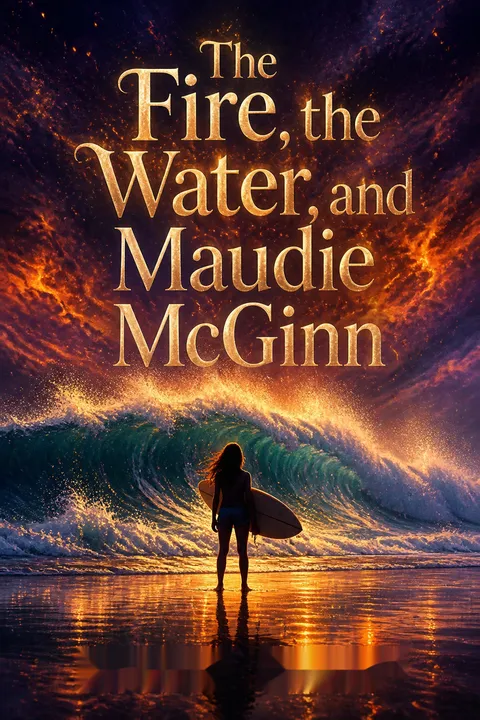

Plot Summary
Fire and Flight
Maudie McGinn, a sensitive, autistic thirteen-year-old, arrives in California for her cherished summer with Dad, only to be swept into chaos by a sudden wildfire. The flames force Maudie and her father to evacuate their beloved mountain cabin, the one place she feels safe. The trauma of the fire is immediate and overwhelming, triggering Maudie's sensory overload and anxiety. Her mother, Grace, and stepfather, Ron, are far away in Texas, planning a luxury cruise, leaving Maudie to navigate the disaster with her gentle, quiet Dad. The fire is not just a physical threat—it's a metaphor for the upheaval and uncertainty that has always shadowed Maudie's life, from her parents' divorce to her mother's remarriage. As the smoke settles, Maudie's longing for safety and belonging burns brighter than ever.
Shelter of Ashes
In the crowded emergency shelter, Maudie catalogues the overwhelming smells, sounds, and sensations, using a coping trick from her special ed teacher. Her father's presence is her anchor, but the loss of their home looms. Maudie's mother calls, frantic and critical, doubting Dad's ability to care for her. The threat of being sent back to Texas, away from Dad, terrifies Maudie. She pleads to stay, clinging to the rule that summers belong to Dad. The shelter is a liminal space—neither home nor safe, filled with strangers and uncertainty. Yet, in this moment of crisis, Maudie's determination to remain with her father crystallizes. The fire has destroyed their cabin, but not the bond between them.
Summer's Lost Haven
Maudie recalls the warmth and comfort of her father's cabin—the carved bookshelves, the woodstove, the soft quilts, the sense of acceptance. In contrast, her life in Texas with Mom and Ron is cold, hard, and full of rules. The cabin was her sanctuary, a place where she could be herself without shame. Now, with the fire's destruction, Maudie is unmoored. Dad, ever resourceful, proposes a new plan: they'll drive south to Conwy, his old beach town, and start over in a borrowed camper. The journey is both literal and emotional—a flight from disaster, but also a search for a new sense of home. Maudie's hope flickers amid the ashes.
Rules, Rifts, and Ron
Maudie's mother, Grace, is a YouTube influencer obsessed with appearances, masking her anxieties with makeup and performance. Ron, her stepfather, is strict, controlling, and quick to anger—especially with Maudie, whose autistic traits he neither understands nor tolerates. Maudie's life in Texas is a minefield of rules, expectations, and shame. She's learned to mask her true self, to suppress her stims and silence her voice. Therapy has taught her compliance, not acceptance. The contrast with Dad's gentle, accepting presence is stark. As Maudie and Dad drive toward Conwy, she carries not just the trauma of the fire, but the deeper wounds of family conflict and secrets she's been forced to keep.
Ocean's Edge, New Beginnings
The beach town of Conwy is a world apart—misty, wild, and alive with the roar of the Pacific. Maudie and Dad settle into their borrowed camper, welcomed by Naldo, Dad's old friend, and his niece Begonia. The ocean calls to Maudie, offering both solace and challenge. Early one morning, she meets Etta, an enigmatic older surfer with silver dreadlocks and a commanding presence. Etta's invitation to "hop on" her board plants a seed of longing in Maudie—a desire to learn to surf, to master the waves, to find her own strength. The ocean becomes a symbol of possibility, a place where Maudie might write something new in the sand.
Surf Witch and Milagros
As Maudie explores Conwy, she forges connections—with Begonia, who gifts her a milagro charm for luck, and with Etta, whose surf wisdom is both practical and mystical. The milagros, small silver charms, become talismans of hope and protection. Maudie's world expands: she meets Max, the lifeguard, and Paddi, a passionate, ADHD classmate from a local school for neurodivergent kids. These friendships are different—accepting, understanding, and free of judgment. The ocean, the charms, and her new friends offer Maudie glimpses of a life where she can be herself, unmasked and unashamed. The possibility of entering the Surf Bash beginner contest takes root—a wild, improbable dream.
Learning to Swim, Learning to Speak
Determined to surf, Maudie trains daily, swimming in the cold Pacific, growing stronger. Memories of past failures—swim team tryouts, Ron's cruel "weak gazelle" nickname—haunt her, but the water is her element. She learns that everyone stims, everyone masks, and that her differences are not defects. Etta's lessons are about more than surfing: they're about finding her own way, adapting, and persisting through falls. Maudie's confidence grows, but so does her anxiety about secrets—her wish to stay with Dad, the truth about Ron's abuse, and the guilt she carries about the fire. The ocean teaches her to ride one wave at a time.
Secrets, Shame, and Surfboards
Maudie's life is shaped by secrets—her mother's insistence on silence about Ron's abuse, her own guilt over a wishing candle she fears may have started the fire, her hidden ambition to win the Surf Bash. She learns to surf on a battered board named Esmeralda, patched by the local board shaper, Moondog. Each lesson with Etta is a step toward self-acceptance. Yet, the pressure of secrets builds, threatening to overwhelm her. The Surf Bash becomes a beacon—a chance to prove herself, to win money for Dad, to claim her place in this new community. But the fear of disappointing others, of being "too much trouble," shadows her every move.
Finding Family, Finding Self
As summer unfolds, Maudie finds family in unexpected places: with Dad, Naldo, Begonia, Max, Paddi, and the "silver surfers." She learns about her father's own neurodivergence, about Grandma Carmen's resilience, and about the power of chosen family. The Vida School, where Paddi studies, offers a vision of acceptance and support. Maudie's friendships deepen, and she begins to imagine a future where she belongs. Yet, the threat of being sent back to Texas looms, and the secrets she carries—about Ron, about her wish to stay—grow heavier. The ocean remains her refuge, a place where she can be strong, brave, and free.
The Wish and the Wound
The guilt over the wishing candle becomes unbearable, culminating in a meltdown. Maudie finally confides in Dad, who reassures her that the fire was caused by lightning, not her. The relief is profound, but another, deeper secret remains: the truth about Ron's abuse. The Surf Bash approaches, and Maudie's plan to surprise Dad with her surfing is threatened when Mom and Ron arrive early, intent on taking her back to Texas. In a moment of desperation, Maudie runs away, seeking refuge with Etta. The wish to stay with Dad, to be safe, to be seen for who she is, burns brighter than ever.
Surf Bash Dreams
On the day of the Surf Bash, Maudie competes in the beginner heat, channeling her anger and fear into furious paddling. A sudden rip current pulls her out to sea, but she remembers Etta's lessons and escapes, riding a wave back to shore. The ordeal is both terrifying and transformative—a test of everything she's learned about resilience, self-trust, and survival. Her performance earns her an honorable mention and the respect of her peers. But the confrontation with Mom and Ron is unavoidable. When Ron's anger turns violent in public, Maudie's secret is finally exposed.
The Rip Current Reckoning
In the aftermath of the Surf Bash, Maudie's injury brings the truth to light. Dr. Shakti, witnessing Ron's abuse, intervenes and ensures Maudie's safety. The cycle of silence is broken. Dad, devastated by what he learns, takes action to protect Maudie. The community rallies around her, offering support and validation. The shame words that have haunted Maudie—incapable, broken, trouble—are replaced by new words: brave, strong, worthy. The ocean, once a place of danger and uncertainty, becomes a symbol of healing and possibility. Maudie's journey through the rip current mirrors her journey through trauma—survival, struggle, and, ultimately, freedom.
Breaking the Silence
In the hospital, wrapped in warm blankets, Maudie begins to process the enormity of what has happened. She talks openly with Dad, with Dr. Shakti, and with her new therapist. The old coping strategy—locking feelings away—is replaced by a new one: speaking, sharing, trusting. Mom, confronted with the truth, begins her own journey of reckoning and apology. The legal arrangement is changed: Maudie will live with Dad, safe from Ron. The process is painful, but necessary. Maudie learns that her worth is not diminished by what she has endured. She is not a burden; she is loved.
Rescue and Reckoning
With the support of Dad, Dr. Shakti, and the Conwy community, Maudie and her father move into a cottage on the Vida School campus. Dad finds meaningful work, and Maudie enrolls in a school designed for kids like her—neurodivergent, unique, and valued. The milagro charms, the wooden heart, and the memories of the summer become symbols of survival and hope. Maudie's friendships flourish, and she continues to surf, to create, to heal. The ocean remains her teacher, reminding her that every day is a new slate, every wave a new beginning.
Healing Waves
As Maudie settles into her new life, she reflects on the journey from fire to water, from trauma to healing. The lessons of the summer—resilience, self-advocacy, the power of community—become part of her. She learns to honor her feelings, to ask for help, to trust in her own strength. The shame words lose their power, replaced by the good words she writes on her milagro heart. The ocean's waves, once overwhelming, are now a source of joy and renewal. Maudie's story is one of transformation—not just survival, but flourishing.
A New Home, A New Hope
In her new home, surrounded by friends and family who see and accept her, Maudie finds peace. The trauma of the past does not disappear, but it no longer defines her. She continues to surf, to create, to connect. The future is uncertain, but full of possibility. Every day, she writes something new in the sand. The fire and the water have shaped her, but they do not limit her. Maudie McGinn is, at last, home.
Analysis
A modern tale of trauma, resilience, and neurodiversityThe Fire, the Water, and Maudie McGinn is a powerful exploration of what it means to survive and heal from both visible and invisible wounds. Through Maudie's autistic perspective, the novel challenges stereotypes about neurodivergence, showing both the struggles and the unique strengths that come with it. The story confronts the realities of family dysfunction, emotional and physical abuse, and the societal pressures to mask and conform. Yet, it is ultimately a hopeful narrative—one that affirms the possibility of transformation through community, self-advocacy, and the courage to speak the truth. The ocean, with its endless waves and daily renewal, becomes a metaphor for the ongoing process of healing and growth. The book's lesson is clear: every day is a new slate, and every person—no matter how battered by fire or storm—deserves safety, acceptance, and the chance to write something new in the sand.
Review Summary
The Fire, the Water, and Maudie McGinn receives overwhelmingly positive reviews (4.5/5 stars), praised for its authentic portrayal of an autistic protagonist. Readers commend Sally J. Pla's characterization and sensitive handling of serious topics including physical abuse, parental manipulation, and autism acceptance. Maudie's summer with her understanding father, learning to surf, and finding inner strength resonates deeply. Some readers found flashbacks triggering or formatting challenging. The book's positive adult role models and emotional depth earned it the 2024 Schneider Family Book Award, with widespread recommendations for middle-grade readers.
People Also Read

Characters
Maudie McGinn
Maudie is a thirteen-year-old autistic girl whose world is defined by sensory intensity, anxiety, and a deep longing for safety and acceptance. Her relationship with her father is nurturing and affirming, while her life with her mother and stepfather is fraught with criticism, misunderstanding, and emotional (and physical) abuse. Maudie's internal world is rich and tumultuous—she masks her true self to survive, but yearns to be seen and loved as she is. Her journey is one of self-discovery, courage, and healing. Through surfing, friendship, and the support of her community, Maudie learns to trust her voice, confront her trauma, and claim her place in the world.
Dad (Pedro McGinn)
Maudie's father is her anchor—a quiet, creative carpenter who understands her in ways no one else does. He shares her neurodivergence, though it was never formally diagnosed, and offers her unconditional love and acceptance. Dad's own struggles with learning differences and trauma shape his empathy and patience. The loss of the cabin is a profound blow, but he adapts, finding new ways to provide for Maudie and build a home. His willingness to listen, to believe Maudie, and to fight for her safety is transformative. Through him, Maudie learns that she is not a burden, but a gift.
Grace (Mom)
Maudie's mother is a complex figure—outwardly glamorous and successful as a YouTube influencer, inwardly anxious and insecure. She masks her own struggles with perfectionism and control, often at Maudie's expense. Grace's inability to accept Maudie's differences leads to shame, secrecy, and emotional distance. Her marriage to Ron is both a financial salvation and a source of further conflict. Grace's journey is one of gradual reckoning—forced to confront the reality of Ron's abuse and her own complicity, she begins to seek forgiveness and change. Her love for Maudie is real, but flawed by fear and denial.
Ron
Ron is Maudie's stepfather, a man whose need for control and order manifests as anger and violence. He is incapable of understanding or accepting Maudie's neurodivergence, viewing her as a problem to be fixed or punished. His abuse is both physical and emotional, enabled by Grace's silence and rationalizations. Ron's presence is a constant source of fear and shame for Maudie, shaping her sense of self and her strategies for survival. Ultimately, his actions are exposed, and he is removed from Maudie's life, but the scars he leaves are deep.
Etta Kahana
Etta is an older surfer, a local legend with a mysterious past and a fierce, nurturing spirit. She becomes Maudie's surf teacher and spiritual guide, offering practical skills and life lessons. Etta's approach is direct, compassionate, and adaptive—she encourages Maudie to find her own way, to embrace her differences, and to trust her instincts. Etta's presence is transformative, helping Maudie build confidence, resilience, and a sense of agency. She embodies the healing power of community and the ocean.
Naldo
Naldo is Dad's childhood friend and the campground manager in Conwy. He welcomes Maudie and Dad with open arms, providing practical support and emotional warmth. Naldo's family, including his niece Begonia and nephew Max, become part of Maudie's chosen family. Naldo's easygoing, accepting nature helps Maudie feel at home in Conwy. He also serves as a bridge to Dad's past, sharing stories and wisdom that deepen Maudie's understanding of her family history.
Begonia
Begonia is Naldo's niece, a vibrant, artistic young woman who befriends Maudie and introduces her to the milagro charms. She works at the campground gift shop and is always ready to help. Begonia's warmth, humor, and acceptance make her a role model and confidante for Maudie. She helps Maudie navigate new experiences, from shopping for clothes to making art, and supports her dream of surfing. Begonia's presence affirms the importance of chosen family and community.
Max
Max is Begonia's brother and the local lifeguard. He watches over Maudie at the beach, helps her find a surfboard, and offers practical advice and encouragement. Max's understanding of Maudie's needs—speaking slowly, offering reassurance—makes him a safe and supportive figure. He models healthy masculinity and friendship, counterbalancing the negative influence of Ron. Max's role in Maudie's journey is one of steady, unobtrusive support.
Paddi
Paddi is a younger classmate from Vida School, full of energy, opinions, and empathy. She has ADHD and understands what it means to be different. Paddi's friendship is exuberant and unconditional—she invites Maudie into her world, shares her passions, and stands up for what's right. Paddi's mother, Dr. Shakti, is the school principal and another key ally. Through Paddi, Maudie experiences the joy of true friendship and the power of speaking up.
Dr. Shakti
Dr. Shakti is Paddi's mother and the principal of Vida School. She is perceptive, assertive, and deeply committed to the well-being of her students and their families. When she witnesses Ron's abuse, she intervenes decisively, ensuring Maudie's safety and connecting her to resources. Dr. Shakti's leadership is both compassionate and pragmatic—she creates opportunities for Dad and Maudie, offering them a new home and a new start. Her presence is a catalyst for healing and change.
Plot Devices
Dual Settings: Fire and Water
The novel's structure is anchored in two elemental settings: the wildfire-ravaged mountains and the ever-changing ocean. The fire represents trauma, loss, and the destructive forces in Maudie's life—her family's fragmentation, Ron's abuse, the loss of home. The ocean, by contrast, symbolizes renewal, possibility, and the fluidity of identity. The movement from fire to water is both literal and metaphorical, charting Maudie's path from crisis to healing.
Sensory Overload and Coping Mechanisms
Maudie's autistic perception is central to the storytelling—her cataloguing of sensory details, her stims, her need for routines and coping tricks. The narrative often slips into poetic, fragmented language to convey her inner world. This device immerses the reader in Maudie's experience, fostering empathy and understanding. It also highlights the challenges and strengths of neurodivergence.
Secrets and Silence
The plot is driven by secrets—Maudie's promise to her mother not to reveal Ron's abuse, her guilt over the wishing candle, her hidden ambition to surf. The motif of locking feelings away recurs throughout, illustrating the psychological toll of silence. The eventual breaking of these silences is a turning point, enabling healing and justice.
Surfing as Metaphor
Surfing is both a literal skill and a metaphor for navigating life's challenges. Etta's lessons—about balance, adaptation, and resilience—echo Maudie's emotional journey. The ocean's unpredictability, its dangers and delights, reflect the uncertainties of trauma and recovery. The Surf Bash competition is the climax, testing everything Maudie has learned.
Found Family and Community
The novel foregrounds the importance of chosen family—friends, mentors, and allies who offer acceptance and support. The contrast between Maudie's biological family (fractured, conflicted) and her Conwy community (nurturing, inclusive) underscores the theme that belonging is found, not given. The Vida School represents a vision of inclusive education and community.
Foreshadowing and Symbolism
The wishing candle, the milagro charms, the wooden heart, and the recurring imagery of fire and water all serve as symbols of hope, guilt, transformation, and healing. The narrative structure uses foreshadowing—Maudie's nightmares, her anxiety about secrets—to build tension and prepare the reader for the climactic revelations.
Download PDF
Download EPUB
.epub digital book format is ideal for reading ebooks on phones, tablets, and e-readers.








































