
Plot Summary
Prologue: Fire Over Tokyo
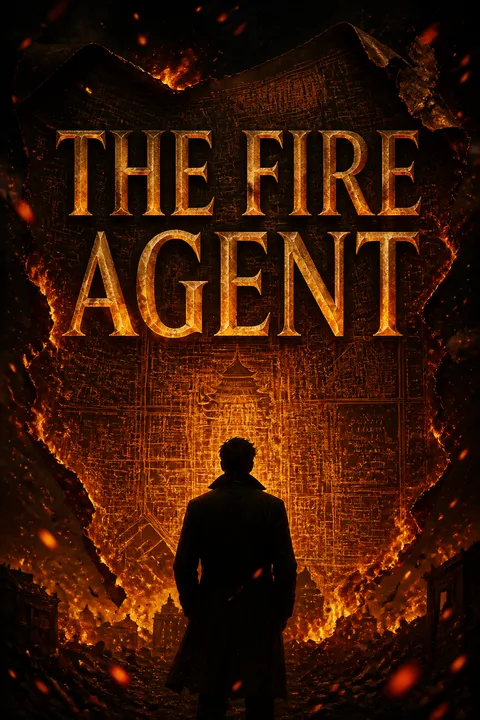
In 1945, Ernst Baerwald, a German-Jewish expert on Japan, sits at the Presidio in San Francisco, watching the American firebombing of Tokyo unfold. He is haunted by his knowledge—he once helped build Tokyo, now he helps destroy it. The firestorm is meticulously planned, exploiting the city's gas lines, and Ernst's blueprints are key. The devastation is immense, and the guilt is overwhelming. As the city burns, Ernst prays for forgiveness, torn between his duty and the horror of what he's enabled. The prologue sets the tone: a world where science, war, and conscience collide, and where the lines between savior and destroyer blur.
Apprentices of Enlightenment
At the turn of the 20th century, the Baerwald family in Frankfurt embodies the ideals of Jewish Enlightenment—education, integration, and progress. Ernst, the youngest, is restless, brilliant, and rebellious, drawn to both science and the mysteries of the world. His father, Hermann, is a pillar of reason and tradition, but Ernst seeks experience beyond the classroom, donning disguises to learn from the streets. The family's network connects them to the great banking and industrial dynasties of Europe, but beneath the glittering surface, the seeds of future catastrophe are sown. The chapter explores the tension between tradition and modernity, faith and reason, and the hope that knowledge can save humanity.
Milan: Science and Seduction
Ernst's journey takes him to Milan, where he apprentices at Cassella, a chemical firm at the heart of Europe's industrial revolution. Here, he meets Arkady, Rossi, and Novak—fellow outsiders and thinkers. Together, they confront the looming crisis of soil depletion and famine, working on the "Doom Record" that charts the world's dying farms. Ernst's scientific training is matched by his immersion in Italian bohemia, where he falls for Chizuko, a Japanese dressmaker, and navigates the dangerous world of spies, anarchists, and secret police. Milan is a crucible of ideas and passions, where the promise of science is shadowed by the threat of violence and betrayal.
The Doom Record Unveiled
The global crisis of agriculture becomes clear: without new sources of nitrates, famine will sweep the world. Fritz Haber, a driven chemist, offers hope with his process to synthesize ammonia—"bread from air." The breakthrough is celebrated as a triumph of reason and international cooperation, but the same chemistry that can feed the world can also make explosives. The chapter traces the gathering of bankers, scientists, and industrialists in Berlin, where the chemical wedding of science and capital is consummated. Yet, the alliance with Krupp, the arms manufacturer, foreshadows the dark uses to which science will be put. The optimism of the age is real, but so is its blindness.
Love and Revolution
Ernst and Chizuko's love deepens in Milan and later in Tokyo, where they build a life together as Japan modernizes. Their circle includes artists, musicians, and radicals, all swept up in the era's ferment. But the world is changing: labor unrest, political violence, and the rise of nationalism threaten the fragile peace. The couple's relationship is tested by distance, prejudice, and the demands of their respective ambitions. Chizuko's artistry flourishes, while Ernst becomes ever more entangled in the webs of industry and espionage. The chapter captures the beauty and fragility of love in a world on the brink.
The Chemical Wedding
The Haber-Bosch process is hailed as a miracle, and vast sums are raised to build nitrate plants across the globe. The alliance of German science, American oil, and Japanese ambition creates a new world order, but also a new kind of danger. Krupp's involvement ensures that the technology will serve both bread and bombs. The chemical wedding is both a triumph and a curse, as the tools of life become the tools of death. The chapter explores the moral ambiguity of progress, the seduction of power, and the ease with which ideals are corrupted.
War's First Flames
The assassination of an archduke triggers a global conflagration. Ernst, now in Japan, is swept into the defense of Tsingtau, a doomed German outpost in China. The siege is brutal, and Ernst witnesses the collapse of old certainties. Captured and sent to a Japanese POW camp, he finds unexpected humanity and hope. Under the enlightened command of Colonel Matsue, the Bandō camp becomes a place of music, learning, and cross-cultural friendship. Yet, the war's horrors are never far away, and the seeds of future violence are sown even in peace.
Lovers Torn by War
The war scatters the characters: Chizuko builds her business in Tokyo, while Ernst endures captivity and loss. Letters and memories sustain them, but the world they knew is gone. The Bandō camp orchestra, led by Hanssen, becomes a symbol of resilience, culminating in a legendary performance of Beethoven's Ninth. The music unites prisoners and guards, Germans and Japanese, in a fleeting moment of transcendence. But the armistice brings new challenges—revolution, famine, and the rise of new ideologies. The lovers are changed, their innocence burned away, but their bond endures.
The Bandō Miracle
In the aftermath of war, the Bandō POW camp becomes a beacon of what might have been. Under Colonel Matsue's humane leadership, prisoners and guards create a community of learning, art, and mutual respect. The performance of Beethoven's Ninth is both a personal and collective redemption, a testament to the power of culture to bridge divides. Yet, outside the camp, the world is unraveling—revolutions, assassinations, and the rise of fascism. The miracle of Bandō is real, but it is also fragile, a brief oasis before the next storm.
The Virus of Myth
As the 1920s and 1930s unfold, Japan and Germany are swept by waves of myth-making and ultranationalism. Secret societies like the Dark Ocean and Black Dragon cultivate assassins and propagandists, infiltrating every level of society. The virus of myth—stories of divine ancestry, heroic sacrifice, and racial destiny—infects millions, preparing them for war and atrocity. Kodama Yoshio, a prodigy of violence, rises through the ranks, embodying the new breed of fanatic. The chapter traces the transformation of politics into a cult of death, and the complicity of industry, crime, and state.
The Rise of Assassins
The era of "government by assassination" begins: prime ministers, reformers, and moderates are systematically killed by ultranationalist cells. The yakuza, military, and secret police merge into a shadow state, funded by drugs, gambling, and looted treasure. The liberal order collapses, and Japan is set on a path to conquest and ruin. In Germany, the Nazis seize power, and the machinery of genocide is built with the help of industrial giants like IG Farben. The chapter is a study in how societies are captured by their worst elements, and how violence becomes both means and end.
The Golden Lily Conspiracy
As Japan invades China and Southeast Asia, a vast operation—Golden Lily—is launched to loot the continent's wealth. Kodama and his allies orchestrate the systematic theft of gold, art, and jewels, burying treasure in secret vaults. Slave labor is used and then exterminated to hide the evidence. The spoils of empire fuel both the war machine and the fortunes of a new criminal elite. The Americans, British, and Soviets watch and wait, preparing their own moves in the great game of postwar power. The chapter exposes the dark logic of total war and the complicity of all sides.
Earthquake and Inferno
The 1923 Kantō earthquake devastates Tokyo, unleashing firestorms that kill over 100,000. In the chaos, ultranationalists incite pogroms against Koreans and leftists, and the city becomes a hellscape of violence and fear. Chizuko barely survives, traumatized and transformed. Ernst, desperate to save her, witnesses the collapse of order and the triumph of myth over reason. The disaster is both literal and symbolic—a preview of the destruction to come, and a lesson in how quickly civilization can vanish.
The Shadow Network
As the world lurches toward another war, Ernst, Lina, and Chizuko build a network of intelligence, resistance, and refuge. They aid Jewish refugees fleeing Europe, navigate the treacherous politics of Tokyo and Shanghai, and play a double game with American, German, and Japanese agencies. The lines between friend and foe blur, and survival depends on wit, courage, and luck. The chapter is a tapestry of intrigue, betrayal, and small acts of heroism, as the characters try to hold onto their humanity in a world gone mad.
The American Gambit
With the outbreak of World War II, Ernst and his family are forced to flee Japan, their networks compromised. Lina becomes a British agent in North Africa, sacrificing herself in a final act of heroism. Kurt, their son, comes of age in Switzerland and America, haunted by loss but determined to fight. Ernst, now in the US, becomes a key advisor to American intelligence, helping plan the firebombing of Japan and the postwar order. The chapter explores the moral cost of victory, the price of survival, and the impossibility of innocence.
Urbicide: Cities in Ashes
The American campaign against Japan is relentless: firebombing, starvation, and finally atomic bombs reduce the country to ruins. Ernst, now a teacher of intelligence officers, explains the logic of urbicide—the deliberate annihilation of cities as a weapon of war. The virus of myth has made total destruction necessary, he argues, but the cost is incalculable. The chapter is a meditation on the limits of reason, the seduction of power, and the tragedy of a world where every victory is also a defeat.
The Spoils of Empire
In the aftermath of war, American and Japanese intelligence officers unearth the Golden Lily treasure, using it to fund covert operations and the rebuilding of Japan as an anti-Communist bulwark. War criminals become assets, yakuza become partners, and the machinery of empire is repurposed for the Cold War. Ernst, disillusioned and hunted, helps refugees and tries to atone for his complicity. The chapter reveals how the spoils of war shape the world to come, and how the cycle of violence and betrayal continues.
The Last Song of Hope
In the postwar years, Ernst's family is scattered, his friends dead or lost, and the ideals of his youth betrayed. Yet, in Tokushima, a new generation gathers to perform Beethoven's Ninth, echoing the miracle of Bandō. Kurt, now a scholar, returns to Japan to learn the truth of his father's life. The story ends with music, memory, and a fragile hope—that even in a world of fire and ashes, the dream of enlightenment, justice, and joy can survive, if only for a moment.
Analysis
A modern epic of conscience and complicityThe Fire Agent is a sweeping, polyphonic meditation on the 20th century's greatest hopes and darkest crimes. Through the lens of one family's journey, it interrogates the promises of Enlightenment—reason, justice, progress—and the ways those ideals are betrayed by power, myth, and violence. The novel is unsparing in its depiction of how science and capital, meant to save the world, become engines of destruction; how love and art offer moments of redemption, but cannot halt the tide of history; and how individuals are both agents and victims of forces beyond their control. Its lessons are urgent for our own time: that the virus of myth and the machinery of propaganda remain potent; that the alliance of power and profit is always dangerous; and that the struggle for justice and humanity is never finished. The Fire Agent asks us to remember, to resist, and to hope—even when hope seems impossible.
Characters
Ernst Baerwald
Ernst is the novel's central figure—a German-Jewish polymath, scientist, spy, and reluctant agent of destruction. Raised in the tradition of Enlightenment, he is driven by a belief in reason, justice, and the possibility of progress. Yet, his life is a series of compromises and betrayals: he helps build the machinery of modernity, only to see it turned to war and genocide. His relationships—with Chizuko, Lina, Arkady, and his son Kurt—are marked by love, loss, and guilt. Psychologically, Ernst is divided: part dreamer, part survivor, always aware of the cost of his choices. His journey is one from innocence to experience, from hope to disillusionment, but never to cynicism. He is both witness and participant in the tragedies of the 20th century, and his story is a meditation on the limits of conscience and the burden of history.
Chizuko Watanabe
Chizuko is Ernst's great love and the embodiment of creative strength. Born to a mixed Japanese-European family, she becomes a pioneering designer and entrepreneur in Tokyo, building a business and a school that empower women and outcasts. Her relationship with Ernst is passionate but complicated by cultural barriers, trauma, and the demands of survival. Chizuko endures war, disaster, and personal loss, emerging each time with renewed purpose. Psychologically, she is both nurturing and fiercely independent, refusing to be defined by victimhood. Her art is her resistance, and her legacy is one of beauty amid ruin.
Lina (Ursuline Bergen)
Lina is a chameleon—an orphan, a survivor of abuse, and a master of espionage. Her intelligence and sensuality make her both a formidable agent and a magnetic presence. She partners with Ernst and Chizuko in love and in resistance, building networks of information and refuge. Lina's psychological complexity is rooted in her trauma and her refusal to be defined by it; she is both vulnerable and ruthless, capable of great tenderness and great violence. Her ultimate sacrifice in North Africa is an act of love and defiance, a refusal to be a bystander in the face of evil.
Arkady Zelenko
Arkady is Ernst's closest friend and intellectual sparring partner—a Ukrainian Jew, chemist, and sometime spy. He is skeptical, sardonic, and deeply wounded by history, yet capable of great loyalty and humor. Arkady's journey takes him from Milan to Moscow to Shanghai, always on the margins, always adapting. Psychologically, he is marked by loss and displacement, but also by a stubborn refusal to give up on hope or friendship. His final act—helping Ernst in his last gambit—is a testament to the enduring power of connection.
Kurt Baerwald
Kurt is the child of Ernst and Lina, raised amid chaos and exile. His coming of age is marked by trauma, estrangement, and the search for identity. As an adult, he becomes a scholar of Japan, seeking to understand his father's legacy and the meaning of their shared history. Psychologically, Kurt is both haunted and resilient, shaped by absence but determined to find his own path. His journey is one of reconciliation—with his father, with the past, and with the possibility of joy.
Kodama Yoshio
Kodama is the novel's most chilling antagonist—a prodigy of violence, trained by secret societies to be an assassin, looter, and kingmaker. He rises from poverty to become a central figure in Japan's criminal and political underworld, orchestrating the looting of Asia and the rise of postwar yakuza power. Psychologically, Kodama is a sociopath, but also a product of the myths and traumas of his time. He is both a symbol and an agent of the virus of myth, the dark side of modernity.
Baron Takahashi
Takahashi is a key figure in Japan's attempt to modernize and democratize. He is a patron of the arts, a friend to Ernst, and a believer in trade and peace. His assassination marks the end of hope for moderation in Japan and the triumph of the militarists. Psychologically, Takahashi is wise, patient, and principled, but ultimately powerless against the tide of fanaticism.
Hans Kraus
Hans is the conductor of the Bandō camp orchestra and later a pillar of the refugee network. He is practical, compassionate, and dedicated to the healing power of music. Psychologically, Hans is steady and resilient, providing stability amid chaos. His friendship with Ernst is a source of strength for both men.
General Charles Willoughby
Willoughby is an American intelligence officer whose zeal for anti-Communism leads him to ally with former enemies and criminals. He is both a product and a driver of the new world of covert power, where morality is subordinate to strategy. Psychologically, Willoughby is insecure, authoritarian, and ultimately destructive, a warning about the dangers of unchecked power.
Allen Dulles
Dulles is the embodiment of the new American imperium—charming, ruthless, and convinced of his own righteousness. He orchestrates the postwar intelligence order, recruiting former Nazis and yakuza to fight communism. Psychologically, Dulles is a true believer in power, a man for whom the ends always justify the means. His legacy is both the triumph and the tragedy of the American century.
Plot Devices
Interwoven Timelines and Generational Saga
The novel uses a sweeping, multi-generational structure, moving from the late 19th century through World War II and into the Cold War. The Baerwald family's story is interwoven with the great events of the age, allowing personal and historical narratives to illuminate each other. The structure enables the exploration of how ideals are tested by history, and how individuals both shape and are shaped by the forces around them.
Science as Salvation and Doom
The recurring motif of chemistry—first as the hope for feeding the world, then as the engine of war and genocide—serves as both plot device and symbol. The Haber-Bosch process is both miracle and curse, and the alliance of science, capital, and state is shown to be morally ambiguous. The novel foreshadows the dark uses of technology even as it celebrates its promise.
Music as Redemption
Music, especially Beethoven's Ninth, recurs as a symbol of hope, unity, and the possibility of transcendence. The Bandō camp orchestra, the postwar concerts, and the personal connections forged through music provide moments of grace amid horror. Music is both plot device and thematic anchor, representing the best of humanity.
Espionage, Networks, and Betrayal
The novel is structured around networks—of family, business, crime, and intelligence. Characters move between roles as spies, agents, and double agents, and the shifting alliances drive much of the plot. Betrayal is both personal and political, and the question of whom to trust is ever-present. The use of microdots, secret codes, and hidden rooms adds layers of suspense and irony.
The Virus of Myth and the Machinery of Propaganda
The spread of ultranationalist and fascist myths is depicted as a literal virus, infecting societies and preparing them for violence. Propaganda, education, and ritual are shown as tools of both liberation and enslavement. The motif of the "virus of myth" is used to foreshadow the rise of totalitarianism and the collapse of reason.
Foreshadowing and Recurrence
The novel uses foreshadowing—through dreams, speeches, and historical parallels—to create a sense of inevitability and tragedy. Events recur in new forms: the firestorms of Tokyo echo the fires of Kantō; the betrayals of one generation are mirrored in the next. The structure invites the reader to see history as both progress and repetition.
Download PDF
Download EPUB
.epub digital book format is ideal for reading ebooks on phones, tablets, and e-readers.








































