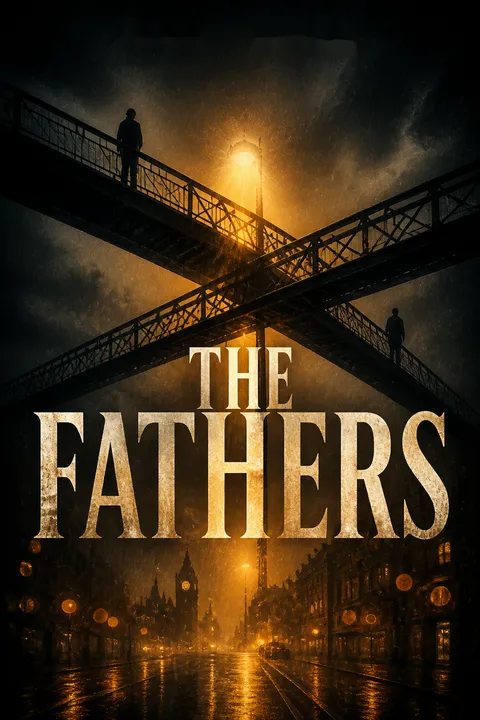

Plot Summary
Two Sons, Two Strangers
The story opens on a wintry morning in Glasgow as Dan Chambers supports his wife, Grace, through a grueling round of IVF births. The joy at delivering their long-awaited son, Tom, after years of infertility, is electrifying for them. Simultaneously, in a different hospital room, Jada Hamilton, a notorious local character, welcomes baby Jayden with his much younger partner, Nicola, his sixth child with a sixth woman. The men's paths cross on the hospital steps: Dan, anxious and sleep-deprived, is awed and naïve; Jada is rough, sardonic, and used to fast, chaotic life. Their brief encounter, shaped by class divide and outlook, sets the tone for two parallel fatherhood journeys.
Unexplained Infertility Rage
Dan and Grace's five-year ordeal of failed conception haunts every moment. The clinical process of IVF, the isolation, the intrusive medical probes, and physical and emotional exhaustion erode them. Jealousy at the ease with which others have children turns bitter and corrosive. The efforts are lonely: Dan obsesses over health, Grace shoulders private guilt and, at her lowest point, considers suicide. Society's careless platitudes—"it'll happen if you want it," "what's for you won't go by you"—highlight their suffering and powerlessness.
Births at Opposite Ends
Inside their cramped flat, Jada rebuffs phone complaints with vulgar bravado and deals drugs to pay rent. His world is cluttered, lawless, and steeped in moral ambiguity. New fatherhood for Jada is fleeting—a reason for a quick hookup, a round in the pub, and talk of easy money. In contrast, Dan returns to his elegant West End home flooded with euphoria, already fussing over his son's safety, warmth, and future. The spatial differences between their households echo the gulf in opportunity, expectation, and security.
Fathers on Hospital Steps
On hospital steps, Dan and Jada meet again, exchanging small talk about the births and philosophies of fatherhood. Dan's anxiety and earnestness meet Jada's mix of bravado, cynicism, and streetwise philosophy. Jada's take on fathering many children—detached and jocular—disturbs and fascinates Dan, who is desperate to be a good dad. Their conversations are shaped by assumptions about class and fate, highlighting their envy and incomprehension of each other's lives.
Media Success and Resentments
Dan's professional success as writer-creator of the hit TV show McCallister has made him wealthy but resentful. He feels trapped by the expectations of fans and actors—especially the vain, aging Gregor, who resists Dan's insistence that the show must end. Gregor needs the role for status and alimony; Dan yearns for creative renewal. Their co-dependent resentment is mutual. At home, Grace manages logistics and family with quiet competence, her own legal career deferred.
Family Meals, Class Divides
Family meals in the Chambers household are ritualized, wholesome, and tightly managed: food deliveries, feeding schedules, sterilized bottles—every element planned for Tom's wellbeing. At Jada and Nicola's, chaos reigns: takeaways, bickering, indifference to mess, and outright neglect, all seasoned with complaint and crude jokes. Both families feel the tension of expectation and disappointment, but the kinds of support—and the consequences of failure—diverge sharply along class lines.
Bonding Night, Car Gone
Both Dan and Jada "wet the baby's head" with mates—their boozy pub rituals typical of their social circles. Dan's friends toast fatherhood, reminisce, and share advice, but a petty theft at the end of the night seals a key plot turn: Dan's luxury Tesla is stolen by Jada's associates, sold for parts to cover debts. This theft links their fates through a shared atmosphere of envy, luck, and opportunism. The event forces Dan to confront privilege and impotence.
Desperation, Theft, Regret
Jada uses criminal connections to strip Dan's Tesla, barely breaking even after debts and bribes. This "score" is tarnished by moral exhaustion and the brevity of any peace it brings. Meanwhile, Dan's ordeal with the stolen car is minor and quickly solved by insurance, but his sense of violation and the growing distance from his working-class roots deepen his self-doubt. Meanwhile, McCallister's impending finale heightens his anxiety and sense of life's unfinished business.
Parent Groups, Class Wars
As months pass, the families diverge: Grace joins affluent mummy groups, trading tips on nurseries and weaning; Nicola wanders budget supermarkets, scraping by. The babies' development diverges too—Tom's life is a circuit of cognitive stimulation, organic meals, and safety, while Jayden grows up in a hazardous, unstimulated world of secondhand smoke, TV, and deprivation. Occasional brief encounters at playgroups or in the street expose judgment and incomprehension from both sides.
Small Triumphs, Private Griefs
Dan and Grace are grateful for Tom's first steps; Jada glories in Jayden's first curse word, even as the house falls further into disrepair. Yet under the surface, victories are fragile: Dan's obsessive need to control every variable in Tom's environment is propelled by trauma, not joy. Grace, still haunted by infertility, tries to force happiness and fails. Nicola suffers postnatal depression and substance cravings, rarely acknowledged by Jada or the system.
Illegal Schemes, Temptations Lurk
Jada is drawn into a scheme to steal military supplies from the airport, encouraged by corrupt contacts and the promise of easy money. Enticed by images of quick wealth, he deepens his criminal involvement at the cost of increased risk, encounters with loyalist paramilitaries, and mounting debts. The logic of quick fixes infects family life, where neglect and survival hustle blend, and violence always simmers near the surface.
Reunion, Collapse, Moving Out
Work stress, financial worries, and substance habits strain both marriages. Frustrated by Dan's emotional withdrawal, Grace asks him to leave. Jada and Nicola's relationship is similarly under siege from drug use, oblique threats from creditors, and ever-present chaos. Dan drifts into the orbit of Jada's world, finding bleak solace in the pub and a growing disregard for his own wellbeing. Grace copes through therapy and long walks, teetering on the edge of despair.
Descent Into Nightlife
The worlds of both men deteriorate: Dan's drinking escalates, and he loses contact with friends. Jada and Nicola descend into heavier drug use, inviting Dan into a cycle of heroin and cocaine that offers temporary escape from pain and responsibility. The distinction between respite and ruin blurs. Their children—Tom, now gone, and Jayden, increasingly neglected—become both casualties and pretexts in their failures.
A Crime, A Plan
The anniversary of Tom's death approaches. Dan, numbed by grief, concocts a wild plan: using his proximity to Jayden and Nicola's incapacity, he plots to essentially "adopt" Jayden as a replacement. He manipulates Jada, arranging for a favor (a large loan) and practical paperwork to sign away parental rights, knowing Jada is desperate. Meanwhile, he acquires heroin, intending a lethal overdose for Jayden's parents, all justified by a twisted sense of justice and restitution.
A Favour Exchanged
Jada, overwhelmed by threats from loyalist associates after a gun deal goes wrong, comes to Dan for money. Dan exploits Jada's desperation, having him sign documents relinquishing guardianship, presented as routine paperwork for the "loan." Jada, illiterate and exhausted, trusts Dan, not realizing the enormity of what he's signed away. Dan's moral collapse is nearly complete—crime, deception, and rationalization blend into a single act of betrayal.
Signed, Stolen, Betrayed
At a celebratory binge, Dan surreptitiously replaces heroin with a deadly synthetic mix, watches as Jada and Nicola overdose, and prepares to take Jayden home as his own son. He finds evidence of Jada's attempts to improve—elementary handwriting practice, a heartfelt, broken letter of gratitude—and is ambushed by guilt and horror. Unable to continue, Dan calls emergency services. Both parents are barely saved; Dan is left numb, with his illusions—and moral claims—destroyed.
Overdose, Redemption, Recovery
The aftermath: Both families recover, scattered and battered but alive. Jada and Nicola, forced into rehab after their brush with death, begin a slow climb toward responsibility—Nicola especially responds to therapy and makes peace with her own past. Dan, haunted, confesses his failed crime to Grace, and they reunite, broken but honest. There is no easy forgiveness, just a tentative rebuilding of intimacy and mutual acknowledgement of grief. New life—with a second child—emerges for Dan and Grace, while Jada and Nicola achieve a kind of stability.
Epilogue: Cycles Restarted Anew
Eighteen months later, the families are forever altered yet stubbornly hopeful. Dan pushes a buggy with his daughter through the park, haunted but shored up by love. Jada, now a part of Jayden's life in a more responsible way, has grown—less philandering, caring, battered but present. Nicola's journey of recovery continues; old patterns are not easily broken but acceptance grows. The two men meet, worlds still apart, joined by children, loss, and the stubborn forward lurch of ordinary life.
Analysis
Sharp, unflinching anatomy of class, fatherhood, and the limits of redemptionTHE FATHERS ruthlessly examines what it means to be a man, a parent, and a human caught between fate and self-destruction in contemporary Britain. John Niven's parallel plotting exposes the anatomy of inequality, showing how class structures not only shape opportunity and suffering, but also how they inform the ways grief, love, and hope are managed—or fail to be managed—and the narratives we tell ourselves about destiny, deserving, and goodness. By refusing sentimentality or easy solutions, the novel insists on the reality that trauma is not "fixed" by will or wealth, that cycles of addiction, violence, and loss are both generational and mutable. Niven's greatest intervention is his refusal to grant any one world, or set of coping mechanisms, a moral high ground: both Dan and Jada are damaged, damaging, but also redeemable in small, begrimed increments. In an era obsessed with parental self-realization and the promise of self-invention, THE FATHERS asks readers to accept the pervasiveness of pain, the necessity of humor, and the possibility—never certainty—of small, grace-laden change.
Review Summary
The Fathers receives overwhelmingly positive reviews, averaging 4.23/5. Readers praise Niven's masterful balance of pitch-black humour with raw emotional depth, particularly his exploration of fatherhood, class inequality, and grief set in Glasgow. The dual narrative contrasting wealthy Dan and streetwise Jada is widely lauded for its nuance and authenticity. The audiobook narration by Angus King receives special mention. Common criticisms include an overly neat, rushed ending and occasional unbelievable plot elements. Many consider it among Niven's finest work.
People Also Read




Characters
Dan Chambers
Creator and writer of the police drama McCallister, Dan embodies the contradictions of the British liberal middle class: supremely capable and successful yet seething with insecurity, resentment, and self-doubt. Years of infertility leave him obsessed with control, his sense of identity consumed by the project of "good" parenting. Dan's journey is dominated by grief—first over infertility, then by Tom's tragic death—and a desperate urge to restore wholeness, leading him to a criminal, self-deluding spiral. Underneath, Dan's core is decency, warped by pressure and pain. His psychological downfall—marked by envy of Jada's "freedom," substance abuse, and a self-justifying crime—culminates in a reluctant return to honesty and slow healing, ultimately rediscovering humility in accepting loss.
Jada Hamilton
Jada, the "wit" and bruiser of his Glasgow block, is every inch the product of generational poverty, violence, and neglect. Aggressive, profane, but charming, he survives through cunning, crime, and bravado, cycling through women and schemes with unexamined emotional roots. Psychologically, Jada is both armored and exposed—his fear of intimacy manifests in sabotage, yet sly attempts at self-improvement reveal vulnerability. His relationship with Dan exposes latent envy and confusion regarding what "good" fathering might mean; his love for Jayden is often inept but real. After overdose and betrayal, Jada begins, painfully, to accept change, his journey a rough arc toward imperfect responsibility.
Grace Chambers
Grace, Dan's younger wife, is rational, empathetic, and pragmatic: the unseen laborer who keeps the household, and Dan, functioning. The trauma of infertility, societal expectations, and professional sacrifice weigh on her, but she persists without self-indulgence. After Tom's death, her grief is direct but unsentimental, seeking help in therapy and eventually deciding to move on practically. Grace's psychological journey is one of cautious opening—reaccepting Dan, choosing another child, but never succumbing to easy redemption or sentimentality. Her acceptance of ambivalence and complexity anchors the family.
Nicola McGovern
Raised in chaos with a revolving door of addicts, abusers, and absent role models, Nicola initially mirrors her upbringing: detached, overwhelmed, drawn to substances to numb despair. Her sexual precocity is tied to a search for affection and control. Her relationship with Jada is transactional; motherhood is crushing. Yet, after near-death, Nicola becomes the novel's quiet revelation—helped by therapy, she chooses recovery, stable love, and self-respect, forging a new template for her own child. Her arc defies pathos; instead, we witness genuine, hard-won growth.
Tom Chambers
More than a character, Tom embodies hope, possibility, the promise of "getting it right." His brief presence and sudden, seemingly random death by choking on a grape fracture all characters' sense of meaning, exposing life's uncontrollability. His memory haunts the narrative, a paradoxical source of guilt, self-pity, longing, and, ultimately, acceptance.
Jayden Hamilton
Jayden, the "other" child, personifies potential blighted or redirected. Raised amid deprivation, neglect, and risk, his fate is a central concern—his future teeters between the repeating patterns of his parents' failures and the hope for something better. He is the unwitting site for Dan's desperate redemptive scheme, and, finally, the proof that cycles can—slowly, painfully—be changed.
Gregor Wappler
The actor who plays McCallister, Gregor embodies egotism, insecurity, and fear of obsolescence. His battles with Dan over creative control and the threat of irrelevance reflect deeper anxieties about aging, masculinity, and worth outside the spotlight. Though comically self-involved, Gregor's panicked bargaining exposes the terror of losing public purpose and private self.
The Gypsy
An underground kingpin, the Gypsy mediates between the criminal world's promises of fortune and the hard reality of scarcity, exploitation, and risk. He is practical, detached, and views sentiment or trust as liabilities. Psychologically, he represents the logic of survival without illusion—the anti-Dan, with no illusions about upward mobility or transcendence.
Sarah
One of Grace's old friends, Sarah's singlehood, hedonism, and later, late-in-life pregnancy, foreground alternative scripts of adulthood. Her choices (sometimes seemingly disastrous, sometimes enviable) offer contrast and possible futures—her own struggles, and the pragmatic acceptance of "good enough," provide a counterpoint to Grace's and Dan's perfectionism.
Jayden's Grandparents, Extended Relatives
Both the Chambers and McGovern/ Hamilton clan relatives are present as background forces, embodiments of old advice, expectations, and disappointments that both sustain and stifle the main characters. They personify the inertia of class, tradition, and unspoken traumas that are both ballast and burden.
Plot Devices
Mirror Structure: Parallel Lives
The novel employs a dual, mirrored narrative structure: Dan's and Jada's lives unfold side by side, each event in one world echoing or inverting a similar event in the other. Births, parental anxieties, celebrations, falls, and attempted redemptions are set against each other to highlight the arbitrary nature of fate, the structural brutality of class, and the universality of longing and pain.
Chiasmic Encounters and Crossings
The stories intersect at chance encounters—on hospital steps, in pubs, at playgrounds—each less about connection and more about missed opportunities, cultural misunderstanding, and the impossibility of bridging social divides except through violent rupture or abjection.
Legal and Bureaucratic Documents
The signing of forms—medical, criminal, financial, legal—recurs as a motif. Documents become the hinge by which lives are changed, property and people transferred, rights and responsibilities reallocated. Jada's illiteracy and Dan's obsessive paperwork contrast, but both are ultimately at the mercy of randomness and systemic indifference.
The Death of a Child (Tom)
Tom's sudden, accidental death by choking is both a plot twist and a symbolic shattering. It exposes life's unpredictability, the futility of control, and the depths of parental guilt. The event fractures Dan and Grace, catalyzes Dan's madness, and provides motivation for the ethically disastrous plan to "save" Jayden.
Cycle of Addiction and Recovery
Characters on both sides of the class line succumb to addiction—Dan drowns in alcohol, Jada and Nicola in drugs. The descent is both self-destruction and an attempt to numb pain, highlightng the ubiquity of despair and the thinness of the line between coping and harm.
Irony and Dark Humor
The novel is leavened by crude, caustic, and brilliantly rendered Glasgow humor; laughter is both armor and anesthetic. The humor sharpens the indictment of systemic failure, petty cruelty, and self-delusion, but never quite absolves characters of their choices.
Unreliable Narration/Confession
Much of Dan's involvement in the crime plan and his rationalizations are filtered through internal monologue, therapy-speak, and voice-of-conscience. The reader is invited to both judge and sympathize, never fully allowed the comfort of easy condemnation or identification.
Cyclical Ending/Beginning
The final scenes present the characters years later, their situations altered but not transcended. New children are born, cycles of grief and joy repeat, small increments of personal growth emerge, suggesting that change—when it comes—is partial, fleeting, but real.
Download PDF
Download EPUB
.epub digital book format is ideal for reading ebooks on phones, tablets, and e-readers.








































