
Key Takeaways
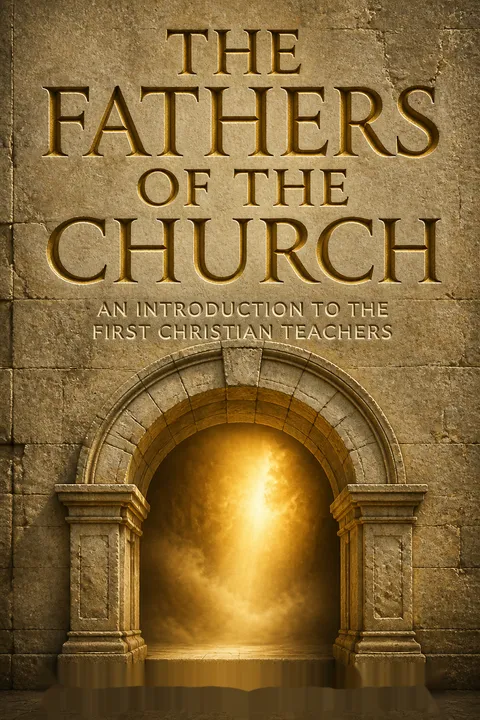
1. The Fathers of the Church: Guardians of Unity and the Gospel.
As heirs to the Apostles, the leaders and teachers of the early Church — the Fathers of the Church — were intensely concerned with preserving the unity and integrity of the “company of those who believed,” even as that company grew from a small band of several hundred to encompass millions of people speaking dozens of languages and dispersed throughout the Roman Empire.
Paternal Concern. The Fathers of the Church understood themselves as spiritual fathers, deeply invested in the well-being and cohesion of the Christian family. Their primary mission was to safeguard the precious inheritance of unity in Jesus Christ, ensuring that the burgeoning community remained "of one heart and soul" (Acts 4:32) despite its rapid expansion across diverse cultures and languages. This paternal role extended to teaching, disciplining, and protecting the faithful from internal and external threats.
Historical Context. Spanning from the mid-first to the mid-eighth century, the Patristic Era witnessed Christianity's transformation from a persecuted sect to the dominant religion of the Roman Empire, and then its survival through the empire's collapse. The Fathers navigated periods of intense persecution, doctrinal disputes, and societal upheaval, always striving to maintain the Church's identity and mission. Their lives and writings reflect a dynamic period of growth, struggle, and profound theological development.
Enduring Legacy. The Fathers' efforts laid the foundational doctrines and practices of Christianity, shaping its liturgy, moral teachings, and understanding of God. Their collective witness provides an unbroken link to the Apostles, offering timeless guidance for the Church. Their work ensured that the "Good News" remained intelligible and transformative for successive generations, even as the world around them changed dramatically.
2. Defining the Fathers: Four Enduring Criteria for Authority.
The Fathers, generally speaking, meet four criteria, which were established by St. Vincent of Lérins in the fifth century: 1. Sound doctrine 2. Holiness of life 3. Church approval 4. Antiquity.
Vincentian Canon. St. Vincent of Lérins provided the enduring framework for identifying a Church Father, emphasizing that their teachings must align with what has been "believed everywhere, always, and by all." This "Vincentian Canon" ensures that the authority of the Fathers is rooted in a universal, ancient, and consensual understanding of the faith, rather than individual opinion. These criteria serve as a safeguard against novel interpretations and ensure continuity with apostolic teaching.
Beyond Uniformity. Despite these strict criteria, the Fathers were a remarkably diverse group, reflecting the vast geographical and cultural expanse of the early Church. They hailed from different ethnic backgrounds, spoke various languages (Greek, Latin, Syriac, Coptic, Armenian), and possessed distinct temperaments. This diversity highlights the richness of Christian faith, demonstrating that unity in doctrine does not necessitate uniformity in expression or personality.
Humanity and Error. While revered for their holiness and orthodoxy, the Fathers were not infallible. Some, like Tertullian, strayed into schism, while others, like Origen, ventured into speculative theology that later councils deemed problematic. Even Eusebius, the "Father of Church History," faced suspicion for his Arian sympathies. These instances underscore that their authority rests on their collective consensus and the Church's subsequent approval, rather than individual perfection, vividly showing the Church as both divine and human.
3. The Apostolic Fathers: The Gospel's First Echo and Foundation.
Their witness is invaluable, because these Fathers were nearest to the Apostles, who were, in turn, nearest to Jesus Christ.
Direct Connection. The Apostolic Fathers, such as St. Clement of Rome, St. Ignatius of Antioch, and St. Polycarp of Smyrna, lived during or immediately after the time of the Apostles. Many were direct disciples, providing a crucial, unmediated link to the teachings and experiences of those who walked with Jesus. Their writings are the "first echo" of the Gospel, offering authentic insights into the nascent Church's understanding of Christian identity, worship, and morality.
Early Challenges. These early leaders grappled with fundamental questions that shaped the Church's future:
- What does it mean to be a believer?
- How does Christianity differ from Judaism?
- What constitutes proper Christian worship?
- Who holds authority in the Church?
Their responses laid the groundwork for later doctrinal development, addressing internal divisions and external accusations from pagan and Jewish communities.
Martyrdom and Authority. Many Apostolic Fathers sealed their witness with their blood, becoming martyrs for the faith. Their willingness to die for Christ, as exemplified by St. Ignatius's eagerness for martyrdom and St. Polycarp's steadfastness, served as a powerful testament to the truth of Christianity. This ultimate act of fidelity conferred immense authority and veneration upon them, inspiring generations of persecuted Christians.
4. The Ante-Nicene Fathers: Forging Christian Identity Amidst Persecution and Philosophy.
Heretics and pagans forced the Church and its teachers to be ever clearer in their expression of faith.
Clarifying Faith. The second and third centuries saw the Church "find its voice" as the Ante-Nicene Fathers engaged with both pagan philosophy and burgeoning heresies. Figures like St. Justin Martyr and Athenagoras used reasoned arguments to explain Christianity to a skeptical Greco-Roman world, refuting charges of atheism, cannibalism, and immorality. This period marked the emergence of theology as a disciplined study, as Fathers sought appropriate vocabulary and methods to articulate complex Christian truths.
Athens and Jerusalem. A key tension of this era was the relationship between Greek philosophy and Christian revelation. While some, like Tertullian, vehemently rejected pagan thought ("What indeed has Athens to do with Jerusalem?"), others, like St. Clement of Alexandria and Origen, saw philosophy as a "handmaid to theology," a tool to purify the soul and provide language for doctrines like the Trinity and Incarnation. The Hellenizers largely prevailed, integrating philosophical concepts to deepen Christian understanding.
Internal Struggles. Beyond external persecutions, the Church faced significant internal challenges from heresies like Gnosticism, which offered "secret knowledge" and distorted Christian teachings. Debates also raged over the forgiveness of post-baptismal sins, particularly for the lapsi (those who renounced their faith under persecution). St. Cyprian of Carthage, for instance, championed mercy and reconciliation, emphasizing the Church as a "hospital for sinners" and striving to maintain unity amidst these divisive issues.
5. The Fourth Century: A Golden Age of Doctrinal Clarity and Imperial Challenges.
It was this controversy, which involved the core Christian doctrines of the Trinity and the Incarnation, that forced the fourth century to be a golden age.
Peace and Crisis. The fourth century began with the end of Roman persecution under Constantine's Edict of Milan (313), ushering in an era of peace. However, this external peace was quickly overshadowed by the internal crisis of Arianism, which denied Christ's full divinity. This heresy, which "the world awoke with a groan to find itself Arian," compelled the Church to articulate its core doctrines with unprecedented clarity and precision, leading to a "golden age" of theological development.
Defining Orthodoxy. The Council of Nicaea (325), convened by Emperor Constantine, was a pivotal moment, where St. Athanasius championed the "consubstantial" (homoousion) nature of Christ with the Father. This period saw the rise of intellectual giants like St. Basil the Great, St. Gregory of Nazianzus, and St. Gregory of Nyssa (the Cappadocian Fathers), who systematically defended Trinitarian and Christological doctrines. Their work culminated in the Council of Constantinople (381), which definitively settled the Arian controversy and affirmed the full deity of the Holy Spirit.
Church and State. The newfound peace also brought complex questions about the relationship between Church and state. While Eusebius of Caesarea envisioned a harmonious integration of imperial and ecclesiastical power, St. Ambrose of Milan fiercely asserted the Church's autonomy in spiritual matters, famously compelling Emperor Theodosius to perform public penance. This era established precedents for the distinct roles of secular and spiritual authority, shaping the future of Western Christianity.
6. The Later Fathers: Navigating a Crumbling Empire and Preserving Christian Civilization.
The great work of the later Fathers was the continued evangelization of the “barbarian” peoples, the preservation of civil and moral order, and the salvaging of Christian and classical learning.
A World in Flux. The fifth to eighth centuries marked the twilight of the Western Roman Empire, as barbarian invasions led to its collapse and widespread anarchy. Amidst this societal breakdown, the Later Fathers became crucial figures in preserving not only Christian faith but also civil and moral order. They undertook the monumental task of evangelizing the "barbarian" peoples, integrating them into a new, emerging Christian civilization.
Intellectual Giants. This era produced some of the most influential figures in Church history, including St. Augustine of Hippo, arguably the greatest of all Fathers. Augustine's profound synthesis of classical philosophy and Christian doctrine, his introspective Confessions, and his foundational City of God shaped Western thought for centuries. Other key figures like St. Leo the Great asserted papal authority in doctrinal matters and even negotiated with invaders, while St. Gregory the Great laid the groundwork for medieval Europe, promoting monasticism and missionary efforts.
Enduring Challenges. The later Fathers continued to battle heresies, such as Pelagianism (denying original sin and emphasizing human free will) and Monophysitism (distorting Christ's natures). The rise of Islam in the seventh century presented a new external threat, sweeping away Christian lands in the Near East. St. John of Damascus, the last of the Fathers, courageously defended the veneration of icons against iconoclasm, articulating the crucial distinction between adoration and veneration, and leaving a comprehensive theological legacy.
7. Scripture and Tradition: The Dual Fount of Christian Doctrine and Interpretation.
The Fathers are abiding witnesses to the Church’s “sacred tradition,” which with the Scriptures is seen as a primary fount of Christian doctrine.
Interpreting the Word. For the Fathers, the "Gospel" encompassed both the written Scriptures and the living Tradition received from the Apostles. They held a singular devotion to the Bible, seeing it as "letters from the other world" (Augustine) and "the feast of wisdom" (Ambrose). Their writings are replete with scriptural quotations, demonstrating their belief that "to be ignorant of Scripture is to be ignorant of Christ" (Jerome).
Senses of Scripture. The Fathers developed sophisticated methods of biblical interpretation, discerning multiple "senses" within the text:
- Literal sense: The historical event, person, or precept.
- Spiritual sense: Further divided into:
- Allegorical: Truths about Jesus Christ.
- Moral: How Christians should live.
- Anagogical: Revelations about heavenly destiny.
This typological reading, exemplified by Melito of Sardis, saw Old Testament events as prefigurations of Christ and the Church.
Community of Interpretation. Crucially, the Fathers understood that Scripture could not be interpreted in isolation. They held themselves accountable to the "community of interpretation"—the Church, the communion of saints. St. Polycarp warned against interpreting "according to his own perverse inclinations," emphasizing that the "consensus of the Fathers," guided by the living Magisterium, was essential for discerning true doctrine and safeguarding against heresy.
8. The Eucharist: The Sacrament of Unity and Real Presence.
For all the Church Fathers, the Eucharist was the sacrament of Christian unity. It signified the unity of the Church and, by the power of God’s grace, it effected that unity.
Central to Worship. From the earliest documents like the Didache (c. A.D. 48-90), the Eucharist was recognized as the heart of Christian worship and a sacrifice. St. Ignatius of Antioch, in the early second century, graphically affirmed the Real Presence, referring to the sacrament as "the blood of God" and "the flesh of our Savior Jesus Christ." He also linked the Eucharist directly to the "Catholic Church," emphasizing its role in unifying believers.
Unbroken Witness. St. Justin Martyr's detailed description of the Roman liturgy in 155 A.D. reveals a Mass remarkably similar to today's, including readings, homily, prayers, and the reception of "eucharisted" bread, wine, and water. He unequivocally stated that this food "is both the flesh and blood of that Jesus who was made flesh." This consistent witness across centuries underscores the enduring belief in the Eucharist as the true Body and Blood of Christ.
Deepening Understanding. Over time, the theological understanding of the Eucharist deepened. St. Cyril of Jerusalem taught catechumens that the bread and wine, through Christ's declaration, become His Body and Blood, urging them to trust faith over sensory perception. St. John of Damascus, the last of the Fathers, marveled at the "how" of this transformation, attributing it to the Holy Spirit, just as Christ's incarnation in Mary was by the Spirit. The Eucharist was consistently seen as the means by which believers are united to Christ and to one another, forming one body.
9. The Papacy and Episcopal Authority: Pillars of the Church's Structure.
The Church’s great Father on earth was the bishop of Rome, who from the early days was called Papa — “Pope.”
Apostolic Succession. The Fathers consistently emphasized the importance of episcopal authority and apostolic succession as guarantees of authentic teaching. Bishops were seen as fathers to their flocks, inheriting the mantle of the Apostles. St. Clement of Rome, the fourth pope, demonstrated Rome's early primacy by intervening in a dispute in Corinth, expecting obedience from a distant church.
Primacy of Rome. St. Irenaeus, at the end of the second century, explicitly affirmed the "preeminent authority" of the Church of Rome, tracing the unbroken line of bishops from St. Peter. He stated that "it is a matter of necessity that every Church should agree with this Church." St. Ignatius of Antioch, while addressing other churches with authority, showed deference only to the Roman Church, further attesting to its unique standing.
Defending Authority. The papacy's role in resolving doctrinal disputes became increasingly vital. Pope St. Leo the Great's "Tome" at the Council of Chalcedon (451) definitively settled Christological controversies, with bishops exclaiming, "Peter has spoken through Leo." St. Maximus the Confessor, facing imperial pressure to accept heresy, steadfastly deferred to the Roman See, declaring it had "universal and supreme dominion, authority, and the power of binding and loosing over all the holy churches of God." This consistent recognition solidified the papacy as the ultimate earthly authority in matters of faith.
10. Heresy and Orthodoxy: The Constant Battle for the Integrity of Faith.
Pick-and-choose Catholicism, then as now, was the very definition of heresy.
Internal Threats. From the Apostles' time, the Church battled "aberrant doctrine." Heresies like Docetism (Jesus only seemed human) and Gnosticism (emphasizing secret knowledge and despising matter) challenged the core identity of Christ and the goodness of creation. The Fathers viewed these as grave threats, not merely intellectual disagreements, because they distorted the very person of Jesus and the path to salvation.
Major Heresies and Responses:
- Arianism: Denied Christ's full divinity, leading to the Nicene Creed's affirmation of "consubstantial" (St. Athanasius).
- Nestorianism: Divided Christ into two persons, countered by the Council of Ephesus's affirmation of Mary as Theotokos (Mother of God) (St. Cyril of Alexandria).
- Monophysitism: Claimed Christ had only one nature, condemned at Chalcedon (St. Leo the Great).
- Pelagianism: Denied original sin and overemphasized human free will (St. Augustine).
- Iconoclasm: Rejected religious images as idolatry, refuted by St. John of Damascus.
Theological Development. The constant struggle against heresy spurred profound theological development. The Fathers, using tradition, philosophy, and rhetoric, clarified doctrines, defined terms, and convened councils to articulate the faith with ever-greater precision. This process, though often contentious, ultimately strengthened the Church's understanding of God and Christ, ensuring that the "deposit of faith" remained pure and accessible.
11. The Mothers of the Church: Unsung Heroes and Exemplars of Holiness.
There is no custom of calling them “Mothers of the Church,” but there is no reason why individual Christians might not revere them as such.
Beyond the Title. While the formal title "Fathers of the Church" was reserved for male teachers, women played indispensable roles in the early Church, often as martyrs, ascetics, and spiritual guides. Though their writings are scarce due to societal limitations on women's education and public roles, their impact on the faith and its transmission was profound. Their lives exemplify holiness, courage, and unwavering devotion to Christ.
Witness of Martyrs and Ascetics. Women like St. Perpetua, a noblewoman martyred in Carthage, left powerful personal accounts of faith under persecution, inspiring countless others. Her narrative, along with that of her slave Felicity, is a testament to early Catholic doctrines and the strength of Christian women. In the desert, "Ammas" or "Mothers" like St. Syncletica offered spiritual counsel, their "Sayings" reflecting deep wisdom and practical guidance for the ascetical life.
Influence and Legacy. Many prominent Fathers, including St. Augustine (whose mother St. Monica tirelessly prayed for his conversion) and St. Gregory of Nyssa (who wrote a moving biography of his sister St. Macrina, a renowned spiritual director), were profoundly shaped by the women in their lives. These "Mothers" fostered faith, established communities, and provided moral leadership, demonstrating that leadership in the Church extended far beyond formal ecclesiastical titles. Their stories remind us that holiness and spiritual authority are not confined by gender or official position.
Review Summary
Readers largely praise this book as an excellent introduction to the Church Fathers, appreciating its accessible format of brief biographies paired with selected writings, organized chronologically from the first to eighth centuries. Many highlight it as a valuable reference for Catholics and Christians seeking to understand early Church history, theology, and the refutation of heresies. Common criticisms include the book's brevity, occasional perceived bias toward Roman Catholic perspectives, and sometimes disconnected excerpts. Most recommend it as a strong starting point for deeper exploration of Patristics, with an overall rating of 4.24 out of 5.
People Also Read


Download PDF
Download EPUB
.epub digital book format is ideal for reading ebooks on phones, tablets, and e-readers.








































