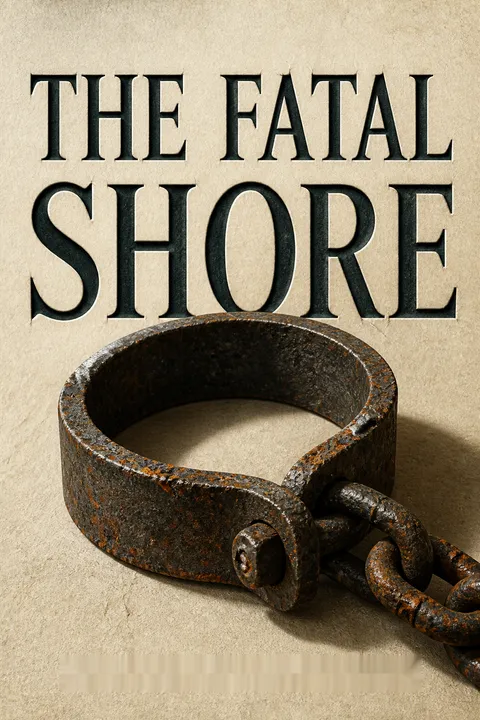

Key Takeaways
1. Australia's Birth as a Distant, Unexplored Jail
An unexplored continent would become a jail.
A Dystopian Vision. In 1787, Britain, under King George III, embarked on an unprecedented colonial experiment: transforming an unknown continent into a vast, remote prison. This decision was driven by a burgeoning "criminal class" in late Georgian England, overcrowded hulks and jails, and the loss of American colonies as a dumping ground for felons. Australia, particularly Botany Bay, was chosen with minimal reconnaissance, seen as a distant, invisible cloaca for society's "excrementitious mass."
The First Fleet's Ordeal. The journey of the First Fleet, carrying over 1,000 people (including 736 convicts), was the longest forced exile in pre-modern history. Captain Arthur Phillip, a meticulous but uncharismatic officer, navigated 15,000 miles of ocean, battling:
- Overcrowding and disease (typhus outbreaks)
- Inadequate provisions and corrupt contractors
- The psychological toll of exile on convicts and marines alike
A Harsh New Reality. Upon arrival in January 1788, Botany Bay proved unsuitable, leading Phillip to Port Jackson (Sydney Harbor). The initial settlement was a struggle against barren land, lack of skilled labor, and constant hunger. Early interactions with Aborigines were marked by curiosity, misunderstanding, and escalating violence, as convicts, desperate for an inferior class, often clashed with the indigenous population.
2. The Convict's Journey: Anguish, Exploitation, and Survival
For many people, the sentence of transportation—whatever its announced length—must have seemed like a one-way trip over the edge of the world.
Psychological Torment. The prospect of transportation inflicted profound despair, severing convicts from family and homeland. Letters reveal heart-wrenching pleas for wives to join them, promises of fidelity, and the terror of an unimaginable, distant fate. This emotional trauma was often compounded by the brutal conditions of the journey itself.
Hell-Ships and Exploitation. Early convict transports, particularly the Second Fleet, were notorious "hell-ships." Contractors, paid per head regardless of survival, often:
- Overcrowded vessels with slave shackles
- Provided insufficient food and water, leading to widespread scurvy and disease
- Allowed captains to sell leftover provisions in Australia, profiting from convict deaths
A System of Suffering. While conditions improved after 1815 with naval surgeons overseeing voyages, the journey remained arduous. Convicts endured:
- Cramped, dark, and unsanitary holds
- Constant vermin infestations
- Strict discipline, including floggings for minor infractions
- The tedium of long months at sea, relieved only by makeshift entertainment and gambling
3. The Rise of Bushrangers: Defiance in the Wild
The thoughts of Liberty from such a place as this is Enoufh to induce any Convicts to try all Skeemes to obtain it, as they are the same as Slaves all the time they are in this Country.
The Lure of Escape. For many convicts, the vast, untamed Australian bush represented a chance for freedom, however slim. Early Irish absconders, fueled by the "China myth," believed they could walk to Asia, often perishing in the wilderness. The sea offered a more plausible, though still perilous, escape route.
Epic Escapes and Piracy. Mary Bryant's 1791 journey, sailing a stolen cutter 3,250 miles from Sydney to Timor, became a legendary feat of endurance. Other convicts:
- Stowed away on trading vessels, often ending up as beachcombers in the Pacific
- Secretly built makeshift boats, though most attempts failed
- Pirated ships, like the brig Cyprus, leading to dramatic chases and trials
Bushrangers as Folk Heroes. In Van Diemen's Land, escaped convicts, initially kangaroo hunters, formed gangs, becoming "bushrangers." Figures like Michael Howe and Matthew Brady gained notoriety, often romanticized as "Robin Hoods" who robbed the rich and aided the poor. Their defiance, celebrated in ballads, cemented their place as symbols of resistance against the oppressive System.
4. Irish Rebels: A Persistent Threat to Colonial Order
The Irish, on arriving in Australia, were treated as a special class.
Doubly Colonized. Irish political prisoners, particularly those from the 1798 rebellion, arrived in Australia as a distinct and feared minority. Seen as Jacobin traitors, they faced heightened oppression and surveillance, often denied basic rights and subjected to brutal punishments. Their strong communal bonds and shared grievances made them a constant source of anxiety for the authorities.
The Castle Hill Uprising. In 1804, Irish convicts at Castle Hill staged the only concerted uprising on the Australian mainland. Fueled by rumors of liberty and fueled by rum, they marched towards Parramatta, singing "treason songs." The rebellion was swiftly and brutally suppressed by the New South Wales Corps, leading to:
- Summary executions and floggings
- Banishment of ringleaders to Norfolk Island
- The public display of gibbeted corpses as a deterrent
Enduring Legacy. Despite the suppression, Irish resistance and sectarianism persisted. Later waves of "Whiteboys" and "Ribbon Men" were dispersed across the expanding colony, but their collective memory of oppression contributed significantly to Australia's anti-authoritarian ethos, influencing working-class culture for generations.
5. Social Hierarchies and the Plight of Women and Aborigines
The whore-stereotype, accepted by the upper layers of a rigid little colonial society, wielded immense power.
The "Damned Whore" Myth. Female convicts, comprising one-seventh of all transportees, were overwhelmingly sent for petty theft, not prostitution. Yet, colonial society, particularly its middle and upper classes, branded them as "whores." This stereotype, fueled by moral prejudice and a misunderstanding of working-class cohabitation, justified their exploitation and degradation.
Female Factories and Sexual Exploitation. Women convicts faced a double bind:
- Often forced into cohabitation with male convicts or guards for "protection" and survival
- Those unassigned or returned from service were sent to Female Factories (e.g., Parramatta, Hobart), notorious for squalor and sexual abuse
- Punishments included head-shaving and public humiliation, leading to riots and despair
Homosexuality in a Male World. In a colony with a severe gender imbalance, homosexuality flourished, especially in chain gangs and penal settlements. Despite sodomy being a capital crime, it was pervasive, though rarely prosecuted. Officials like Bishop Ullathorne described "crimes that... would make your blood to freeze," while others like Thomas Cook detailed the power dynamics and sadistic humiliation inherent in prison sexual relations.
Aboriginal Catastrophe. The arrival of whites was an unmitigated disaster for Aborigines. Denied land rights due to their nomadic lifestyle, they faced:
- Disease epidemics (cholera, influenza)
- Systematic violence, often by convicts and settlers
- Displacement from ancestral lands by expanding pastoralism
- The use of blacktrackers by authorities, deepening racial animosity
6. The "Government Stroke" and the Genesis of Colonial Wealth
The convict’s fate was determined entirely by himself—by his own obedience and tractability, or lack of them.
Assignment: A Modified Slavery. Convicts were "assigned" to private settlers or worked on government projects. While not chattel slaves, their labor was owned by the Crown, and their rights were limited. This system, though criticized as "slavery" by English reformers, was crucial for colonial development, attracting "opulent" settlers with promises of free labor.
The "Government Stroke." Convict labor was notoriously inefficient, characterized by the "Government stroke"—minimal effort to avoid punishment. This inefficiency was offset by:
- Task-work, allowing convicts to earn "own time" wages
- The rum economy, where spirits served as currency and incentive
- The sheer abundance of free labor, driving down costs for settlers
Macquarie's Visionary Reforms. Governor Lachlan Macquarie (1810-1821) sought to transform the penal colony into a thriving society. He:
- Invested heavily in public works, building roads, barracks, and civic structures (e.g., Rum Hospital, Hyde Park Barracks)
- Championed Emancipist rights, believing they were the future of Australia
- Introduced incentives for good conduct, including land grants and early pardons, to foster self-reliance
7. Secondary Penal Settlements: The Ultimate Terrors of the System
Prisoners upon trial declared that they would rather suffer death than be sent back to Macquarie Harbour. It is the feeling I am most anxious to be kept alive.
Macquarie Harbor: Hell's Gates. Established in 1821, Macquarie Harbor on Tasmania's west coast was designed as a place of "ultra banishment." Its entrance, Hell's Gates, symbolized the despair awaiting convicts. Conditions were horrific:
- Forced labor in icy waters, felling Huon pine
- Starvation diets of old salt meat, leading to scurvy
- Brutal floggings and solitary confinement on Grummet Island
- Cannibalism among escapees, like Alexander Pearce, driven by desperation
Port Arthur: A Machine for Punishment. Opened in 1830, Port Arthur on the Tasman Peninsula became the most infamous penal settlement. Under Commandant Charles O'Hara Booth, it was a "purgatorial grinding-mill" focused on systematic discipline:
- Hard labor in timber gangs and coal mines
- Strict silence, constant surveillance, and solitary confinement
- The "first Australian railway," convict-powered, for transport
- Point Puer, a reformatory for juvenile convicts, teaching trades amidst harsh conditions
Norfolk Island: The Ne Plus Ultra. Re-established in 1825, Norfolk Island, a thousand miles east of Sydney, was the ultimate destination for incorrigible recidivists. Under commandants like Morisset and Price, it became a byword for extreme cruelty:
- Incessant floggings with specially designed "cats"
- A pervasive informer system, fostering mutual suspicion
- Suicide pacts, where convicts murdered each other to escape to the mainland gallows
- A "demonized" environment, where hope was systematically extinguished
8. Maconochie's Mark System: A Brief Experiment in Humane Reform
I have almost made black white.
A Visionary Reformer. Captain Alexander Maconochie, appointed commandant of Norfolk Island in 1840, sought to transform the penal system from punishment to reform. Drawing on his own experience as a POW, he believed in incentives over brute force. His "Mark System" proposed:
- Indefinite sentences, where convicts earned "marks" for good behavior and hard work
- Marks could be exchanged for goods or time, giving prisoners agency over their fate
- Progress through stages of increasing liberty, culminating in group therapy and mutual responsibility
The Queen's Birthday Experiment. Maconochie's radical approach was immediately evident. On Queen Victoria's birthday in 1840, he:
- Opened prison gates, allowing convicts to roam freely
- Provided rum, food, and entertainment, including theatrical performances
- Observed "not a single irregularity," demonstrating the power of trust
Clash with the Old Guard. Despite initial successes in reducing violence and improving morale, Maconochie's system faced fierce opposition. Governor Gipps and colonial conservatives, fearing a breakdown of order and the "taint" spreading to the mainland, criticized his "leniency" and "visionary" ideas. Maconochie was eventually recalled in 1843, his experiment deemed a failure by those who prioritized terror over reform.
9. The Probation System: A Flawed Attempt at Control
The unlimited influx of manumitted convicts from Van Diemen’s Land is an intolerable grievance calculated rapidly to alienate the affections of Your Majesty’s dutiful subjects.
Stanley's Grand Design. Lord Stanley, Colonial Secretary, introduced the "Probation System" in 1842, aiming to make transportation more efficient and terrifying. Convicts would pass through five stages:
- Initial detention on Norfolk Island (for long-sentence men)
- Labor in probation gangs on public works in Van Diemen's Land
- Probation pass, allowing wage labor for settlers
- Ticket-of-leave, then conditional or absolute pardon
Economic Collapse and Moral Panic. The system proved a "wretched failure," coinciding with a severe economic depression in Van Diemen's Land. The influx of thousands of convicts, coupled with the abolition of assignment, led to:
- Mass unemployment and widespread poverty
- A surge in crime and social disorder
- Moral outrage over rampant sodomy in isolated probation gangs, fueling calls for abolition
Eardley-Wilmot's Downfall. Lieutenant-Governor Sir John Eardley Eardley-Wilmot, a "muddle-brained blockhead" appointed by Stanley, bore the brunt of the system's failures. Attacked by the press, clergy, and settlers for his perceived incompetence and moral laxity, he was eventually dismissed by Gladstone. His death shortly after, attributed to a "broken heart," became a symbol of the system's destructive power.
10. Gold, Abolition, and the Enduring Legacy of the Stain
Gold was the mineral that put an end to transportation, because its discovery plucked off the last rags of terror that clung to the name of Australia.
The Gold Rush: A Game Changer. The discovery of gold in New South Wales (1851) and Victoria (1851) irrevocably altered Australia's destiny. Thousands of free settlers and ex-convicts flocked to the diggings, creating:
- Massive labor shortages in traditional industries
- Rapid economic growth and social upheaval
- A new, truculent egalitarianism, as diggers declared, "We be the aristocracy now."
The End of Transportation. The gold rush rendered transportation obsolete. A free passage to the goldfields was no longer a punishment but a "great boon." Coupled with growing abolitionist sentiment in Britain and the eastern colonies' fierce opposition to the "convict taint," transportation to Van Diemen's Land ceased in 1853. Western Australia continued to receive convicts until 1868, but the System's days were numbered.
A Lingering Stain. The legacy of transportation was complex. While it built Australia's early infrastructure and provided a second chance for many, it also left deep scars:
- Tasmania, lacking gold, stagnated economically and remained burdened by its "demonic" convict image.
- The "convict stain" fostered a pervasive desire for historical amnesia among many Australians.
- Yet, it also contributed to a unique Australian character: a distrust of authority, mateship, and a fierce, if sometimes unamiable, egalitarianism.
Review Summary
Most reviewers praise The Fatal Shore as a masterful, exhaustive history of Australia's convict transportation system, highlighting Hughes' meticulous research, vivid prose, and comprehensive coverage of colonial brutality, Aboriginal treatment, and social conditions. Many call it essential reading for understanding Australia's origins. Common criticisms include its occasionally "florid" or "ponderous" writing style and overwhelming length. Several Australian reviewers note it fills significant gaps left by their school education. The accounts of Norfolk Island's cruelty and women convicts' suffering are frequently cited as particularly harrowing yet essential reading.
People Also Read




Download PDF
Download EPUB
.epub digital book format is ideal for reading ebooks on phones, tablets, and e-readers.








































