
Key Takeaways
1. The Erosion of Public Life and the Rise of Intimacy
Today, public life has also become a matter of formal obligation.
A modern malaise. Modern society faces a profound imbalance between public and private life, mirroring the decline of the Roman Empire where public duties became bloodless obligations. Today, interactions with the state are met with resigned acquiescence, and even broader public spaces like cities are seen as decaying. This public enervation extends to manners and ritual interchanges with strangers, who are often perceived as threatening figures.
The private alternative. Unlike the Romans who sought religious transcendence in private, modern individuals retreat into themselves, seeking authenticity in their psyches and intimate relationships. This "intimate vision of society" prioritizes personal feelings as the ultimate standard of reality, leading to self-absorption. The psyche is treated as a delicate entity that withers if exposed to the harsh social world, making self-knowledge an end rather than a means to understand the world.
Psychic trap. This intense self-absorption, however, becomes a trap. The more privatized the psyche, the less it is stimulated, making it difficult to feel or express genuine emotion. This psychological lens distorts understanding of society, obscuring class importance, and devaluing community relations among strangers. Ironically, it also inhibits basic personality strengths like respect for others' privacy, as the constant quest for self-revelation leads to a "market exchange of intimacies" and eventual boredom.
2. The Ancien Régime: A World of Impersonal Public Civility
"Public" thus came to mean a life passed outside the life of family and close friends; in the public region diverse, complex social groups were to be brought into ineluctable contact.
A distinct public sphere. In the 18th-century capitals of Paris and London, "public" denoted a social realm separate from family and close friends, where diverse groups of strangers interacted. This era saw the emergence of cosmopolitanism, where individuals moved comfortably amidst unfamiliarity, unburdened by inherited wealth or feudal obligations. This public life was centered in the growing capital cities, fostering a unique social dynamic.
Urban transformation. The rapid growth of these cities, fueled by young, unattached migrants from distant provinces, created a "milieu of strangers as unknowns." Traditional social hierarchies and occupational identities became blurred, making it difficult to "place" individuals based on their background. This demographic shift necessitated new forms of social interaction that did not rely on pre-existing personal knowledge or fixed status.
Impersonal courtesy. To navigate this complex urban landscape, new codes of courtesy emerged, emphasizing impersonal interactions. Unlike courtly flattery based on known qualities, urban greetings became generalized and flowery, honoring individuals without delving into personal details. Gossip, too, became a mark of established friendship rather than an initial point of contact, reflecting a conscious effort to maintain social distance and avoid prying into others' private lives.
3. Public Roles: The Body as Mannequin, Speech as Sign
The body was treated as mannequin; speech was treated as a sign rather than a symbol.
Artifice in appearance. 18th-century urban society fostered meaningful social encounters through codes of belief that bridged theater and everyday life. Dress, particularly for public display, treated the body as a "mannequin"—a neutral frame for contrived decorations like elaborate wigs, hats, and face patches. These conventions, often stable in form, served as recognizable, albeit arbitrary, markers of social standing, allowing strangers to interact "as if" they knew each other's place.
Speech as self-contained sign. Public speech, especially in coffeehouses and theaters, operated as a system of "signs" rather than "symbols." Words and gestures carried self-contained emotional meaning, independent of the speaker's personal circumstances or inner feelings. This allowed for spontaneous and passionate audience responses in the theater, where actors were judged on the effectiveness of their performance rather than the "truth" of their emotions.
Impersonal passion. This system of artifice enabled a unique form of "impersonal passion" in public life. Whether through elaborate compliments or theatrical displays, emotions were presented as objective, repeatable forms. This detachment from individual personality fostered a vibrant, sociable public sphere where diverse individuals could engage without the burden of self-disclosure, creating a sense of order amidst the material disorder of the growing cities.
4. Rousseau's Prophecy: The Tyranny of Authenticity
In a big city, full of scheming, idle people without religion or principle, whose imagination, depraved by sloth, inactivity, the love of pleasure, and great needs, engenders only monsters and inspires only crimes; in a big city, where moeurs and honor are nothing because each easily hiding his conduct from the public eye, shows himself only by his reputation …
City as corruptor. Jean-Jacques Rousseau, a fierce critic of cosmopolitan life, viewed the great city as a monstrous growth that corrupted "moeurs" (manners, morals, beliefs). He argued that urban leisure, detached from the duties of survival, led to excessive sociability and mutual dependence. In this environment, individuals manipulated their appearances to gain approval and reputation, becoming "actors" who lost contact with natural virtue and genuine inner life.
Loss of self. For Rousseau, the city's public culture was a realm where this "loss of self" occurred. The complexity of urban social and economic relations made it impossible to discern a stranger's true character from their material conditions. This ambiguity, combined with the pursuit of reputation, replaced the pursuit of virtue, leading to a moral disaster where art and the great city were in harmony, but at the expense of authentic human experience.
Political tyranny and authenticity. Rousseau's most chilling prophecy was the link between political tyranny and the search for individual authenticity. He believed that true creative expression and a genuine self could only flourish in isolation, away from the corrupting influence of urban social interaction. This led him to advocate for censorship and strict political control in small towns, where men could become "creatively unique" by ignoring community standards and searching their own hearts, thus equating political repression with personal liberation.
5. Industrial Capitalism's Dual Impact: Mystification and Privatization
The capitalist order had the power to throw the materials of appearance into a permanently problematical, permanently "mystifying" state...
Economic transformation. The 19th century saw unprecedented urban growth, driven by in-migration and a shift towards a mass-production, mass-distribution economy. While capitals remained centers of trade and finance, the rise of the department store revolutionized retail. This new form of commerce, with fixed prices and open browsing, replaced the theatrical haggling of old markets, transforming the buyer into a passive consumer.
Mystification of goods. Department stores, like Paris's Bon Marché, thrived by mystifying mass-produced goods. They used unexpected juxtapositions and exotic "nouveautés" to endow ordinary items with an interest they intrinsically lacked, stimulating consumption through disorientation. This "commodity fetishism," as Marx termed it, diverted attention from production conditions to the objects themselves, making them seem imbued with human qualities and personal meaning.
Privatization of interaction. Industrial capitalism also reshaped privacy. While public commerce became passive and mystified, active, uninhibited interaction retreated to the private sphere, particularly in wholesale trade where secrecy became the price of continuous human contact. This created a paradox: a public realm where appearances were mystifying yet taken as clues to personality, and a private realm where genuine interaction required secrecy, leading to a fearful withdrawal from expression and a heightened pressure for others to "get closer" to know one's true feelings.
6. Personality's Ascent: From Character to Self-Disclosure
All visible things are emblems; what thou seest is not there on its own account; strictly taken, is not there at all: Matter exists only spiritually, and to represent some Idea, and body it forth. Hence Clothes, as despicable as we think them, are so unspeakably significant.
Immanent personality. The 19th century witnessed a profound shift in secular belief, from a transcendent "Order of Nature" to an "ordering of natural phenomena" where immediate sensation and fact were paramount. Personality emerged as the way to understand the implicit meaning in human life, seen as varying, unstable, and controlled by self-consciousness. Appearances were no longer veils but direct expressions of the "inner" self, making every detail "unspeakably significant."
Decoding appearances. This new secular faith, combined with mass production, thrust personality into the public realm. As clothes became more homogeneous and monochromatic (e.g., black broadcloth suits), people intensely scrutinized minute details—the quality of a button, the tying of a cravat—to "decode" class (gentlemanliness) and sex (looseness). This miniaturization of clues made public appearances a source of anxiety, as involuntary disclosures of character were feared.
Defense and self-consciousness. The only defense against this pervasive scrutiny was to "cover up" and become nondescript, leading to the era's prudery and the covering of the body. Self-consciousness became a retrospective activity, an "unraveling" of past emotions to understand the self, rather than a preparation for future action. This era saw the rise of the detective and mystery novel, reflecting society's compulsive attention to detail and anxiety about what appearances symbolized.
7. The Silent Spectator and the Charismatic Performer
The performer aroused them; but to be aroused they have had first to make themselves passive.
Split public identity. As personality permeated the public realm, the identity of the public man fractured. A few became active, professional performers, while the majority became silent spectators. This spectator, unsure of his own feelings and convinced they were involuntarily expressed, sought fulfillment not in social interaction but in observing others, hoping to be "aroused to feel more" by extraordinary public personalities.
The Romantic performer. The 19th-century Romantic artist, like Liszt or Paganini, embraced the new code of immanent personality, making the performance itself, rather than the text, the moment of truth. Their "shocking quality" and extraordinary technique made music immediate and sensuous, transcending notation. This elevated the performer to a dominant, isolated figure, whose "ineffable personality" became the focus of public adulation, creating feelings that were both abnormal and safely contained within the artistic realm.
The disciplined audience. In response, the audience cultivated a "discipline of silence" in theaters and concert halls, suppressing immediate emotional displays to appear "respectable." This passivity, reinforced by dimmed lights and explanatory program notes, transformed the audience from active participants to passive witnesses. This self-suppression, born of self-doubt and anxiety about being "cultured," created a dependence on the stage for images of public feeling, where truth and freedom of expression were found only under the aegis of art.
8. Collective Personality and Destructive Gemeinschaft
The more a fantasied common personality dominates the life of a group, the less can that group act to advance its collective interests.
Community as collective personality. In the absence of robust public life, a new form of community emerged: "gemeinschaft," defined by full, open emotional relations and a shared "collective personality." This identity was forged not through shared action or objective interests, but through fantasy and projection, where small details of behavior were "decoded" as symbols of an entire character state, defining who "we" are as a group.
Political pacification. This collective personality, often grandiose and unstable, became a powerful political tool. In the 1848 Revolution, figures like Lamartine used their charismatic personalities to pacify aroused workers, diverting attention from class interests to their own "noble sentiments." This "suspension of ego interests" demonstrated how personality could triumph over class, making political action subservient to personal motivation and effectively neutralizing revolutionary fervor.
Destructive schism. The Dreyfus Affair exemplified the destructive potential of such a community. Both Dreyfusards and anti-Dreyfusards formed rigid collective personalities, interpreting all evidence through the lens of personal character and moral integrity. This led to an "irremediable schism," where negotiation was seen as betrayal, and the "purge" of those who didn't conform to the collective image became the community's primary activity. This "fratricide" within society prioritized emotional solidarity over objective truth or collective action.
9. The Tyranny of Intimacy: A Society Without Public Life
Intimacy is a tyranny in ordinary life of this last sort. It is not the forcing, but the arousing of a belief in one standard of truth to measure the complexities of social reality.
Intimacy as sovereign. Modern society is governed by an "ideology of intimacy," where closeness is a moral good, and social relationships are deemed authentic only if they approach inner psychological concerns. This belief, a product of 19th-century dislocations, has become a "tyranny" that seduces us into measuring all social reality in psychological terms, effectively effacing the res publica.
Erosion of civility. This tyranny manifests as "incivility"—burdening others with oneself and decreasing sociability. Modern charismatic leaders, amplified by electronic media, embody this by focusing on their motivations and sentiments rather than their actions, deflecting public scrutiny and stabilizing routine politics. This "psychic striptease" makes leaders believable through their apparent spontaneity, rather than their accomplishments, leading to a seduction that leaves structures of domination unchallenged.
Fratricidal community. The ideology of intimacy also perverts fraternity. Communities formed around collective personality become increasingly localized and exclusive, shunning "outsiders" and prioritizing shared impulses over objective interests. This leads to a "fratricidal" dynamic, where internal emotional "housekeeping" and the purge of those who don't "feel" the same become paramount, hindering collective action and reinforcing a fear of the unknown. The city, once a crucible for impersonal social bonds, is atomized, and the capacity for play—the ability to engage with conventions and take risks—is lost, leaving individuals as "actors deprived of an art."
Review Summary
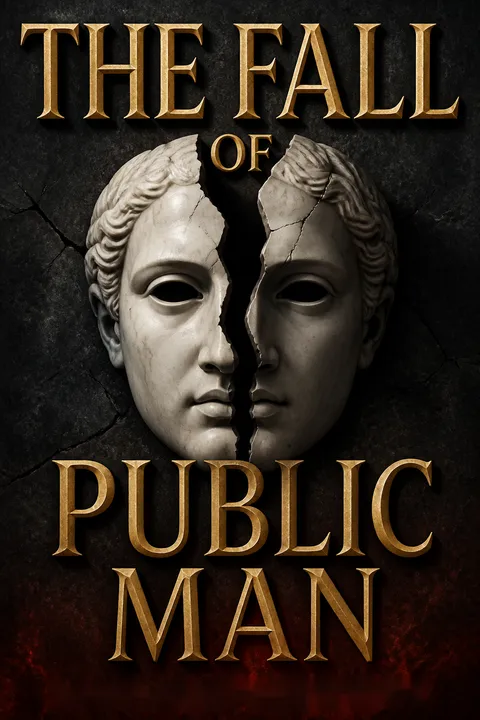
Reviews of The Fall of Public Man are largely positive, averaging 4.16/5. Admirers praise its sweeping historical analysis of the decline of public life, tracing how Western society shifted from vibrant civic engagement to narcissistic self-absorption. Sennett's exploration of theater, coffee houses, fashion, and urban spaces is widely celebrated for its brilliance and prescience. Critics, however, note methodological weaknesses, insufficient evidence for bold claims, overly narrow geographical focus, and occasional unclear logical connections. Most agree the book remains remarkably relevant today, particularly regarding personality-driven politics and social media's erosion of genuine public discourse.
People Also Read





About the Author
Other books by Richard Sennett







Download PDF
Download EPUB
.epub digital book format is ideal for reading ebooks on phones, tablets, and e-readers.








































