
Plot Summary
Eclipse and Disappearance
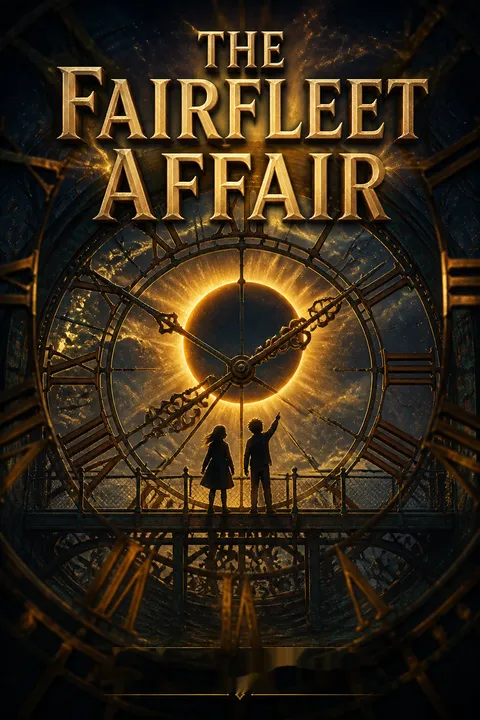
On June 10th, the quiet New England town of Northbrook is unsettled by three mysteries: an eerie silence, a solar eclipse, and the sudden disappearance of Dr. Alistair Fairfleet, the beloved chairman of the Fairfleet Institute. His absence is shocking—he's never missed an appointment in thirty years. The police find no clues: his car is untouched, breakfast half-eaten, and his cat left behind. The town and college are thrown into turmoil, but no ransom or note appears. The only certainty is that something extraordinary has happened, and the community's most influential figure has vanished without a trace, setting the stage for a summer of secrets and suspense.
The Secret Letters
Three weeks after Dr. Fairfleet's disappearance, identical letters arrive for four Institute directors—Prudence Ito, Minnie Mayflower, Quentin Carlisle, and John Wright—and a fifth, slightly altered, for twelve-year-old detectives Alex Foster and Asha Singh. Each letter claims Dr. Fairfleet has vanished under suspicious circumstances and challenges the recipients to follow a trail of clues, warning that one among them is responsible for his disappearance, two share a secret, and one will succeed him. The children's letter is tinged with affection and urgency, drawing them into a high-stakes game where participation is not optional and the truth must be uncovered by July 15th.
Detectives in the Tree House
Alex and Asha, best friends and founders of the A&A Detective Agency, receive their letter in their beloved tree house. They debate whether to involve adults but decide to honor Dr. Fairfleet's wishes and investigate themselves. Their first clue is a list of the four directors, and they resolve to start with Minnie, Alex's former babysitter. The tree house becomes their headquarters—a place of camaraderie, nerves, and excitement as they prepare to question adults, confront their own biases, and embark on a real mystery for the first time.
The Archivist's Clue
Visiting Minnie, the children reveal their involvement and persuade her to share her clue: a Shakespeare quote from King Lear and a note to "gather all the pieces." Minnie explains the tangled history of the Fairfleet Institute and its succession rules, hinting at legal complications if Dr. Fairfleet retires without an heir. The children learn about the missing Fairfleet Charter, a document dictating the Institute's leadership, only to discover it has vanished from the archives. The sense of unease deepens as they realize the stakes are higher than they imagined.
Museum Treasure Hunt
The next day, Alex and Asha visit Dr. Wright at the Museum of Natural History. He's gruff but allows them to join his scavenger hunt, following clues through the museum's artifacts. Each riddle leads to another, revealing the Institute's storied past and the directors' ambitions. The children learn about the Nabataean Zodiac, a prized artifact with a mysterious origin, and uncover a photograph and a cryptic couplet about Athena. The hunt is both exhilarating and unsettling, as the clues seem to point toward secrets, rivalries, and the possibility that Dr. Fairfleet's disappearance is tied to the Institute's legacy.
Art, Forgery, and Blackmail
At the Fairfleet Museum of Art, the children meet Dr. Prudence Ito, who is elegant, sharp, and guarded. Her clue is a jigsaw puzzle, which, when completed, reveals another Shakespeare quote and points to the museum's most famous painting, La Grenouille de l'étang. The children witness Dr. Ito's anger when she discovers she's being blackmailed—her secret is tied to a $5,000 check and a forged painting. The tension between art, authenticity, and reputation becomes clear, and the children realize that the secrets among the directors are as dangerous as the mystery itself.
The Theater's Limerick
The next clue leads Alex and Asha to Quentin Carlisle at the Fairfleet Center for the Performing Arts. Carlisle is charming but evasive, refusing to share his clue. The children resort to subterfuge, pulling a fire alarm to access his office and discovering a limerick about Dublin, a forged letter of recommendation, and evidence of blackmail. Carlisle's ambition and moral ambiguity are laid bare, and the children's investigation grows riskier as they confront adult duplicity and the blurred lines between performance and reality.
Red Herrings and Wrong Turns
The detectives split up: Asha investigates Dr. Fairfleet's health, suspecting dementia, while Alex confronts Dr. Ito about the blackmail. Both hit dead ends—Asha receives a literal red herring from a deli, signaling a wrong turn, and Alex learns about Carlisle's failed job application and the significance of the Trinity Clock. Their frustrations mount, and their partnership is tested by ethical questions about truth, loyalty, and the cost of exposing secrets. The case seems to stall, but the children's determination only grows.
The Clock Tower Code
Piecing together clues from the limerick and the museum hunt, Alex and Asha realize the next step involves the Trinity Clock's automaton spectacle. With Carlisle's reluctant help, they climb into the clock tower, risking life and limb to retrieve a hidden portfolio—Dr. Ito's old sketchbook. Inside are studies of famous paintings, including La Grenouille de l'étang, and another Shakespeare quote with mysterious numbers. The discovery raises new questions about forgery, identity, and the tangled relationships among the directors.
Fractures and Forgiveness
As the heat intensifies, so does the tension between Alex and Asha. They argue over whether to expose Dr. Ito's forgery, each wrestling with their own sense of justice and loyalty. Their fight is raw and painful, threatening to dissolve their partnership. Both seek solace with mentors—Asha with Dr. Wright, who shares his own ethical struggles, and Alex with Minnie, who offers wisdom about forgiveness and the value of friendship. Their reconciliation is hard-won, marked by apologies and a renewed commitment to honesty and each other.
Breaking into the Mansion
With the King Lear code unsolved and time running out, the detectives devise a plan to break into Dr. Fairfleet's mansion. Using Minnie's key and a series of clever misdirections, they search for a hidden safe. After a tense encounter with an unknown intruder, they escape with a single blue-gray feather and a date—July 15th. The feather's meaning eludes them, but it points toward a new location and the final phase of the mystery.
The Charter's Secret
Returning to the archives, the children and Minnie finally crack the King Lear code, discovering it's an archival reference. They uncover documents revealing that the Nabataean Zodiac, the Institute's prized artifact, was smuggled out of Jordan by Xavier Fairfleet and its origin story fabricated. The revelation devastates Dr. Wright, who must confront the Institute's complicity in historical theft. The children realize that the Institute's legacy is built on both brilliance and betrayal, and that the truth must come out, no matter the cost.
The Lake House Revelation
The blue-gray feather leads the group to Lake Alborg, where they find a secret Fairfleet lake house and, at last, Dr. Fairfleet himself. The directors, children, and Dr. Fairfleet gather for a tense confrontation. The truth emerges: Minnie is Dr. Fairfleet's daughter, the unacknowledged heir, and the missing charter's succession clause is revealed. The emotional fallout is intense—Minnie's anger and grief, Dr. Fairfleet's regret, and the directors' shock all collide in a cathartic reckoning.
Truths Unveiled
At the lake house, all secrets are laid bare. Dr. Fairfleet confesses his paternity and his reasons for orchestrating the elaborate game. Minnie confronts him with righteous anger, but ultimately chooses to begin a relationship on her own terms. Dr. Wright is unanimously chosen as the new chairman, with conditions to reform the Institute and repatriate stolen artifacts. Dr. Ito's secret identity as the artist Le Merle is revealed, and Carlisle's blackmail is exposed. The directors face the consequences of their actions, and the Institute's future is set on a new, more ethical path.
New Beginnings
As summer fades, the characters move forward: Dr. Wright leads the Institute with integrity, Dr. Ito remains as art director, Minnie and Dr. Fairfleet travel Europe to rebuild their relationship, and Carlisle flees in disgrace. Alex and Asha's detective agency flourishes, their friendship stronger for the trials they've faced. The story closes with a new case—a puppy named Aggie, a gift from Dr. Fairfleet—symbolizing hope, forgiveness, and the enduring power of curiosity and partnership.
Analysis
A modern mystery of legacy, ethics, and belongingThe Fairfleet Affair is more than a clever puzzle; it's a meditation on the complexities of inheritance—personal, institutional, and cultural. Through the intertwined mysteries of a missing patriarch, a forged masterpiece, and a stolen artifact, the novel explores how secrets, lies, and ambitions shape both individuals and communities. The young detectives' journey is as much about growing up—learning to navigate moral ambiguity, forgive mistakes, and trust in partnership—as it is about solving a case. The adult characters, too, are forced to confront their pasts, reckon with their failures, and choose whether to perpetuate or reform the legacies they've inherited. Ultimately, the book champions honesty, empathy, and the courage to change. It reminds readers that history is not static, that institutions can evolve, and that the bonds of friendship and family—however imperfect—are worth fighting for. The Fairfleet Affair is a celebration of curiosity, resilience, and the enduring human need to seek the truth, even when it's uncomfortable or inconvenient.
People Also Read
Characters
Alex Foster
Alex is a twelve-year-old with a knack for adventure and a disregard for rules—unless they're his own. He's the co-founder of the A&A Detective Agency, driven by a love of puzzles and a desire to prove himself. Alex's relationship with Asha is the emotional core of the story; their friendship is tested by ethical dilemmas and personal biases, but ultimately endures. He's impulsive, creative, and sometimes reckless, but his loyalty and willingness to learn from mistakes make him a compelling protagonist. Alex's journey is one of self-discovery, learning to balance intuition with integrity and to value partnership over pride.
Asha Singh
Asha is Alex's best friend and the other half of the detective duo. Bookish and methodical, she approaches mysteries with logic and empathy. Asha's respect for rules is tempered by a deep sense of justice, and she often serves as Alex's moral compass. Her own struggles—with family expectations, cultural identity, and the legacy of her grandmother's dementia—add depth to her character. Asha's growth is marked by her willingness to challenge authority, confront uncomfortable truths, and forgive both herself and others. Her partnership with Alex is a testament to the power of trust, communication, and shared purpose.
Dr. Alistair Fairfleet
The missing chairman of the Fairfleet Institute, Dr. Fairfleet is a complex figure—part benevolent mentor, part flawed patriarch. His disappearance is both a cry for help and a carefully orchestrated test for those he cares about. Driven by a desire to secure his legacy and atone for past mistakes, he manipulates events to force the truth into the open. His relationship with Minnie, his unacknowledged daughter, is the emotional heart of the story's resolution. Dr. Fairfleet's arc is one of reckoning, humility, and the hope for redemption through honesty and connection.
Minnie Mayflower
Minnie is the Institute's archivist and, unbeknownst to herself, Dr. Fairfleet's daughter and heir. Raised by a single mother, she's kind, diligent, and often overlooked. Her journey is one of self-discovery—learning the truth of her parentage, confronting feelings of abandonment, and ultimately choosing to build a relationship with her father on her own terms. Minnie's warmth and vulnerability make her a sympathetic figure, and her courage in facing painful truths is quietly heroic.
Dr. Prudence Ito
The director of the Museum of Art, Dr. Ito is poised, stylish, and fiercely intelligent. Beneath her composed exterior lies a secret: she is the elusive artist Le Merle, creator of the museum's most famous painting. Blackmailed by Carlisle, she's forced to confront her past and the compromises she's made. Dr. Ito's arc is one of self-acceptance, as she reconciles her artistic identity with her public role and chooses to stay and reform the Institute rather than flee from her secrets.
Dr. John Wright
As the director of the Museum of Natural History, Dr. Wright is a man of integrity, deeply committed to ethical stewardship of the Institute's collections. His ambition to succeed Dr. Fairfleet is complicated by revelations of the Institute's complicity in historical theft. Dr. Wright's willingness to confront uncomfortable truths and demand reform marks him as the right leader for a new era. His relationship with Alex and Asha is paternal and respectful, and his partnership with Dr. Fairfleet is tested but ultimately strengthened by honesty.
Quentin Carlisle
The artistic director of the Fairfleet Center for the Performing Arts, Carlisle is a master of performance—on and off the stage. Ambitious and unscrupulous, he forges letters, blackmails Dr. Ito, and revels in his own cleverness. Ultimately, his schemes are exposed, and he's forced to flee, but not before serving as a catalyst for the other characters' growth. Carlisle embodies the dangers of unchecked ambition and the thin line between artifice and authenticity.
Captain Nemo
Dr. Fairfleet's cat, Captain Nemo, is a minor but meaningful character. His repeated attempts to return home mirror the human characters' search for belonging and truth. Nemo's presence in Minnie's apartment and his role in the mansion break-in serve as subtle reminders of the ties that bind the Institute's makeshift family.
Aggie (Agatha Christie)
The basset hound puppy gifted to Alex and Asha at the story's end symbolizes the renewal of friendship, the promise of future adventures, and the enduring spirit of curiosity. Aggie's arrival marks a joyful conclusion and a new chapter for the detective duo.
Ella Mayflower
Minnie's late mother, Ella, shapes her daughter's values and sense of self. Her decision to raise Minnie alone and keep her paternity secret is both protective and painful. Ella's legacy is felt in Minnie's resilience, her longing for family, and her ultimate willingness to forgive.
Plot Devices
Puzzle Mystery Structure
The novel employs a classic puzzle mystery format, with clues, riddles, and codes embedded in the story. Each director receives a personalized clue, often referencing Shakespeare's King Lear, which must be solved in sequence. The children's investigation is structured as a scavenger hunt through the Institute's museums, archives, and town landmarks. This device not only engages readers in the process of deduction but also mirrors the characters' emotional journeys—each clue revealing not just facts, but hidden motives, regrets, and relationships.
Foreshadowing and Red Herrings
The narrative is rich with foreshadowing—eclipses, missing documents, and cryptic letters all hint at deeper secrets. Red herrings, such as the literal red herring from the deli and the suspicion cast on various directors, keep both characters and readers guessing. These devices heighten tension, complicate the investigation, and ultimately make the resolution more satisfying.
Dual Protagonists and Shifting Perspectives
The alternating focus on Alex and Asha allows for contrasting approaches to mystery-solving—intuition versus logic, rule-breaking versus rule-following. Their partnership is both a narrative engine and a thematic core, illustrating how collaboration, conflict, and reconciliation are essential to uncovering the truth.
Thematic Motifs
The story weaves motifs of inheritance, both material and emotional, throughout its plot. The missing charter, the forged painting, and the smuggled artifact all symbolize the burdens and responsibilities of legacy. The motif of forgiveness—between friends, between parent and child, and within the Institute—underscores the possibility of growth and renewal.
Symbolism
Objects like the Nabataean Zodiac, the bust of Athena, and La Grenouille de l'étang serve as symbols of the characters' inner lives: fractured histories, hidden talents, and the tension between authenticity and appearance. The blue-gray feather, the lake house, and the puppy Aggie all represent hope, reconciliation, and the promise of new beginnings.
Download PDF
Download EPUB
.epub digital book format is ideal for reading ebooks on phones, tablets, and e-readers.








































