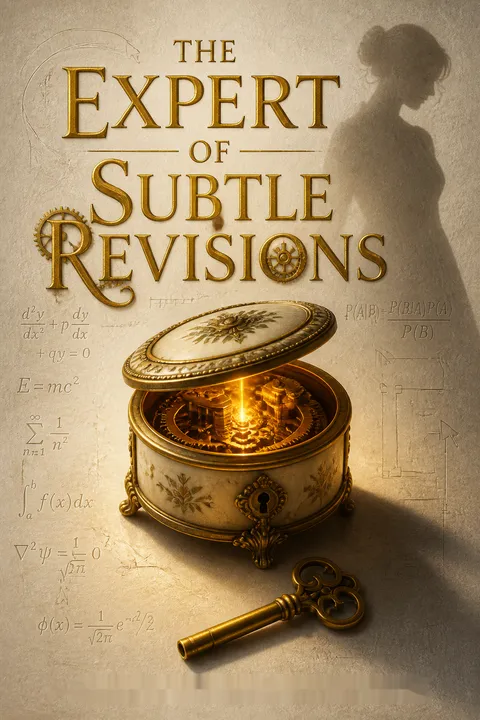

Plot Summary
Invisible in Plain Sight
Hase, a young woman living in San Francisco, exists almost entirely off the grid—no official records, no digital footprint, no family except her father, who isn't her biological parent. She's a chameleon, shifting names and identities as needed, finding comfort in anonymity and the digital world of Wikipedia, where she edits under the handle TheRabbit. Her only constants are her father, her best friend Harriet, and the rituals they share. But even these are fragile, as her father's paranoia and their itinerant life keep her isolated, always on the move, always hiding from something unnamed.
Birthday Without a Father
On her self-chosen birthday, Hase waits at the harbor for her father, who never arrives. The day, once marked by quirky traditions and Jell-O shapes, is now filled with unease and longing. The absence gnaws at her, and as dusk falls, she's forced to return to her apartment, only to find it ransacked. Her laptop is stolen, her sense of safety shattered. The only thing left untouched is the ham radio, her lifeline to her father. But when she tries to reach him, there's only silence. The world feels suddenly emptier, and the boundaries between loneliness and abandonment blur.
Letters, Locks, and Loss
Hase's life is a patchwork of small routines and big uncertainties. She clings to the rituals her father taught her—collecting his mysterious letters, following his instructions, and maintaining their secret communication. But as she investigates his disappearance, she finds only dead ends: a cryptic letter filled with incomprehensible math, a vandalized P.O. box, and a growing sense that someone is watching. Her memories of childhood—of birthdays, of her mother's locket, of the music her father hummed—become both comfort and torment as she tries to piece together what's been lost.
Vienna's Haunted Circle
In 1930s Vienna, Anton Moritz arrives to join the university's intellectual elite, only to find a city simmering with political unrest and personal intrigue. He's drawn into the orbit of the enigmatic Engelhardt Circle, where philosophy, mathematics, and the occult intermingle. Here, Anton meets the brilliant and alluring Sophia Popovic, the charismatic artist-mathematician Josef Zedlacher, and the mysterious Haskell Gaul—a man who claims to have traveled through time. The circle's debates blur the lines between reason and madness, and Anton's own desires and fears become entangled with the city's fate.
Childhoods and Ghosts
Josef's childhood is marked by privilege, loss, and the slow corrosion of war. He meets Sophia as a boy, falls in love, and then loses her to time and circumstance. As Vienna fractures, Josef's sense of self is shaped by exclusion and resentment. He becomes both a victim and an agent of the city's rising intolerance, seeking belonging through conformity and, later, through betrayal. His longing for recognition and his obsession with secrets—his family's lost fortune, Sophia's affections, the mysteries of mathematics—drive him toward choices that will haunt him and others.
The Séance and the Spiral
The Engelhardt Circle's fascination with the supernatural culminates in a séance led by the medium Maria Campioni. Anton and Josef attend, each seeking something different: Anton, to debunk; Josef, to contact his dead father. The séance becomes a crucible for their fears and desires. Anton is confronted by a vision from his past, a forbidden love that still wounds him. Josef is denied the closure he craves. The night's events ripple outward, deepening the circle's entanglements and setting the stage for betrayals, blackmail, and the unraveling of lives.
Ghost Ship Ashore
News breaks that Hase's father's sailboat has washed ashore, empty and battered. The authorities suspect foul play, but there are no answers—only more questions. Hase is left with a single directive: retrieve a specific book from a Berkeley library. The task becomes a quest, leading her through memories of her childhood with Harriet, the kindness of Dr. Ord, and the rituals that once anchored her. The book, when found, contains only a cryptic number—a code that seems to point nowhere. The sense of loss deepens, but so does Hase's determination to uncover the truth.
Codes, Clues, and Wikipedia
Hase's search for her father becomes a journey through the hidden architecture of Wikipedia. The number in the book is a page ID, leading her from one obscure article to another, each edit a clue left by her father. The trail winds through biographies, deleted pages, and the shadow history of the internet. Along the way, she encounters Manifold, a legendary Wikipedia editor who claims to be Haskell Gaul. Together with Harriet, Hase begins to unravel the connections between her father, the Zedlacher Institute, and the mysterious music box that may hold the key to everything.
The Music Box's Secret
The music box, a recurring symbol in Anton's and Hase's lives, is revealed to be more than a keepsake—it's a machine capable of shifting its owner through time. Built by Haskell Gaul and completed with Anton's mathematical insights, the box is both a marvel and a curse. Its use has left scars across generations: Anton's exile, Hase's displacement, the obsessions of the Zedlacher Institute. The box's melody, "Himmelsauge," composed by a woman erased from history, becomes a motif for longing, loss, and the possibility of rewriting fate.
Entanglements Across Time
Anton and Haskell's relationship, forged in the crucible of Vienna's intellectual ferment, is both passionate and tragic. Their collaboration on the music box binds them across decades and continents, but also traps them in a paradox: to return and "fix" the past is to risk erasing themselves and those they love. Hase, caught in the wake of their choices, must confront the reality that her own existence is an accident, a side effect of their entanglement. The desire to undo mistakes collides with the need to claim one's own story.
Betrayals and Blackmail
Josef's hunger for recognition and power curdles into resentment and treachery. He blackmails Anton, sabotages his rivals, and ultimately commits murder, killing Engelhardt in a fit of ideological and personal rage. His actions set off a chain of events that reverberate through the lives of everyone connected to the circle. The aftermath is a study in the corrosive effects of envy, the dangers of unchecked ambition, and the ways in which personal wounds can become historical tragedies.
The Return Problem
Anton's years in exile are consumed by the quest to repair the music box and return to his own time. But the mathematics of return prove elusive, and the cost of success becomes increasingly clear: to "fix" the past is to erase the present, including Hase's life. The Zedlacher Institute, obsessed with harnessing the box's power, hunts Anton and Haskell across decades. The dream of return becomes a metaphor for the human longing to undo regret, to rewrite history, and the pain of realizing that some things, once done, cannot be undone.
Erased and Unwritten
Hase discovers that her mother, like so many women before her, has been written out of the official record. The Wikipedia page for Katarina Popovic, composer of "Himmelsauge," is deleted for lack of notability. Hase herself is invisible in the Zedlacher narrative, her existence an accident, her contributions unrecorded. The novel's structure mirrors this erasure, foregrounding the ways in which history is shaped by omission as much as by inclusion. Hase's journey becomes not just a search for her father, but a fight to claim her own place in the story.
The Daughter's Revision
Armed with her father's journal and the music box, Hase returns to the rose garden where her story began. She digs up the satchel he left for her, reads the letter he wrote to Haskell, and confronts the truth of her own existence. Refusing to be erased, she winds the music box herself, choosing to write her own fate rather than be a casualty of others' regrets. Her act is both defiance and affirmation—a subtle revision that asserts her agency and the value of her life, however accidental.
The Final Winding
The novel closes with Hase arriving in Vienna, a stranger in her own family's past, but determined to bear witness and make her mark. She finds her mother's office, observes the lives that led to her own, and chooses not to erase herself, but to revise the narrative. The music box's song, once a lullaby of loss, becomes a hymn to possibility. History, Hase realizes, is not fixed—it is a palimpsest, open to subtle revisions by those brave enough to claim their place within it.
Analysis
A meditation on history, identity, and the power of revisionThe Expert of Subtle Revisions is a novel about the stories we inherit, the ones we erase, and the ones we choose to write for ourselves. Through its intricate structure and richly drawn characters, the book explores the ways in which history is constructed—not as a fixed record, but as a living, contested archive shaped by power, omission, and the quiet acts of revision that often go unnoticed. The music box, with its haunting melody and impossible promise, becomes a symbol for the human longing to undo regret and reclaim lost possibilities, even as it warns of the dangers of erasure. Hase's journey—from invisible daughter to author of her own fate—is both a personal and political act, asserting the right to exist and to be remembered. The novel's engagement with Wikipedia, time travel, and the erasure of women's contributions is both timely and timeless, inviting readers to consider whose stories are told, whose are forgotten, and what it means to bear witness in a world where history is always being rewritten.
Review Summary
Reviews for The Expert of Subtle Revisions are mixed, averaging 3.72/5. Many praise its stunning Wikipedia-inspired cover, elegant prose, and ambitious blend of historical fiction, speculative elements, and queerness. Readers particularly enjoy the 1930s Vienna setting, the intertwining timelines, and complex characters. However, critics find the time travel underdeveloped and unexplained, the pacing uneven, and the protagonist Hase underdeveloped. Some feel the novel is overly confusing or fails to deliver on its "taut mystery" promise, while enthusiastic readers consider it a brilliantly layered, thought-provoking debut.
People Also Read




Characters
Hase (Vera)
Hase is a woman shaped by absence—of records, of family, of certainty. Raised by a father who is not her biological parent, she grows up on the margins, learning to survive by being unseen. Her intelligence is sharp, her emotional life complex, and her sense of self is both fragile and fiercely defended. Hase's journey is one of reclamation: of her history, her agency, and her right to exist. She is haunted by the erasure of women's stories, including her mother's, and ultimately chooses to revise her own narrative rather than be erased by others' regrets. Her relationship with her father is both anchor and wound, and her evolution is marked by a growing refusal to be invisible.
Anton Moritz
Anton is a man of intellect and longing, drawn to the beauty of mathematics and the dangers of desire. His arrival in Vienna is both a professional triumph and a personal crucible, as he becomes entangled with the Engelhardt Circle, Sophia Popovic, and the enigmatic Haskell Gaul. Anton's collaboration with Haskell on the music box is both a scientific and emotional partnership, complicated by the impossibility of return. His guilt over the consequences of their actions—especially the accidental creation of Hase—drives his quest to "fix" the past, even as he comes to realize that some things cannot, and should not, be undone. His development is a study in the limits of reason, the costs of love, and the necessity of acceptance.
Josef Zedlacher
Josef is a man driven by a hunger for recognition and a fear of exclusion. His early life is marked by privilege and loss, and his response to adversity is to seek power through conformity, betrayal, and, ultimately, violence. His obsession with secrets—his family's fortune, the mysteries of mathematics, the identities of those around him—leads him to blackmail, sabotage, and murder. Josef's founding of the Zedlacher Institute is both a monument to his ambition and a testament to the dangers of unchecked resentment. His psychological complexity lies in his capacity for both insight and self-delusion, and his legacy is one of both genius and madness.
Haskell Gaul (Manifold)
Haskell is a figure out of time, both literally and metaphorically. As the builder of the music box and Anton's collaborator and lover, he is at once a catalyst and a victim of the story's central paradoxes. His relationship with Anton is passionate, fraught, and ultimately tragic, as their efforts to control time lead to unintended consequences. Haskell's own sense of self is fractured by his experiences, and his longing for connection is both his strength and his undoing. His presence in the modern world as Manifold, a legendary Wikipedia editor, underscores the novel's themes of identity, erasure, and the search for meaning.
Sophia Popovic
Sophia is a mathematician and the daughter of a famous pianist, living in the shadow of both her mother's genius and the male-dominated world of Vienna's intellectual elite. Her relationship with Anton is complex—mentor, lover, mother of his child—and her own contributions are often erased or attributed to others. Sophia's resilience and subtle influence are felt throughout the narrative, even as her official story is one of omission. Her legacy is embodied in Hase, who inherits both her gifts and her struggle for recognition.
Harriet Ord
Harriet is Hase's childhood companion and the daughter of Dr. Ord, a mathematician who provides sanctuary and support to both Hase and her father. Harriet's presence is a reminder of the possibility of connection and the importance of bearing witness. Her own career in mathematics is shaped by her mother's example, and her friendship with Hase is a source of both comfort and challenge. Harriet's role is to ground the narrative in the realities of modern life, even as the story spirals through time and memory.
Dr. Monica Ord
Dr. Ord is a mathematician who offers refuge to Anton and Hase, providing them with a home and a sense of belonging. Her generosity and wisdom are a counterpoint to the betrayals and exclusions that define much of the novel's world. Dr. Ord's own struggles as a woman in academia mirror those of Sophia and Hase, and her legacy is one of quiet resistance and subtle revision.
Engelhardt
Engelhardt is the chair of philosophy in Vienna, leader of the eponymous circle, and a figure of both inspiration and tragedy. His murder by Josef is a turning point in the narrative, marking the collapse of a world of reason and the rise of violence and intolerance. Engelhardt's ideals live on in the memories of those who loved him, but his story is also a cautionary tale about the fragility of intellectual freedom.
Katarina Popovic
Katarina is the creator of "Himmelsauge," the symphony that becomes the music box's melody and a symbol of women's erased contributions. Her life and work are largely lost to history, her Wikipedia page deleted for lack of notability. Yet her influence endures, both in the music that haunts the narrative and in the resilience of her daughter and granddaughter.
Jake
Jake is Hase's roommate and former boyfriend, a man of routines and limited imagination. His inability to understand Hase's complexity serves as a contrast to the novel's more extraordinary characters. Jake's presence is a reminder of the comforts and limitations of the ordinary, and his role is to highlight the costs of living on the margins.
Plot Devices
Nonlinear Narrative and Multiple Timelines
The novel employs a nonlinear structure, shifting between Hase's present-day search, Anton's experiences in 1930s Vienna, and the perspectives of other key characters. This structure mirrors the themes of time travel, memory, and historical revision, allowing the reader to experience the entanglements and echoes that bind the characters across generations. The use of Wikipedia as both a literal and metaphorical archive underscores the instability of history and the ways in which stories are constructed, erased, and revised.
The Music Box
The music box is both a literal device—a machine capable of shifting its owner through time—and a metaphor for the desire to undo mistakes, reclaim lost opportunities, and control one's fate. Its melody, "Himmelsauge," composed by a woman erased from history, becomes a motif for the novel's central concerns: who gets to write history, whose stories are preserved, and what is lost in the process of revision.
Wikipedia and the Archive
The novel's use of Wikipedia as a plot device foregrounds the ways in which history is constructed, contested, and erased. Hase's journey through page IDs, deleted articles, and edit histories becomes a metaphor for the search for meaning in a world where the official record is always incomplete. The act of editing—of making "subtle revisions"—is both an assertion of agency and a reminder of the fragility of memory.
Foreshadowing and Recursion
The narrative is rich in foreshadowing, with motifs and symbols recurring across timelines and perspectives. The music box's melody, the rose garden, the act of winding and returning—all serve to create a sense of inevitability and possibility. The story's recursive structure—characters seeking to undo or revise their own actions—mirrors the mathematical and philosophical debates at the heart of the novel.
Erasure and Omission
The novel is as much about what is missing as what is present. Women's contributions are erased, personal histories are lost, and the official record is shaped by those with power. Hase's invisibility, the deletion of Katarina Popovic's Wikipedia page, and the gaps in the narrative all serve to highlight the costs of omission and the necessity of bearing witness.
Download PDF
Download EPUB
.epub digital book format is ideal for reading ebooks on phones, tablets, and e-readers.








































