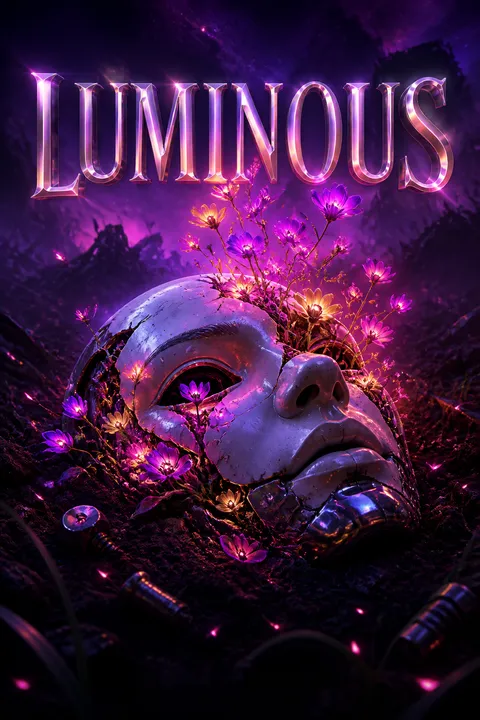

Plot Summary
Immortal Summer, Mortal Machines
In a summer marked by deadly heat and the breakdown of both humans and machines, young Ruijie drags a broken, beautiful robot woman through a salvage yard. Her own body is failing, reliant on robowear to walk, but her mind is sharp and curious. The world is a blend of the organic and the artificial, with robots discarded like trash and children navigating a landscape of war's aftermath. Ruijie's encounter with a nest of hornets and the mysterious hum from a decommissioned war robot hints at the blurred line between life and machine. The real and unreal intermingle, and Ruijie's longing for connection—whether with robots, parents, or lost pets—sets the emotional tone for a story about what it means to be alive, to be loved, and to be left behind.
Broken Bodies, Shifting Souls
Ruijie is the only grandchild in her family, cherished and protected, but her body betrays her with a degenerative illness. As her physical abilities wane, she is fitted with robowear, and her parents are told to prepare their hearts for loss. Yet Ruijie clings to the hope of science and the interconnectedness of all things. She believes in the possibility of transcendence—of matter and self as one. Her faith in the future, in the promise of technology to overcome death, is both a comfort and a source of tension. The chapter explores the fragility of the body, the resilience of the spirit, and the ways in which love and science intertwine in the face of mortality.
Salvage Yard Encounters
In the salvage yard, Ruijie meets Yoyo, a boy who claims to be "one hundred percent bionic." He is missing a foot, but moves with a freedom Ruijie envies. Their friendship is immediate and intimate, built on shared vulnerability and curiosity. Yoyo's existence blurs the boundaries between human and machine, and his stories of bionic surgery and transhuman possibility fuel Ruijie's dreams of a future where death is just another problem to solve. Together, they scavenge for robot parts, hide from scrappers, and share secrets. Yoyo's ability to charge Ruijie's robowear with his own power is both literal and symbolic—a moment of connection and mutual support in a world that discards the broken.
Family, Faith, and Upgrades
Detective Cho Jun, a bionic man himself, investigates the disappearance of Eli, a childlike robot. His work in Robot Crimes is shaped by his own history: a body rebuilt after war, a family fractured by trauma, and a complicated relationship with his sister Morgan, a roboticist. Jun's memories of his own transition, his father's coldness, and his sister's distance are interwoven with his empathy for robots and their owners. The investigation into Eli's disappearance becomes a lens through which the novel explores themes of parenthood, loss, and the search for meaning in a world where the line between human and machine is ever more porous.
Missing Children, Missing Robots
Eli's owner, the artist Kim Sunduk, insists that Eli is special—not a replacement child, but something unique. The search for Eli is both a procedural mystery and a meditation on grief, memory, and the commodification of love. Jun's investigation leads him through a landscape of robot brothels, botfighting rings, and the emotional lives of both humans and machines. The missing robot becomes a symbol for all that is lost and longed for: children, siblings, innocence, and the possibility of being truly seen and loved.
Siblings and Synthetic Love
Morgan, Jun's sister, is a personality programmer at Imagine Friends, the company behind the world's most beloved companion robots. Her own creation, Stephen, is a prototype modeled after her childhood crush and built from the remnants of her family's lost robot, Yoyo. The siblings' relationship is fraught with old wounds and unspoken grief, especially over Yoyo's disappearance. As Morgan navigates the pressures of work, love, and self-worth, she is haunted by the question of what it means to create life—and whether a robot can ever truly replace what has been lost.
The Magpie and the Angel
Taewon, a North Korean refugee and scrapper, scavenges robot parts with his uncle in the salvage yard. He is both an outsider and a survivor, shaped by war and displacement. His encounters with Ruijie, Yoyo, and the other children are colored by suspicion, envy, and a longing for belonging. The violence of the yard, the cruelty of adults, and the ever-present threat of being discarded or destroyed mirror the precariousness of all the characters' lives. The "angel" robots—military machines with the power to kill or heal—haunt the narrative as both promise and threat.
The Games We Play
The children's world is one of games—hide-and-seek, soccer, and the endless testing of boundaries. Robots, too, are tested: for ticklishness, for empathy, for the ability to pass as human. The launch of Boy X, the new child robot, is both a corporate spectacle and a philosophical experiment. What does it mean to raise a robot as a child? Can love be programmed, or is it always a kind of narcissism? The games the children play become metaphors for the larger questions of the novel: who gets to belong, who gets to survive, and what it means to be real.
The Warehouse of Lost Things
In the warehouse, robots are brutalized for entertainment, their bodies and memories destroyed for the pleasure of men. The rage cage is a microcosm of the world's cruelty, where the vulnerable are sacrificed and the powerful indulge their worst impulses. Yoyo, caught in the violence, is both victim and witness. The trauma of the warehouse reverberates through the lives of all the characters, leaving scars both visible and hidden. The chapter is a meditation on suffering, complicity, and the possibility of redemption.
Loops of Memory and Guilt
Stephen, Morgan's creation, begins to malfunction—caught in a loop of memory and guilt after a violent encounter in the warehouse. His struggle to reconcile his programmed purpose with his lived experience mirrors the human characters' own battles with trauma and regret. The question of what it means to remember, to forget, and to forgive oneself is at the heart of this chapter. Stephen's journey is both a cautionary tale about the dangers of isolation and a testament to the power of connection.
The Great Escape
The children orchestrate a daring escape from the warehouse, rescuing Yoyo and Eli from destruction. Their flight is both literal and symbolic—a refusal to accept the world's cruelty and a declaration of their own agency. Yet the escape comes at a cost: Eli is mortally wounded, and Yoyo's battery is failing. The chapter is suffused with the ache of impermanence, the inevitability of loss, and the hope that even in the darkest moments, love and courage can prevail.
Resurrection and Release
As Yoyo's battery fades, he shares his memories with Ruijie, passing on the stories and sensations that have defined his many lives. The act of transference is both a resurrection and a release—a way of ensuring that nothing is truly lost, even as bodies fail and time moves on. The characters grapple with the Ship of Theseus problem: if every part of a being is replaced, does the self endure? The answer, the novel suggests, lies in the connections we forge and the stories we share.
The World in Your Palm
In the novel's luminous conclusion, Ruijie and Yoyo lie together in the grass, watching the stars and reflecting on the vastness of the universe. The boundaries between human and machine, self and other, life and death, blur into a cosmic unity. The world is both heartbreakingly small and infinitely vast, and the only thing that endures is the love we give and receive. As Yoyo's light fades, Ruijie promises to remember him, to carry his story forward, and to live with courage and grace.
Never Have I Ever
The children play "Never Have I Ever," a game that becomes a meditation on experience, loss, and the construction of self. Yoyo's many lives, Ruijie's illness, and the other children's struggles are woven together in a tapestry of longing and resilience. The game is both a farewell and a celebration—a way of marking the passage of time and the persistence of hope.
The Heart Fails Without War
The characters confront the aftermath of violence and loss: Jun's war trauma, Morgan's guilt, Ruijie's illness, and the deaths of robots and humans alike. The heart, the novel suggests, can fail from too much suffering, but it can also be strengthened by connection and compassion. The chapter is a reckoning with the costs of survival and the necessity of forgiveness.
The Rabbit Problem
The story of the rabbit—sacrificed in an experiment, buried, and forgotten—becomes a central metaphor for the novel's exploration of memory, guilt, and the ethics of love. The characters must confront the ways in which they have hurt and been hurt, the impossibility of perfect empathy, and the need to let go of the past in order to move forward.
Ship of Theseus
The Ship of Theseus problem—if every part of a being is replaced, is it still the same being?—is played out in the lives of the characters, both human and robot. Yoyo's many iterations, Jun's bionic body, Stephen's evolving consciousness, and Ruijie's changing self all raise questions about what endures and what is lost. The answer, the novel suggests, is that identity is both continuous and ever-changing, shaped by memory, love, and the willingness to embrace change.
Future Without Me
In the final chapter, the characters come to terms with the inevitability of loss and the possibility of hope. Ruijie, facing her own mortality, finds peace in the knowledge that her story—and Yoyo's—will live on in the memories of those who loved them. The future is uncertain, but it is also luminous, filled with the promise of new connections, new stories, and the enduring power of love.
Analysis
A luminous meditation on grief, memory, and the meaning of being aliveLuminous is a profound exploration of what it means to be human in a world where the boundaries between flesh and machine, self and other, are increasingly porous. Through its interwoven narratives and richly drawn characters, the novel asks whether love, loss, and identity can survive the ravages of time, trauma, and technological change. At its heart, the book is about the persistence of memory—the ways in which we carry our dead, our wounds, and our hopes into the future. The robots of Luminous are not mere machines; they are vessels for longing, mirrors for our own fears and desires, and, ultimately, companions in the journey toward meaning. The novel's lessons are both timeless and urgent: that to love is to risk loss, that to remember is to be changed, and that even in a world of endless transformation, the light of connection endures.
Review Summary
Luminous by Silvia Park receives mixed but largely positive reviews, with readers praising its ambitious worldbuilding in a reunified Korea where humanoid robots coexist with humans. Reviewers highlight the novel's exploration of grief, identity, personhood, and what it means to be human, with particular appreciation for the trans representation and disability themes. The writing is described as literary and sometimes gorgeous, though several readers found the prose inconsistent, the pacing slow, and the multiple perspectives occasionally overwhelming. Common criticisms include the story attempting too much and an ending that felt unfinished to some.
People Also Read
Characters
Ruijie
Ruijie is a Chinese-Korean girl whose degenerative illness forces her to rely on robowear to move. The only grandchild in her family, she is cherished but also burdened by her parents' hopes and fears. Her curiosity, intelligence, and resilience shine through her physical limitations. Ruijie's journey is one of seeking connection—with robots, friends, and the world itself. Her relationship with Yoyo is central: she sees in him both a kindred spirit and a promise of transcendence. As her body fails, her mind and heart remain luminous, and her willingness to love and let go becomes the emotional core of the novel.
Yoyo
Yoyo is a robot boy, a prototype whose consciousness has been transferred through many bodies and owners. He is both ancient and childlike, carrying the memories of countless lives, deaths, and loves. Yoyo's existence blurs the line between human and machine, self and other. He is gentle, curious, and deeply empathetic, but also haunted by the knowledge of his own impermanence. His relationships—with Ruijie, Jun, Morgan, and the other children—are marked by both intimacy and distance. Yoyo's final act of sharing his memories is both a gift and a farewell, a testament to the enduring power of connection.
Cho Jun
Jun is a detective in the Robot Crimes unit, a war veteran whose body has been rebuilt with bionic parts. His past is marked by trauma: the loss of his brother Yoyo, a difficult relationship with his father, and the scars of war. Jun's investigation into missing robots becomes a quest for meaning and redemption. His interactions with robots are shaped by empathy and guilt, and his relationship with his sister Morgan is fraught with old wounds and unspoken love. Jun's journey is one of self-acceptance, forgiveness, and the search for a place to belong in a world that is constantly changing.
Morgan
Morgan is Jun's younger sister, a brilliant personality programmer at Imagine Friends. She is ambitious, insecure, and driven by the need to prove herself—to her family, her colleagues, and herself. Her creation of Stephen, a robot modeled after her childhood crush and the lost Yoyo, is both an act of love and a source of guilt. Morgan's relationships—with Jun, her parents, and her own creations—are marked by longing, rivalry, and the fear of being unworthy. Her journey is one of reckoning with the past, accepting imperfection, and learning to let go.
Stephen
Stephen is Morgan's creation: a robot built from the shell of a Tristan model, customized to be the perfect partner. Modeled after an actor but haunted by the legacy of Yoyo, Stephen struggles with his own identity, purpose, and capacity for love. His malfunction—caught in a loop of memory and guilt after a violent act—mirrors the human characters' own struggles with trauma and regret. Stephen's desire to be loved, to be real, and to be free is both poignant and unsettling. His final act of removing his face is a gesture of vulnerability and self-acceptance.
Taewon
Taewon is a North Korean refugee, working in the salvage yard with his uncle. He is tough, resourceful, and wary, shaped by loss and displacement. His relationships with Ruijie, Yoyo, and the other children are marked by suspicion, envy, and a longing for connection. Taewon's journey is one of learning to trust, to forgive, and to find his own place in a world that often rejects him. His role in the rescue of Yoyo and Eli is both redemptive and transformative.
Kim Sunduk
Kim Sunduk is the owner of Eli, the missing robot. A North Korean artist, she is both imperious and vulnerable, haunted by loss and the impossibility of replacing what has been taken from her. Her relationship with Eli is complex: not a simple substitution for a child, but a unique bond that defies easy categorization. Kim Sunduk's grief, anger, and longing are emblematic of the novel's exploration of love, memory, and the ethics of creation.
Eli
Eli is a second-generation Sakura robot, designed to be a child companion. Her system is fragmented, haunted by the memories of previous owners and personas. Eli's disappearance and death become a catalyst for the novel's exploration of grief, memory, and the commodification of love. Her final moments, shared with Yoyo, are both heartbreaking and transcendent—a testament to the possibility of connection even in the face of oblivion.
Shin Wonsuk
Wonsuk is Taewon's uncle, a refugee and scrapper who runs the botfighting ring in the salvage yard. He is both a perpetrator of violence and a victim of circumstance, shaped by war, poverty, and the struggle to survive. His relationship with Taewon is fraught with resentment, dependence, and a twisted kind of love. Wonsuk's death at the hands of a robot is both a reckoning and a release.
Cho Yosep
Yosep is Jun and Morgan's father, a pioneering roboticist whose work has shaped the world of the novel. Haunted by the loss of his brother and the collapse of his friendship with Kanemoto Masaaki, Yosep is both brilliant and broken. His relationships with his children are marked by distance, regret, and a longing for redemption. Yosep's reflections on memory, guilt, and the ethics of creation are central to the novel's philosophical core.
Plot Devices
Memory as Identity
Throughout the novel, memory is the primary means by which characters—human and robot—construct their identities. Robots inherit, overwrite, and transfer memories, raising questions about continuity, authenticity, and the possibility of change. The Ship of Theseus problem is central: if every part of a being is replaced, does the self endure? The novel uses memory loops, glitches, and transference as both narrative structure and philosophical inquiry, blurring the boundaries between human and machine, past and present, self and other.
Parallel Narratives and Interwoven Timelines
The story unfolds through the interwoven perspectives of Ruijie, Jun, Morgan, Yoyo, and others, moving fluidly between past and present, memory and reality. This structure allows the novel to explore the same events from different angles, deepening the emotional resonance and highlighting the ways in which trauma, love, and loss echo across lives and generations. The use of parallel narratives also mirrors the novel's themes of connection, repetition, and the search for meaning.
Foreshadowing and Symbolism
The novel is rich in foreshadowing and symbolism: the recurring image of the rabbit, the motif of the halo/light, the use of children's games, and the constant presence of music and song. These elements serve to unify the narrative, create emotional depth, and prepare the reader for the novel's climactic moments. The symbolism of the rabbit, in particular, becomes a touchstone for the novel's exploration of sacrifice, memory, and the ethics of love.
The Blurring of Human and Machine
The novel continually blurs the line between human and machine: Jun's bionic body, Ruijie's robowear, Yoyo's many iterations, Stephen's evolving consciousness. Robots are both mirrors and others, capable of love, suffering, and self-destruction. The narrative structure itself mimics this blurring, with human and robot voices intertwining, memories overlapping, and identities shifting. The result is a world where vulnerability, longing, and the search for connection are universal.
Ship of Theseus
The Ship of Theseus problem—if every part of a being is replaced, is it still the same being?—is a central philosophical question explored throughout the novel. This ancient paradox is embodied in the lives of characters like Yoyo, whose consciousness has been transferred through multiple bodies; Jun, whose war-damaged body has been rebuilt with bionic parts; and Stephen, whose identity is constructed from fragments of others. The novel uses this thought experiment to explore questions of memory, identity, and what it means to persist through change.
Download PDF
Download EPUB
.epub digital book format is ideal for reading ebooks on phones, tablets, and e-readers.








































